Hand Painted Jewelry Box Materials: Wood, Paint & Sealant Guide
Discover how base woods, paint mediums, and sealants impact your hand painted jewelry box. A material comparison guide for lasting heirloom storage.

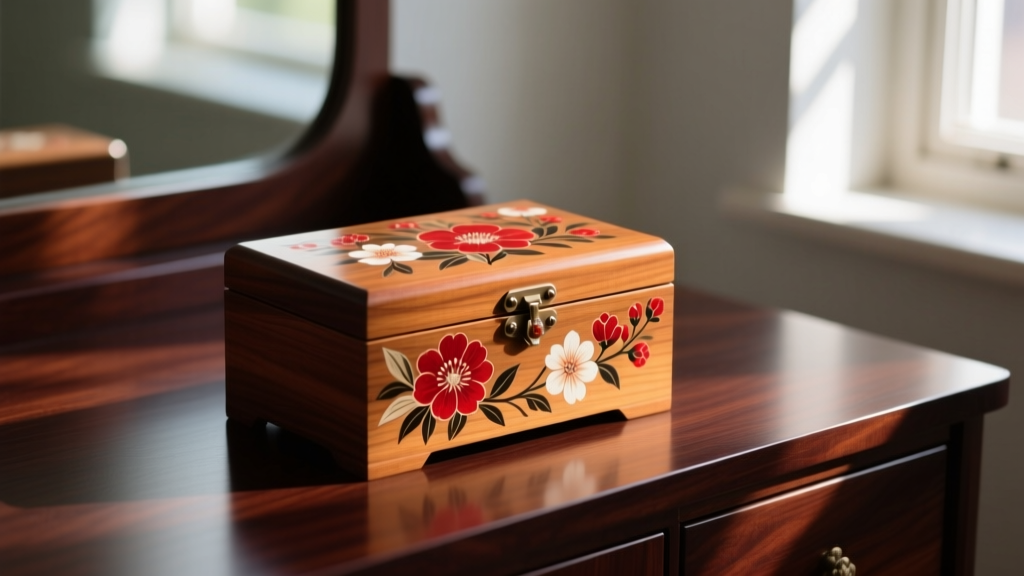
The Anatomy of an Heirloom: Why Materials Matter
A true hand painted jewelry box is more than just a decorative vessel; it is a functional micro-environment that dictates the longevity of your most precious metals and gemstones. While collectors and jewelry enthusiasts often focus entirely on the artistry of the exterior brushwork, the underlying material science—specifically the base wood, paint medium, and protective sealants—determines whether the box will protect your collection or actively accelerate tarnishing and degradation.
In 2026, as artisanal craftsmanship sees a massive resurgence, the market is flooded with both museum-quality heirlooms and mass-produced imitations. Understanding the chemical and physical properties of these materials is essential for any serious collector. This guide breaks down the exact material specifications you should demand when evaluating a hand painted jewelry box for your storage needs.
Base Wood Comparison: Stability and Off-Gassing Risks
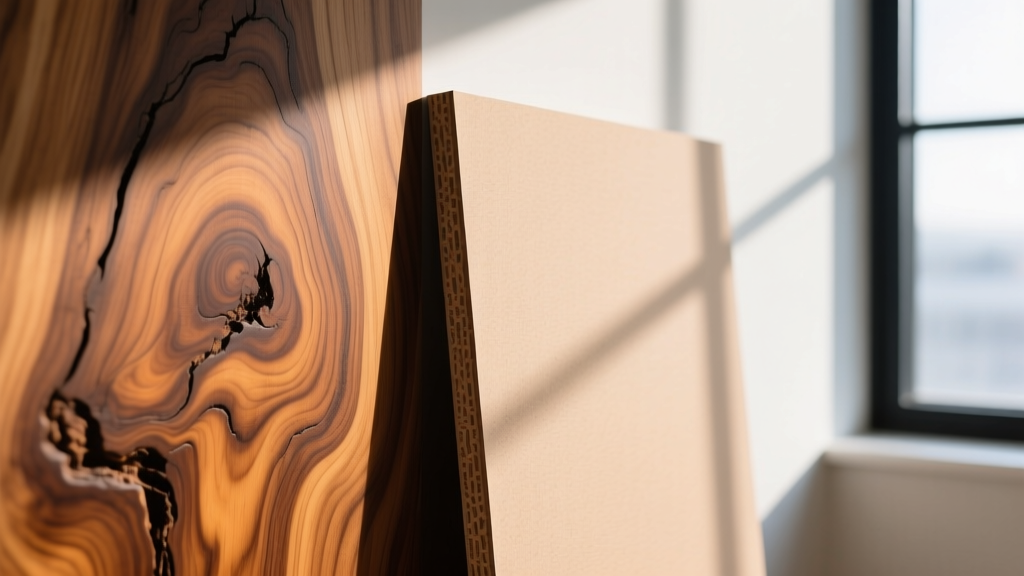
The structural foundation of any painted box dictates its dimensional stability. Wood naturally expands and contracts with fluctuations in relative humidity (RH). If the wood moves too much, the painted surface will craze, crack, and eventually flake off. Furthermore, certain woods and engineered boards contain high levels of tannins, resins, or urea-formaldehyde glues that off-gas volatile organic compounds (VOCs) and sulfur, which rapidly tarnish silver and copper.
| Material | Janka Hardness | Dimensional Stability | Off-Gassing / Tarnish Risk | Price Tier |
|---|---|---|---|---|
| Quarter-Sawn White Oak | 1,360 lbf | Exceptional | Low (if properly sealed) | Premium |
| Solid Mahogany | 900 lbf | High | Low | High |
| Baltic Birch Plywood | N/A (Layered) | Very High | Low (Low-VOC glues) | Mid-Range |
| MDF (Medium Density Fiberboard) | N/A | Poor (Swells with moisture) | High (Formaldehyde/Sulfur) | Budget |
| Knotty Pine | 380 lbf | Moderate | High (Sap/Resin bleed) | Budget |
For a premium hand painted jewelry box, The Wood Database and master carpenters universally recommend Baltic Birch plywood or solid Mahogany. MDF should be strictly avoided for fine jewelry storage, as the sulfur compounds in its binding agents will cause sterling silver to develop black silver sulfide tarnish within weeks, regardless of the exterior paint job.
Paint Mediums: Acrylics, Oils, and Mineral Pigments
The type of paint used on the exterior of your box affects both its visual aging process and its chemical safety. Historically, artisan boxes were painted with linseed or walnut oil-based paints. While these offer unparalleled depth and blending capabilities, traditional oil paints undergo a prolonged oxidation process to cure.
The Hidden Danger of Oil Paints
During the curing process, which can take anywhere from six months to over a year depending on the thickness of the impasto technique, oil paints release peroxides and organic acids. According to guidelines outlined in the NPS Museum Handbook regarding exhibit materials, these acidic off-gases can corrode lead, copper, and silver alloys. If you purchase a newly crafted, oil-painted box, it must be kept in a well-ventilated area away from your jewelry until fully cured.
Modern Acrylic Polymer Emulsions
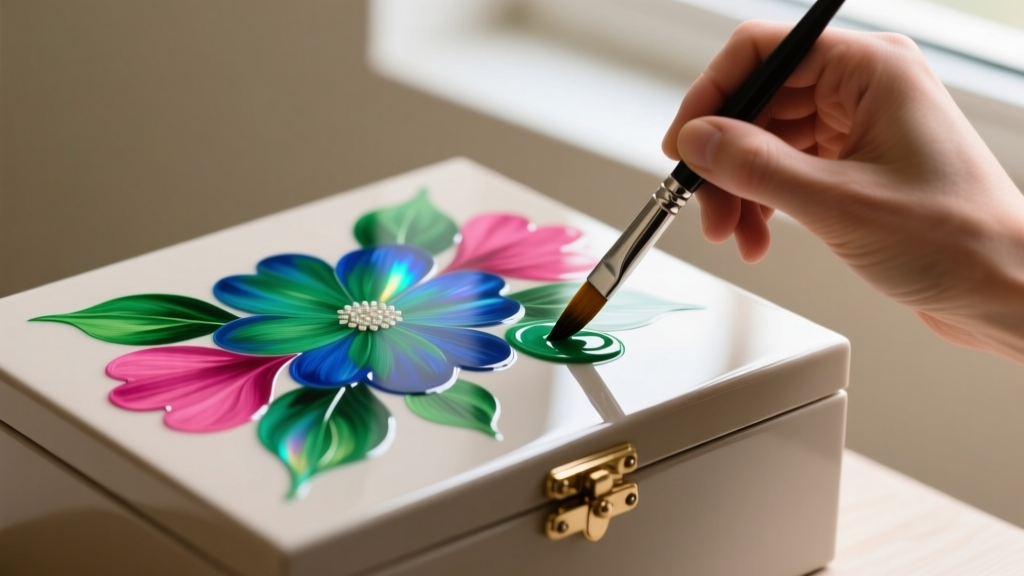
Today, high-end artisan painters frequently utilize professional-grade acrylic polymer emulsions (such as Golden Heavy Body). Acrylics cure via water evaporation and coalescence, typically finishing their chemical off-gassing within 14 to 21 days. Once fully cured, acrylic paint films are chemically inert, flexible, and highly resistant to the micro-climate fluctuations inside a bedroom or dressing room, making them vastly superior for protecting the structural integrity of the box and the safety of the jewelry inside.
The Crucial Topcoat: Sealants and the Oddy Test
Paint alone is porous. A protective topcoat is mandatory to lock in any residual VOCs from the wood or paint and to protect the artwork from UV degradation and physical abrasion. However, the wrong sealant can be just as destructive as the wrong wood.
- Solvent-Based Lacquers: Highly durable and glossy, but they can trap unreacted solvents that slowly leach into the interior of the box over time.
- Natural Shellac: A traditional, non-toxic resin secreted by the lac bug. It is an incredible odor and VOC barrier (often used to seal knots in wood), but it is brittle and susceptible to damage from alcohol-based perfumes or hand sanitizers.
- Water-Based Polyurethane: The gold standard for modern heirloom boxes. Products like General Finishes High Performance Water-Based Topcoat provide a flexible, non-ambering, and completely inert barrier once cured.
Conservators evaluating materials for museum display cases use the Oddy Test, an accelerated aging process that exposes materials to silver, copper, and lead in a sealed, humid environment to check for corrosive off-gassing. When commissioning a bespoke hand painted jewelry box, ask the artisan if their chosen sealants pass Oddy Test standards for silver and copper safety.
Interior Linings: The Anti-Tarnish Hero
The exterior materials protect the art, but the interior lining protects the assets. Many commercial boxes use cheap synthetic velvets or polyurethane foams that break down into acidic compounds. Even natural, untreated cotton or wool can harbor ambient moisture and sulfur from the environment.
For a true archival-grade hand painted jewelry box, the interior should be lined with Pacific Silvercloth or a similar anti-tarnish flannel. This specialized material is embedded with microscopic silver particles that act as a sacrificial anode. Hydrogen sulfide (H2S) in the air reacts with the embedded silver particles in the cloth rather than your valuable jewelry, effectively intercepting tarnish-causing gases before they reach your sterling silver or copper pieces. When evaluating a box, ensure the lining is adhered with an acid-free, pH-neutral PVA adhesive, as standard spray adhesives contain solvents that will immediately tarnish pearls and opals.
Environmental Control and Maintenance
Even the finest materials will fail if subjected to extreme environments. To preserve both the painted exterior and the jewelry within, maintain the room's relative humidity between 45% and 55%. Fluctuations beyond this range will cause the base wood to swell or shrink, leading to micro-fractures in the paint and sealant layers. Dust the exterior only with a dry, lint-free microfiber cloth; never use commercial furniture polishes containing silicone or ammonia, which will degrade the water-based polyurethane topcoat and dull the artisan's brushwork over time.


