Hello Kitty Jewelry Holder Materials: Resin vs Ceramic Safety
Compare resin, ceramic, and metal Hello Kitty jewelry holders. Discover which materials prevent tarnish and protect fine jewelry from damage.

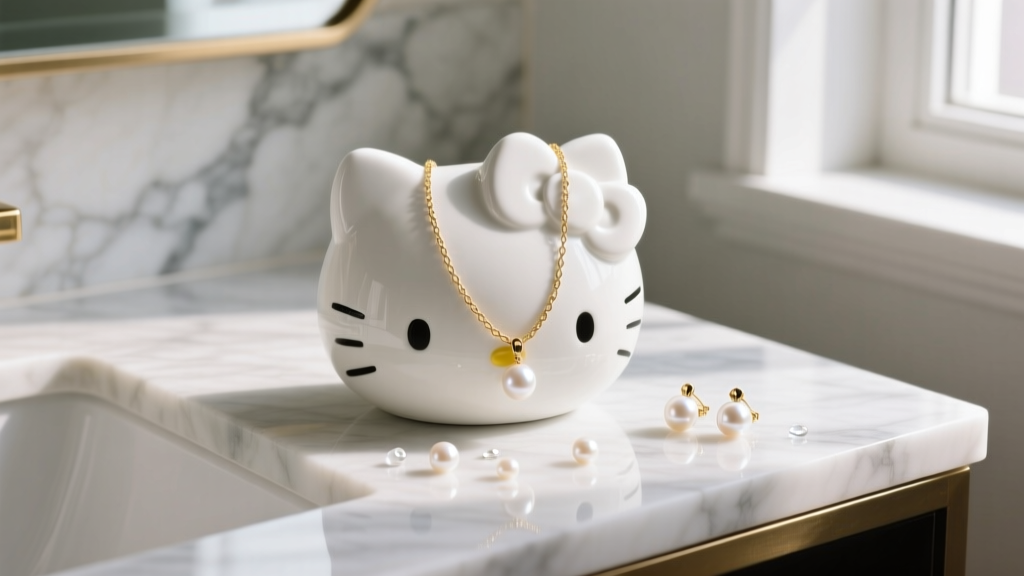
The Evolution of Sanrio Storage: From Novelty to Functional Art
When collectors and jewelry enthusiasts think of a Hello Kitty jewelry holder, the mind often jumps to cheap plastic trinkets won at arcades or purchased in the impulse aisles of novelty shops. However, as of 2026, the landscape of character-themed vanity organization has drastically evolved. Sanrio’s premium home goods lines, alongside high-end artisan interpretations, now feature sophisticated materials designed for serious jewelry collectors. But a critical question remains for those storing heirloom gold, sterling silver, or porous gemstones: is your cute organizer secretly damaging your valuables?
The material composition of your jewelry display dictates its chemical reactivity, moisture retention, and surface hardness. Storing a porous turquoise ring or a delicate 18k gold chain on the wrong surface can lead to irreversible micro-scratches, chemical off-gassing, and accelerated tarnishing. In this comprehensive material comparison, we break down the exact properties of the most common Hello Kitty jewelry holders on the market, analyzing their safety profiles through the lens of gemological conservation.
Material Breakdown: What Are Hello Kitty Holders Actually Made Of?
To understand how a jewelry holder interacts with precious metals and stones, we must examine the base materials used in their manufacturing. The market is currently dominated by three primary material categories, each with distinct physical and chemical properties.
1. Injection-Molded ABS Plastic & Polyresin
The most ubiquitous and affordable Hello Kitty ring dishes and necklace trees are crafted from ABS (Acrylonitrile Butadiene Styrene) plastic or polyresin. Polyresin is a synthetic compound made by combining liquid resin with powdered stone additives, resulting in a heavy, ceramic-like feel at a fraction of the cost and weight.
The Danger of Off-Gassing: While modern, high-grade ABS is relatively stable, lower-quality polyresin castings often utilize sulfur-based catalysts or cheap plasticizers (like phthalates) during the molding process. Over time, especially in humid environments or direct sunlight, these materials can off-gas trace amounts of volatile organic compounds (VOCs) and sulfur dioxide. According to conservation standards outlined by the Gemological Institute of America (GIA), exposure to sulfur compounds is the primary catalyst for silver sulfide formation—the black tarnish that plagues sterling silver (925) jewelry. Furthermore, plasticizers can leave a microscopic greasy film on porous gemstones like opals, pearls, and turquoise, dulling their natural luster.
2. Glazed Ceramic & High-Fired Porcelain
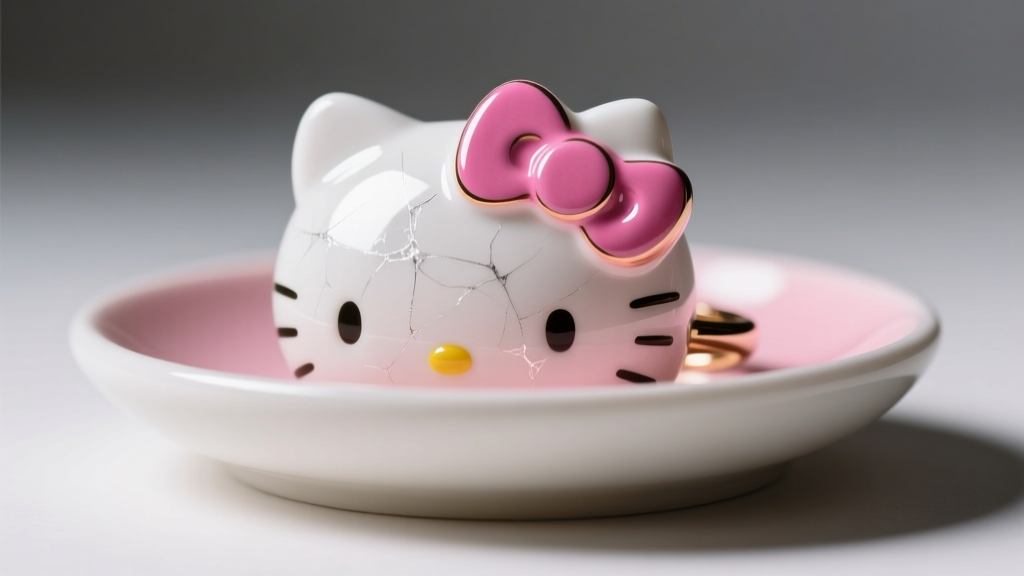
Premium official Sanrio merchandise and artisan-crafted Hello Kitty holders frequently utilize glazed ceramic or porcelain. Fired in kilns at temperatures exceeding 1,200°C (2,192°F), these materials are completely vitrified, meaning they are non-porous and chemically inert.
The Mohs Hardness Dilemma: While ceramic is entirely safe from a chemical standpoint—it will never off-gas or cause silver to tarnish—it presents a severe physical threat to softer metals. Ceramic glaze typically ranks between 6 and 7 on the Mohs Hardness Scale. In contrast, pure 24k gold is a 2.5, 14k gold is around 3.5, and platinum sits at 4.5. Sliding a gold ring onto a ceramic Hello Kitty dish will result in the ceramic scratching the gold. Additionally, if the ceramic chip or cracks, the exposed, unglazed bisque underneath is highly abrasive and can easily scuff delicate gemstones like tanzanite or emeralds.
3. Enameled Zinc Alloy (Zamak)
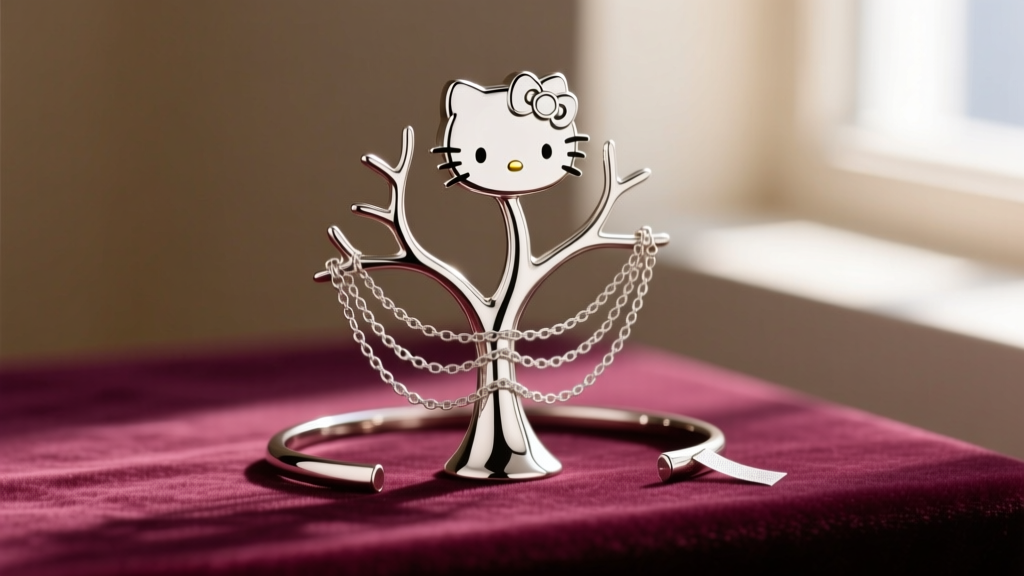
For a luxurious, weighty feel, many high-end Hello Kitty bracelet trees and earring screens are die-cast from Zamak—an alloy of zinc, aluminum, magnesium, and copper. These pieces are finished with a hard enamel coating (often featuring Hello Kitty’s signature red bow) to provide color and a protective barrier.
Galvanic Corrosion Risks: As long as the enamel remains perfectly intact, Zamak is a safe, durable storage option. However, enamel is essentially glass fused to metal; it can chip upon impact. Once the base zinc alloy is exposed, it becomes highly reactive in the presence of moisture. If an exposed zinc node touches a sterling silver chain in a humid bathroom, it can trigger galvanic corrosion, rapidly degrading the silver and leaving permanent dark pits on the metal's surface.
The Tarnish Factor: Material Comparison Chart
When curating a vanity display, understanding the risk matrix of your storage materials is essential. The following table synthesizes the physical and chemical risks associated with the three dominant Hello Kitty holder materials.
| Material | Base Composition | Tarnish Risk (Silver) | Scratch Risk (Gold/Gems) | Longevity & Care |
|---|---|---|---|---|
| Polyresin / ABS | Synthetic Resin + Stone Powder | Moderate to High (Sulfur off-gassing) | Low (Mohs 2-3) | 3-5 Years; degrades in UV light |
| Glazed Ceramic | Kaolin Clay + Silica Glaze | Zero (Chemically Inert) | High (Mohs 6-7) | Lifetime; brittle upon impact |
| Zamak Alloy | Zinc, Aluminum, Copper | High (If enamel chips) | Moderate (Mohs 4-5) | 5-10 Years; requires enamel inspection |
Protecting Fine Jewelry on Novelty Displays
You do not need to abandon your love for Sanrio aesthetics to maintain museum-level care for your jewelry collection. By implementing a few strategic barrier methods, you can safely utilize almost any Hello Kitty jewelry holder without risking chemical or physical damage.
"The key to preserving fine jewelry on decorative displays is interrupting the micro-climate between the metal and the storage surface. A simple physical barrier neutralizes 90% of material-related risks."
- For Ceramic Holders: Line the base of the ceramic dish or the prongs of the ring tree with a small piece of acid-free, unbleached cotton or microfiber cloth. This provides a soft landing pad that prevents the hard ceramic glaze from micro-scratching high-polish gold or platinum bands.
- For Polyresin Holders: Combat off-gassing by placing a small, discreet 3M Silver Shield anti-tarnish tab or a piece of Pacific Silvercloth underneath the Hello Kitty figure. These materials actively absorb airborne sulfur compounds before they can reach your sterling silver.
- For Enameled Metal Holders: Conduct a monthly "touch test" with your fingertips. If you feel any roughness, bubbling, or chipping in the enamel, immediately remove all jewelry. Repair minor chips with a dab of clear, jewelry-safe epoxy resin to reseal the reactive zinc base.
- Environmental Control: Avoid placing any jewelry holder in direct sunlight or within three feet of a bathroom shower. UV light accelerates the breakdown of plasticizers in resin, while ambient humidity acts as an electrolyte for galvanic corrosion in chipped metal holders.
Verdict: Choosing the Right Holder for Your Collection
Ultimately, the safest Hello Kitty jewelry holder depends entirely on what you intend to display. If your collection consists primarily of hard gemstones (diamonds, sapphires, rubies) and platinum or white gold, a glazed ceramic holder is the superior choice due to its complete chemical inertness and premium aesthetic. The scratch risk to platinum is minimal compared to softer yellow golds.
However, if you are displaying vintage sterling silver, porous cabochons (like turquoise or coral), or high-karat yellow gold, you must avoid direct contact with both abrasive ceramics and reactive plastics. In these cases, an enameled Zamak alloy holder—paired with a velvet-lined base and anti-tarnish strips—offers the best balance of structural integrity, chemical safety, and undeniable Sanrio charm. As always, adhering to Tiffany & Co. care guidelines regarding surface contact and moisture control will ensure your jewelry remains as flawless as the iconic character holding it.


