Hives Honey Jewelry Armoire: Expert Technical Review
An expert technical review of the Hives Honey jewelry armoire, analyzing wood composites, anti-tarnish linings, and spatial ergonomics.

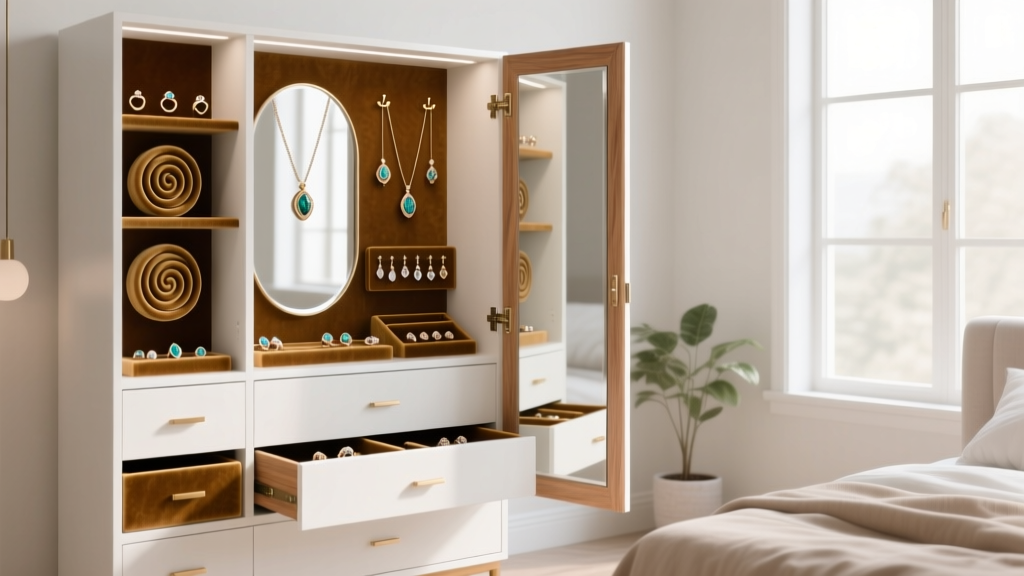
The Anatomy of Furniture-Grade Jewelry Storage
When transitioning from basic acrylic organizers to furniture-grade storage, collectors demand more than just aesthetic appeal; they require structural stability, chemical safety, and precise spatial ergonomics. The Hives Honey jewelry armoire has emerged as a benchmark in the mid-tier luxury storage market. But beneath the polished veneers and mirrored doors lies a complex assembly of engineered materials and hardware. In this expert deep dive, we deconstruct the technical specifications, material science, and microclimate management of these armoires to determine if they truly protect high-value pieces in 2026.
Material Science: MDF, Veneers, and Structural Integrity
Unlike solid hardwood, which is prone to warping and humidity-induced joint failure, modern furniture-grade armoires rely on engineered wood composites. Hives & Honey predominantly utilizes Medium Density Fiberboard (MDF) for the core cabinetry. From a structural standpoint, MDF offers superior dimensional stability. The fibers are compressed with synthetic resins under high heat, resulting in a dense, uniform panel that resists the seasonal expansion and contraction that plagues solid oak or pine.
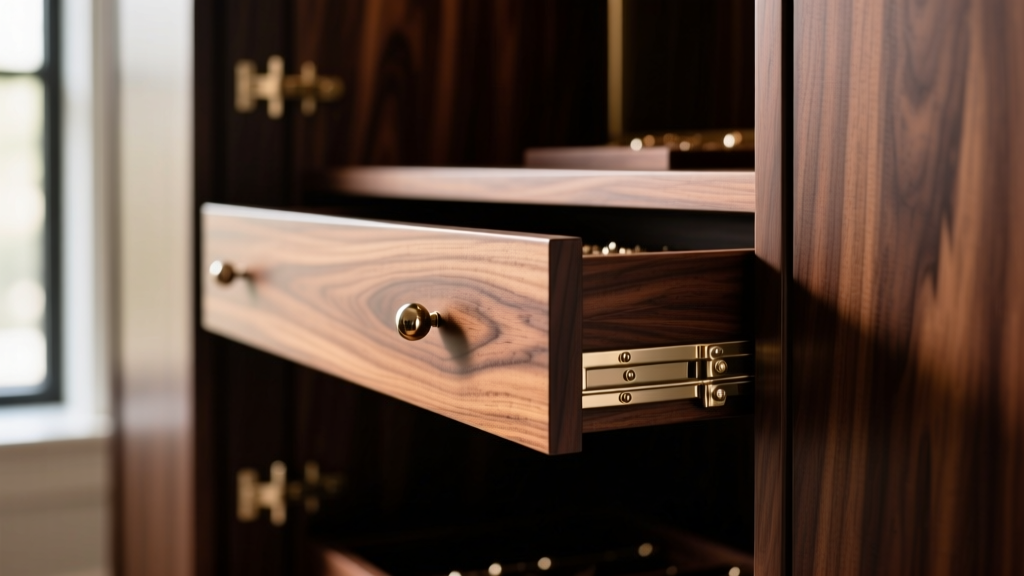
The exterior is finished with a wood veneer or a high-pressure laminate (HPL). Veneers in this price bracket typically measure between 0.6mm and 1.2mm in thickness, bonded to the MDF core using polyvinyl acetate (PVA) adhesives. A critical factor for jewelry storage is the off-gassing of volatile organic compounds (VOCs) and formaldehyde from these adhesives. As of 2026, reputable manufacturers adhere to CARB Phase 2 (California Air Resources Board) compliance, ensuring that formaldehyde emissions remain below 0.11 ppm. This is vital, as acidic off-gassing can accelerate the oxidation of copper alloys and porous gemstones like pearls and turquoise. Always verify the CARB Phase 2 certification label on the packaging before introducing sensitive antique pieces to a new armoire.
Interior Microclimates: Anti-Tarnish Linings and Flocking
The interior lining of a jewelry armoire dictates the chemical microclimate surrounding your metals. The standard lining found in most Hives Honey jewelry armoire models is a polyester-blend flannel, applied via an electrostatic flocking process or adhered as a pre-cut textile layer. While this material provides excellent cushioning to prevent micro-scratches on polished gold and platinum, it is inherently permeable to hydrogen sulfide and sulfur dioxide—the primary atmospheric culprits behind silver sulfide formation (tarnish).
Expert gemologists and conservators note that standard polyester flannel does not possess active anti-tarnish properties. To achieve true tarnish inhibition, linings must be treated with embedded zinc or silver particles (acting as sacrificial anodes) or woven with activated carbon. Because Hives & Honey prioritizes accessible luxury over specialized archival conservation, their standard flannel requires supplementation. For collectors storing sterling silver or untreated brass, we strongly recommend integrating 3M Anti-Tarnish Strips into the drawer compartments. These strips utilize copper-based particulate technology to absorb tarnish-causing gases, effectively creating a localized inert microclimate within the drawer.
Spatial Ergonomics: Evaluating the Layout
A beautiful armoire is useless if the internal geometry forces chains to tangle or ring bands to crush against one another. Evaluating the spatial ergonomics of the Hives Honey jewelry armoire lineup reveals a thoughtful, albeit standardized, approach to capacity planning. Ring rolls are typically spaced at 1.25 to 1.5 inches apart, which accommodates standard bands but can compress wide-signet rings or heavily pave-set cocktail rings. Necklace drops on the interior doors generally offer 7 to 8 inches of clearance, sufficient for standard 18-inch princess chains but inadequate for longer opera-length strands, which require a minimum 12-inch drop to prevent gravity-induced tangling of delicate box and snake chains.
Model Comparison: Capacity and Dimensions
| Model Name | Dimensions (W x D x H) | Core Material | Drawer Configuration | Estimated 2026 Price |
|---|---|---|---|---|
| The Morgan | 14.5' x 10.5' x 38' | CARB Phase 2 MDF | 7 Drawers, 2 Side Doors | $280 - $320 |
| The Bryn | 16' x 12' x 40' | CARB Phase 2 MDF | 9 Drawers, Flip-Top Mirror | $350 - $410 |
| The Tribecca | 15' x 11' x 36' | MDF with Pine Accents | 5 Drawers, Arched Top | $240 - $290 |
Data sourced from current retail specifications and Hives & Honey official product archives.
Hardware and Hinge Mechanics
The failure point of most mid-tier armoires is the hardware. Drawer glides must support the concentrated weight of dense metals; a single drawer holding 50 sterling silver rings can easily exceed 15 pounds. Hives & Honey utilizes side-mounted, ball-bearing drawer glides rated for approximately 35 pounds, ensuring smooth actuation even under maximum load. The inclusion of a felt-padded stopper mechanism prevents the drawer from over-extending and derailing, a common issue in cheaper friction-slide alternatives.
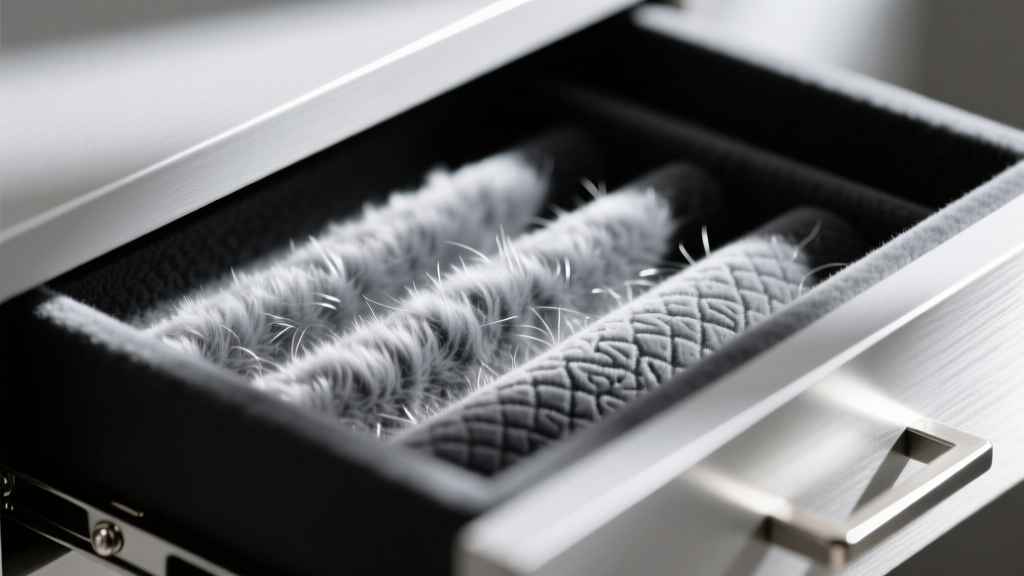
Mirror lids and side doors rely heavily on their hinge mechanics. Friction stays (the small metal arms that hold a lid open) are notorious for losing tension over time, leading to crushed fingers and shattered glass. Higher-end models in the Hives & Honey catalog have begun migrating toward dual-support steel lid stays and continuous piano hinges for side doors. Piano hinges distribute the mechanical stress evenly across the entire length of the door, preventing the wood-screw tear-out that plagues standard butt hinges. When inspecting your armoire upon delivery, ensure all hinge screws are driven into pilot holes and seated flush; protruding screw heads can easily snag and snap delicate filigree chains.
Maintenance and Long-Term Preservation
To maintain the structural and aesthetic integrity of your armoire, environmental control is paramount. Keep the unit away from direct HVAC vents and exterior walls where thermal bridging can cause localized humidity spikes. According to the Gemological Institute of America (GIA), extreme fluctuations in temperature and humidity can degrade the adhesives used in jewelry settings and damage organic gems like opals and amber. Wipe the exterior veneer with a slightly damp microfiber cloth—never use ammonia-based glass cleaners on the mirrors if they are mounted in wood frames, as the runoff can strip the polyurethane finish and cloud the silvering on the mirror backing.
Final Verdict: Is the Investment Justified?
The Hives Honey jewelry armoire represents a highly engineered compromise between mass-market accessibility and specialized archival storage. While it lacks the active anti-tarnish linings found in $2,000+ bespoke safes, its CARB Phase 2 compliant MDF core, robust ball-bearing glides, and intelligent spatial partitioning make it an exceptional choice for the serious enthusiast. By supplementing the interior with localized anti-tarnish strips and practicing mindful loading of the ring rolls and necklace drops, collectors can secure a museum-quality presentation and preservation environment at a fraction of the luxury cost.


