Indian Jewelry Box Care: Cleaning & Storing Heirloom Pieces
Learn expert tips for cleaning your Indian jewelry box, preserving velvet linings, and safely storing intricate Kundan, Meenakari, and Jadau heirlooms.

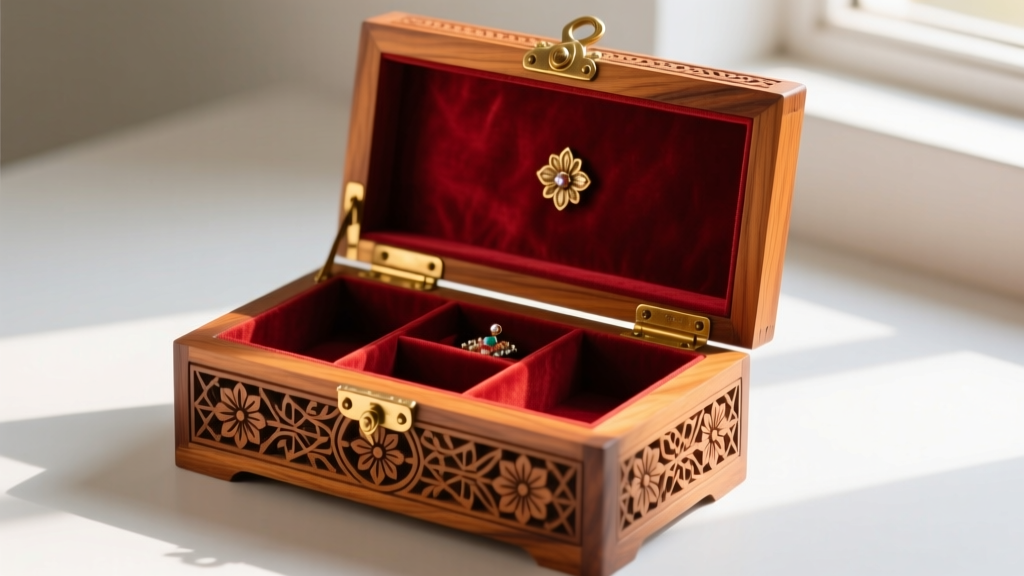
The Symbiosis of Heirloom Ornaments and Their Storage
Indian jewelry is renowned for its breathtaking complexity, heavy gold weight, and delicate embellishments like uncut diamonds (Polki), vitreous enamel (Meenakari), and gold foil settings (Jadau). However, the vessels we use to store these masterpieces—the traditional Indian jewelry box—are often heirlooms themselves. Crafted from dense hardwoods like Sheesham (Indian rosewood) or mango wood, and lined with plush textiles, these boxes require specialized maintenance. Neglecting the box inevitably leads to the degradation of the jewelry inside. In this comprehensive guide, we explore the precise care, maintenance, and cleaning protocols required to preserve both your Indian jewelry box and the priceless ornaments it safeguards.
Understanding Your Indian Jewelry Box Materials
Unlike mass-produced cardboard or plastic organizers, authentic Indian jewelry boxes are constructed from organic, reactive materials. Understanding these materials is the first step in preventing structural failure and cosmetic degradation.
Sheesham and Mango Wood Care
Sheesham wood is highly prized for its rich grain and durability, but it is susceptible to fluctuating humidity. When the ambient relative humidity drops below 35%, the wood can develop micro-fissures. Conversely, humidity above 65% can cause the wood to swell, leading to stuck drawers and warped lids. To maintain the wood's integrity, apply a high-quality, solvent-free beeswax paste every six months. Avoid silicone-based polishes, which create a non-porous barrier that traps moisture inside the wood fibers, eventually leading to rot.
Brass Hinge and Lock Maintenance
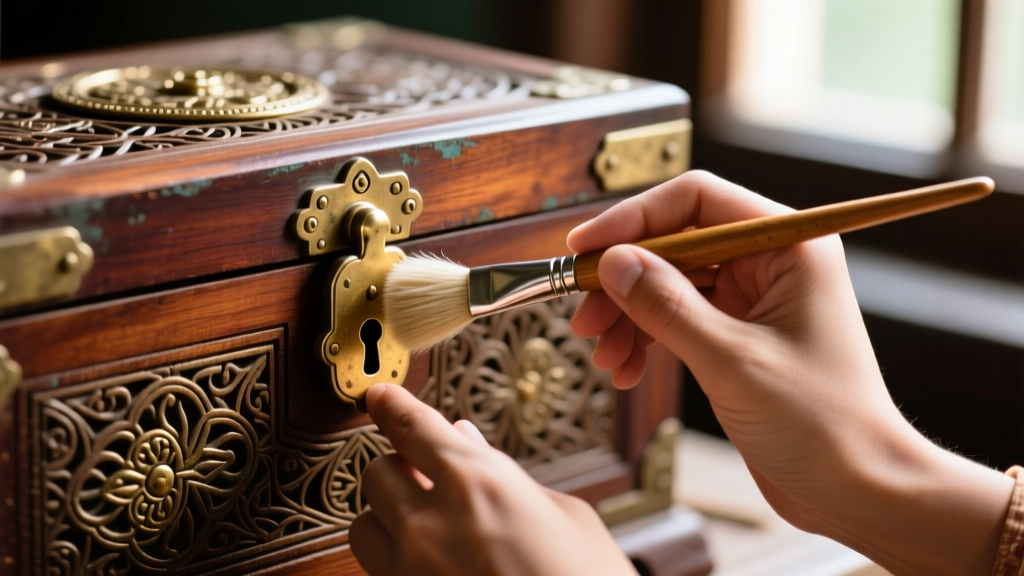
Traditional brass hardware is prone to oxidation, resulting in a dark, mottled patina. While some collectors appreciate this antique look, excessive tarnish can flake off onto velvet linings and delicate jewelry. Clean brass hardware using a mild paste of lemon juice and baking soda, applied with a cotton swab to avoid contacting the surrounding wood. Buff with a microfiber cloth until the natural luster returns.
Interior Upkeep: Preserving Velvet and Suede Linings
The interior lining of an Indian jewelry box is typically made of cotton velvet, silk, or suede. These textiles act as a buffer against scratches but are notorious for trapping dust, skin oils, and ambient moisture.
- Dust Removal: Never use a standard vacuum directly on the velvet, as the suction can pull the fabric away from its adhesive backing. Instead, use a HEPA-filter vacuum with a soft brush attachment on the lowest suction setting, or gently brush the lining with a clean, dry goat-hair makeup brush.
- Stain Treatment: Avoid liquid stain removers, which can cause the dyes to bleed and the underlying cardboard armature to warp. For localized oil stains, sprinkle a thin layer of cornstarch or talc-free baby powder over the spot. Let it sit for 24 hours to absorb the oils, then gently brush it away.
- Adhesive Failure: If the velvet begins to peel from the wooden or cardboard substrate, do not use superglue (cyanoacrylate), which dries hard and brittle. Use a flexible, acid-free fabric glue, applying it sparingly with a toothpick to prevent seepage.
Storing Intricate Indian Jewelry Safely
The way you place jewelry inside the box is just as critical as the box's condition. According to conservation guidelines from the Victoria and Albert Museum, improper storage is a leading cause of mechanical damage to historic ornaments. Different Indian jewelry styles demand distinct storage strategies.
Jadau and Polki (Foil-Backed Uncut Diamonds)
Jadau and Polki jewelry feature uncut diamonds set in 22k or 24k gold, backed by varak (ultra-thin silver or gold foil) to enhance brilliance. This foil is highly porous and reacts violently to moisture and sulfur, turning irreversibly black. Before placing Jadau pieces in your Indian jewelry box, wrap them in acid-free tissue paper and seal them in airtight, anti-tarnish ziplock bags. Never store them loose in a velvet compartment where ambient humidity can penetrate.
Meenakari (Vitreous Enamel Work)
Meenakari involves fusing colored glass powder to metal. While visually stunning, enamel is essentially glass and will chip or crack if subjected to hard impacts. Store Meenakari bangles and pendants in individual, soft suede pouches before placing them in the box's partitioned slots to prevent them from knocking against heavy gold chains or gemstones.
Temple Jewelry and Heavy Gold Chains
Traditional South Indian Temple jewelry is exceptionally heavy. Hanging heavy gold necklaces on standard box hooks can stress the links, causing them to stretch or snap under their own weight over time. Instead, lay heavy chains flat in the widest, deepest compartment of the box, coiling them loosely in a figure-eight pattern to prevent kinking.
| Jewelry Type | Primary Vulnerability | Ideal Box Compartment | Prep Before Storage |
|---|---|---|---|
| Jadau / Polki | Moisture-induced foil oxidation | Deep drawer with silica gel | Seal in anti-tarnish ziplock bag |
| Meenakari | Enamel chipping from impact | Individual partitioned slots | Wrap in soft suede or flannel pouch |
| Temple Jewelry | Link stretching / structural stress | Wide, flat base compartment | Coil in figure-eight, lay flat |
| Kundan | Wax/lac setting dislodgement | Temperature-stable drawer | Cushion with acid-free tissue |
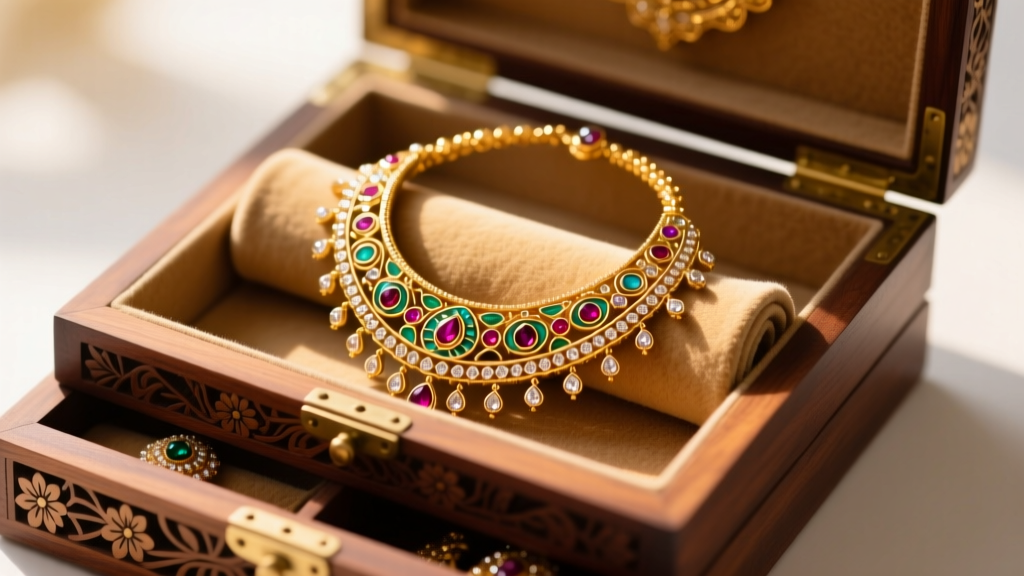
Environmental Controls: Humidity and Anti-Tarnish Tactics
The microclimate inside your Indian jewelry box dictates the longevity of both the wood and the metals. The Gemological Institute of America (GIA) emphasizes that controlling the storage environment is paramount for preserving sensitive gemstone settings and precious metals.
Desiccants vs. Activated Charcoal
While silica gel packets are the industry standard for moisture control, they do nothing to neutralize volatile organic compounds (VOCs) or odors that can tarnish silver and degrade adhesives. For superior protection, place small, breathable muslin bags filled with activated bamboo charcoal in the corners of your box. Charcoal absorbs both excess moisture and airborne sulfur compounds. Replace or sun-dry the charcoal bags every three months to recharge them.
UV and Thermal Protection
Never place your Indian jewelry box in direct sunlight or near HVAC vents. UV radiation will rapidly fade the vibrant velvet linings and cause the Sheesham wood's natural oils to dry out, leading to cracking. Maintain a stable room temperature between 65°F and 72°F (18°C - 22°C) to prevent the lacquer and wax settings in Kundan jewelry from softening or becoming brittle.
Troubleshooting Common Indian Jewelry Box Issues
Even with meticulous care, vintage and antique Indian jewelry boxes may develop mechanical quirks. Here is how to address them without causing further damage:
- Stuck Drawers: Swelling from humidity is the usual culprit. Remove the drawer and rub a block of paraffin wax or a dry bar of soap along the wooden runners. Never force the drawer shut, as this can snap the internal wooden joints.
- Musty Odors: A musty smell indicates mildew spores in the velvet or wood. Empty the box completely. Wipe the bare wood interiors with a cloth lightly dampened with white vinegar, then let it air dry in a shaded, well-ventilated area for 48 hours. Place bowls of dry coffee grounds inside the closed box for a week to absorb residual odors.
- Loose Brass Inlays: If decorative brass wire inlays on the exterior begin to lift, secure them using a two-part clear epoxy resin. Mask the surrounding wood with painter's tape to prevent the epoxy from staining the Sheesham grain.
Step-by-Step Deep Cleaning Schedule
To maintain your Indian jewelry box in pristine condition, adhere to this seasonal maintenance schedule:
Quarterly Routine (Every 3 Months)
- Empty all compartments and inspect jewelry for early signs of tarnish or loose stones.
- Vacuum velvet linings using a HEPA brush attachment.
- Wipe down the exterior wood with a dry microfiber cloth to remove surface dust.
- Recharge or replace activated charcoal and silica gel packets.
Annual Routine (Every 12 Months)
- Clean brass hinges and locks with a lemon-baking soda paste, ensuring no moisture touches the wood.
- Apply a thin, even coat of solvent-free beeswax to the exterior wood and bare interior wood surfaces. Buff to a gentle sheen.
- Inspect all internal hinges and drawer runners; apply a microscopic drop of synthetic clock oil to moving metal joints to prevent friction wear.
"An Indian jewelry box is not merely a container; it is the first line of defense for your heritage. Treat the wood, brass, and velvet with the same reverence you afford the gold and diamonds it cradles, and it will protect your legacy for generations."
By integrating these specialized care techniques into your routine, you ensure that your Indian jewelry box remains a functional, beautiful sanctuary for your most treasured heirlooms, preserving their intricate artistry and historical value for the future.


