The Ultimate James Avery Jewelry Box Buying Guide & Care Tips
Discover how to choose, authenticate, and care for a genuine James Avery jewelry box to protect your sterling silver and charm collections.

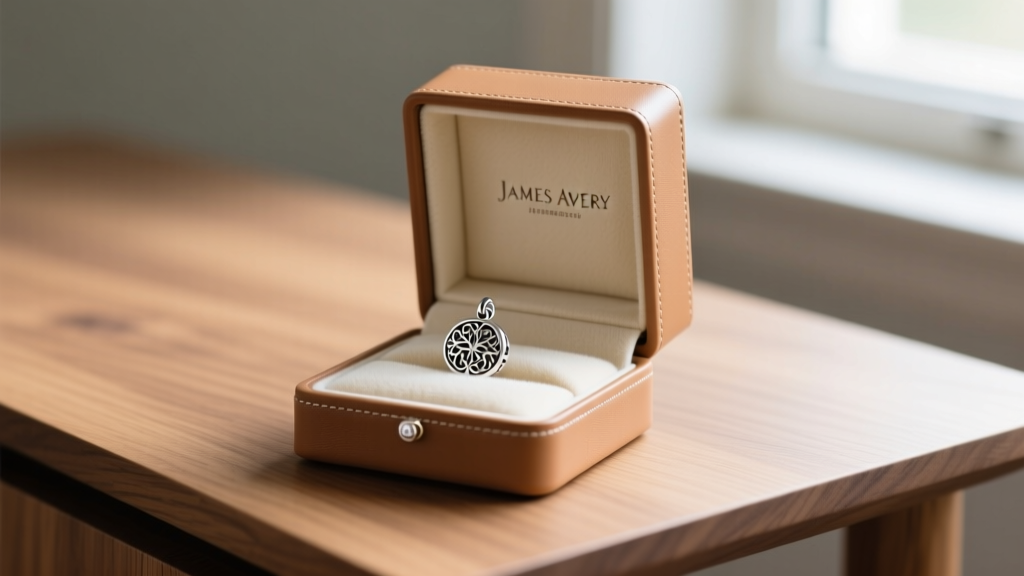
The Legacy of Avery Storage: More Than Just a Presentation Case
For collectors and everyday wearers alike, a James Avery jewelry box is far more than a simple retail receptacle. It is a meticulously engineered micro-environment designed to protect the brand’s iconic 925 sterling silver, 14k gold, and gemstone pieces from the ravages of oxidation and physical abrasion. Whether you are purchasing a new presentation box from a boutique, hunting for a vintage collector's chest on the secondary market, or simply looking to upgrade your current storage, understanding the specific material grades and anti-tarnish technologies used in these boxes is critical.
Sterling silver is particularly vulnerable to hydrogen sulfide and high humidity, which cause rapid tarnishing. According to The Silver Institute, proper storage in treated environments can reduce tarnish buildup by up to 80% compared to open-air display. This buying guide will walk you through the exact specifications, authentication markers, and sizing frameworks you need to make an informed purchase in 2026.
The Science of Silver Storage: Why Authentic Avery Boxes Excel
The interior of a genuine James Avery jewelry box is not lined with standard cotton or decorative polyester. Authentic modern boxes utilize a specialized, chemically treated flannel or velvet-equivalent fabric. This material is often embedded with microscopic silver or zinc particles that act as a sacrificial barrier. These particles oxidize in place of your jewelry, effectively absorbing the sulfur compounds in the air before they can reach your sterling silver charm bracelets or cross pendants.
Furthermore, the adhesives used to bind the interior fabric to the cardboard or wood core are strictly acid-free. Cheap, mass-market jewelry boxes often use acidic glues that off-gas volatile organic compounds (VOCs), which can cause permanent pitting or yellowing on delicate pearls and porous gemstones like turquoise—a staple in many vintage Avery designs. When investing in a James Avery box, you are paying for a chemically neutral, pH-balanced vault that meets the rigorous archival standards outlined in the official James Avery Jewelry Care Guide.
Authentic vs. Replica: How to Spot a Genuine Avery Box
Because of the brand's prestige, the secondary market is flooded with counterfeit or "inspired" boxes. Distinguishing a genuine article requires a close inspection of three primary elements: the exterior logo, the hinge hardware, and the interior tag.
1. Logo Evolution and Stamping
Vintage boxes (pre-2015) typically feature a dark brown leatherette exterior with a gold-foil stamped cursive logo or the classic "A" inside a shield. Modern 2026 iterations have shifted toward sustainable, lighter tan polyurethane with a blind-debossed shield logo. Counterfeits often use poorly aligned foil stamping that flakes easily, whereas authentic blind debossing is crisp, deep, and perfectly centered.
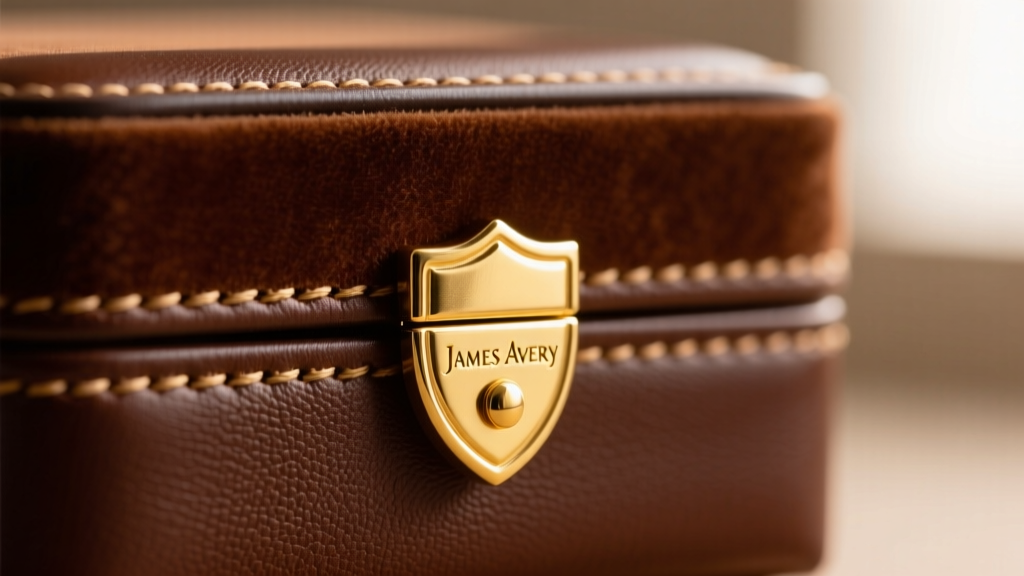
2. Hinge Hardware and Stitching
Authentic boxes utilize heavy-duty, rust-resistant brass or nickel-plated piano hinges on larger chests, and concealed, high-tension friction hinges on smaller ring boxes. The exterior stitching on genuine polyurethane leatherette is done with waxed, heavy-gauge polyester thread, featuring exactly 8 to 10 stitches per inch. Replicas often use thin cotton thread that frays within months of regular use.
3. The Interior Tarnish Test
Run your fingers across the interior fabric. A genuine anti-tarnish flannel feels slightly dense and matte, almost like a high-quality billiard cloth. If the interior is shiny, slippery, or feels like cheap satin, it is likely a replica that will trap moisture against your silver, accelerating corrosion rather than preventing it.
Sizing Guide: Matching Your Collection to the Right Configuration
James Avery produces a wide variety of box configurations. Storing a heavy, multi-charm bangle in a shallow ring box will result in severe scratching and bent lobster clasps. Use the framework below to select the correct footprint for your specific pieces.
| Box Style | Approx. Dimensions | Best Use Case | Internal Layout |
|---|---|---|---|
| Classic Ring Box | 2.2" x 2.2" x 1.5" | Single bands, signet rings, small stud earrings | Single center velvet slit |
| Hinged Bracelet Vault | 4.5" x 4.5" x 1.2" | Charm bracelets, bangles, chain link cuffs | Wide, flat padded bed with corner tucks |
| Pendant & Cross Case | 3.5" x 5.0" x 1.0" | Large oxidized silver crosses, lariats | Deep drop-well to protect bail and chain |
| Collector's Multi-Tier | 10.0" x 8.0" x 6.0" | Full collections, mixed metals, watches | Modular dividers, ring rolls, deep drawers |
For heavy charm bracelets, the Hinged Bracelet Vault is non-negotiable. The flat bed ensures that the weight of the silver charms does not pull the chain taut, which can warp the links over time. If you collect large, intricate crosses (like the iconic 3-inch Trinity Cross), standard pendant boxes will force the chain to kink; always opt for a case with a deep drop-well.
Material Evolution: 2026 Sustainability Standards
In recent years, James Avery has overhauled its packaging and storage materials to align with modern environmental standards. The traditional PVC-based leatherette has been replaced by a high-durability, water-based polyurethane (PU) that mimics the grain of genuine leather without the ecological footprint. The structural cores of the boxes are now constructed from 100% post-consumer recycled, FSC-certified cardboard, providing the same rigid crush-resistance as older wood-composite cores but at a fraction of the environmental cost.
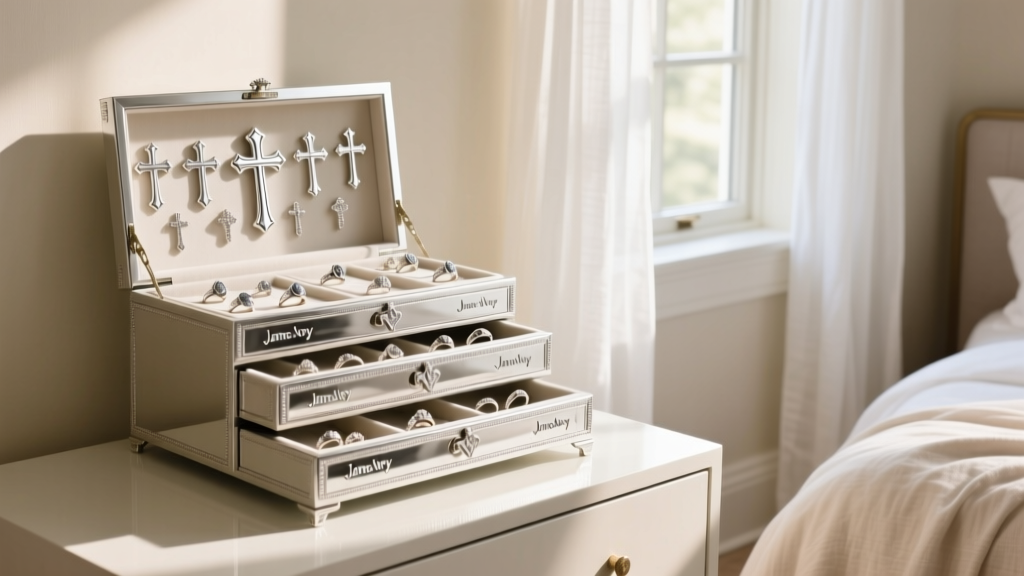
This shift means that newer boxes are slightly lighter, yet they maintain the structural integrity required to protect jewelry during travel or long-term vault storage. When buying on the secondary market, you can often date a box by its weight and exterior texture; the pre-2020 PVC boxes feel heavier and slightly more "plastic" to the touch compared to the modern, matte-finish PU alternatives.
Caring for Your James Avery Storage Solutions
To maintain the anti-tarnish efficacy of your box, you must treat the interior fabric with care. Follow these strict maintenance rules:
- Never Wash the Interior: Water and laundry detergents will strip the sacrificial anti-tarnish nanoparticles from the flannel. If the fabric becomes soiled, use a soft, dry brush to gently lift dust and debris.
- Avoid Direct UV Exposure: Prolonged sunlight will not only fade the tan or brown polyurethane exterior but can also degrade the chemical bonds in the interior anti-tarnish treatment.
- Recharge with Anti-Tarnish Strips:While the fabric is highly effective, its absorption capacity is finite. For long-term storage (over 12 months), slip a 3M anti-tarnish strip into the corner of the box to extend the life of the interior cloth.
- Keep Liquids Away: Never store jewelry that is still wet from cleaning solutions or swimming pool water. Moisture trapped inside a closed box will cause rapid, localized tarnishing that the fabric cannot absorb fast enough.
Sourcing Guide: Boutiques vs. The Secondary Market
If you are buying directly from a James Avery boutique or their official online store, you are guaranteed an authentic, current-generation box with full anti-tarnish properties. However, many collectors seek out vintage boxes to match their vintage jewelry, or simply to save money.
Pro-Tip for Secondary Market Buyers: When purchasing a James Avery jewelry box on platforms like Poshmark, eBay, or Etsy, always ask the seller if the box has been stored in a smoke-free and pet-free environment. Polyurethane leatherette and untreated fabric interiors are highly porous and will permanently absorb cigarette smoke and pet odors, which can transfer to your jewelry and degrade the metal over time.
Expect to pay between $15 and $25 for authentic, empty standard presentation boxes on the secondary market, while large, multi-tiered wooden collector's chests can command upwards of $150 to $300 depending on the condition of the velvet and the functionality of the brass hardware. Always request close-up photos of the interior fabric and the hinge stamps before finalizing your purchase to ensure you are getting a genuine piece of Avery history.


