Finding a Jewelry Box Antique: A Beginner's Guide to Safe Storage
Learn how to safely buy, restore, and use a jewelry box antique. Discover material risks, lining replacements, and expert storage tips.

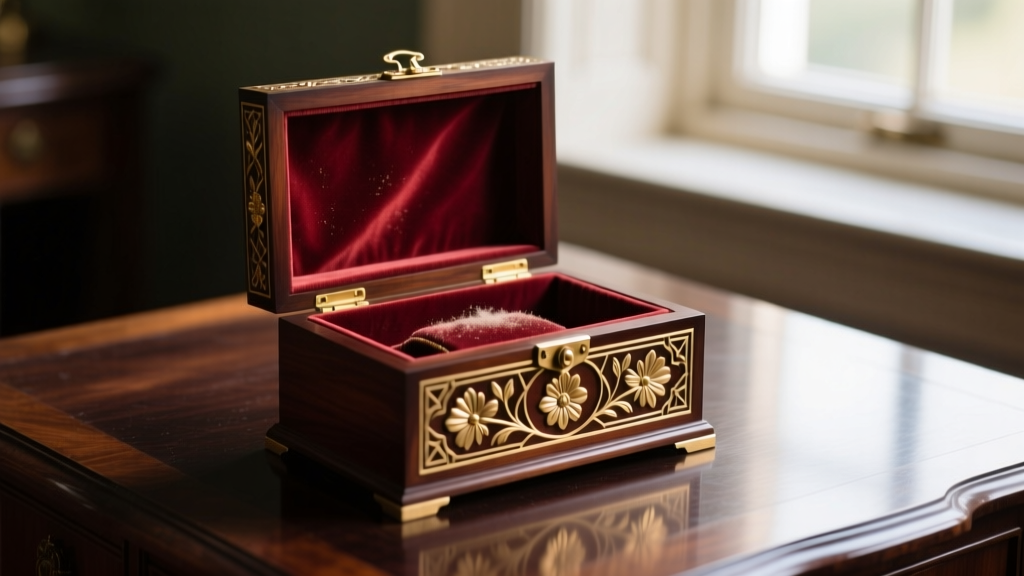
There is an undeniable romance in storing your modern heirlooms inside a vintage vessel. The craftsmanship, the rich patina of aged wood, and the intricate brass hardware of a genuine jewelry box antique offer a level of character that mass-produced modern acrylic or PU-leather organizers simply cannot match. However, transitioning from a modern, climate-controlled jewelry roll to a 19th-century wooden chest requires a fundamental understanding of material chemistry. What looks like a beautiful sanctuary for your sterling silver and porous gemstones can actually be a trap for acidic off-gassing, moisture retention, and accelerated tarnish.
This beginner-friendly explainer will walk you through the exact inspection points, material risks, and restoration steps required to safely use vintage storage. By the end of this guide, you will know exactly how to evaluate a piece, what to pay for it, and how to retrofit it for 2026 jewelry care standards without destroying its historical value.
The Hidden Dangers: What to Inspect Before Buying
When hunting for a jewelry box antique at estate sales or online auctions, the exterior mahogany or walnut veneer is only half the story. The interior environment is what dictates whether your jewelry will survive or degrade. According to conservation guidelines from the Smithsonian Institution, silver tarnish is primarily caused by hydrogen sulfide and high humidity—both of which can be trapped or generated by degrading antique materials.
The 'Shattered Silk' Phenomenon
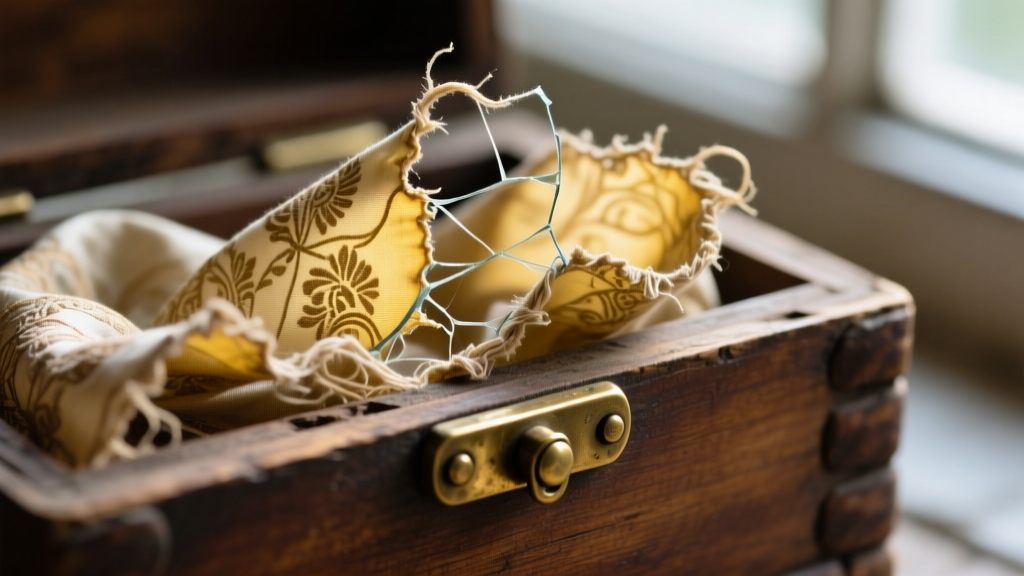
Many Victorian and Edwardian boxes feature interiors lined with silk. Over the decades, the metallic salts used to 'weight' the silk in the 19th and early 20th centuries cause the fibers to become highly acidic and physically brittle, a condition conservators call 'shattered silk.' As the pH drops below 5.0, the lining begins to emit acidic vapors that can etch soft metals, degrade pearl nacre, and corrode copper alloys.
Wood Off-Gassing and Varnish Risks
Not all antique woods are safe for jewelry. Oak, for example, naturally emits acetic acid as it ages. If an antique oak box was sealed with early 20th-century shellac or certain oil-based varnishes, those finishes can off-gas volatile organic compounds (VOCs) in enclosed spaces, leading to rapid silver sulfide formation (black tarnish) on your sterling pieces. Always look for boxes made from stable, low-acid woods like mahogany, walnut, or cedar, provided the original finish has fully cured or been professionally stabilized.
Material Compatibility Matrix
Before placing your jewelry into a vintage piece, cross-reference the box's materials with the chart below. The Gemological Institute of America (GIA) emphasizes that porous gems like opals, turquoise, and pearls are exceptionally vulnerable to the micro-climates created by unventilated antique drawers.
| Box Material / Lining | Risk Level | Best For Storing | Avoid Storing |
|---|---|---|---|
| Original 19th-C. Silk | High (Acidic) | Nothing (Replace immediately) | Pearls, Silver, Gold-plate |
| Aged Cotton Velvet | Medium (Traps Dust) | Hard gemstones (Diamonds, Sapphires) | Intricate filigree, Prong-set stones |
| Sealed Mahogany/Walnut | Low | Gold, Platinum, Costume Jewelry | Unsealed silver (if varnish is degrading) |
| Untreated Oak | High (Acetic Acid) | None | All Silver, Copper, Brass, Pearls |
| Modern Pacific Cloth | None (Protective) | Sterling Silver, Fine Gold, Opals | N/A |
Step-by-Step Beginner Restoration
You do not need to be a master conservator to make a jewelry box antique safe for daily use. The goal is to stabilize the exterior and neutralize the interior without stripping the historical patina. Avoid harsh chemical polishes or sanding, which will instantly destroy the piece's financial and aesthetic value.
Step 1: Exterior Stabilization
Dust the exterior with a clean, lint-free microfiber cloth. To protect the original wood finish and provide a barrier against ambient humidity, apply a thin layer of microcrystalline wax (such as Renaissance Wax). Unlike carnauba or beeswax, microcrystalline wax is pH-neutral, will not yellow over time, and provides a stable, non-off-gassing seal. Apply with a soft cotton cloth, let it haze for 15 minutes, and gently buff.
Step 2: Removing the Acidic Lining
If the box contains shattered silk or degrading velvet, it must be removed. Use a plastic spudger or a dull bamboo skewer to gently lift the edges of the fabric. Antique linings were often glued down with animal hide glue or early starch pastes. If the glue resists, lightly dampen a cotton swab with distilled water to soften the adhesive—never use chemical solvents like acetone or Goo Gone, as they will bleed into the raw wood and ruin the interior.
Step 3: Installing an Anti-Tarnish Barrier
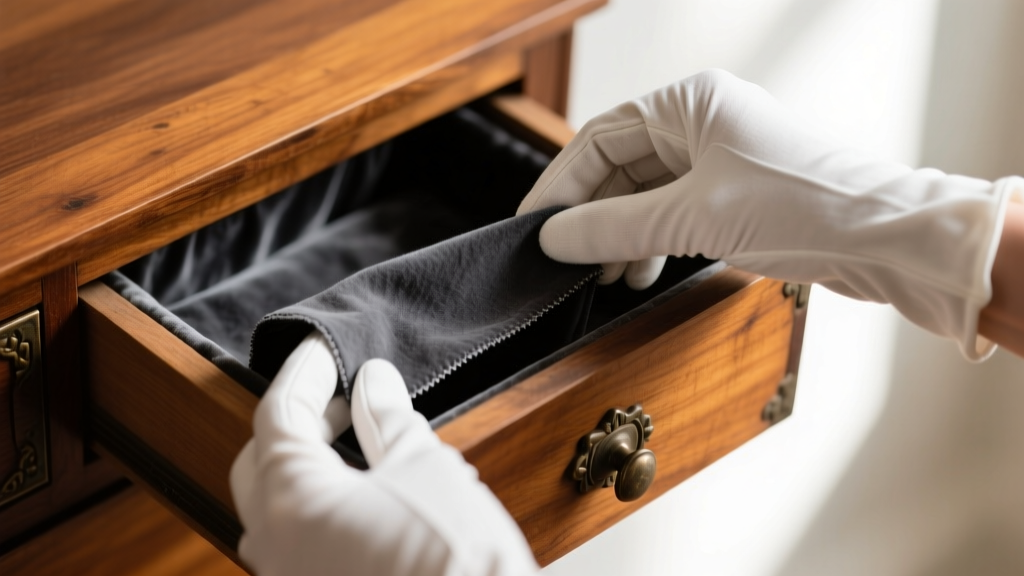
Once the drawer or lid is bare, line it with an archival-quality, acid-free barrier. The gold standard for silver storage is Pacific Silvercloth, a 100% cotton flannel embedded with microscopic silver particles that intercept and absorb hydrogen sulfide gases before they reach your jewelry. Cut the cloth to size using pinking shears to prevent fraying, and adhere it to the wood using a pH-neutral, archival PVA glue (like Lineco Neutral pH Adhesive). Allow it to cure for 48 hours in a well-ventilated room before introducing any jewelry.
Market Pricing: What Should You Actually Pay?
The market for antique jewelry boxes is highly variable, driven by era, provenance, and condition. Here is a realistic pricing framework for the current market to help you avoid overpaying for damaged goods.
- Victorian (1837–1901): Characterized by burl wood veneers, mother-of-pearl inlay, and brass cartouches. Expect to pay $150 to $500 for pieces in good structural condition. Beware of 'restored' pieces where modern synthetic velvet has been poorly glued over original silk.
- Art Deco (1920s–1930s): Features geometric lines, macassar ebony, bakelite handles, and mirrored interiors. Prices range from $80 to $300. Check the mirrors for 'desilvering' (black edges), which is common but doesn't affect jewelry safety.
- Mid-Century Modern (1950s–1960s): Often made of teak or rosewood with clean lines and brass pulls. These are highly functional and usually priced between $40 and $150. The linings in these are often early synthetic felts, which are generally safe but prone to trapping dust.
Daily Usage Rules for Antique Pieces
Even after a proper restoration, a jewelry box antique requires specific environmental management to function safely in a modern home.
- Control the Micro-Climate: Never store an antique wooden box in a bathroom or near a humidifier. Wood expands and contracts with humidity swings, which can warp drawers and crack veneers. Maintain a room humidity level between 40% and 50%.
- Use Silica Gel Strategically: If you live in a high-humidity environment, place a small, rechargeable silica gel desiccant canister in the bottom drawer. Crucial rule: Never let the desiccant touch your jewelry or the wood directly; keep it in a small breathable cotton pouch.
- Avoid Overcrowding: Antique compartments were designed for the jewelry of their era—brooches, pocket watches, and single-strand pearls. Modern jewelry, with its long layered chains and oversized hoop earrings, will tangle and scratch if forced into tiny Victorian ring rolls. Use the compartments for sorting, but rely on modern anti-tarnish zip bags for oversized items stored within the box.
'An antique jewelry box is not just a container; it is a micro-environment. By understanding the chemistry of its materials, you transform it from a beautiful liability into a secure, historical vault for your most prized possessions.'
By approaching your purchase with a critical eye and taking the time to retrofit the interior with modern conservation materials, you can enjoy the beauty of a jewelry box antique while ensuring your collection remains pristine for generations to come.


