Jewelry Box Dimensions: How Material Properties Dictate Size
Discover how material properties dictate true jewelry box dimensions. Compare wood, acrylic, and metal to maximize your internal storage volume.

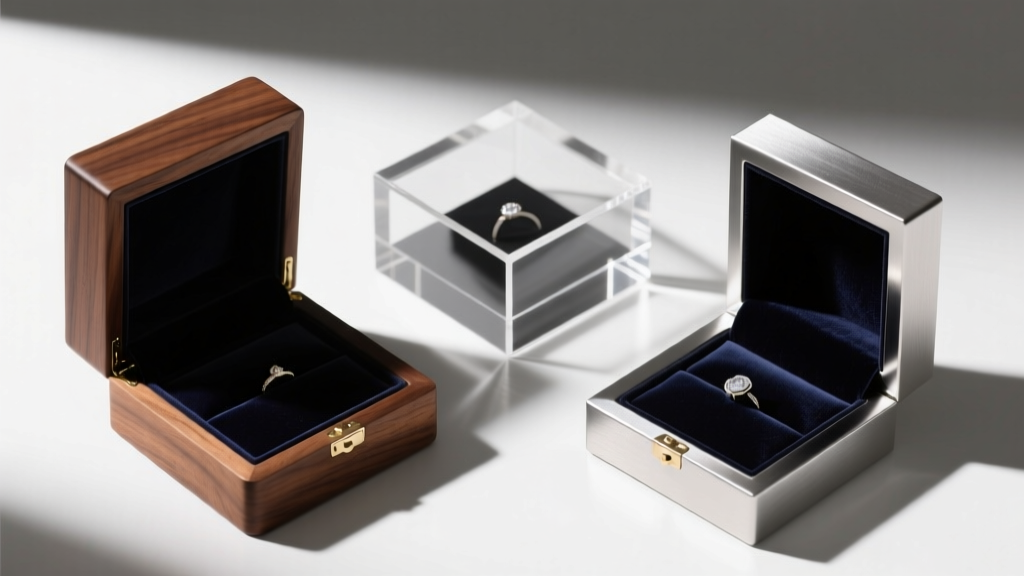
The Hidden Link Between Material and Dimension
When shopping for luxury jewelry storage, most collectors focus on external measurements. A box listed as 12 inches by 10 inches seems like it offers ample space for a growing collection of gemstone rings, layered necklaces, and statement cuffs. However, external measurements are often deceptive. The true usable capacity of any organizer is dictated by its structural material. In 2026, as jewelry collections become more diverse and valuable, understanding the relationship between material properties and internal volume is critical for serious collectors. The structural demands of solid hardwood, cast acrylic, and aerospace-grade aluminum fundamentally alter the internal geometry of the box. A 12-inch wooden box and a 12-inch acrylic box will yield drastically different internal footprints due to wall thickness, corner joinery, and framing requirements. This guide breaks down the material science behind jewelry box dimensions, helping you calculate true usable space and select the right storage medium for your specific collection.
Solid Hardwoods: The Thick-Wall Tradition
Hardwoods like Black Walnut, Honduran Mahogany, and Cherry are the traditional gold standard for heirloom jewelry boxes. However, their structural properties demand significant dimensional sacrifices. According to data from The Wood Database, solid hardwoods require substantial thickness to prevent warping, cupping, and splitting over decades of use. A high-quality wooden jewelry box typically features wall thicknesses ranging from 3/8 inch (9.5mm) to 1/2 inch (12.7mm). While this provides a satisfying heft and excellent acoustic dampening when closing the lid, it immediately reduces the internal width and depth by nearly an inch compared to the exterior footprint.
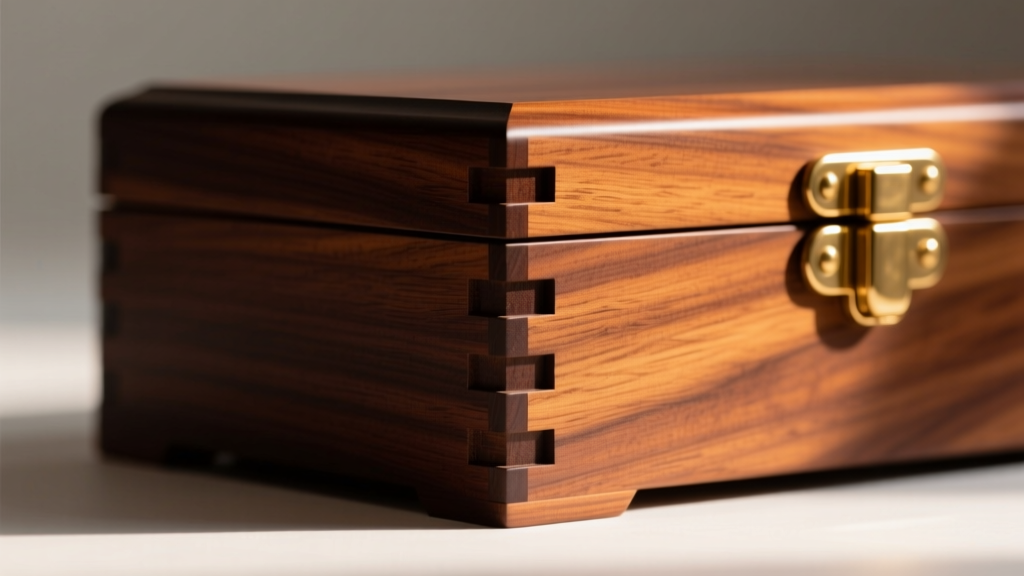
The dimensional loss is most severe at the corners. Premium wooden boxes utilize traditional joinery methods like dovetail or box joints to ensure longevity. A hand-cut dovetail joint requires extra material at the corners, often creating a solid block of wood up to 3/4 inch thick at the intersection of the walls. This means the internal corner space is entirely dead zone, unusable for storing rigid items like bangle bracelets or watch boxes. Furthermore, hardwoods are susceptible to environmental humidity. To prevent the lid from binding during high-humidity summer months, craftsmen must leave a 1/16-inch tolerance gap around the lid perimeter, slightly altering the internal tray dimensions. When calculating usable space in a wooden box, you must subtract the wall thickness, the joinery bulk, and the lining thickness (usually 2mm to 3mm of suede or velvet over a felt underlay) from the external measurements.
Cast Acrylic and Polycarbonate: Maximizing Internal Volume
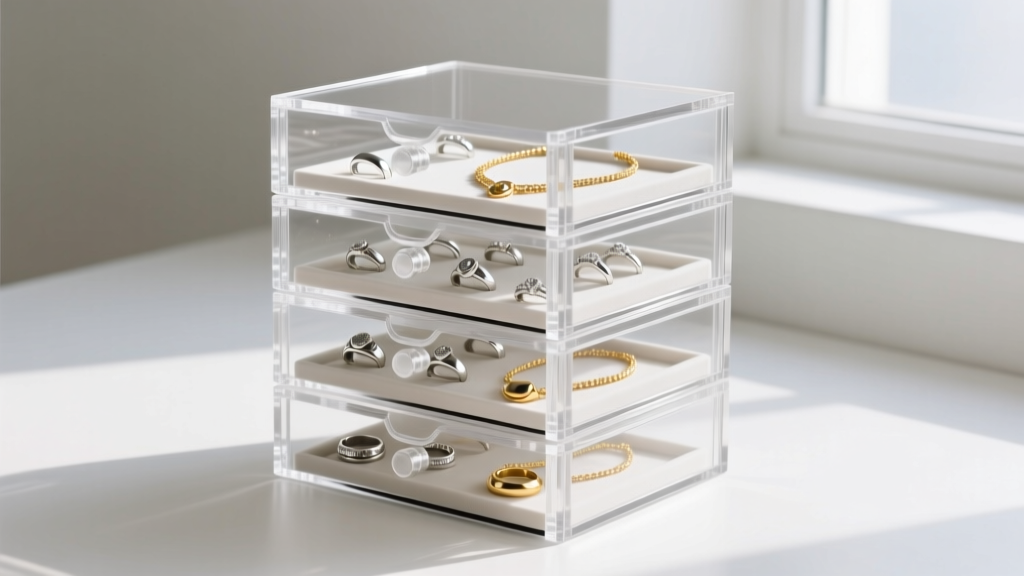
For collectors who prioritize maximum visibility and internal volume efficiency, cast acrylic (PMMA) is the superior modern choice. Unlike wood, acrylic possesses immense tensile strength even at minimal thicknesses. High-end modular acrylic organizers utilize 4mm to 5mm (approximately 3/16 inch) thick cast acrylic panels. Because the panels are joined using solvent welding rather than mechanical interlocking joints, the corner bulk is virtually non-existent. The internal dimensions of an acrylic drawer are typically only 8mm to 10mm smaller than the external dimensions in both width and depth.
This material property allows for a highly efficient, grid-like internal layout. Acrylic does not require internal framing or thick baseboards to maintain structural rigidity, meaning the entire depth of the drawer can be utilized for stacking jewelry inserts or housing tall items like pearl tiaras and elaborate chandelier earrings. However, acrylic has its own dimensional limitations regarding height. Because 5mm acrylic can bow under heavy lateral pressure, wide drawers (exceeding 14 inches in width) require a central acrylic divider or a thicker 8mm baseplate to prevent sagging over time. Therefore, while acrylic maximizes horizontal footprint efficiency, it dictates a modular, compartmentalized approach to vertical space.
Metals and Alloys: Gauge Thickness and Weight Ratios
Metal jewelry boxes, particularly those crafted from aluminum or stainless steel, offer a sleek, industrial aesthetic and unparalleled security. The dimensions of metal boxes are governed by sheet metal gauge standards. A premium aluminum travel case or desktop vault typically uses 20-gauge to 22-gauge aluminum, which translates to a wall thickness of just 0.032 inches to 0.025 inches (roughly 0.8mm to 0.64mm). On paper, metal offers the thinnest walls of any material, theoretically providing the highest internal-to-external volume ratio.
However, thin sheet metal lacks inherent rigidity and is prone to denting and flexing. To compensate, manufacturers must incorporate structural reinforcements that silently consume internal space. These include corrugated inner panels, welded corner gussets, and recessed channels for sliding trays. A metal box with an external width of 10 inches might feature internal walls lined with a 1/4-inch structural foam or a secondary thin-metal sleeve to prevent the exterior from telegraphing the shape of the internal trays. Additionally, metal is a highly conductive material. To protect jewelry from rapid temperature fluctuations and condensation—which can accelerate tarnishing on sterling silver—metal boxes require thicker internal insulation and plush linings, often eating up an additional 4mm to 5mm of internal depth compared to a wooden box.
The Usable Volume Formula: A Decision Framework
To stop guessing and start measuring like a professional organizer, apply the Usable Volume Formula when evaluating potential purchases. This framework helps you translate external marketing dimensions into real-world storage capacity.
| Material Type | Avg. Wall Thickness | Corner/Frame Bulk | Internal Volume Efficiency |
|---|---|---|---|
| Solid Hardwood | 3/8' to 1/2' | High (Dovetail joints) | 75% - 82% |
| Cast Acrylic | 4mm to 5mm | None (Solvent welded) | 92% - 96% |
| Aluminum (22ga) | 0.64mm | Medium (Internal ribbing) | 85% - 89% |
| MDF / Leather Wrap | 1/4' to 3/8' | Low (Mitered glue joints) | 88% - 91% |
How to calculate: Take the external length and width, and subtract double the wall thickness. Then, subtract an additional 1/2 inch from both dimensions if the box features traditional wooden joinery or internal metal framing. Finally, account for the lining. A standard anti-tarnish velvet lining adds roughly 2mm per side. According to organization experts featured in Architectural Digest, mapping out your internal grid before purchasing is the single most effective way to avoid buying a box that looks large on the outside but feels cramped on the inside.
Material Off-Gassing and Tarnish Prevention
Dimensions are not just about physical space; they are also about the chemical environment inside the box. The Gemological Institute of America (GIA) notes that improper storage materials can cause severe tarnishing and degradation of precious metals and porous gemstones. Solid woods, particularly Oak and certain unsealed Mahoganies, naturally emit acidic vapors (off-gassing) as they age. If a wooden box is not properly sealed with a polyurethane or lacquer barrier, these vapors will tarnish silver and copper alloys rapidly.
To combat this, high-end wooden boxes require an internal barrier layer—often a sheet of acid-free archival paper or a specialized foil laminate—installed between the wood and the velvet lining. This barrier layer requires physical space, further reducing the internal depth of the box by 1mm to 2mm. Acrylic and properly powder-coated metals, on the other hand, are chemically inert and do not off-gas, meaning they do not require these bulky barrier layers, preserving every millimeter of internal depth for your jewelry. When storing highly reactive pieces like oxidized silver or raw turquoise, the inert properties of acrylic or sealed metal make them dimensionally and chemically superior to raw wood.
Conclusion: Choosing Your Ideal Dimensions
Ultimately, the perfect jewelry box dimensions depend entirely on the material you choose and the specific needs of your collection. If you value heirloom aesthetics, acoustic warmth, and traditional craftsmanship, solid hardwood is unmatched, but you must purchase a box with external dimensions at least 15% larger than your calculated storage needs to account for thick walls and joinery. If your priority is maximizing every square inch of drawer space, achieving a modern gallery-like display, and utilizing modular stacking systems, 5mm cast acrylic provides the highest internal volume efficiency. By understanding the structural and chemical properties of these materials, you can look past the external tape measurements and select a storage solution that truly protects and accommodates your most prized possessions.


