The Jewelry Box Mid Century Collector Guide: Wood, Joinery, Linings
Discover how to authenticate, evaluate, and restore a jewelry box. Mid century construction, wood types, and anti-tarnish lining tips for collectors.

The Anatomy of Mid-Century Jewelry Storage
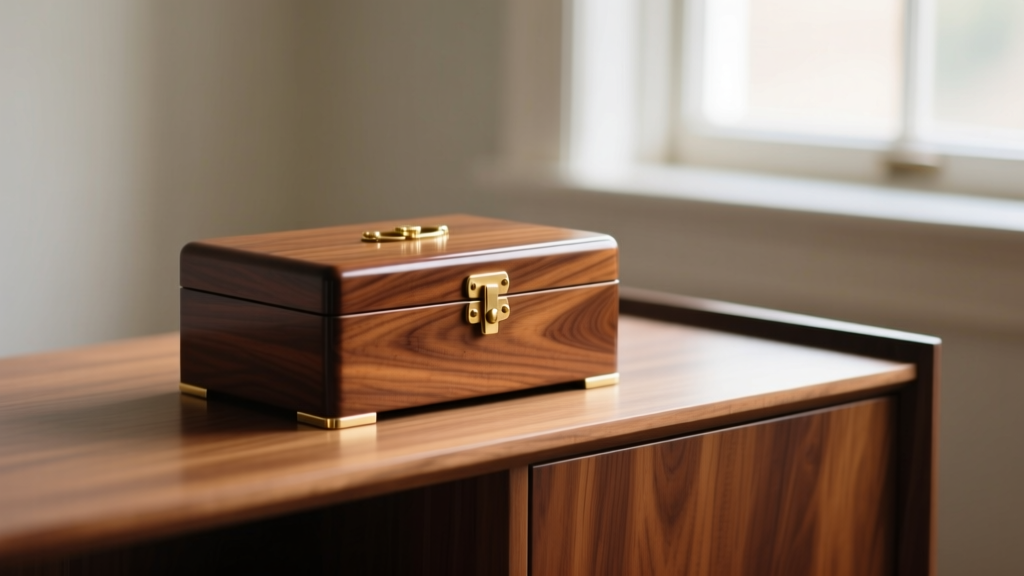
When evaluating a jewelry box mid century collectors and antique enthusiasts often focus first on the exterior silhouette. The transition from the heavy, ornate carvings of the Victorian and Edwardian eras to the sleek, functionalist aesthetics of Mid-Century Modern (MCM) design represents a massive shift in domestic casegoods. Manufacturers like Lane Furniture, Friede, and Widdicomb led this charge, prioritizing the natural beauty of wood grain over applied ornamentation. However, true expertise in collecting and restoring these pieces requires looking past the tapered legs and floating planes to understand the underlying material science, structural joinery, and the hidden chemical environments that dictate how well these boxes protect their contents today.
Unlike contemporary mass-produced storage, authentic MCM jewelry boxes were engineered as miniature architectural structures. The woods were selected not just for color, but for dimensional stability. The finishes were formulated to withstand decades of shifting indoor humidity. Yet, the interior environments of these vintage boxes often harbor hidden dangers for fine metals and gemstones. This guide provides a deep technical dive into authenticating, evaluating, and properly restoring mid-century jewelry storage to meet modern conservation standards.
Wood Identification and Veneer Analysis
The most defining characteristic of any mid-century piece is its timber. While solid wood was used for structural framing and legs, the expansive flat surfaces of jewelry boxes were almost exclusively constructed using high-grade architectural veneers applied over a stable secondary wood core, such as poplar or sweetgum. This prevented the warping and splitting that plagued solid-wood casegoods.
| Wood Species | Grain Characteristics | Era & Style Match | Restoration Notes |
|---|---|---|---|
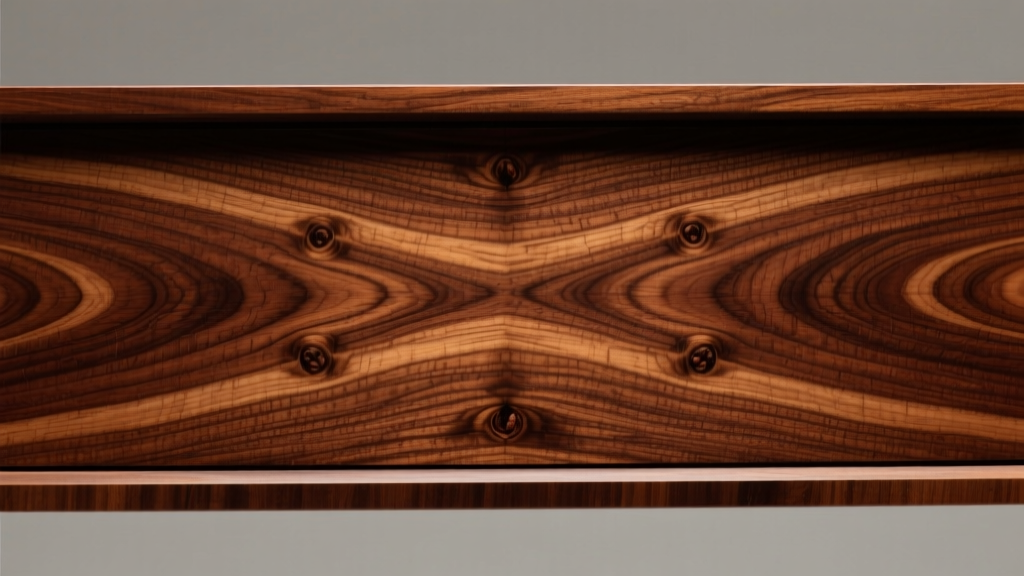
| American Black Walnut | Open grain, rich dark brown, prominent crotch and burl figures | 1940s-1960s (American MCM, Lane, Friede) | Requires grain filling before high-gloss finishing; highly responsive to oxalic acid bleaching for water stains. |
| Danish Teak | Tight, straight grain, golden-orange to medium brown, occasional silica deposits | 1950s-1970s (Danish Modern, Skovmand) | Silica blunts hand tools; best finished with penetrating oils (Tung or Danish) rather than surface film finishes. |
| Brazilian Rosewood | Swirled, highly figured, dark streaks, spicy scent when sanded | 1960s High-End (Executive and luxury travel cases) | CITES restricted; repairs require sourcing antique offcuts. Natural oils can resist glue adhesion; wipe with naphtha before patching. |
Authenticating the veneer is critical. Later 1970s reproductions often used 'printed' wood grain on composite board or extremely thin rotary-cut veneers that lack the depth of the knife-cut architectural veneers used in the 1950s. Look closely at the edges and corners; original MCM boxes will feature solid wood banding or meticulously mitered veneer tape, whereas later fakes will show exposed particle board or peeling PVC edge banding.
Joinery Techniques and Hardware Evaluation
The structural integrity of a vintage jewelry box relies on its joinery. High-end American manufacturers utilized machine-cut half-blind dovetails for the main carcase, ensuring the box could withstand decades of being lifted and moved. Cheaper, mass-market pieces from the late 1960s often resorted to simple rabbet joints reinforced with brads and hide glue. If you are inspecting a piece for purchase, gently pull the drawer or lift the box by its top lip. Any flexing or audible cracking indicates failed glue joints, a common issue as the original animal-based hide glue desiccates and crystallizes over 60+ years.
Hardware is another major diagnostic tool. The lid support mechanism is particularly prone to failure. Many mid-century boxes utilized brass 'quadrant hinges'—the folding, slotted stays that hold the lid open at a precise 90-degree angle. The pivot pins on these hinges frequently wear through the soft brass, causing the lid to slam shut. When restoring, avoid replacing these with modern steel alternatives, which will look anachronistic and cause galvanic corrosion if they touch the original brass screws. Instead, source New Old Stock (NOS) brass quadrant hinges from specialized architectural salvage dealers or carefully re-pin the originals using brass brazing rod.
Evaluating and Replacing the Interior Linings
The most critical, yet frequently overlooked, aspect of restoring a jewelry box mid century collectors love is the interior lining. Original 1950s boxes were typically lined with rayon, acetate, or early synthetic velvets. From a modern conservation perspective, these materials are highly problematic for fine jewelry.
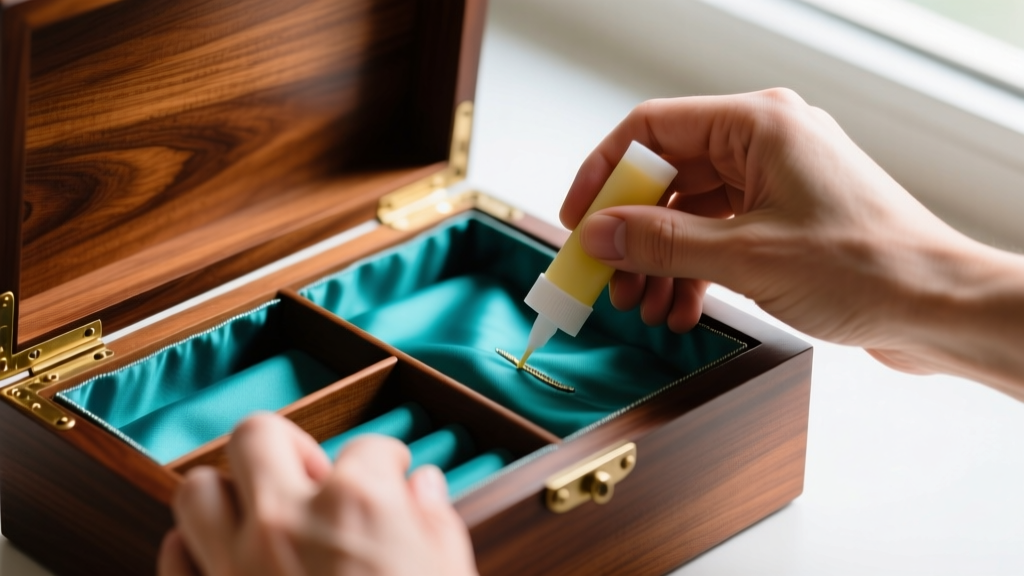
According to guidelines from the American Institute for Conservation, textiles and the adhesives used to bind them can off-gas volatile organic compounds (VOCs) that actively damage metals. Acetate fabrics break down over time, releasing acetic acid. This acid accelerates the formation of verdigris on copper, brass, and low-karat gold alloys. Rayon and the rubber-based adhesives used to secure it often contain sulfur compounds. When sulfur off-gasses in the confined microclimate of a closed jewelry box, it reacts with sterling silver to form silver sulfide—the black tarnish that plagues vintage silverware and jewelry.
The Restoration Protocol:
- Removal: Carefully pry up the original lining. Use a heated spatula to soften the vintage adhesive. Scrape the residue away using a wooden scraper to avoid gouging the soft cedar or mahogany interior substrate.
- Sealing: Apply two coats of dewaxed shellac (a 1.5 lb cut) to the bare interior wood. This creates an impermeable barrier, preventing any residual acids or tannins in the wood from migrating into the new lining.
- Replacement Material: Never use standard craft felt or craft velvet. Use certified anti-tarnish materials like Pacific Silvercloth or Intercept Technology fabrics. These materials are embedded with microscopic silver particles or copper polymers that actively absorb and neutralize sulfur and corrosive gases before they reach your jewelry.
- Adhesion: Use an acid-free, archival-quality PVA adhesive (such as Lineco Neutral pH Adhesive) to secure the new lining, ensuring you do not reintroduce the very chemicals you are trying to eliminate.
Step-by-Step Veneer and Finish Restoration
The exterior finish of a mid-century jewelry box requires precise identification before any restoration work begins. As noted by experts at Popular Woodworking, applying the wrong solvent can instantly ruin an original patina. The two most common finishes from this era are shellac and nitrocellulose lacquer.
The Solvent Test: Find an inconspicuous area, such as the bottom edge or the back panel. Apply a single drop of denatured alcohol using a cotton swab. Wait 30 seconds. If the finish becomes tacky or dissolves, it is shellac (more common in transitional 1940s pieces). If the alcohol has no effect, apply a drop of lacquer thinner. If the finish softens, it is nitrocellulose lacquer, the industry standard for 1950s and 60s factory-finished casegoods like those from Lane.
If the original lacquer is heavily crazed (alligatored) or peeling, it must be stripped. Avoid harsh, wax-containing chemical strippers that leave a residue in the wood pores. Instead, use a methylene chloride-free gel stripper, followed by a neutralizing wash of naphtha. Once bare, the wood should be sanded progressively from 220 to 400 grit. For an authentic mid-century sheen, apply three coats of pre-catalyzed lacquer or a high-quality wiping varnish, rubbing out the final coat with 0000 steel wool and paste wax to achieve that signature soft, satin 'hand-rubbed' look favored by designers like George Nelson and Charles Eames.
Sourcing Authentic Replacement Parts
When a mid-century jewelry box is missing a key component—such as a specific brass drawer pull, a mirrored tray, or a velvet ring roll—sourcing authentic replacements requires patience. The Metropolitan Museum of Art design archives and various mid-century collector forums are excellent resources for identifying original hardware patterns. Avoid big-box store reproduction hardware, which often features incorrect thread pitches and overly bright, unlacquered brass finishes that clash with the mellowed patina of the original piece. Instead, seek out specialized vintage hardware dealers who stock salvaged Bauer, Armac, or Clifford of America pulls, ensuring your restored jewelry box maintains its historical integrity and market value.