2026 Buyer's Guide: Choosing the Best Jewelry Box Safe
Discover how to choose the ultimate jewelry box safe in 2026. Compare steel gauges, UL fire ratings, biometric locks, and anti-tarnish interiors.

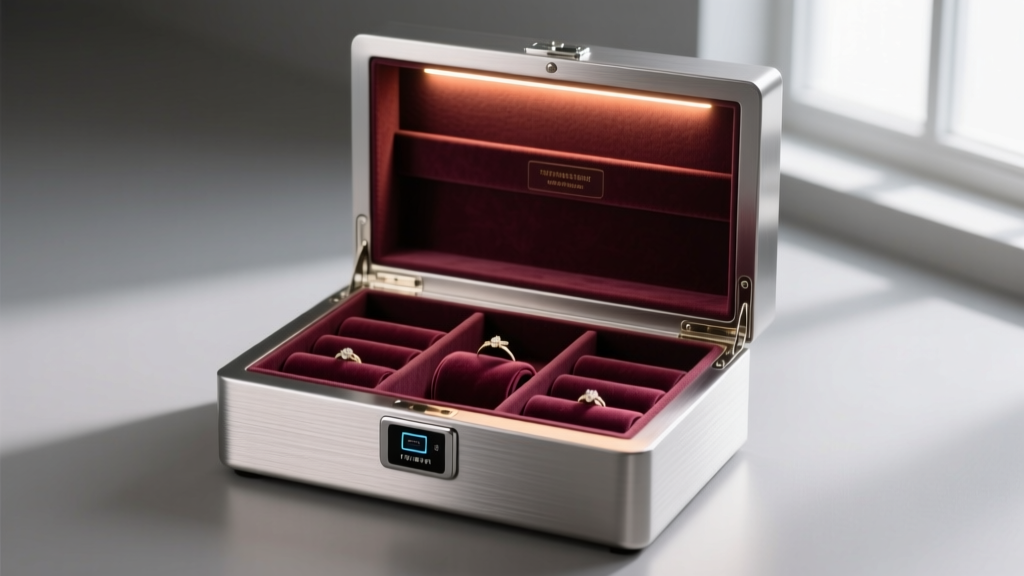
Many consumers make a costly mistake by confusing a standard "lockable jewelry box" with a true jewelry box safe. A beautifully crafted wooden armoire with a cheap wafer lock offers zero protection against a burglar equipped with a basic pry bar. Conversely, a true jewelry safe is a fortified, pry-resistant vault engineered to protect high-value assets while simultaneously preserving them from environmental damage. As burglary tactics evolve and high-end jewelry collections appreciate in value, the 2026 market for luxury safes demands a rigorous understanding of metallurgy, locking mechanics, and horological care.
The Anatomy of a True Jewelry Box Safe
The first metric of any security container is its steel gauge. In the safe industry, a lower gauge number indicates thicker, stronger steel. Entry-level lockable boxes often use 14-gauge or 16-gauge steel (roughly 0.059 inches thick), which can be breached with a $20 crowbar in seconds. A legitimate jewelry box safe should feature a minimum of 10-gauge steel (0.1345 inches) for the body, with premium models utilizing 7-gauge steel (0.1793 inches) or even solid 1/4-inch steel faceplates.
Beyond sheer thickness, look for active hardplates. These are specialized, heat-treated steel plates embedded directly behind the locking mechanism. If a burglar attempts to drill through the door to punch the lock, the hardplate will shatter the drill bit or trigger a glass relocker—a secondary spring-loaded mechanism that permanently jams the bolts if the glass is shattered. Furthermore, ensure the safe features anti-pry tabs and concealed, internal hinges to prevent the door from being torched or pried off its frame.
Decoding Security and Fire Ratings
Marketing terms like "burglar-proof" are meaningless without third-party certification. The gold standard for safe testing is Underwriters Laboratories (UL). For jewelry safes, you will typically encounter two main burglar ratings:
- UL RSC (Residential Security Container): The entry-level standard. It certifies that the safe can withstand 5 minutes of rigorous attack using common hand tools like hammers, chisels, and pry bars.
- UL TL-15 (Tool Resistant): The luxury standard. This certifies that the door (and sometimes the entire body) can withstand 15 minutes of concentrated attack using high-speed carbide drills, angle grinders, and sledgehammers. If your collection exceeds $100,000, a TL-15 rating is mandatory for adequate insurance coverage.
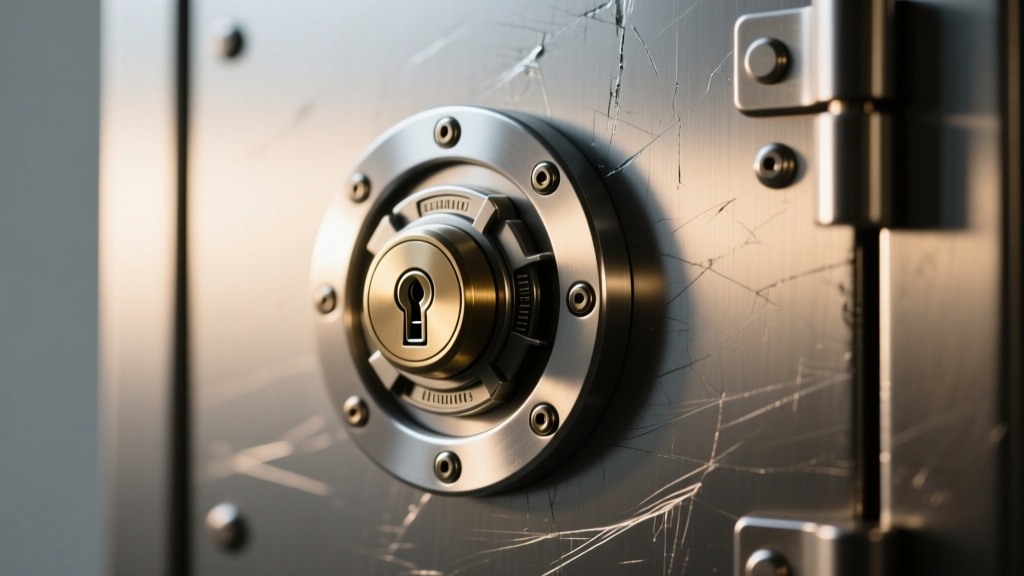
Fire ratings are equally critical, but jewelry requires specific considerations. According to the National Fire Protection Association (NFPA), standard home fires can reach 1,100°F to 1,500°F. While gold and platinum have high melting points, organic gemstones like pearls, opals, and emeralds contain microscopic water inclusions. If the internal temperature of a safe exceeds 350°F, these stones will dehydrate, crack, and be permanently ruined. Always look for a UL 350 1-Hour Fire Rating, which guarantees the interior temperature will not exceed 350°F during a severe external blaze.
Locking Mechanisms: Biometric vs. Electronic vs. Mechanical
The lock is the brain of your jewelry box safe. In 2026, buyers have three primary options, each with distinct operational profiles. High-end manufacturers typically rely on Sargent & Greenleaf (S&G) or LaGard mechanisms for proven reliability.
| Lock Type | Access Speed | Reliability & Maintenance | Best Use Case |
|---|---|---|---|
| Biometric (Fingerprint) | Instant (1-2 seconds) | Requires batteries; advanced 2026 sensors have a False Rejection Rate (FRR) of < 0.001%. | Daily wearers who need rapid access to watches and rings. |
| Electronic Keypad (S&G Titan) | Fast (3-5 seconds) | Highly reliable; requires 9V battery changes every 1-2 years. Features penalty lockouts. | Shared access for couples or estate managers via multiple PINs. |
| Mechanical Dial (Group 2) | Slow (15-20 seconds) | Zero batteries required; EMP-proof and virtually indestructible. Requires annual lubrication. | Long-term storage of heirloom pieces and high-value bullion. |
Expert Tip: If you opt for a biometric lock, ensure it features a "dual-control" or "duress" fingerprint option, and always verify that it includes a physical override key or electronic backup keypad in case the internal battery fails.
Interior Architecture: Anti-Tarnish and Watch Winding
A true jewelry box safe bridges the gap between a bank vault and a luxury dressing room. The interior lining must actively combat hydrogen sulfide gas in the air, which causes sterling silver to tarnish. Avoid standard felt or untreated velvet. Instead, demand Pacific Silvercloth or similar treated flannel linings. These fabrics are embedded with microscopic silver nanoparticles that act as a sacrificial barrier, absorbing corrosive gases before they reach your jewelry.
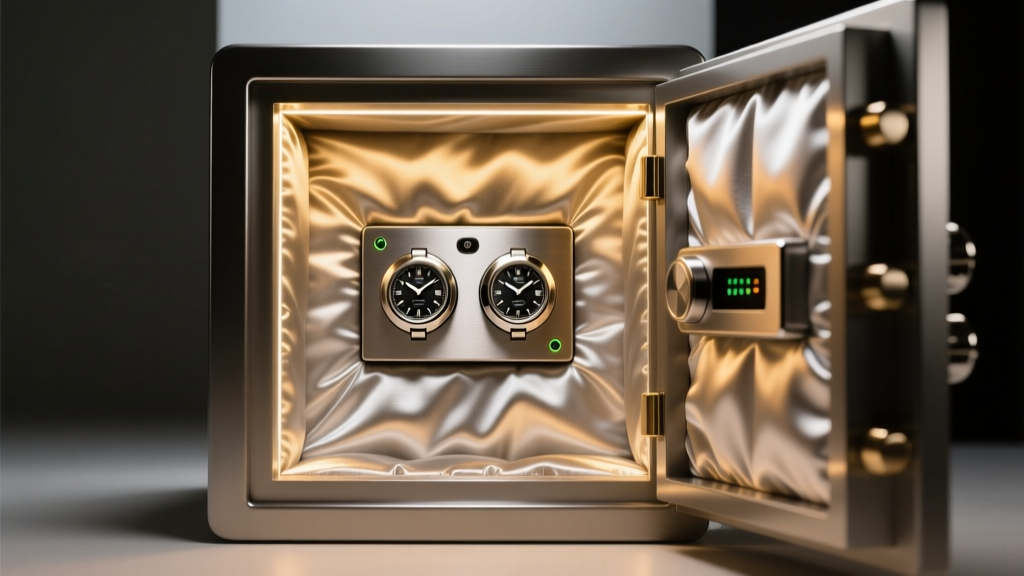
For horologists, integrated watch winders are a common feature, but improper winding can destroy a movement. A high-quality safe will offer programmable Turns Per Day (TPD) settings. A standard Rolex requires roughly 650 TPD, while a complex Patek Philippe perpetual calendar may require 900 TPD. Crucially, the winder must be bi-directional and feature an intermittent rotation cycle (e.g., spin for 5 minutes, rest for 10) to prevent overwinding and excessive wear on the mainspring and slip-clutch mechanisms. Ensure the interior also features adjustable, battery-operated LED lighting with a color rendering index (CRI) of 90+ so you can accurately judge the color of your gemstones.
2026 Pricing Tiers and What to Expect
When budgeting for a jewelry box safe, expect to pay for the steel, the lock, and the fire rating. Here is the current market breakdown:
- Entry-Level ($400 - $900): 12-gauge to 10-gauge steel, UL RSC rating, basic electronic keypad, standard velvet interior, and 30-minute fire protection. Suitable for collections under $20,000.
- Mid-Tier ($1,200 - $2,800): 10-gauge steel, upgraded fire ratings, biometric or premium electronic locks, Pacific Silvercloth lining, and basic watch winders. Ideal for serious collectors.
- Luxury / TL-15 ($3,500 - $10,000+): Solid steel faceplates, TL-15 or TL-30 burglar ratings, UL 350 1-hour fire ratings, bespoke leather interiors, and programmable Swiss-grade watch winders. Mandatory for high-jewelry and investment-grade timepieces.
Installation and Anchoring Best Practices
The most secure jewelry box safe in the world is useless if a thief can simply carry it out the front door. Even a 400-pound safe can be moved by two burglars using an appliance dolly. Proper anchoring is non-negotiable.
If installing on a concrete slab, use 1/2-inch wedge anchors driven at least 3 inches into the concrete. If installing on a wooden subfloor, you must locate the floor joists and use heavy-duty lag bolts with fender washers to distribute the sheer force. For master bedroom closets, consider bolting the safe directly to the wall studs using the pre-drilled rear mounting holes, providing a secondary anchor point that prevents the safe from being tipped forward and pried open. Always consult a professional safe installer to ensure your specific flooring can support the concentrated point-load weight of a fully loaded steel vault.


