How to Clean a Brown Jewelry Box: Leather & Wood Care
Learn how to properly clean, condition, and maintain your brown jewelry box. Expert tips for leather and wood exteriors to protect your precious gems.

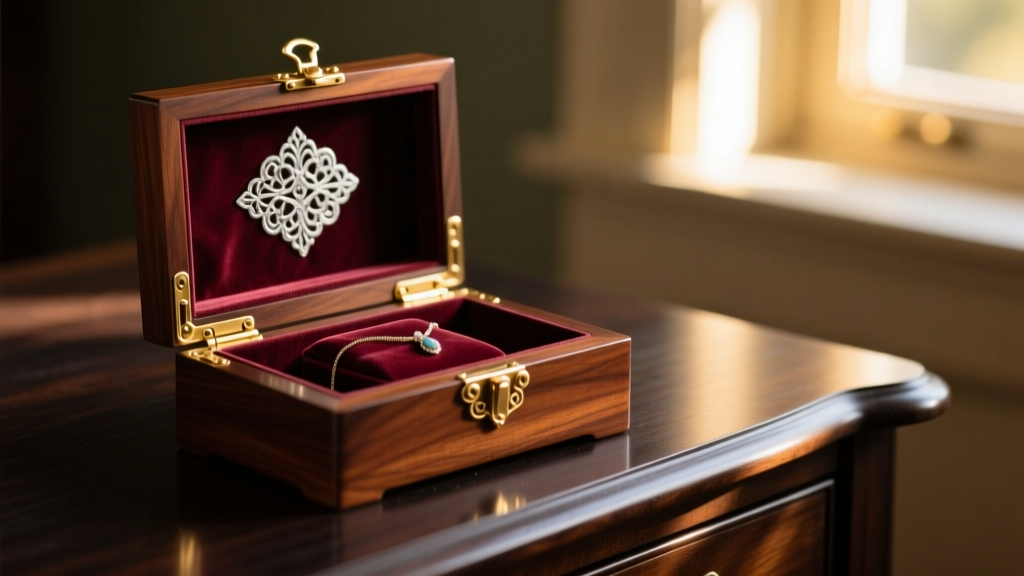
A beautifully crafted brown jewelry box is more than just a storage vessel; it is an investment in the longevity of your fine jewelry collection. Whether your piece is wrapped in rich cognac leather or carved from deep walnut wood, the exterior and interior materials require specific, scientifically grounded maintenance. Neglecting your storage environment can lead to accelerated tarnishing, micro-abrasions, and structural degradation of the box itself. In this comprehensive guide, we break down the exact protocols for cleaning, conditioning, and preserving your brown jewelry box to ensure it continues to protect your precious metals and gemstones.
The Hidden Threat: How a Dirty Jewelry Box Damages Your Collection
Many collectors assume that once jewelry is placed inside a closed box, it is completely safe. However, the interior environment of a poorly maintained jewelry box can actively damage your pieces. Household dust contains microscopic silica particles, which rank at a 7 on the Mohs hardness scale. By comparison, pure gold and sterling silver sit at a mere 2.5 to 3. When dust accumulates in the crevices of your jewelry box, the simple act of placing a ring into its slot can drag silica across the metal, causing permanent micro-scratches.
Furthermore, degraded interior linings and unregulated humidity can off-gas acidic compounds or trap moisture. According to the Gemological Institute of America (GIA), silver tarnish is primarily caused by a reaction with hydrogen sulfide in the air. If your brown jewelry box lacks active anti-tarnish properties or proper ventilation, the enclosed space can actually concentrate these corrosive gases, leading to rapid blackening of your silver pieces.
Material Identification: What Is Your Brown Jewelry Box Made Of?
Before applying any cleaning agents, you must correctly identify the exterior material. Using a water-based cleaner on a shellac-finished wood box, or an alcohol-based solvent on full-grain leather, will cause irreversible damage. Use the table below to identify your material and its baseline maintenance requirements.
| Material Type | Visual Characteristics | Cleaning Frequency | Primary Vulnerability |
|---|---|---|---|
| Full-Grain Leather | Natural markings, develops a patina, feels warm to the touch. | Every 3-6 months | Over-conditioning, alcohol-based solvents, UV fading. |
| Top-Grain Leather | Uniform color, slightly sanded surface, often treated with a protective coating. | Every 2-3 months | Cracking of the polyurethane topcoat, peeling. |
| Walnut Wood | Deep, rich brown grain, usually finished with oil or lacquer. | Monthly dusting, annual waxing | Silicone buildup, moisture rings, extreme humidity swings. |
| Mahogany Wood | Reddish-brown hue, fine straight grain, traditionally French polished. | Monthly dusting, bi-annual polishing | Shellac dissolution from alcohol or ammonia-based cleaners. |
Step-by-Step Cleaning Guide for Brown Leather Jewelry Boxes
Leather is a porous, organic material that requires a careful balance of cleaning and hydration. The ideal pH level for leather cleaners is between 5.5 and 7.0. Anything more alkaline will break down the collagen fibers, leading to premature stiffening and cracking.
Dusting and Surface Preparation
Begin by removing all jewelry and using a clean, soft horsehair brush to gently sweep away loose dust from the surface and the stitching. Horsehair is soft enough not to scratch the leather’s finish but stiff enough to dislodge particles trapped in the grain. Avoid using paper towels, as they are made from wood pulp and can leave microscopic scratches on highly polished leather surfaces.
Deep Cleaning and Stain Removal
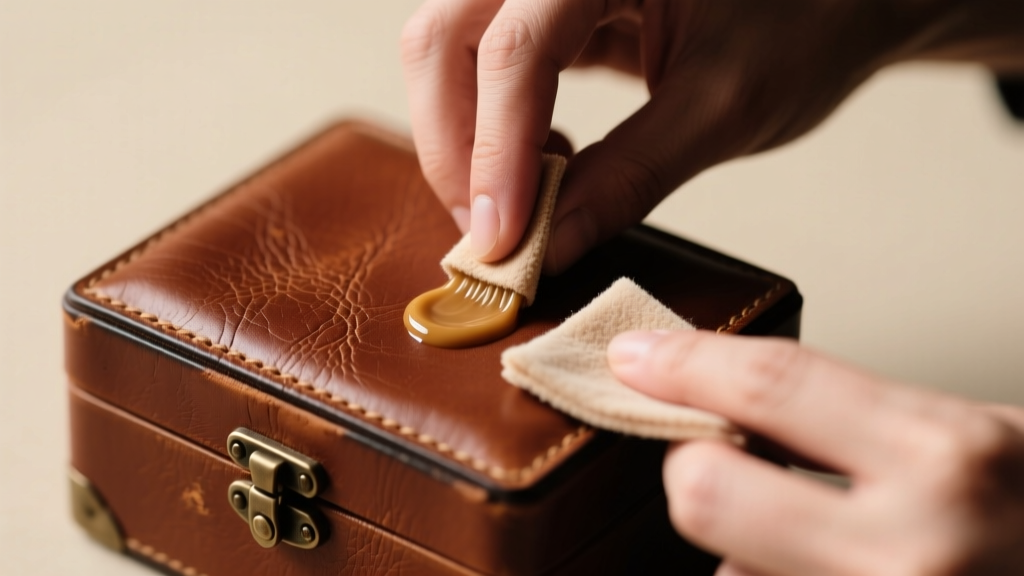
For general cleaning, apply a small amount of a dedicated, pH-balanced leather cleaner to a plush microfiber cloth—never directly onto the box. Work the cleaner into the leather using gentle, overlapping circular motions. If you encounter dark oil spots, sprinkle a small amount of cornstarch over the stain, let it sit for 12 hours to absorb the lipid, and gently brush it away. Never use mink oil on a brown leather jewelry box; while it is a traditional conditioner, it can oxidize, turn rancid over time, and drastically darken the leather unevenly.
Conditioning the Leather
Once the surface is clean and dry, apply a high-quality leather conditioner formulated with carnauba wax or beeswax. These natural waxes provide a breathable barrier that locks in moisture without clogging the leather’s pores. Buff the surface with a dry microfiber cloth until it yields a soft, matte sheen.
Restoring and Polishing Brown Wood Jewelry Boxes
Wooden brown jewelry boxes, particularly those made from walnut or mahogany, rely on their finish for protection. The most common mistake owners make is using commercial aerosol dusting sprays. These products often contain silicone oils, which provide a temporary, high-gloss shine but eventually build up into a cloudy, sticky film that traps dust and ruins the wood's natural patina.
Instead, follow the Smithsonian Institution's object care guidelines, which recommend using a soft, lint-free cotton cloth lightly dampened with distilled water for routine dusting. For annual maintenance, apply a thin layer of museum-grade paste wax (such as a blend of beeswax and carnauba). Apply the wax in the direction of the wood grain, allow it to haze for 15 minutes, and buff it vigorously with a clean cotton cloth. This provides a hard, protective shell that resists fingerprints and minor moisture exposure.
Troubleshooting White Haze on Wood
If your brown wood jewelry box develops a white, cloudy ring, this is usually moisture trapped beneath the wax or shellac finish. To remedy this, gently rub the affected area with a cloth lightly dampened with mineral spirits to strip the compromised wax layer, let it dry completely, and reapply a fresh coat of paste wax.
Interior Lining Maintenance: Velvet, Suede, and Anti-Tarnish Felt
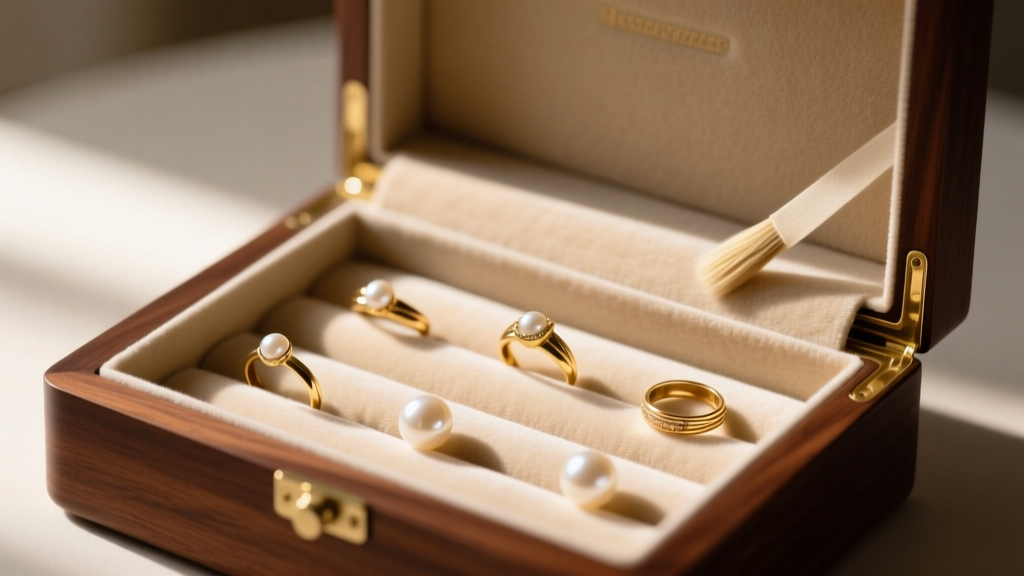
The interior of your brown jewelry box is just as critical as the exterior. Velvet and suede linings trap skin oils, perfume residues, and microscopic debris. To clean velvet, use a soft-bristled upholstery brush to gently lift the nap and dislodge trapped particles. For deeper cleaning, use a handheld vacuum with a brush attachment on the lowest possible suction setting to avoid pulling the fabric away from its adhesive backing.
If your box features anti-tarnish felt or Pacific Silvercloth linings, be aware that these materials have a finite lifespan. They work by absorbing and neutralizing hydrogen sulfide gases. Once the active agents are saturated—typically every 6 to 12 months depending on your local climate—they lose their effectiveness. You can recharge the environment by placing fresh 3M anti-tarnish strips in the hidden corners of the box, replacing them bi-annually.
Environmental Controls: Humidity and Placement
Where you place your brown jewelry box dictates its lifespan and the safety of its contents. Both leather and wood are hygroscopic, meaning they absorb and release moisture from the surrounding air. The ideal relative humidity (RH) for storing fine jewelry and preserving organic box materials is between 40% and 50%.
- Below 30% RH: Leather will dry out and crack; wood joints may shrink and loosen, causing drawers to stick or hinges to misalign.
- Above 60% RH: Promotes the growth of mold on interior velvet linings and accelerates the oxidation of silver and copper alloys.
Finally, keep your brown jewelry box out of direct sunlight. UV radiation will rapidly bleach the rich brown dyes in both leather and wood, leaving the surface brittle and discolored. By mastering these material-specific care techniques, your jewelry box will remain a stunning, functional heirloom for decades to come.


