Mele Jewelry Box Vintage Materials: Wood, Veneer & Lining Guide
Explore the material properties of a Mele jewelry box vintage piece. Learn about wood veneers, brass hardware, and lining degradation for restoration.

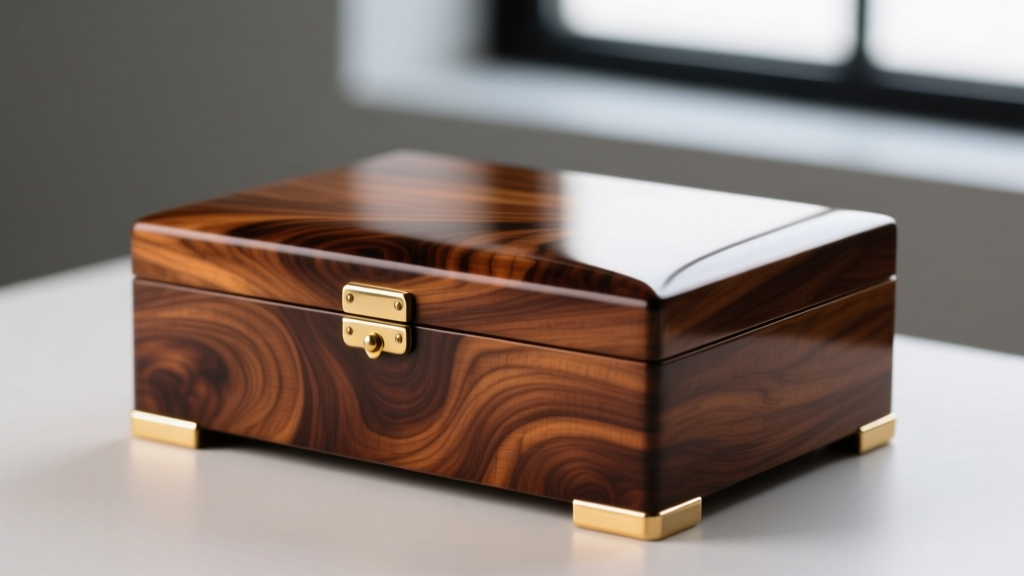
Collectors and antique enthusiasts often seek out a mele jewelry box vintage model for its undeniable mid-century elegance and heirloom construction. Founded in 1912, Mele & Co. established a reputation for crafting storage solutions that rivaled fine furniture. However, owning a vintage piece requires a deep understanding of its material composition. From the specific wood veneers and substrate adhesives to the metallurgy of the hinges and the chemical properties of the interior linings, preserving these boxes demands specialized knowledge.
The Anatomy of a Classic Mele & Co. Exterior
The exterior of a vintage Mele box is typically a masterclass in mid-century woodworking and veneer application. Unlike modern, mass-produced MDF boxes wrapped in printed paper, vintage models rely on authentic timber and meticulous craftsmanship.
Solid Woods vs. Engineered Veneers
Most high-end vintage Mele boxes feature exotic veneers, such as crotch mahogany, burl walnut, or rosewood, applied over a stable substrate. In pieces from the 1950s through the 1970s, the substrate was often high-grade plywood or early-generation medium-density fiberboard (MDF). The veneer thickness in these commercial luxury boxes typically ranges from 1/42-inch to 1/28-inch. While this provides a stunning chatoyancy (the 3D light reflection in the wood grain), it leaves little margin for error during sanding or restoration.
According to the American Institute for Conservation (AIC), cleaning these veneers requires avoiding silicone-based polishes, which can penetrate micro-cracks and prevent future conservation-grade adhesives from bonding during repairs. Instead, a micro-crystalline wax like Renaissance Wax is the standard for protecting the lignin and cellulose structure without altering the refractive index of the original lacquer finish.
Hardware and Hinge Metallurgy
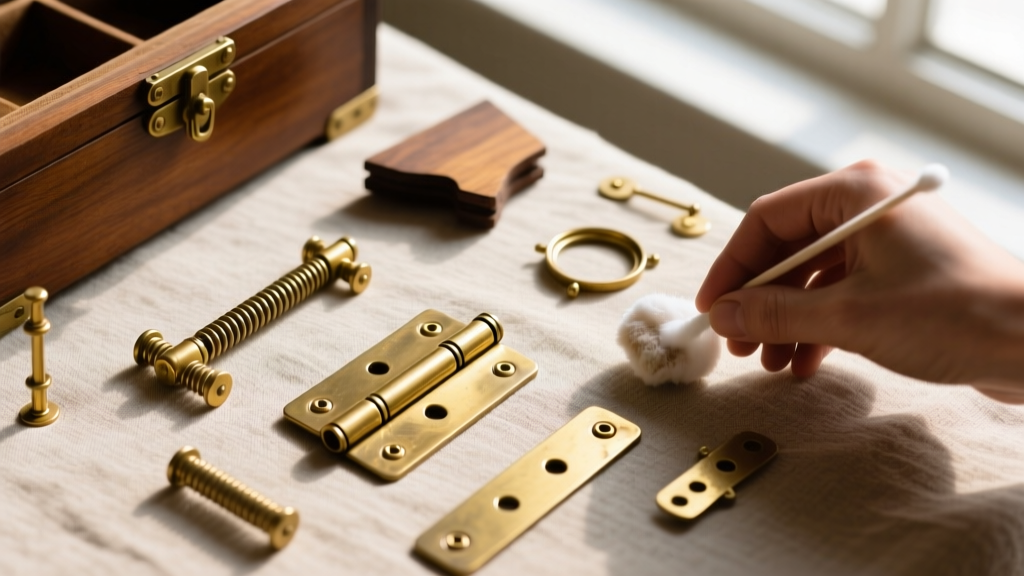
The hardware on a genuine vintage Mele box is a critical authentication marker. Hinges, lock escutcheons, and corner brackets were predominantly crafted from solid brass or heavily plated steel. Solid brass is non-magnetic and develops a rich, protective patina over decades. Conversely, later 1980s models may feature zamak (a zinc-aluminum alloy) with a thin brass electroplate. Zamak is prone to "zinc pest"—a destructive intergranular corrosion that causes the metal to swell, pit, and eventually crumble. If a magnet sticks to your vintage hinge, or if you see white, powdery oxidation beneath the brass finish, you are dealing with plated alloy, which requires gentle wiping rather than aggressive chemical polishing.
Interior Linings: Tarnish Prevention and Fabric Degradation
The interior of a jewelry box is a microclimate. The materials used to line a vintage Mele box directly impact the chemical stability of the precious metals and gemstones stored within.
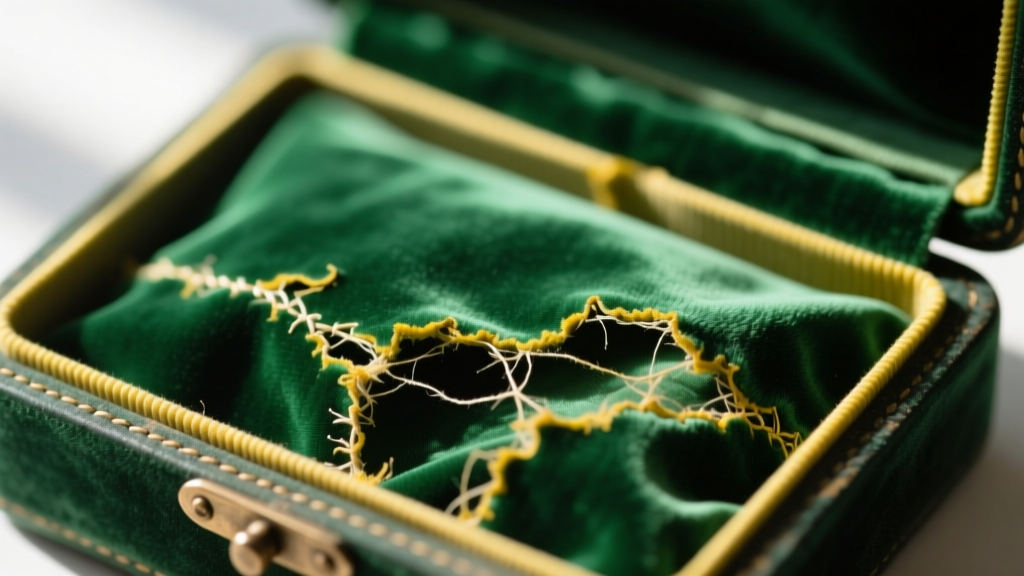
The Danger of Acidic Off-Gassing
Many vintage boxes from the 1960s and 1970s were lined with rayon-blend velvets or pigskin suedes. While luxurious to the touch, these older textiles and the animal-hide glues used to adhere them often contain sulfur compounds and formaldehyde resins. As these materials degrade, they off-gas sulfur dioxide and acidic vapors. When sulfur dioxide reacts with the copper alloyed in sterling silver (which is 92.5% silver and 7.5% copper), it rapidly forms silver sulfide (Ag2S)—the black tarnish that plagues vintage jewelry collections. Furthermore, acidic off-gassing can etch the delicate nacre of natural pearls and degrade the silk threads used in pearl knotting.
The Gemological Institute of America (GIA) consistently warns against storing porous gemstones like pearls, turquoise, and opals in environments with unverified textile linings. For vintage boxes, replacing the original lining with modern, archival-grade materials is often a necessary conservation step.
Material Comparison: Vintage vs. Archival Linings
| Material | Sulfur/Acid Content | Moisture Retention | Best Used For |
|---|---|---|---|
| Vintage Rayon Velvet | High (Sulfur dyes) | High | Display only (not long-term storage) |
| Vintage Pigskin Suede | High (Tanning acids) | Medium | Heavy gold pieces (non-reactive) |
| Archival Polyester Flannel | Zero (Oddy-tested) | Low | Sterling silver and copper alloys |
| Acid-Free Unbuffered Tissue | Zero (pH neutral) | Very Low | Pearls, opals, and porous gems |
Material Restoration Framework for Vintage Mele Boxes
Restoring a vintage Mele jewelry box requires a phased approach, respecting the original material properties while halting active degradation.
Step 1: Veneer Stabilization
If the burl or mahogany veneer is blistering or lifting at the corners, do not use modern PVA (polyvinyl acetate) wood glues. PVA dries hard and creates a barrier that is nearly impossible for future conservators to reverse. Instead, inject liquid hide glue using a veterinary syringe. Hide glue remains reversible with heat and moisture, adhering to the conservation principle of reversibility. Clamp the veneer using a cork-backed block to distribute pressure evenly without denting the 1/28-inch wood layer.
Step 2: Hardware Conservation
For solid brass hardware, avoid harsh dip cleaners that strip the metal down to raw, bright yellow brass, destroying the historical patina. Use a mild abrasive paste applied with a cotton swab, carefully masking the surrounding wood veneer with low-tack painter's tape to prevent solvent staining. Once cleaned, seal the brass with a thin coat of micro-crystalline wax to retard future oxidation.
Step 3: Lining Replacement
Carefully score the edges of the old velvet with a fresh scalpel blade. Peel back the fabric and use a citrus-based solvent to dissolve the degraded animal hide glue without raising the grain of the interior wood substrate. Line the compartments with Pacific Silvercloth or an Oddy-tested polyester flannel, adhering it only at the perimeter edges using archival-grade double-sided tape, allowing the center to remain pliable for jewelry insertion.
Step 4: Lock and Escutcheon Maintenance
Vintage Mele boxes frequently utilize small warded locks with brass escutcheons. Over decades, the internal iron or steel tumblers can rust, seizing the mechanism. Apply a microscopic drop of synthetic clock oil (never WD-40, which leaves a gummy residue that attracts dust) directly into the keyway. Work the original brass key back and forth gently. If the key is lost, a professional locksmith can impression a replacement, but avoid forcing generic keys, as the soft brass wafers inside the lock will easily shear.
Sourcing and Authenticating Vintage Mele Pieces
When hunting for a mele jewelry box vintage model at estate sales or antique auctions, authentication relies heavily on material inspection. Look for the stamped brass maker's mark, usually located on the interior bottom rim or the back of the main lid. Inspect the dovetail or miter joints; genuine mid-century Mele boxes feature tight, gap-free joinery. Finally, perform a "smell test." A strong, sharp odor of vinegar or sulfur indicates advanced breakdown of the interior adhesives and linings, signaling that immediate conservation work will be required before the box is safe for storing fine jewelry.
By understanding the intricate material science behind these heirloom pieces, collectors can ensure that a vintage Mele box remains a functional, protective, and beautiful sanctuary for their most prized accessories for generations to come.


