Mirror w/ Jewelry Storage: A Budget & Value Guide
Is a dual-purpose mirror w/ jewelry storage worth the cost? We break down materials, hardware, and pricing tiers to help you find true value.
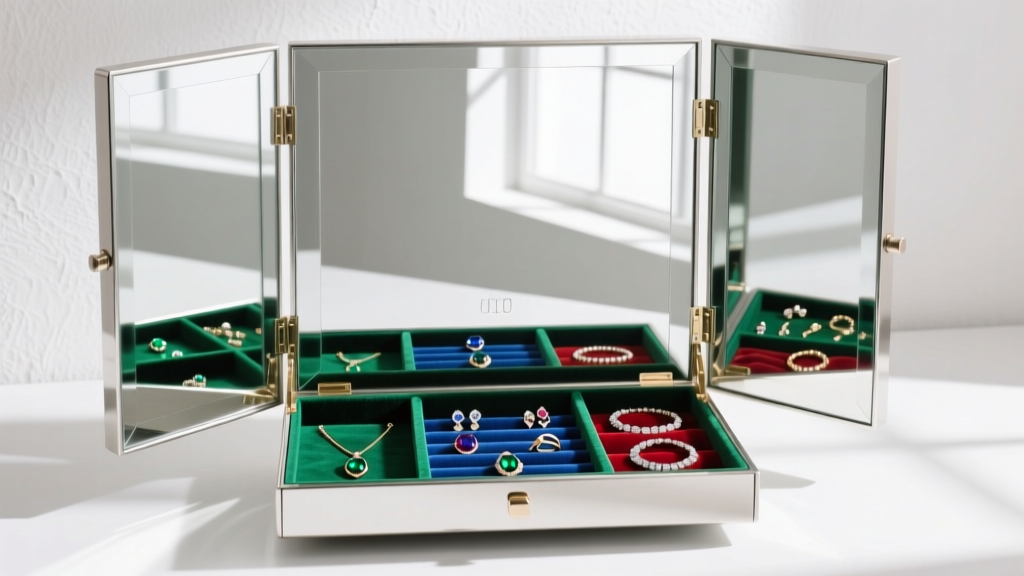
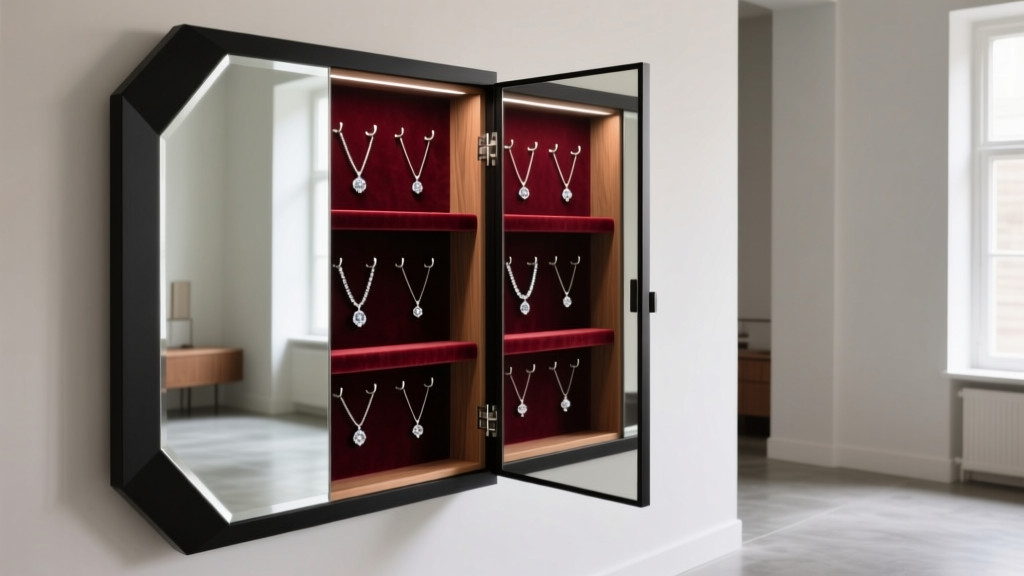
The Allure and the Catch of Dual-Purpose Furniture
In the quest to maximize bedroom space and streamline morning routines, the dual-purpose mirror w/ jewelry storage has surged in popularity. Often referred to as a mirror jewelry cabinet or armoire, these units promise to replace your full-length looking glass and your cluttered dresser-top valet in one fell swoop. But as with any hybrid product, the intersection of two functions often leads to compromises in both. When you are spending anywhere from $40 to $350, how do you separate genuine spatial efficiency from a gimmicky, poorly constructed headache?
At Jewel Style Radar, we evaluate storage solutions not just on their aesthetic appeal, but on their long-term material integrity, hardware durability, and actual cost-per-slot value. According to organization experts at The Spruce, the primary failure point in jewelry organization is accessibility; if a storage unit is cumbersome to open or poorly lit, it simply becomes a graveyard for tangled chains and oxidized silver. Let us break down the true cost of ownership for mirror jewelry cabinets in 2026.
The Hidden Costs of Cheap Mirror Jewelry Cabinets
The market is flooded with sub-$60 mirror cabinets that look fantastic in product renders but fail within six months of real-world use. The most glaring issue with budget models is the frame material. Most inexpensive units are constructed from thin, 12mm Medium-Density Fiberboard (MDF). While MDF is cheap to produce, it lacks structural shear strength. A fully loaded mirror cabinet—weighing upwards of 35 pounds when filled with heavy glass, metal hardware, and jewelry—puts immense stress on the frame.
If you mount a heavy MDF cabinet using the cheap plastic drywall anchors included in the box, you are risking a catastrophic wall failure. Proper installation requires locating wall studs or using heavy-duty toggle bolts (like Snaptoggles rated for 250 lbs). Furthermore, budget models often utilize 3mm standard glass that is prone to warping and "funhouse" distortion if the MDF frame bows even slightly under weight. Upgrading to a mid-range or premium model isn't just about aesthetics; it is a matter of basic household safety and optical clarity.
Material Breakdown: What Justifies a $150+ Price Tag?
To understand where your money is actually going, we need to look at the specific material grades used across different pricing tiers. The difference between a $50 unit and a $200 unit is found in the glass backing, the interior lining, and the structural core.
| Feature | Budget ($40-$80) | Mid-Range ($80-$150) | Premium ($150-$300+) |
|---|---|---|---|
| Frame Material | Thin MDF (12mm) | Thick MDF / Plywood Core | Solid Rubberwood / Extruded Aluminum |
| Mirror Glass | 3mm Standard (prone to warping) | 4mm Silver-Backed | 5mm Copper-Free Silver-Backed (HD) |
| Interior Lining | Oxford Cloth / PU Leather | Short-Pile Polyester Velvet | Microfiber / Genuine Anti-Tarnish Cloth |
| Hinge Type | Standard Butt Hinges (2-point) | Reinforced Butt Hinges (3-point) | Full-Length Piano Hinges |
| Lighting | Battery LED (Low CRI, blue tint) | USB Rechargeable LED (80 CRI) | Hardwired/Smart LED (90+ CRI Daylight) |
Notice the mirror glass specification. Premium models use copper-free silver-backed glass. Traditional mirrors use a copper layer that eventually oxidizes, leading to those ugly black edges (desilvering) after a few years in a humid bedroom or en-suite bathroom. Copper-free glass ensures long-term clarity, a vital detail often omitted from product descriptions.
Hardware and Hinges: The True Failure Point
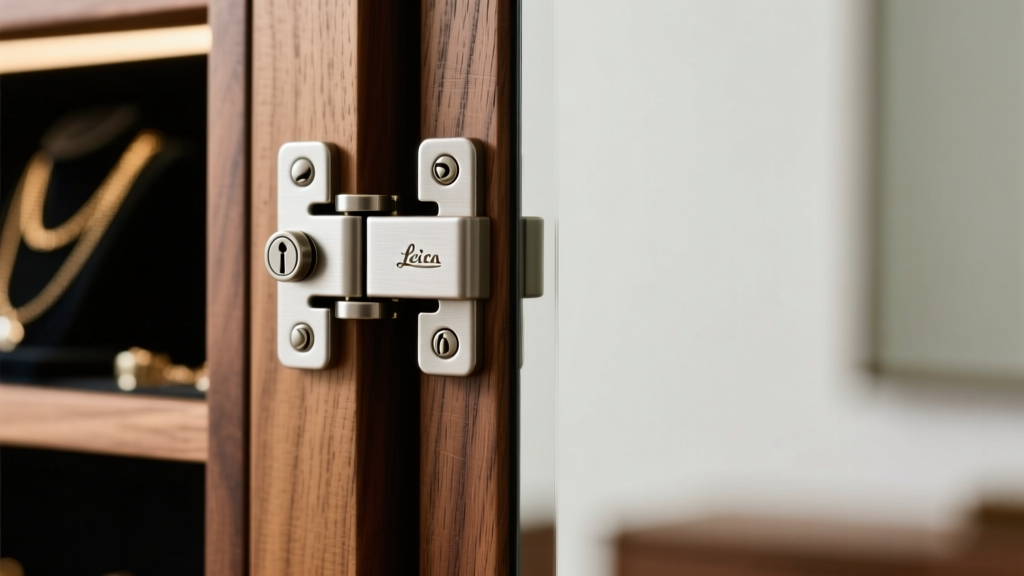
The door of a mirror w/ jewelry storage is essentially a heavy, swinging vault door. Every time you open it, the hinges bear the entire dynamic load of the mirror and the frame. Budget models rely on two small, stamped-metal butt hinges. Over time, the screws strip out of the soft MDF, causing the door to sag, scrape the floor, and fail to close properly.
If you are investing in a mid-range or premium cabinet, demand a full-length piano hinge. A piano hinge distributes the weight of the door evenly across the entire vertical axis, completely eliminating sag and ensuring the door remains perfectly plumb for decades. Additionally, pay attention to the locking mechanism. Cheap mechanical key locks often jam and scratch the mirror frame. Premium models utilize concealed magnetic catches or flush-mounted combination locks that provide security without compromising the sleek exterior profile.
Capacity vs. Footprint: Calculating Your Cost-Per-Slot
When assessing value, do not just look at the overall price; calculate the cost-per-slot. A $120 cabinet that holds 100 pairs of earrings, 30 necklaces, and 50 rings offers a cost of roughly $0.66 per piece of jewelry stored. Compare this to buying individual acrylic organizers or a high-end leather valet, and the spatial efficiency of a wall-mounted mirror cabinet becomes highly compelling for collectors with over 150 pieces.
However, beware of "inflated capacity" claims. Many budget brands claim to hold 100 necklaces, but they achieve this by placing hooks less than 1.5 inches apart. This guarantees severe tangling. For genuine value, look for staggered hook placements, a minimum drop length of 14 inches to accommodate opera-length chains, and dedicated, angled slots for post earrings rather than cheap, punched-hole cardboard inserts that tear over time.
The Anti-Tarnish Reality Check
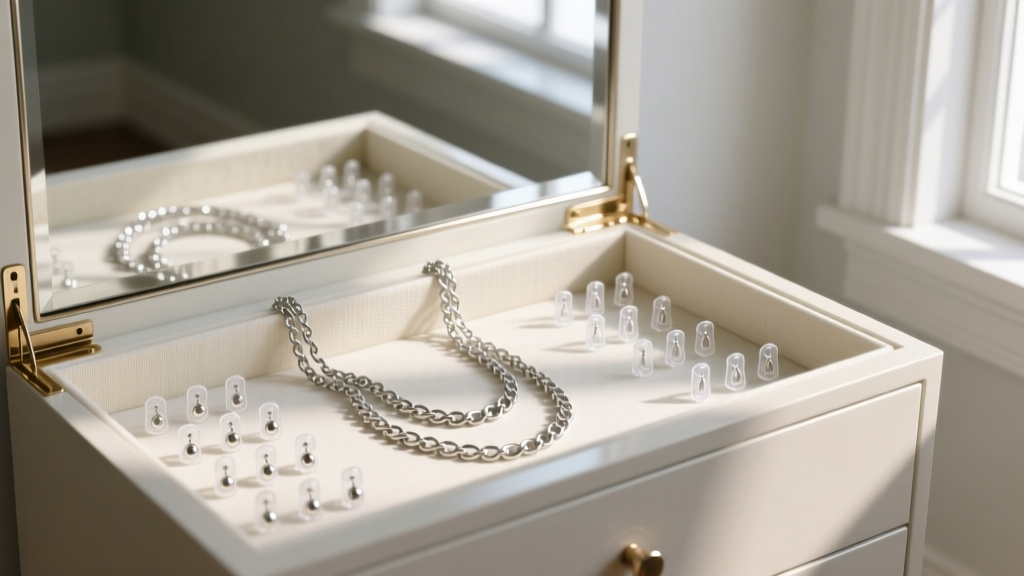
Perhaps the most egregious marketing claim in the jewelry storage industry is the blanket use of the term "anti-tarnish lining." According to the Gemological Institute of America (GIA), tarnish on silver is caused by a chemical reaction with sulfur compounds and moisture in the air. Simply lining a cabinet with dark Oxford cloth or standard polyester velvet does absolutely nothing to stop this chemical process.
True anti-tarnish storage requires specialized materials like Pacific Silvercloth or the inclusion of 3M Silver Shield anti-tarnish strips, which actively absorb sulfur gases. If a premium mirror cabinet claims to be anti-tarnish, check the specifications to see if it utilizes microfiber infused with anti-tarnish agents or includes replaceable anti-tarnish strips. If it just uses black velvet, you will still need to manually wipe down your silver pieces and include your own silica gel packets to control interior humidity. Do not pay a premium for a marketing buzzword that lacks the chemical backing to protect your sterling silver and white gold.
Final Verdict: Who Should Actually Buy?
Is a mirror w/ jewelry storage worth the investment? The answer depends entirely on your spatial constraints and your willingness to pay for structural integrity.
- The Budget Buyer ($40-$80): Only recommended for renters or students who need a temporary, lightweight solution. You must reinforce the mounting hardware and accept that the interior lining will not protect fine silver from oxidation.
- The Value Hunter ($80-$150): The sweet spot for most consumers. At this tier, you get 4mm silver-backed glass, reinforced hinges, and decent velvet lining. It provides 90% of the functionality of a premium model without the luxury markup.
- The Collector ($150-$300+): Worth every penny if you own a large collection of fine jewelry. The solid wood or aluminum frames, piano hinges, high-CRI daylight LEDs (crucial for evaluating gemstone color), and genuine anti-tarnish microfiber linings make these units a permanent fixture in a well-designed dressing room.
Ultimately, a well-constructed mirror jewelry cabinet is a masterclass in spatial efficiency. By prioritizing hinge quality, glass thickness, and genuine material grades over inflated capacity claims, you can secure a storage solution that protects your collection and elevates your daily routine for years to come.


