Photo Frame Jewelry Box: 2026 Display & Storage Trends
Discover 2026 photo frame jewelry box trends. We analyze materials, anti-tarnish linings, and spatial limits for stylish, hidden gallery-wall storage.

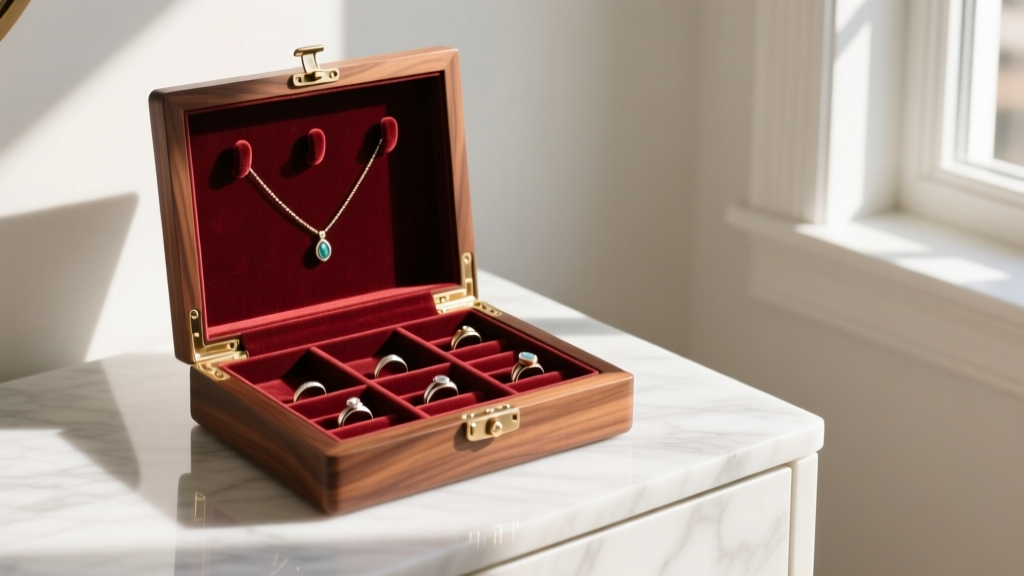
The intersection of sentimental display and secure storage has undergone a massive design evolution. Once relegated to the realm of novelty gifts and dorm-room decor, the modern photo frame jewelry box has emerged as a sophisticated staple in high-end interior design. As we move through 2026, the demand for "hidden in plain sight" storage solutions has pushed manufacturers to elevate these hybrid pieces from cheap plastic contraptions to architectural gallery-wall anchors. For jewelry collectors, this means navigating a new landscape of material grades, spatial constraints, and micro-climate preservation.
This comprehensive style and trend analysis breaks down the engineering, aesthetic shifts, and practical limitations of photo frame jewelry storage, providing you with a data-driven framework to select a piece that protects your investment while enhancing your space.
The Shift from Novelty to Curated Gallery Walls
Historically, photo frame jewelry boxes were shallow, poorly constructed MDF (medium-density fiberboard) boxes with a glass front and a flimsy magnetic clasp. They were designed primarily for lightweight trinkets. The 2026 design ethos, however, treats these boxes as integral components of the curated gallery wall. Interior designers are now utilizing them to break up visual monotony in a grid of art prints, offering a functional surprise that doubles as a conversation piece.
According to Architectural Digest, the modern gallery wall relies on varied textures and interactive elements to create depth. A swinging photo frame jewelry box introduces kinetic movement and mixed materials—like fluted glass, brushed brass, and natural wood grains—into a flat wall arrangement. The trend has shifted heavily toward oversized frames (16x20 inches or larger) that serve as the anchor piece in a bedroom or dressing room vignette, rather than small 5x7 desktop novelties.
Material Integrity and Hardware Mechanics
The longevity of a photo frame jewelry box is entirely dependent on its hardware and material composition. Because the front panel (the photo frame) bears the weight of the glass, the photograph, and the frame itself, the hinge system is the most critical point of failure.
Hinge Engineering
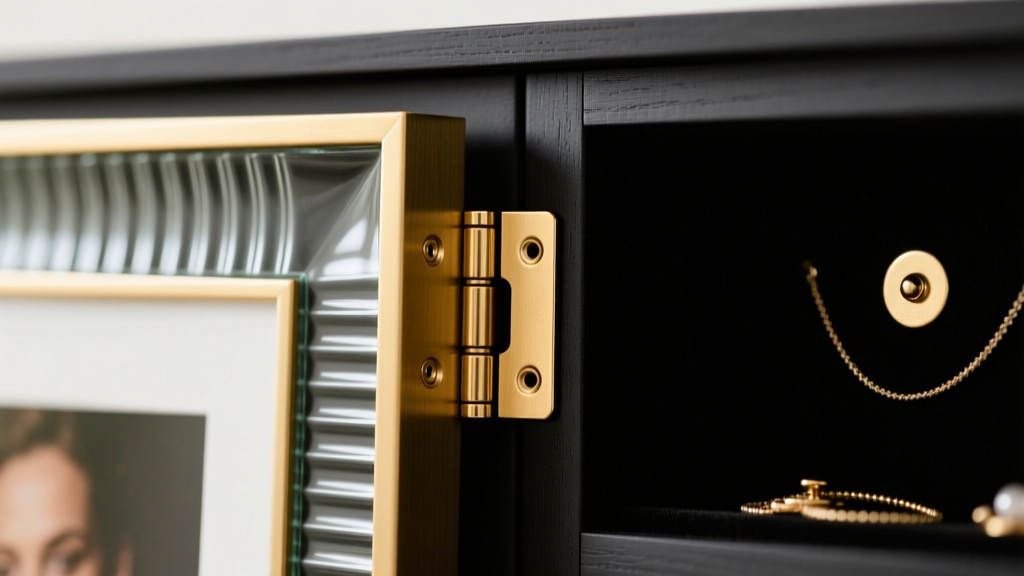
- Concealed European Hinges: The premium standard for 2026. These allow the frame to swing open a full 180 degrees without visible exterior hardware, maintaining the illusion of a standard art print when closed. Look for soft-close dampeners to prevent the frame from slamming against the wall or backing.
- Solid Brass Piano Hinges: Running the entire length of the box, these provide unmatched structural support for heavy, oversized boxes. While visible, they offer a vintage, industrial aesthetic that pairs well with dark walnut or matte black finishes.
- Zinc Alloy Pivot Pins: Common in budget-tier boxes. These are prone to warping under the weight of glass, leading to a crooked frame that fails to close flush against the velvet backing.
Frame Materials
While entry-level models still rely on PVC-wrapped MDF, the luxury market has pivoted toward FSC-certified solid woods and sustainable composites. Solid walnut and white oak offer the necessary density to hold heavy brass hooks without stripping the screw threads over time. Additionally, 2026 has seen a surge in fluted and reeded glass fronts. This not only obscures the jewelry inside for added privacy but also diffracts light beautifully, turning the box into a subtle lighting fixture when paired with interior LED strips.
Spatial Constraints: Depth vs. Jewelry Volume
The most common mistake collectors make when purchasing a photo frame jewelry box is ignoring the interior depth. Because these boxes are designed to sit flush against a wall or lay flat on a shallow dresser, their Z-axis (depth) is severely restricted compared to traditional armoire boxes. Understanding these spatial limits is crucial to prevent crushing delicate pieces or scratching gemstones against the glass front.
| Interior Depth | Box Classification | Ideal Jewelry Types | Pieces to Avoid |
|---|---|---|---|
| 1.0" - 1.5" | Ultra-Shallow / Desktop | Stud earrings, delicate chains, thin signet rings, hairpins. | Drop earrings, bangles, statement rings with high-set stones. |
| 1.75" - 2.25" | Standard Wall-Mount | Chandelier earrings, standard bangles, layered necklaces, brooches. | Wide cuff bracelets, bib necklaces, tiaras. |
| 2.5" - 3.5" | Deep-Set / Armoire Frame | Chunky cuffs, multi-strand pearls, large cocktail rings, watches. | Extremely tall millinery brooches, rigid torque necklaces. |
Pro Tip: Always measure your jewelry while it is clasped and laid flat. A necklace that hangs 2 inches off the wall when unclasped may only require 0.5 inches of depth when coiled properly on a velvet pad.
Micro-Environments: Solving the Shallow Tarnish Trap
Shallow storage enclosures present a unique chemical challenge: they trap ambient humidity and off-gassing compounds from the materials used to build the box itself. If a photo frame jewelry box uses cheap wood glues or acidic paper backings, it can accelerate the oxidation of silver and copper alloys.
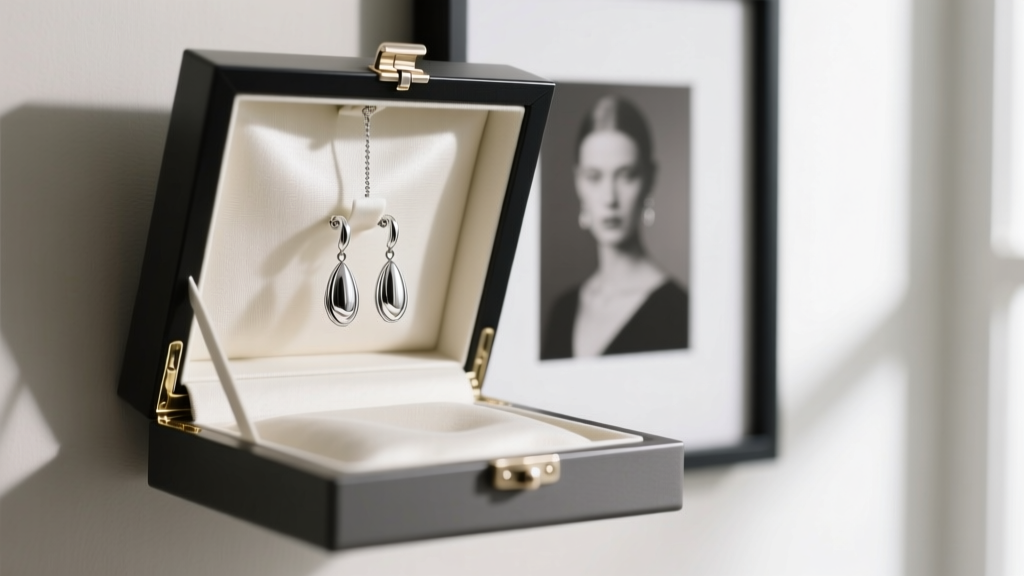
Silver tarnish is primarily caused by a reaction with hydrogen sulfide in the air, a process exacerbated by high humidity. The Victoria and Albert Museum's conservation guidelines emphasize that sealed environments require sacrificial barriers to protect metals. When evaluating a photo frame jewelry box for silver storage, look for the following anti-tarnish integrations:
- Pacific Silvercloth Lining: Unlike standard velvet flocking, genuine Pacific cloth is embedded with fine silver particles that absorb tarnish-causing gases before they reach your jewelry.
- Sacrificial Zinc Strips: High-end 2026 models feature discrete, replaceable slots for 3M anti-tarnish tabs or zinc carbonate strips. These act as a sacrificial anode, corroding in place of your sterling silver.
- Acid-Free Backing Boards: Ensure the photo matting and interior backing are certified acid-free and lignin-free. Standard cardboard backing will off-gas sulfur compounds directly into the enclosed jewelry compartment.
2026 Market Pricing and Buying Framework
The market for photo frame jewelry storage has stratified into three distinct tiers, each offering different levels of material integrity and preservation capabilities.
Entry Tier ($35 - $65)
Constructed from PVC-wrapped MDF with standard glass and magnetic closures. The interior lining is typically synthetic velvet glued directly to cardboard. Verdict: Suitable for fashion jewelry, stainless steel, and gold-plated brass. Not recommended for fine silver or heirloom pieces due to acidic off-gassing and poor humidity control.
Mid-Market Tier ($75 - $160)
Features solid wood veneers over engineered cores, upgraded brass hardware, and European soft-close hinges. Interiors are lined with polyurethane foam and synthetic anti-tarnish fabrics. Verdict: The sweet spot for everyday fine jewelry. Offers excellent wall-mount stability and aesthetic integration into modern gallery walls.
Luxury & Smart Tier ($180 - $350+)
Constructed from solid hardwoods (walnut, mahogany) with switchable privacy glass (PDLC technology that turns from clear to opaque with a remote click). Features genuine Pacific Silvercloth interiors, cedar-lined watch compartments, and integrated, color-calibrated LED lighting (CRI 90+) to accurately display gemstone color. Verdict: Essential for serious collectors requiring museum-grade preservation and high-security concealment.
Gallery Wall Integration and Load-Bearing Limits
When wall-mounting a photo frame jewelry box, you are not just hanging a picture; you are hanging a heavy, moving cabinet. A fully loaded 16x20 inch solid wood box containing silver chains, gemstone rings, and glass can easily exceed 15 pounds. Furthermore, the dynamic force of swinging the door open creates lateral stress on the wall anchors.
"Never rely on standard plastic drywall anchors for kinetic storage pieces. The repeated torque of opening and closing the frame will slowly widen the anchor hole, eventually leading to catastrophic wall failure."
Installation Best Practices:
- Stud Mounting: Always secure at least one side of the mounting bracket directly into a wooden wall stud using a minimum 2-inch wood screw.
- Toggle Bolts: If a stud is not available in the desired gallery wall layout, use heavy-duty steel toggle bolts (rated for at least 50 lbs each in 1/2" drywall) rather than expansion plugs.
- French Cleat Systems: Look for luxury models that utilize a hidden French cleat mounting system. This distributes the weight evenly across a wider horizontal plane and allows the box to sit perfectly flush against the wall, eliminating the "shadow gap" that ruins the illusion of a flat art print.
Final Thoughts on Curatorial Storage
The photo frame jewelry box has matured from a gimmicky space-saver into a legitimate piece of functional furniture. By prioritizing solid wood construction, European hinge mechanics, and active anti-tarnish linings, collectors can safely integrate their most prized pieces into their living spaces. As 2026 design trends continue to favor multifunctional, space-conscious elegance, these hidden storage solutions offer the perfect marriage of sentimental display and horological preservation.


