Polly Pocket Jewelry Box: 2026 Collector Value & Storage Guide
Assess the 2026 market value of vintage and modern Polly Pocket jewelry boxes, plus expert tips on using them for safe, practical jewelry storage.

The Nostalgia Premium: Why Polly Pocket Jewelry Boxes Hold Value
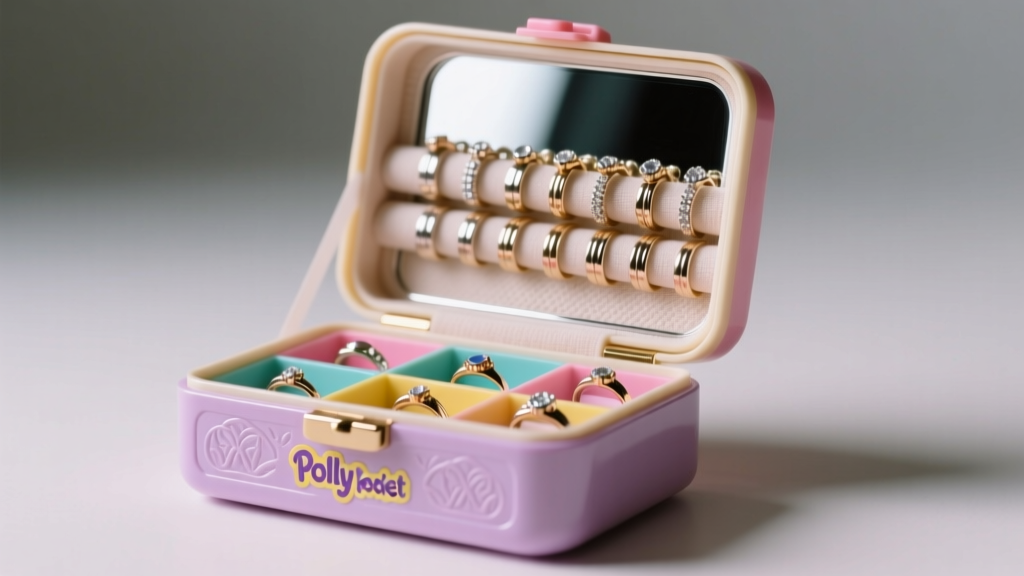
For jewelry enthusiasts and Y2K nostalgia collectors alike, the Polly Pocket jewelry box represents a fascinating intersection of childhood memorabilia and functional micro-storage. Originally designed by Bluebird Toys in the late 1980s and early 1990s, these pocket-sized compacts were engineered to house miniature dolls. However, their intricately molded interiors, complete with tiny ring rolls, stud earring slots, and hinged mirrors, quickly made them a favorite covert storage solution for small, everyday jewelry pieces.
As we navigate the 2026 collectibles market, the value of these items has shifted dramatically. Driven by millennial nostalgia and the broader resurgence of 1990s aesthetic trends, vintage Bluebird-era compacts have transcended their origins as mass-market toys. Today, they are evaluated with the same rigor as vintage costume jewelry or antique vanity cases. Understanding the budget required to acquire one—and the practical realities of using it to store modern precious metals—requires a deep dive into material science, market pricing, and preservation techniques.
2026 Market Pricing: Vintage Bluebird vs. Modern Mattel
When assessing the budget for a Polly Pocket jewelry box, you must first distinguish between the original Bluebird Toys releases (1989–1998) and the modern Mattel reproductions (2019–present). The former are highly sought-after collector's items, while the latter are accessible, budget-friendly novelty storage options.
| Era / Manufacturer | Condition Grade | Average 2026 Market Price | Primary Buyer Profile |
|---|---|---|---|
| Vintage Bluebird (1989-1993) | Mint in Box (MIB) | $180 - $350+ | Hardcore Toy Collectors |
| Vintage Bluebird (1994-1998) | Loose, Excellent | $45 - $95 | Nostalgia Buyers / Jewelry Fans |
| Vintage Bluebird | Play-Worn / Hinge Cracks | $15 - $30 | Restorers & Parts Harvesters |
| Modern Mattel (2019-Present) | New / Retail | $18 - $28 | Budget-Conscious Organizers |
According to market analysts at Antique Trader, the premium for early 1990s Bluebird compacts is heavily tied to the rarity of the specific interior mold. Compacts featuring the 'Ballerina' or 'Pool Party' interiors, which include specialized tiny drawers and velvet-like flocking, command the highest premiums. Modern Mattel versions, while visually similar, utilize cheaper PVC-blend plastics and lack the intricate, multi-level storage tiers of their predecessors, making them strictly utilitarian for jewelry storage.
Evaluating Condition: What Destroys Resale Value?
If you are investing in a vintage Polly Pocket jewelry box with the intent to preserve its financial value while using it for light jewelry storage, you must understand the specific failure modes of 1990s injection-molded plastics. The original cases were manufactured using ABS (Acrylonitrile Butadiene Styrene) plastic. While durable against drops, ABS is highly susceptible to environmental degradation.
The Hinge and Magnet Dilemma
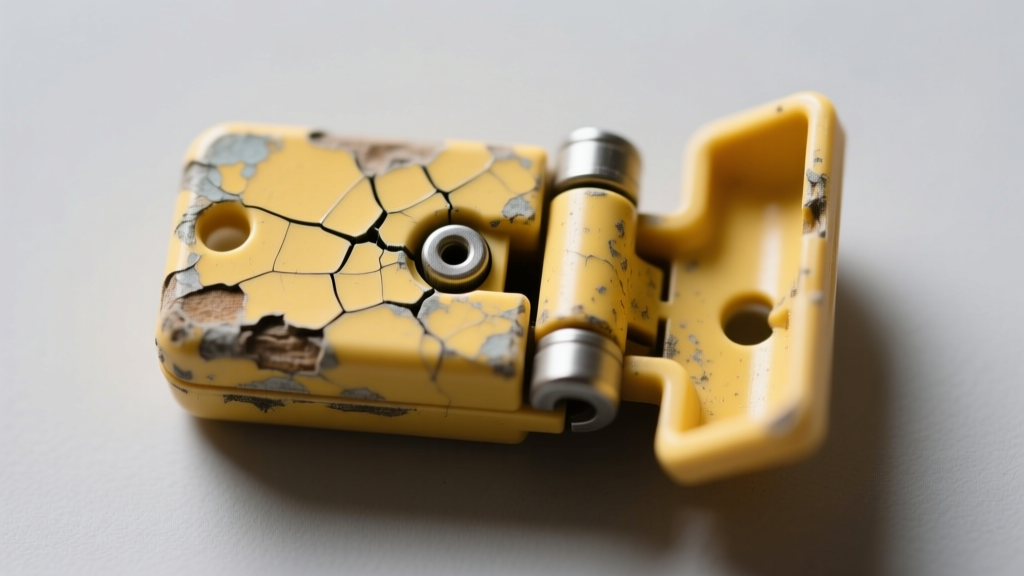
The most common structural failure in vintage compacts is the degradation of the living hinges or the snapping of the microscopic pin-hinges. Furthermore, the original neodymium or ferrite magnets used to keep the compact sealed often lose their magnetic charge or rust, staining the surrounding plastic. If you purchase a loose vintage piece for daily jewelry use, expect to replace the clasp magnets. This can be done by carefully prying out the old magnet, cleaning the cavity with isopropyl alcohol, and securing a replacement 2mm x 1mm neodymium disc magnet using a flexible adhesive like E6000. Never use cyanoacrylate (Super Glue), as it will fog the adjacent plastic and mirror surfaces.
Mirror Desilvering and UV Yellowing
The tiny interior mirrors are notorious for 'black edge' desilvering, a chemical breakdown of the reflective silver nitrate backing caused by humidity infiltration. Additionally, the ABS plastic contains bromine-based flame retardants that turn the casing a sickly yellow when exposed to UV light. As noted by toy preservation experts at Collectors Weekly, retro-brightening (using hydrogen peroxide and UV light) can reverse the yellowing, but this process often strips the original factory clear-coat and can warp the precise tolerances of the compact's closing mechanism, thereby destroying its collector value.
Practical Storage: Can You Actually Use Them for Jewelry?
Beyond the nostalgia, the core question for jewelry enthusiasts is whether a Polly Pocket jewelry box is a viable daily organizer. The answer depends entirely on your jewelry profile and gauge sizes.
- Exterior Dimensions: Most classic compacts measure exactly 2.8 inches in diameter and 0.9 inches thick when closed.
- Interior Depth: The usable depth is typically less than 0.5 inches.
- Best Use Cases: 20-gauge (0.8mm) and 18-gauge (1.0mm) standard earlobe studs, thin signet rings, and delicate stacking bands.
- Poor Use Cases: French wire drop earrings, thick 14-gauge cartilage jewelry, or any chain necklaces (which will tangle in the microscopic hinges).
The tiny molded plastic slots designed for Polly Pocket's accessories are surprisingly perfect for standard butterfly-back stud earrings. However, forcing thicker 16-gauge (1.2mm) posts into these vintage slots repeatedly will cause micro-fractures in the brittle, aged ABS plastic. For modern Mattel reproductions, the plastic is slightly more forgiving, but the flocking (the velvet-like interior lining) is often glued poorly and can lift, leaving sticky adhesive residue on your jewelry.
Anti-Tarnish Realities and Silver Care
From a material science perspective, vintage ABS plastic is relatively inert and does not off-gas sulfur compounds, meaning it will not actively accelerate the tarnishing of sterling silver. However, the compacts are not airtight. Ambient humidity and oxygen will still cause silver to oxidize over time. To convert a Polly Pocket compact into a true anti-tarnish jewelry box, you must cut a 1-inch square of 3M Anti-Tarnish Strip or Pacific Silvercloth and adhere it to the underside of the lid using double-sided archival tape. This will absorb ambient sulfur and protect your silver studs and rings for up to six months before requiring replacement.
Sourcing and Authentication Tips on a Budget
If you are hunting for a vintage piece in the $40 to $80 range, authentication is critical. The secondary market is flooded with 3D-printed replicas and modern Mattel knock-offs. To verify a genuine 1990s Bluebird original, inspect the back rim of the compact. Authentic pieces will feature a deeply embossed 'Bluebird Toys PLC' stamp, along with a specific mold number and the copyright year (usually 1989, 1992, or 1994). Modern Mattel versions will simply read 'Mattel' and lack the deep, sharp engraving of the original steel molds.
Expert Storage Tip: Never store a vintage Polly Pocket jewelry box in a bathroom or high-humidity environment. The combination of temperature fluctuations and moisture will rapidly accelerate the desilvering of the interior mirror and cause the metal hinge pins to rust, seizing the case permanently.
Ultimately, the Polly Pocket jewelry box remains one of the most charming, budget-friendly micro-storage solutions available in 2026. Whether you are paying a premium for a mint-condition 1992 original to display on your vanity, or picking up a modern $20 reproduction for your travel bag, understanding the material limitations and proper gauge pairings will ensure your jewelry remains safe, organized, and perfectly contained within a piece of pop-culture history.


