The Science of the Resin Jewelry Box: UV Stability & Storage
Explore the chemistry of the resin jewelry box. We analyze UV stability, off-gassing risks to silver, and structural tolerances for safe storage.

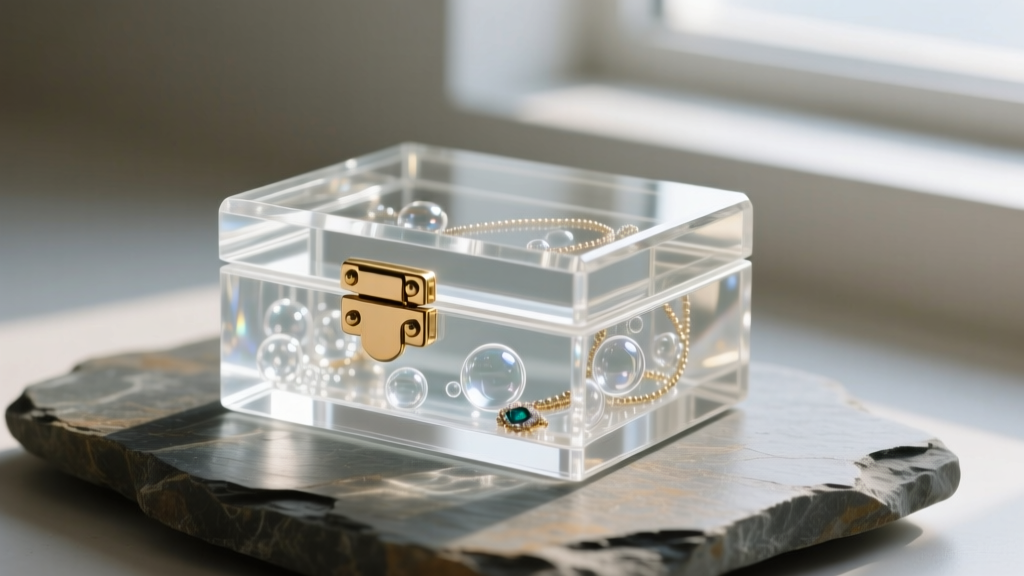
When collectors, jewelers, and archivists seek out a resin jewelry box, they are often drawn to the material's glass-like clarity, limitless color possibilities, and modern aesthetic. However, from a materials science and archival conservation perspective, storing precious metals and delicate gemstones inside a polymer matrix introduces complex chemical variables. Not all resins are created equal. The wrong formulation can lead to warped lids, aggressive yellowing, or worse—chemical off-gassing that permanently damages sterling silver and porous gems.
In this expert deep dive, we move beyond surface-level aesthetics to examine the polymer chemistry, structural tolerances, and archival safety profiles of modern resin storage solutions. Whether you are a hobbyist storing handmade wire-wrapped pendants or a collector preserving estate pieces, understanding the technical realities of resin is critical for long-term jewelry preservation.
The Chemistry of Resin: Epoxy vs. Polyurethane vs. UV-Cured
The term "resin" is a broad umbrella covering entirely different chemical families. When evaluating a resin jewelry box, you are likely looking at one of three primary polymers, each with distinct physical properties and failure modes.
Bisphenol-A (BPA) Epoxy Resins
Epoxies are the industry standard for thick, crystal-clear casts. They offer exceptional dimensional stability with a volumetric shrinkage rate of less than 2%. This low shrinkage is vital for jewelry boxes, as it ensures that lids and bases remain perfectly flat, allowing for seamless closure. However, standard aromatic epoxies are highly susceptible to photo-oxidation, meaning they will amber over time when exposed to ultraviolet light.
Aliphatic Polyurethane Resins
Polyurethanes are inherently UV-stable due to their aliphatic chemical backbone, which lacks the light-absorbing aromatic rings found in standard epoxies. While they exhibit slightly higher shrinkage (2% to 4%), high-grade polyurethanes are the gold standard for archival and museum-grade plastic enclosures. According to the Canadian Conservation Institute, stable plastics like specific polyurethanes and acrylics are preferred for long-term artifact storage due to their low off-gassing profiles.
UV-Cured Acrylate Resins
UV resins cure in minutes under ultraviolet light, making them popular for mass-produced, budget-friendly jewelry boxes. However, they suffer from severe volumetric shrinkage—often between 5% and 8%. This rapid contraction creates immense internal stress, frequently resulting in warped lids that fail to close properly, exposing the jewelry inside to ambient humidity and airborne sulfides.
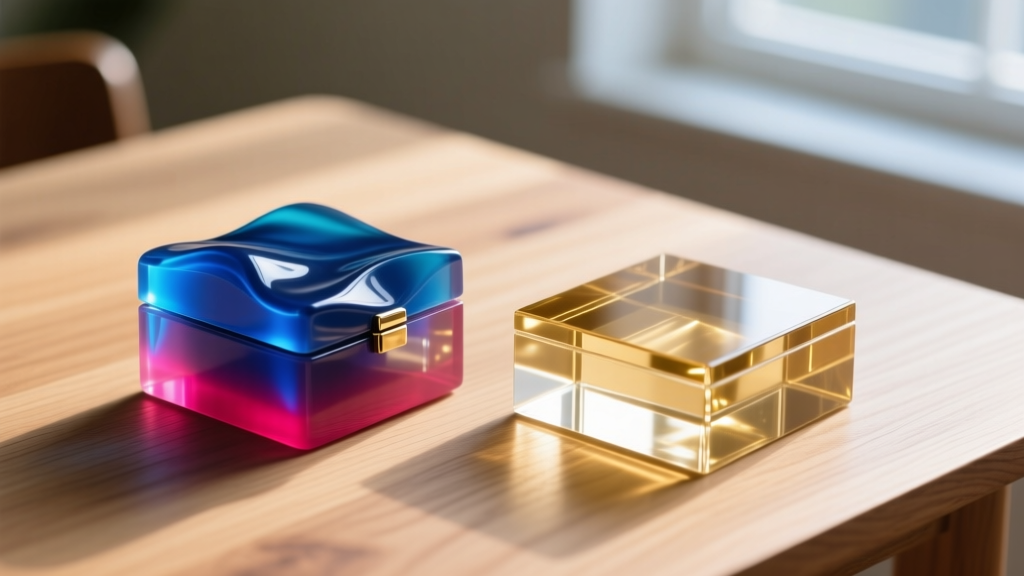
The Yellowing Factor: HALS and UV Absorbers Explained
If you are purchasing a clear epoxy resin jewelry box, UV resistance is the most critical technical specification to verify. Manufacturers combat yellowing by adding two distinct classes of chemical stabilizers:
- Ultraviolet Absorbers (UVAs): Compounds like Tinuvin 1130 act as a microscopic sunblock, absorbing UV radiation and converting it into harmless heat. They protect the bulk of the resin but degrade over time.
- Hindered Amine Light Stabilizers (HALS): Compounds like Tinuvin 292 do not absorb UV light; instead, they scavenge the free radicals generated by photo-oxidation, effectively halting the chemical chain reaction that causes ambering.
Expert Insight: A premium resin jewelry box should utilize a synergistic blend of both UVAs and HALS. Be highly skeptical of brands that claim "lifetime UV resistance" without specifying the use of hindered amines. Even the best stabilized epoxies will eventually yellow if placed in direct, unfiltered sunlight, but a proper HALS/UVA blend will delay this process by a decade or more under normal indoor lighting.
For a deeper comparison of how different light sources affect these polymers, the technical team at ArtResin provides extensive data on the photo-degradation rates of various clear casting mediums.
Off-Gassing and Tarnish: Is Your Resin Safe for Silver?
The most insidious threat a poorly manufactured resin jewelry box poses to your collection is chemical off-gassing. Sterling silver is highly reactive to sulfur compounds and certain acidic vapors, which cause rapid tarnishing (silver sulfide formation). Furthermore, porous gemstones like pearls, opals, and turquoise can be permanently etched or dehydrated by acidic microclimates.
During the curing process, epoxy hardeners (often amine-based) can react with ambient moisture to form a waxy, acidic surface film known as "amine blush." If a resin box is not properly washed and post-cured, this acidic residue will transfer directly to your jewelry, accelerating tarnish and potentially degrading the luster of soft pearls.
| Resin Type | Shrinkage Rate | UV Stability | Off-Gassing Risk | Archival Safety |
|---|---|---|---|---|
| UV-Cured Acrylate | 5% - 8% | Poor (Brittle) | Low (if fully cured) | Moderate |
| Bisphenol-A Epoxy | < 2% | Poor (Ambers) | High (Amine blush) | Poor (without seal) |
| Aliphatic Polyurethane | 2% - 4% | Excellent | Very Low | Excellent |
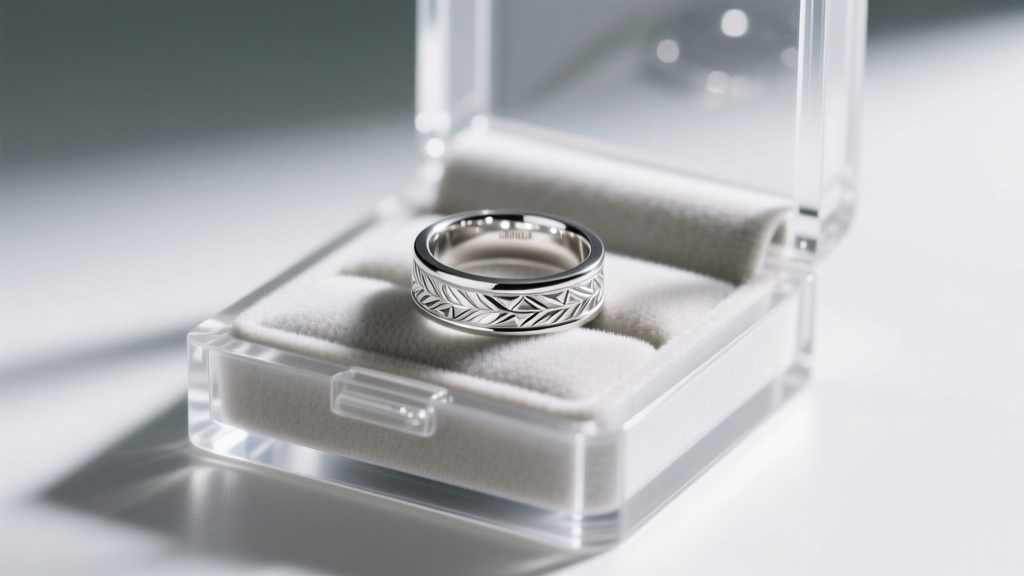
To mitigate off-gassing, high-end resin jewelry boxes are lined with chemically inert materials. Look for interiors lined with unbleached, acid-free cotton, or specialized anti-tarnish treated polyethylene foams. Never store unprotected silver directly against the bare resin floor of a cast box.
Structural Tolerances and Hinge Mechanics in Cast Resin
Resin is a thermoset polymer with a high Shore D hardness (typically 80D to 85D for jewelry-grade epoxies). While this makes the surface highly scratch-resistant, it also means the material is relatively brittle and lacks the pull-out strength required to hold mechanical fasteners. Driving a standard wood or metal screw directly into a resin casing will strip the threads at roughly 40 lbs of torque, leading to catastrophic hinge failure.
Expert makers and high-end manufacturers bypass this limitation by using epoxy-anchored brass threaded inserts. During the casting process or via precision CNC drilling post-cast, M3 or M4 metric brass inserts are embedded into the resin. The hinge screws then thread into the brass, not the polymer. When evaluating a resin jewelry box, inspect the hinge mounting points. If you see screws biting directly into the plastic, the box will eventually fail under the repetitive stress of daily opening and closing.
Furthermore, as noted in the structural guidelines by West System, thick resin casts generate significant exothermic heat during curing. If a manufacturer pours the box walls too thick in a single pour, the internal temperature can exceed 300°F, causing thermal cracking and internal micro-fractures that compromise the box's structural integrity over time.
Evaluating Microclimates: Humidity and Gemstone Porosity
Unlike wood, which breathes and naturally buffers humidity fluctuations, cured resin is entirely non-permeable. This creates a sealed microclimate inside the jewelry box. While this is excellent for keeping ambient sulfides away from silver, it can be detrimental to certain gemstones.
The Opal and Pearl Dilemma
Opals contain up to 20% water by weight. If an opal is sealed inside a dry, non-breathable resin box with a desiccant packet, the stone will slowly desiccate, leading to crazing (a network of fine cracks). Conversely, pearls require a slight amount of ambient moisture to maintain their nacreous luster; storing them in an airtight resin vault can cause them to become brittle and chalky. For these specific gems, ensure your resin jewelry box features microscopic ventilation channels or is stored in a climate-controlled room with 40-50% relative humidity.
Final Checklist for the Discerning Buyer
Before investing in a premium resin jewelry box, run through this technical checklist to ensure you are getting a product engineered for both beauty and preservation:
- Weight and Density: High-quality casts are heavy. Lightweight boxes often indicate the use of chemical foaming agents or excessive filler powders that compromise clarity and structural rigidity.
- The Smell Test: A fully cured, high-grade resin box should have zero odor. Any sharp, chemical, or fishy smell indicates incomplete curing and active amine off-gassing, which will tarnish your metals.
- Hardware Integration: Verify that hinges and clasps are mounted via threaded brass inserts, not direct-to-resin screws.
- Interior Lining: Ensure all contact surfaces are buffered with acid-free, archival-grade textiles or inert polyethylene.
By understanding the polymer science behind your storage solutions, you can ensure that your resin jewelry box serves as a true protective vault, preserving the brilliance and structural integrity of your collection for decades to come.


