Troubleshooting Common Vintage Glass Jewelry Box Storage Issues
Expert troubleshooting for vintage glass jewelry box storage. Learn to fix degraded linings, repair brass hinges, and prevent silver tarnish safely.

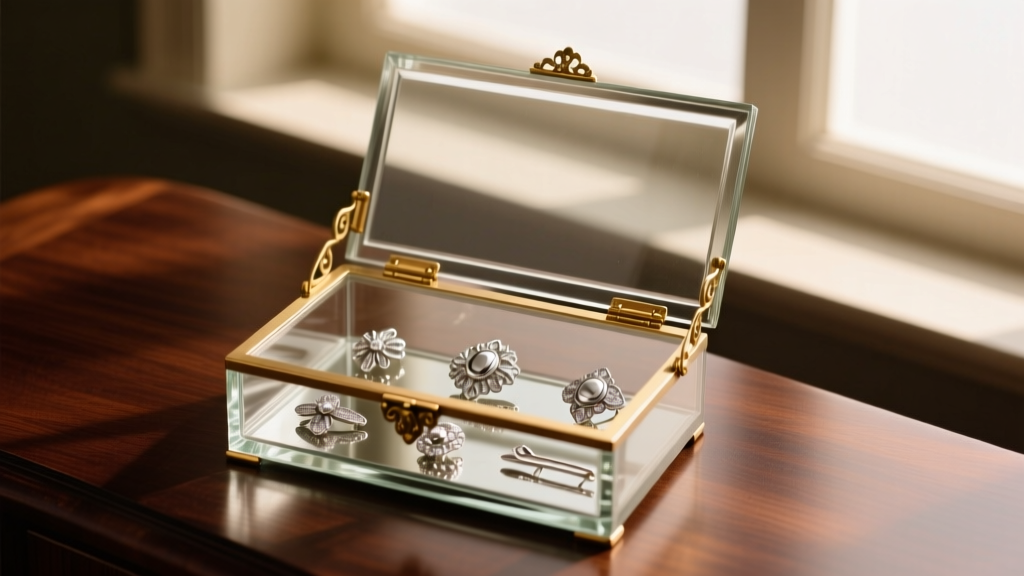
The Hidden Dangers of Antique Glass Storage
Owning a vintage glass jewelry box—whether it is a delicate 1930s Depression glass piece, a heavy Victorian hand-painted casket, or a mid-century geometric design—adds undeniable elegance to any vanity. However, from a conservation and storage perspective, these antique vessels present unique micro-climatic hazards. Unlike modern acrylic or treated wooden organizers, vintage glass is entirely non-porous. While this might seem beneficial for keeping dust out, it inadvertently traps ambient humidity and off-gassing chemicals inside, creating a destructive terrarium effect for fine jewelry.
As we navigate jewelry preservation standards in 2026, professional conservators emphasize that the primary enemy of vintage storage is not the glass itself, but the historical materials used to construct and line the box. Old velvet linings, degrading metal alloys, and improper cleaning agents can rapidly accelerate silver sulfide tarnishing, pit delicate nacre on pearls, and cause irreversible structural damage to the box. This guide provides deep-dive troubleshooting solutions to restore, repair, and safely utilize your vintage glass jewelry box without compromising your collection or the antique's integrity.
Troubleshooting Degraded Velvet and Silk Linings
The Acid Test: Why Old Fabrics Damage Silver and Pearls
The most pervasive issue with antique jewelry boxes is the original interior lining. Mid-century and Victorian boxes were frequently lined with silk, rayon, or cotton velvet dyed using sulfur-based compounds and acidic sizing agents. Over decades, these fabrics break down and off-gas sulfur dioxide and organic acids. When sterling silver is stored in this environment, it undergoes rapid electrochemical reactions, resulting in thick, black silver sulfide tarnish. Similarly, the Gemological Institute of America (GIA) warns that acidic off-gassing can etch the delicate calcium carbonate surface of pearls, causing permanent dullness and pitting.
Step-by-Step Relining with Anti-Tarnish Materials
If your vintage glass jewelry box exhibits a musty odor or if silver tarnishes within weeks of storage, the lining must be replaced. Do not simply lay modern anti-tarnish mats over the old fabric; the acidic gases will still permeate.
- Removal: Use a low-heat setting on a heat gun (around 150°F / 65°C) to gently soften the vintage hide glue or animal-based adhesives. Carefully lift the fabric using a flexible Teflon spatula to avoid scratching the interior glass.
- Residue Cleaning: Remove residual glue using a citrus-based solvent (like d-Limonene) applied to a microfiber cloth. Avoid acetone or alcohol, which can degrade painted glass details or cloud antique pressed glass.
- Modern Replacement: Cut a new lining from Pacific Silvercloth or a specialized zinc-impregnated anti-tarnish flannel. These materials actively neutralize sulfur gases before they reach your jewelry.
- Adhesive Selection: According to guidelines from the American Institute for Conservation (AIC), never use standard craft glues or hot glue, which contain volatile plasticizers. Instead, use a pH-neutral, archival-grade Polyvinyl Acetate (PVA) adhesive, such as Lineco Neutral pH Adhesive, to secure the new fabric to the glass base.
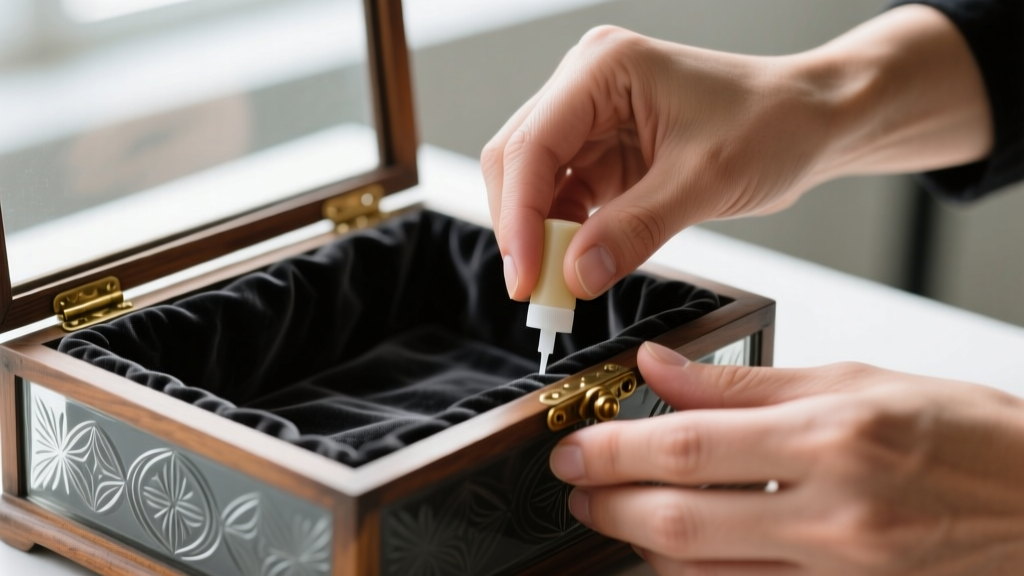
Fixing Sticky Hinges and Warped Metal Frames
Vintage glass boxes are typically bound in brass, bronze, or early pot metal (zinc alloys). Over time, these metals oxidize, leading to stiff, squeaky, or entirely seized hinges. Furthermore, early 20th-century pot metal is susceptible to 'zinc pest'—a destructive intercrystalline corrosion that causes the metal to swell, crack, and crumble.
Safe Lubrication and Realignment Techniques
The most common mistake collectors make is spraying WD-40 or applying petroleum-based oils to antique hinges. These products attract microscopic dust, turn into an abrasive sludge, and permanently stain the surrounding glass and fabric. Instead, use a micro-drop of synthetic clock oil applied with a fine needle, followed by a protective barrier of micro-crystalline wax (such as Renaissance Wax) to halt further oxidation without altering the metal's historic patina.
Reattaching Loose Glass to Metal Frames
When the glass lid separates from the metal bezel, avoid cyanoacrylate (Superglue) at all costs. Cyanoacrylate fumes 'bloom' when curing, leaving a permanent, cloudy white residue on the glass that cannot be polished out. For structural glass-to-metal repairs, conservators rely on UV-curing optical adhesives like Norland NOA68. These adhesives remain perfectly clear, do not off-gas harmful vapors, and only cure when exposed to targeted UV light, giving you ample time to align the heavy glass lid perfectly before setting the bond.
| Material / Problem | Recommended Product | Products to Avoid |
|---|---|---|
| Fabric to Glass Lining | Lineco Neutral pH Adhesive (PVA) | Hot glue, Spray adhesives, Rubber cement |
| Glass to Metal Frame | UV-Curing Optical Resin (Norland NOA68) | Cyanoacrylate (Superglue), 2-part Epoxies |
| Hinge Lubrication | Synthetic clock oil + Renaissance Wax | WD-40, 3-in-One Oil, Petroleum jelly |
| Glue Residue Removal | d-Limonene solvent or Naphtha | Acetone, MEK, Abrasive scraping |
Addressing Glass Clouding, Cracks, and Cleaning Hazards
Maintaining the optical clarity of a vintage glass jewelry box requires an understanding of historical glassmaking. Many antique boxes feature lead crystal or Depression-era pressed glass. A critical troubleshooting rule: never clean lead crystal or antique glass with ammonia-based cleaners (like standard Windex). Ammonia is highly alkaline and will chemically react with the lead oxide or surface patina, causing irreversible 'crizzling' (a network of microscopic cracks) and permanent cloudiness.
For routine cleaning, use a 50/50 mixture of distilled water and white vinegar applied to a lint-free cotton cloth. Spray the cloth, never the glass, to prevent liquid from seeping into the metal hinges or fabric lining. For stubborn grime in the crevices of pressed glass, use a soft-bristled makeup brush lightly dampened with the solution to dislodge dirt without scratching the delicate surface.
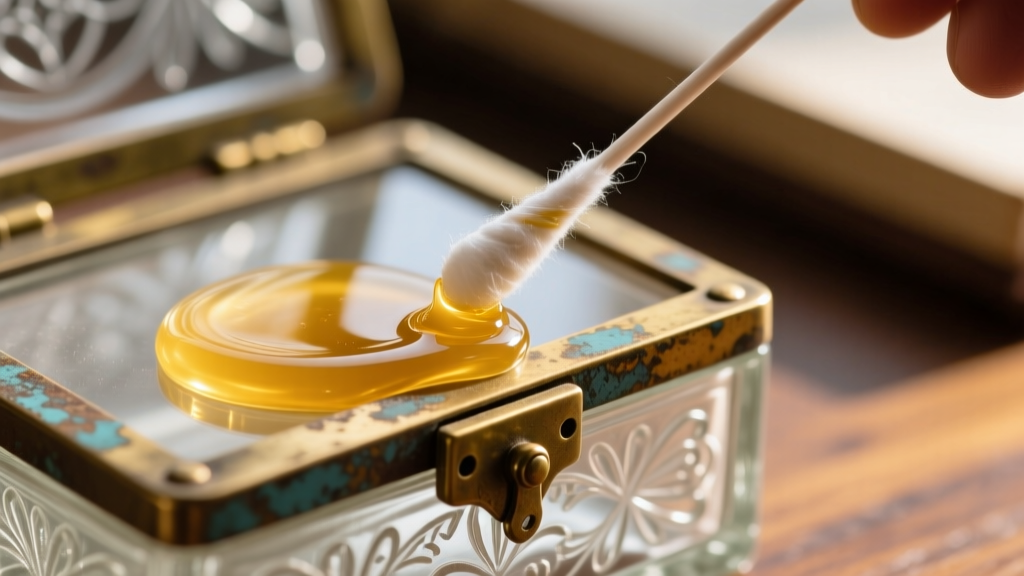
Climate Control: Preventing Micro-Climates in Glass
Because glass is an impermeable barrier, closing the lid of a vintage box in a humid room seals that moisture inside. When the ambient temperature drops at night, the trapped moisture condenses on the interior glass and drips onto your jewelry, causing flash-rusting on steel components and water-spotting on porous gemstones like turquoise and opals.
To troubleshoot this micro-climate issue, you must introduce passive desiccants. Place two or three small, breathable sachets of indicating silica gel (preferably cobalt-free, orange-to-green indicating beads) in the corners of the box. These sachets will absorb excess ambient moisture. Recharge the silica gel by baking it at 250°F for two hours whenever the beads change color. Additionally, incorporate a small strip of activated charcoal to absorb any lingering volatile organic compounds (VOCs) that the silica gel cannot capture.
Summary Checklist for Safe Vintage Storage
Before placing your fine jewelry into a restored vintage glass box, run through this final troubleshooting checklist to ensure a safe storage environment:
- Odor Check: The interior should smell neutral. Any sour or musty odors indicate active acidic off-gassing from old linings.
- Tarnish Test: Leave a piece of inexpensive sterling silver in the box for 72 hours. If it develops yellow or black tarnish, the anti-tarnish lining has failed or the glass seal is trapping sulfur.
- Hinge Tension: The lid should stay open at a 90-degree angle without sagging, preventing accidental glass-on-glass impacts.
- Desiccant Status: Ensure silica gel indicators are in their 'dry' color state before sealing the lid.
- Placement: Keep the glass box out of direct, unfiltered sunlight to prevent UV degradation of the new interior fabrics and to avoid solar heat buildup.
By applying modern conservation science to antique storage vessels, you can preserve the historical beauty of your vintage glass jewelry box while providing a chemically inert, physically secure haven for your most treasured pieces.


