Troubleshooting & Restoring Your Vintage LV Jewelry Case
Learn how to troubleshoot, clean, and restore a vintage LV jewelry case. Expert fixes for vachetta leather, brass hardware, and velvet linings.

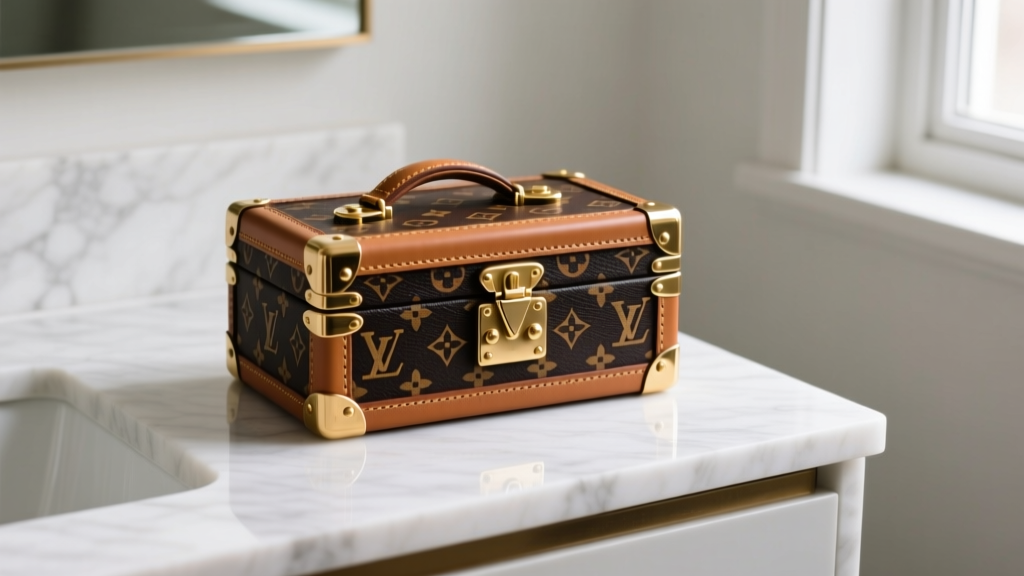
A vintage Louis Vuitton jewelry case is more than just a storage solution; it is a piece of horological and sartorial history. However, decades of travel, fluctuating humidity, and natural material degradation can turn a pristine monogram masterpiece into a tarnished, peeling shell. Unlike standard jewelry boxes, an LV case requires highly specific conservation techniques due to its unique combination of vegetable-tanned vachetta leather, solid brass hardware, and specialized interior adhesives.
In this comprehensive troubleshooting guide, we will break down the exact failure modes of vintage LV jewelry cases and provide professional-grade restoration techniques to bring your luxury storage back to life.
Diagnosing Common LV Jewelry Case Degradation
Before applying any cleaners or conditioners, you must accurately diagnose the materials. A classic LV jewelry case typically features four distinct material zones, each with its own chemical vulnerabilities:
- Monogram Canvas: A cotton duck canvas coated with a proprietary polyvinyl chloride (PVC) derivative. It is highly durable but prone to micro-cracking in dry environments.
- Vachetta Leather: Untreated, vegetable-tanned cowhide used for handles, trims, and piping. It is incredibly porous and reacts aggressively to alkaline substances and water.
- Brass Hardware: Vintage pieces (pre-2000s) typically feature solid, unlacquered brass that develops a patina or verdigris (green corrosion) over time.
- Interior Lining: Older models use cotton velvet or suede, while newer iterations utilize microfiber. The primary failure point here is the breakdown of the animal-hide glues used to bind the fabric to the interior shell.
Vachetta Leather: Treating Water Stains and Darkening
Vachetta leather is the most high-maintenance component of any LV jewelry case. Because it lacks a synthetic topcoat, it absorbs oils, lotions, and moisture directly into its fibers. When water hits vachetta, it displaces the natural tannins, resulting in permanent, dark, irregular spotting.
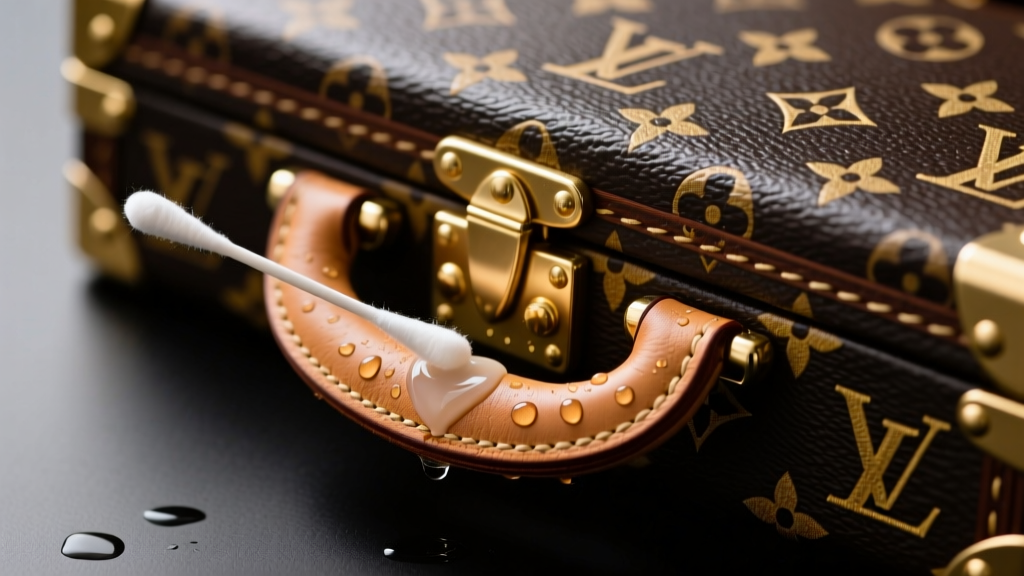
The Eraser and pH-Balancing Method
For light surface scuffs and minor oil transfers from hands, avoid commercial leather wipes, which often contain alcohol and silicone. Instead, use a high-quality, untreated crepe rubber eraser to gently lift the oxidized surface cells.
If the leather has become stiff or is showing signs of dry rot (micro-fissures along the piping), it requires conditioning. However, you must avoid mink oil or neatsfoot oil, as these will permanently darken the leather and attract dust. According to the AIC Conservation Wiki, museum conservators recommend using pH-neutral, water-based emulsions. Products like Bickmore Bick 4 or Lexol Conditioner are ideal because they hydrate the collagen fibers without altering the leather's natural honey-colored patina. Apply a micro-thin layer with a lint-free cotton pad, let it absorb for 24 hours, and buff gently with a horsehair brush.
Brass Hardware: Removing Tarnish Without Ruining the Engraving
The brass S-locks, push-buttons, and corner guards on vintage LV cases are solid brass, not plated. Over time, exposure to sulfur in the air and acidic skin oils causes the brass to oxidize, turning dull brown or developing a crusty green verdigris in the crevices of the 'LOUIS VUITTON' stamp.
Safe Polishing Protocols
Never use harsh, ammonia-based brass dips or abrasive pastes like Brasso. These will strip the metal, round off the sharp edges of the iconic LV engraving, and potentially damage the adjacent monogram canvas.
Instead, follow the guidelines recommended by the National Trust for historic metal conservation:
- Initial Clean: Use a soft-bristled toothbrush dipped in a mild solution of distilled water and pH-neutral dish soap to remove surface grime and loose verdigris.
- Targeted Polishing: Apply a tiny amount of non-abrasive metal polish (such as Maas Metal Polish or Flitz) to a cotton swab. Carefully work the polish into the brass, avoiding contact with the canvas or vachetta.
- Sealing: Once the desired shine is achieved, wipe the hardware completely clean with a microfiber cloth dampened with distilled water to halt the chemical polishing action. You can apply a micro-layer of Renaissance Wax to delay future tarnishing.
Interior Lining: Fixing Peeling Velvet and Microfiber Dust
One of the most frustrating issues with vintage jewelry storage is the interior lining peeling away from the wooden or composite shell. This occurs because the original hide glues dry out, crystallize, and lose their adhesive properties after 15 to 20 years.
Archival-Grade Re-Adhesion
Do not use superglue, hot glue, or standard craft glues to fix a peeling velvet or microfiber interior. These adhesives dry hard, create visible lumps under the thin fabric, and off-gas acidic fumes that will tarnish your silver and gold jewelry.
Instead, use an archival-grade, flexible Polyvinyl Acetate (PVA) adhesive, such as Lineco Neutral pH Adhesive or Jade PVA. Using a fine-tipped spatula or a toothpick, carefully lift the peeling fabric, scrape away the brittle, crystallized original glue, and apply a paper-thin layer of the PVA. Press the fabric down and use low-tack painter's tape to hold it in place while it cures for 12 hours. This ensures a flexible, acid-free bond that will not harm your precious metals.
Clasp and Hinge Mechanisms: Stiff Locks and Loose Pins
A stiff push-button or an S-lock that refuses to click into place is usually the result of microscopic dust, skin cells, and dried oils gumming up the internal spring mechanism.
Crucial Warning: Never spray WD-40 or liquid silicone into an LV lock. These liquids will seep into the interior lining, causing permanent grease stains, and will eventually attract more dust, creating a cement-like sludge inside the lock cylinder.
To troubleshoot a stiff lock, use a dry, ultra-fine graphite powder. Apply a tiny puff of graphite directly into the keyhole or lock seam using a precision straw. Work the lock back and forth multiple times to distribute the dry lubricant through the tumblers and springs. For squeaky hinges, a microscopic drop of synthetic watchmaker's oil applied with a needle-tip oiler will silence the friction without risking fabric stains.
Troubleshooting Matrix: Quick Reference Guide
| Problem | Root Cause | DIY Solution | When to See a Pro |
|---|---|---|---|
| Dark water spots on vachetta | Tannin displacement from moisture | Light sanding with 1000-grit paper; condition with Bick 4 | If the leather is cracked or structurally compromised |
| Green crust on brass hardware | Verdigris (copper oxidation) | Toothbrush with mild soap; Maas polish on a cotton swab | If the brass is pitted or the S-lock spring is broken |
| Velvet lining peeling at the edges | Crystallization of original hide glue | Scrape old glue; re-adhere with Lineco Neutral pH PVA | If the interior shell wood is warped or splintering |
| Stiff push-button clasp | Dust and oil buildup in the spring | Flush with dry graphite powder; cycle the lock 50 times | If the internal metal spring has snapped |
| Monogram canvas micro-cracking | Low humidity and UV exposure | Store at 45-55% RH; avoid direct sunlight | If the canvas is tearing at the seams or folding points |
Long-Term Storage Best Practices for Luxury Cases
Restoring your LV jewelry case is only half the battle; preserving it requires strict environmental controls. The PVC-coated canvas can become brittle if the relative humidity (RH) drops below 30%, while the vachetta leather and interior glues will foster mold if the RH exceeds 65%.
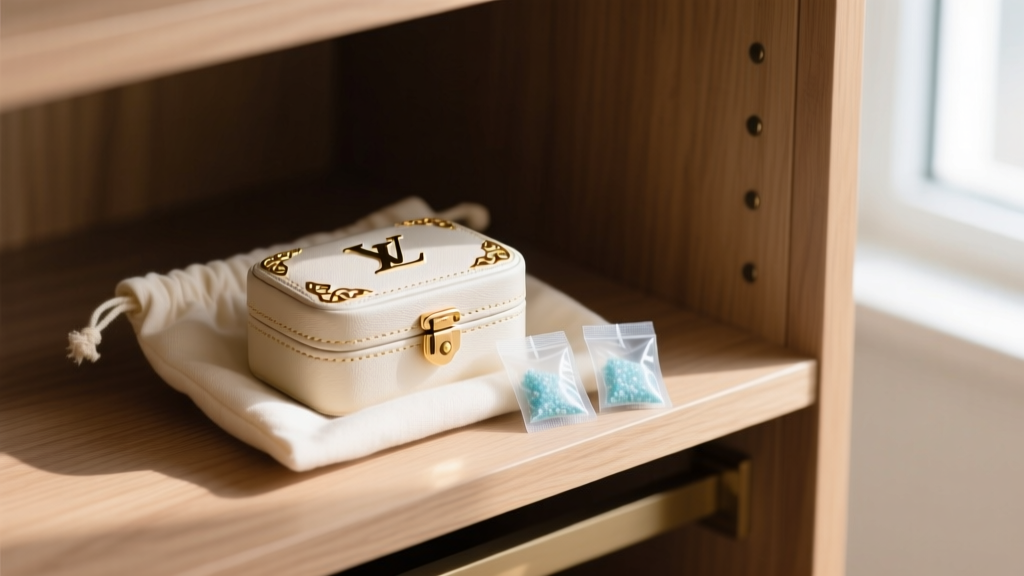
Always store your restored case inside its original, breathable cotton dust bag. Never use plastic bins or vacuum-sealed bags, as the PVC canvas needs to off-gas slightly, and trapping it will lead to a sticky surface degradation known as 'sticky shedding.' Place 2-3 indicating silica gel packets inside the jewelry compartments to maintain a stable micro-climate, and swap them out every six months. If you need to send the piece for structural repairs beyond DIY capabilities, always consult Louis Vuitton Repair Services directly to ensure the historical integrity of the piece is maintained by certified artisans.
Expert Insight: Never store an empty vintage jewelry case with the lid tightly latched for years at a time. The tension on the hinges and the compression on the interior velvet can cause permanent deformation. Leave the clasp slightly resting, or place a soft, acid-free tissue roll inside to support the lid's weight.


