Comparing Materials for Retail Jewelry Display Cases
Compare glass, acrylic, and wood for retail jewelry display cases. Learn about material grades, anti-tarnish properties, and pricing for 2026 setups.

The Material Science of Retail Jewelry Presentation
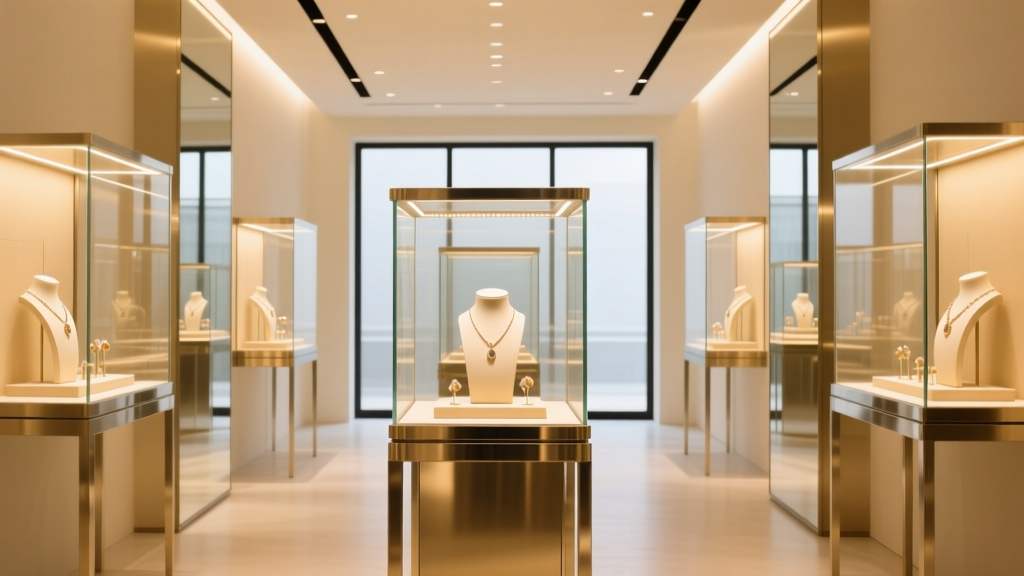
In the highly competitive luxury retail sector of 2026, the physical environment is just as critical as the merchandise itself. When evaluating retail jewelry display cases, buyers often fixate on dimensions and lighting, overlooking the foundational material science that dictates longevity, security, and the chemical preservation of the inventory. A display case is not merely a shelf; it is a microclimate. The materials you choose will directly influence how your diamonds refract light, whether your sterling silver tarnishes prematurely, and how well your fixtures withstand daily operational wear.
This comprehensive guide dissects the physical and chemical properties of the primary materials used in modern retail jewelry display cases, providing actionable data for boutique owners, visual merchandisers, and retail architects.
Glass vs. Acrylic: The Transparency Battle
The primary function of a display case is visibility, but not all transparent materials are created equal. The choice between silicate glass and polymethyl methacrylate (PMMA, commonly known as acrylic) involves trade-offs in optical clarity, weight, and impact resistance.
Optical Clarity and Color Rendering
Standard soda-lime glass, the most common and economical option, inherently contains iron oxide. This imparts a subtle green tint, particularly visible at the edges, and reduces light transmission to approximately 89%. While acceptable for basic fashion jewelry, this green shift can severely distort the perceived color of high-value emeralds, rubies, and fancy-colored diamonds.
For fine jewelry, low-iron glass (often referred to by brand names like Starphire) is the industry standard. By reducing the iron content, light transmission increases to 91-92%, and the green tint is virtually eliminated. This ensures a Color Rendering Index (CRI) that accurately reflects the true hue of gemstones. In 2026, top-tier retailers are increasingly pairing low-iron glass with anti-reflective (AR) coatings, which reduce surface glare from 8% down to less than 1%, creating an 'invisible' barrier between the customer and the product.
Acrylic (PMMA): Weight and Impact Considerations
Acrylic is significantly lighter than glass (roughly half the weight) and offers up to 15 times the impact resistance. However, it is highly susceptible to micro-scratching from routine cleaning. Furthermore, standard acrylic transmits UV light, which can accelerate the fading of certain treated gemstones and organic materials like pearls or coral. If acrylic must be used—often the case for traveling tradeshows or pop-up retail—specify cell-cast acrylic with UV-filtering additives rather than cheaper extruded acrylic, which is prone to warping and internal stress crazing.
Wood and MDF: Structural Foundations and Tarnish Risks
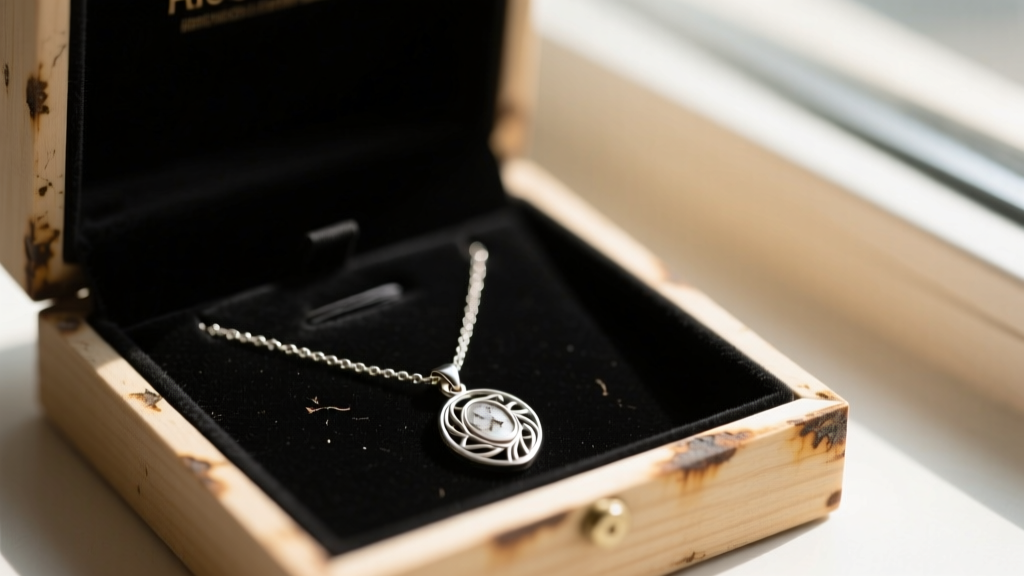
The base and framework of retail jewelry display cases are frequently constructed from wood. While aesthetically warm and highly customizable, wood introduces severe chemical risks to precious metals if not properly specified and sealed.
The Hidden Threat of Off-Gassing
Medium-Density Fiberboard (MDF) and plywood are ubiquitous in retail fixtures due to their cost-effectiveness and stability. However, the urea-formaldehyde resins used to bind these engineered woods continuously off-gas volatile organic compounds (VOCs), including formaldehyde and sulfur-containing amino acids. When trapped inside a closed display case, these compounds react rapidly with the copper and silver alloys in sterling silver and low-karat gold, causing severe, rapid tarnishing.
Even solid hardwoods are not entirely safe. Woods like oak and walnut naturally emit acetic acid and tannins, which can cause lead-tin solders to corrode and silver to blacken. According to conservation guidelines outlined by the Oddy Tests protocol, any material placed in an enclosed space with metals must be rigorously tested for chemical reactivity.
Effective Barrier Solutions
To safely use wood in retail jewelry display cases, the interior surfaces must be hermetically sealed. Standard paints and polyurethanes are insufficient, as they remain somewhat permeable to gases over time. The gold standard for preventing off-gassing is the application of Marvelseal 360, an aluminum-nylon barrier film, beneath the interior velvet lining. Alternatively, using baked-on powder-coated metal bases entirely eliminates the off-gassing risk while providing a sleek, modern aesthetic.
Metals: Aluminum Extrusions vs. Stainless Steel
The framing and hardware of your display cases dictate their structural integrity and security profile. The two dominant metals in 2026 retail fixtures are aluminum and stainless steel, each serving distinct engineering purposes.
Aluminum Extrusions
Anodized aluminum is the workhorse of modular display systems. It is lightweight, easily extruded into complex profiles, and naturally resistant to corrosion due to its protective oxide layer. When specifying aluminum, request Type II anodizing (minimum 0.7 mils thick) for interior retail environments to prevent the frame from chalking or scratching. Avoid powder-coated aluminum for high-traffic edges, as the mechanical impact of sliding heavy glass doors will eventually chip the coating, exposing the raw metal to oxidation.
Stainless Steel Hardware
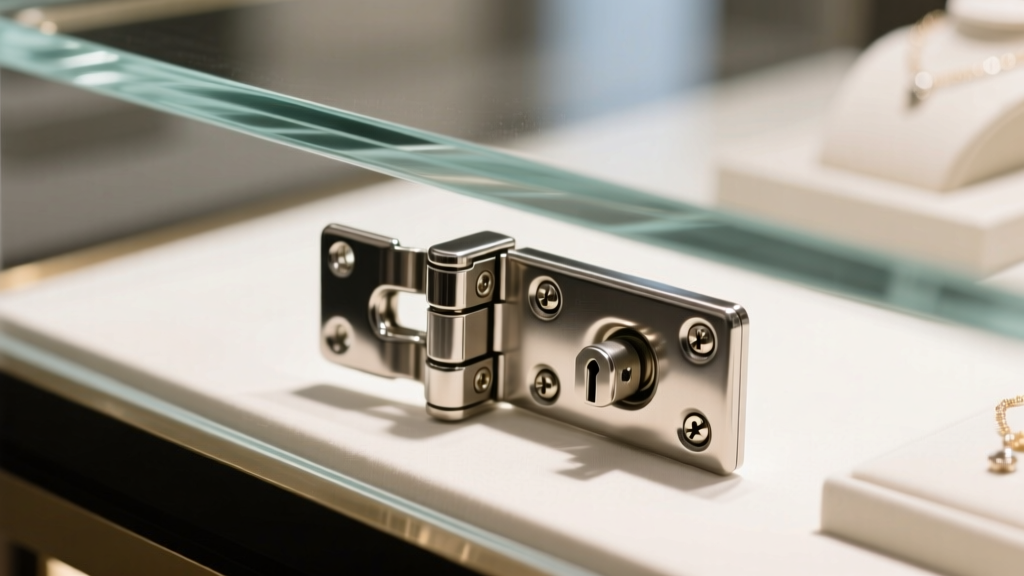
While aluminum frames are common, the hinges, locks, and structural brackets should ideally be machined from stainless steel. For standard inland boutiques, Grade 304 stainless steel provides ample corrosion resistance. However, if your retail location is in a coastal area with high ambient salinity, or if your store utilizes aggressive chemical cleaning agents, you must upgrade to Grade 316 (marine-grade) stainless steel. Grade 316 contains molybdenum, which specifically prevents pitting corrosion from chlorides—a common failure mode in coastal retail environments that leads to seized hinges and compromised security locks.
Material Comparison Matrix
The following table summarizes the critical properties and estimated 2026 market costs for standard 4-foot linear retail jewelry display cases based on material selection.
| Material Component | Optical / Structural Property | Tarnish / Chemical Risk | Est. Cost (4ft Case) | Best Application |
|---|---|---|---|---|
| Standard Soda-Lime Glass | 89% Transmission, Green Tint | None (Inert) | $400 - $700 | Fashion jewelry, high-volume malls |
| Low-Iron Glass (Starphire) | 92% Transmission, True Color | None (Inert) | $1,200 - $2,200 | Fine diamonds, colored gemstones |
| Cell-Cast Acrylic (UV) | 92% Transmission, High Impact | None (Inert) | $500 - $900 | Pop-ups, tradeshows, travel |
| Unsealed MDF / Plywood | Opaque, High Structural Stability | High (Formaldehyde/Sulfur) | $300 - $600 | Exterior cladding ONLY |
| Sealed Hardwood (Walnut) | Opaque, Premium Aesthetic | Moderate (Acetic Acid) | $1,500 - $3,000 | Heritage brands, bespoke boutiques |
| Powder-Coated Steel Base | Opaque, Maximum Security | None (Fully Sealed) | $800 - $1,400 | High-value inventory, modern retail |
Final Verdict: Matching Material to Merchandise
Selecting the right materials for retail jewelry display cases requires aligning the physical properties of the fixture with the chemical vulnerabilities and optical requirements of your specific inventory. If your primary focus is high-carat colored gemstones, the investment in low-iron, anti-reflective glass is non-negotiable to ensure accurate color presentation. If you are moving high volumes of sterling silver, prioritizing powder-coated steel bases and avoiding unsealed MDF will save thousands of dollars in labor and polishing costs associated with premature tarnishing.
Ultimately, treating your display cases as specialized conservation environments rather than simple furniture will elevate the perceived value of your merchandise, protect your assets, and provide a superior, frictionless experience for your clientele. For further reading on material safety in retail and exhibition environments, the American Alliance of Museums provides extensive guidelines on safe material usage and environmental controls that translate perfectly to high-end luxury retail.


