Snap On Tool Box Jewelry Box: Conversion and Troubleshooting
Master the snap on tool box jewelry box conversion. Troubleshoot drawer slides, prevent tarnish from industrial paint, and line drawers safely.

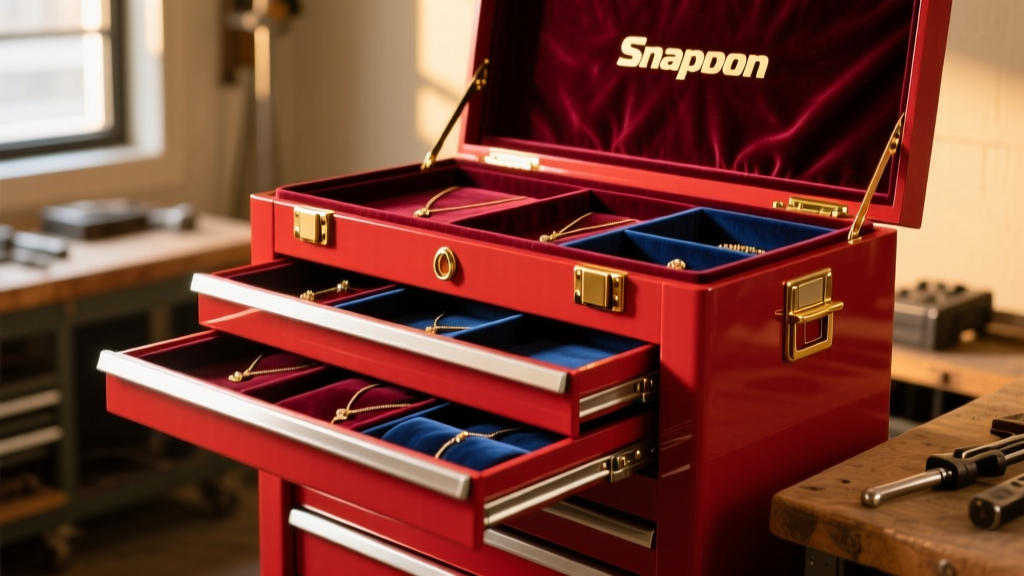
The industrial aesthetic has firmly crossed over from the garage to the dressing room. For mechanics, automotive enthusiasts, and fans of utilitarian design, repurposing a heavy-duty steel cabinet into a jewelry storage solution is the ultimate flex. However, executing a successful snap on tool box jewelry box conversion requires far more than simply dropping a velvet tray into a steel drawer. Industrial storage is engineered for wrenches and sockets, not delicate metals and fragile gemstones. Without proper troubleshooting and modification, the very features that make these tool boxes premium—the aggressive ball-bearing slides, heavy-duty latches, and industrial powder coatings—can actively destroy high-end jewelry.
This guide dives deep into the mechanical and chemical troubleshooting required to safely convert a Snap-on top chest or roll cab into a luxury jewelry vault, ensuring your collection remains pristine in 2026 and beyond.
The Mechanical Hazard: Troubleshooting Ball-Bearing Slide Aggression
Snap-on tool boxes, particularly the EPIQ and Classic series, utilize heavy-duty ball-bearing drawer slides rated for 100 to 200 pounds. These slides are designed to carry immense weight and snap shut with authority. When you load a drawer with only three to five pounds of jewelry, the mass is insufficient to engage the soft-close mechanisms properly, or the drawer simply slams shut due to the low friction-to-weight ratio.
This slamming creates a massive problem: kinetic shock. According to the Gemological Institute of America (GIA), while diamonds rank a 10 on the Mohs hardness scale, they possess distinct cleavage planes and can chip upon hard impact. Furthermore, the violent shaking of a slamming drawer will cause diamond girdles to scratch adjacent 18k gold (Mohs 2.5-3) and platinum settings, leading to micro-abrasions and weakened prongs.
Solutions for Slide Dampening
- Polyurethane Gel Bumpers: Apply 3M Bumpons (polyurethane gel dots) to the inner drawer stops. Unlike standard felt pads, which compress and bottom out under the momentum of a steel drawer, polyurethane gel absorbs the kinetic energy of the slam, reducing the decibel level and shock transfer by up to 80%.
- Slide Swaps: For the ultimate luxury feel, remove the factory Snap-on slides and retrofit the drawers with Blumotion soft-close slides. This requires drilling new mounting holes in the 18-gauge steel cabinet, but it completely eliminates the slamming issue.
- Friction Shims: If the drawer rattles when partially open, apply thin PTFE (Teflon) tape to the upper slide rail to increase friction and stabilize the drawer when pulling out delicate necklaces.
Chemical Hazards: Off-Gassing and Tarnish Acceleration
The most insidious threat in a snap on tool box jewelry box conversion is chemical. Snap-on cabinets are finished with tough epoxy-polyester powder coatings. While highly durable against oil and impacts, industrial coatings and the vulcanized rubber gaskets used to seal the drawers can off-gas volatile organic compounds (VOCs) and sulfur compounds for months or even years after manufacturing.
Sulfur is the primary enemy of sterling silver, reacting with the copper alloy to form silver sulfide (black tarnish). The Canadian Conservation Institute (CCI) explicitly warns against storing silver near vulcanized rubber or uncured industrial adhesives, as the sulfur emissions will rapidly accelerate tarnishing, even in enclosed spaces.
Neutralizing the Chemical Environment
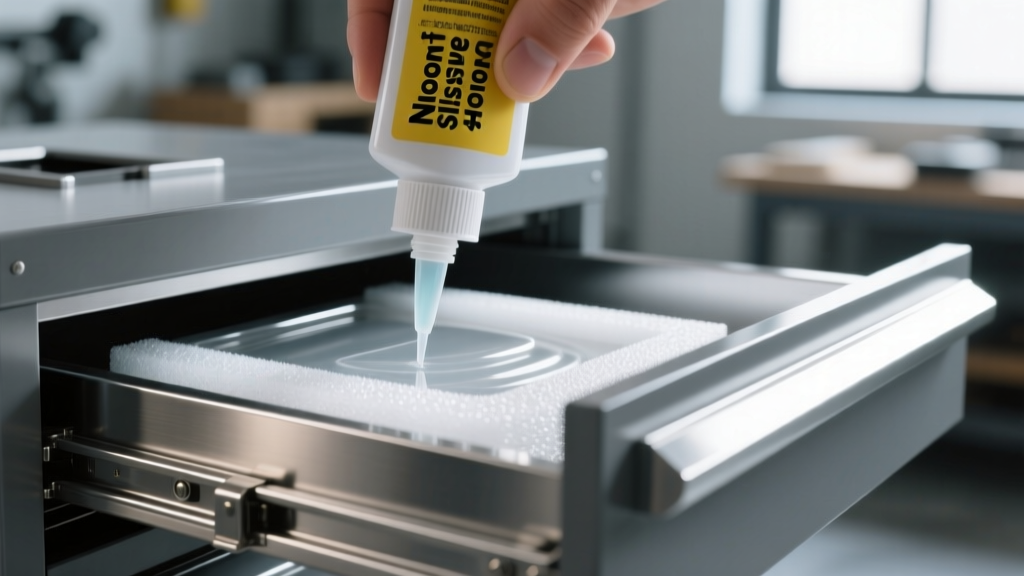
Before installing any jewelry, you must neutralize the drawer environment. Do not use standard spray adhesives like 3M Super 77 to glue down your liners; the solvents will trap VOCs inside the enclosed drawer space. Instead, use a 100% silicone adhesive or a water-based PVA glue, both of which are chemically inert once cured. Furthermore, strip out any factory rubber weatherstripping from the drawer lips and replace it with platinum-cure silicone tubing, which is entirely sulfur-free and safe for precious metals.
Material Selection Framework for Drawer Liners
Choosing the right liner material is critical. Many DIYers mistakenly use cheap craft foams or standard polyurethane (PU) foams, which degrade over time and release acidic gases that can pit pearl surfaces and corrode copper alloys. Below is a troubleshooting matrix for selecting the correct liner material based on your specific jewelry collection.
| Liner Material | Tarnish Resistance | Shock Absorption | Best Application | Chemical Warning |
|---|---|---|---|---|
| Polyethylene (PE) Foam | Excellent | High | Heavy gold/platinum pieces, diamond rings | None (Archival safe) |
| Pacific Silvercloth | Excellent | Low | Sterling silver chains, flatware, coins | Must be kept dry to function |
| Polyurethane (PU) Foam | Poor | High | Avoid entirely | Off-gasses acids; yellows and crumbles |
| EVA Foam | Good | Medium | Travel inserts, watch cushions | Ensure it is formamide-free |
| Acid-Free Flannel | Moderate | Low | Polishing wraps, delicate gemstone beads | Avoid if exposed to high humidity |
Securing the Latches and Preventing Micro-Vibrations
Tool boxes are designed to be rolled across uneven garage floors, meaning their latches and strikers are built with deliberate tolerances to prevent binding. In a static jewelry box environment, this tolerance translates to rattling. Micro-vibrations from nearby foot traffic, closing doors, or even heavy bass from a sound system can cause the steel pawl latch to vibrate against the steel striker plate.
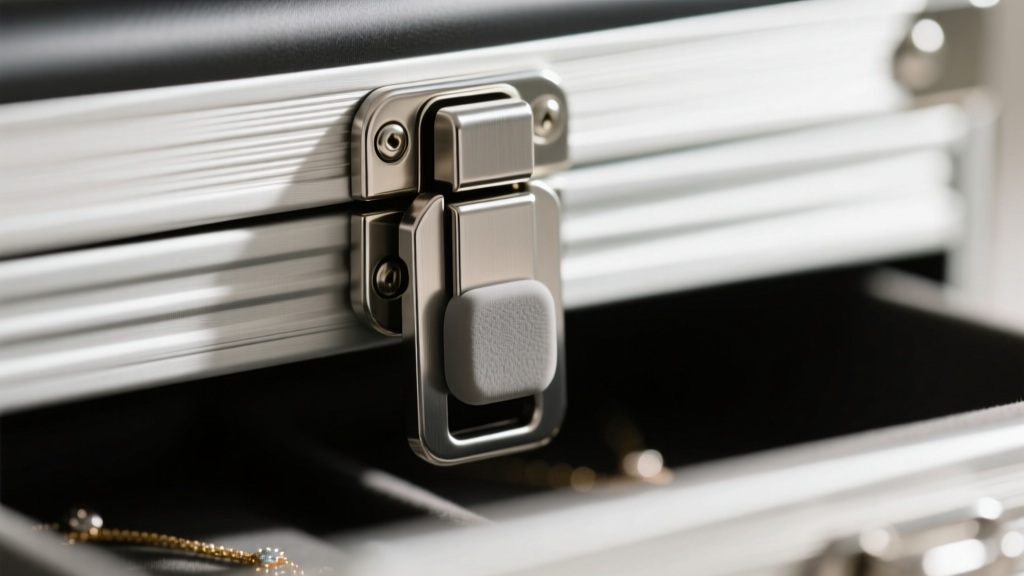
This high-frequency vibration transfers directly through the drawer slide and into the jewelry tray. Over time, this can cause micro-abrasions on high-polish finishes and loosen the tension on delicate tension-set rings or friction-set earrings.
The Silicone Sleeve Fix
To eliminate latch rattle, you must dampen the metal-on-metal contact point. Cut a small piece of 1/16-inch thick platinum-cure silicone sheet and adhere it to the striker plate using a cyanoacrylate (super glue) gel. Alternatively, slide a piece of heat-shrink tubing over the latch pawl and shrink it with a heat gun. This creates a tight, rattle-free seal when the drawer is locked, completely isolating the interior compartment from ambient acoustic and physical vibrations.
Weight Distribution and Center of Gravity Troubleshooting
A fully loaded Snap-on top chest is incredibly heavy, but a converted jewelry box presents a unique physics problem. Precious metals are exceptionally dense; a small drawer holding 50 solid gold chains and platinum rings can easily weigh 15 to 20 pounds. If you load the top drawers of a tall roll cab with dense metals, and leave the bottom drawers empty, you raise the center of gravity dangerously high.
While this might not cause a tip-over on a flat dresser, it makes the unit highly unstable if placed on a rolling cart or an uneven surface. Always distribute the heaviest jewelry collections (solid gold bangles, platinum chains, large gemstone cocktail rings) into the bottom-most drawers. Reserve the top, shallower drawers for lightweight items like silk scarves, pearl strands, and hollow gold electroform pieces. This maintains the structural integrity and safety of the unit, ensuring your industrial jewelry vault remains as secure as it is stylish.


