Jewelry Organizer Wall Maintenance: Cleaning & Care
Learn how to clean and maintain your jewelry organizer wall. Expert tips on preventing tarnish, dust buildup, and protecting delicate pieces on open displays.

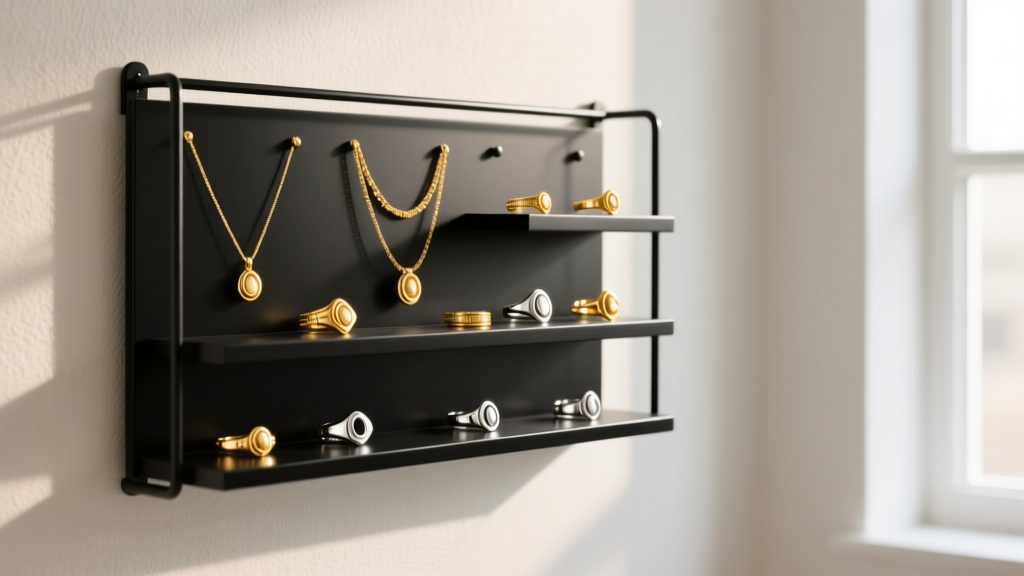
Wall-mounted jewelry displays offer a beautiful, gallery-like way to showcase your favorite pieces while keeping them accessible. However, unlike enclosed velvet-lined boxes, a jewelry organizer wall leaves your collection exposed to ambient air, fluctuating humidity, dust, and ultraviolet light. Without a rigorous care and maintenance routine, this constant exposure can accelerate tarnishing, degrade the organizer's materials, and even damage sensitive gemstones.
As jewelry storage experts, we have developed comprehensive protocols to help you maintain both the structural integrity of your wall display and the pristine condition of the jewelry hanging from it. This guide covers material-specific cleaning, advanced tarnish prevention, and environmental controls necessary for open-air storage.
The Hidden Risks of Open Wall Displays
When you transition from a closed jewelry box to an open wall organizer, you fundamentally change the microenvironment surrounding your pieces. The primary enemy of exposed silver and copper alloys is hydrogen sulfide, a common trace gas in indoor air. When silver reacts with hydrogen sulfide and moisture, it forms silver sulfide—the black, crusty layer we recognize as tarnish. According to the Smithsonian Museum Conservation Institute, open-air display significantly increases the rate of this chemical reaction compared to sealed, acid-free environments.
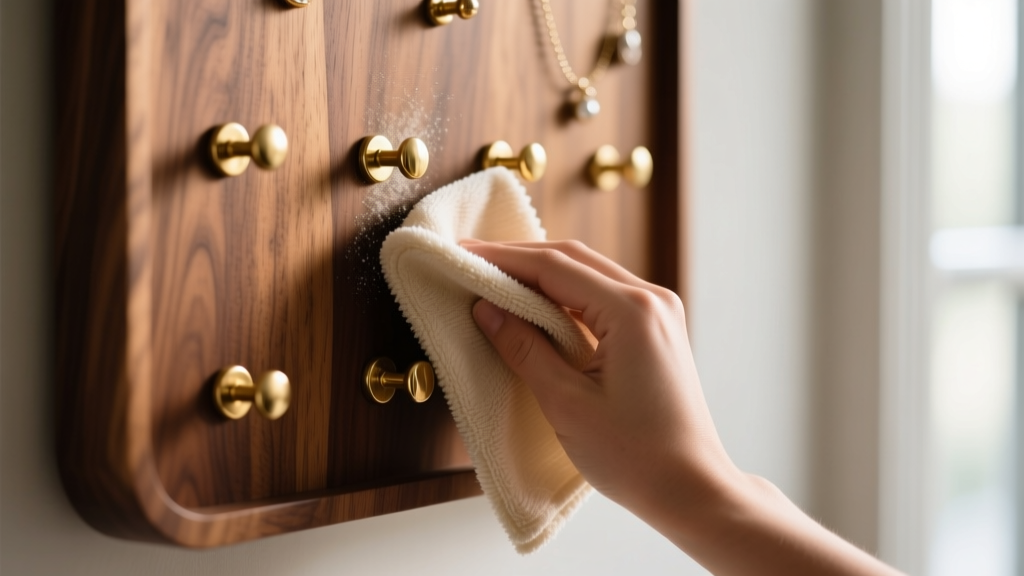
Furthermore, wall organizers act as static magnets for household dust, which often contains microscopic abrasive particles. If left unmanaged, dust can settle into the crevices of intricate filigree work or scratch high-polish metal surfaces when pieces are taken down and worn. Understanding these risks is the first step in implementing a proactive maintenance strategy.
Material-Specific Cleaning Protocols
Your jewelry organizer wall is likely constructed from wood, metal, or acrylic. Each material requires a distinct cleaning approach to prevent surface degradation. Using the wrong cleaner can strip protective finishes, cause micro-scratches, or leave behind chemical residues that will actively harm your jewelry.
| Organizer Material | Recommended Cleaner | What to Avoid | Deep Clean Frequency |
|---|---|---|---|
| Finished Wood (Walnut/Oak) | Damp microfiber cloth, followed by a light application of pure beeswax or carnauba wax. | Silicone-based sprays (Pledge), ammonia, or soaking wet cloths. | Every 6 months |
| Powder-Coated Metal | Mild dish soap diluted in distilled water, wiped dry immediately. | Abrasive sponges, steel wool, or acidic cleaners like vinegar. | Every 3 months |
| Raw Brass / Copper | Specialized brass polish (e.g., Brasso) applied with a soft cotton rag. | Water exposure, which accelerates patina and spotting. | Monthly (if polished look is desired) |
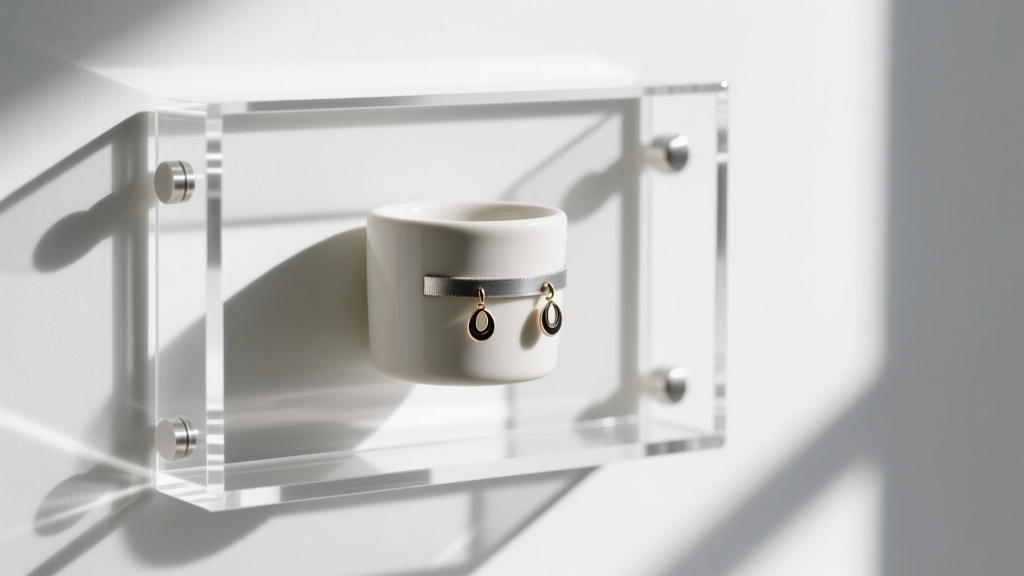
| Cast Acrylic | Distilled water with a drop of mild soap, or dedicated plastic cleaner (e.g., Novus No. 1). | Ammonia-based glass cleaners (Windex), paper towels, or dry dusting. | Monthly |
For acrylic displays, it is critical to avoid paper towels and ammonia. Paper towels are made of wood pulp and will leave microscopic scratches on acrylic surfaces, causing them to look cloudy over time. Ammonia causes 'crazing'—a network of fine cracks that compromises the structural integrity of the plastic.
Tarnish Prevention Strategies for Exposed Jewelry
Because you cannot seal a wall organizer, you must neutralize the airborne pollutants that cause tarnish. The Gemological Institute of America (GIA) recommends storing silver in anti-tarnish environments, which requires creative adaptation for open displays.
Integrating Anti-Tarnish Solutions Invisibly
You can maintain the aesthetic appeal of your jewelry organizer wall while actively fighting corrosion by hiding anti-tarnish agents behind the display elements.
- Anti-Tarnish Strips: Products like 3M Anti-Tarnish Strips absorb sulfur compounds from the air. Cut these strips into one-inch squares and use double-sided tape to adhere them to the back of the organizer board, or hide them behind large decorative hooks and earring holders. They remain effective for up to six months.
- Silica Gel Packets: Moisture accelerates tarnishing. Mount small, breathable mesh bags filled with indicating silica gel beads at the bottom corners of your wall display. When the beads turn from blue to pink, simply bake them in an oven at 200°F for two hours to recharge them.
- Pacific Silvercloth Integration: If your wall organizer features small shelves or trays, line the bottom of these resting areas with Pacific Silvercloth. This specialized cotton fabric is embedded with microscopic silver particles that intercept and absorb tarnish-causing gases before they reach your jewelry.
Environmental Controls: Lighting and Humidity
Where you place your jewelry organizer wall is just as important as how you clean it. Environmental factors can cause irreversible damage to both the display and the gems resting upon it.
UV Light and Gemstone Fading: Direct sunlight streaming through a nearby window can cause severe color fading in UV-sensitive gemstones. Amethyst, kunzite, morganite, and treated topaz will lose their vibrant hues if exposed to prolonged, direct sunlight. Always mount your organizer on a wall that receives only indirect, ambient light, or apply UV-blocking window film to nearby glass.
Humidity Extremes: Avoid mounting your display in or adjacent to a bathroom. The rapid humidity spikes caused by hot showers will aggressively accelerate silver tarnishing and can degrade the adhesive backing on your wall mounts. Conversely, avoid placing the organizer directly beneath an HVAC vent. The constant blast of dry, conditioned air can desiccate moisture-dependent gemstones like opals and turquoise, leading to 'crazing' (internal cracking) and structural failure.
The Weekly and Monthly Maintenance Routine
Consistency is the hallmark of proper jewelry care. Implement this structured routine to keep your jewelry organizer wall in peak condition without spending hours on upkeep.
Weekly: The Dust-Off
Use a clean, dry ostrich feather duster or a very soft, clean makeup brush to gently sweep dust off the jewelry and the organizer's pegs. Do not use a cloth for this step, as cloth can snag on prongs, clasps, and delicate chain links. A soft brush lifts dust away without applying lateral pressure to delicate settings.
Monthly: The Wipe-Down and Inspection
- Remove all jewelry from the display and place it on a clean, lint-free towel.
- Wipe down the empty organizer using the material-specific cleaners outlined in the table above.
- Inspect the wall mounts and screws. The weight of heavy necklaces and bracelets can slowly pull anchors from drywall over time. Tighten any loose hardware.
- Replace the hidden anti-tarnish strips if they have been in place for more than six months.
- Before returning items to the wall, give silver and gold pieces a quick polish with a treated jewelry cloth to remove any skin oils accumulated from recent wear.
Expert Insight: Never hang pearl or coral necklaces on a wall organizer by their chains for long-term storage. The constant downward pull of gravity will stretch the silk thread over time, leading to gaps between the pearls and eventual strand breakage. Always store strung pearls flat in a padded drawer, reserving your wall display for metal chains and solid pieces.
Maintaining a jewelry organizer wall requires a shift in mindset from simple storage to active curation. By understanding the chemistry of tarnish, respecting the material properties of your display, and controlling the surrounding environment, you can enjoy the visual beauty of an open gallery while ensuring your collection remains pristine for generations.


