Troubleshooting Your TR Jewelry Box: Why Silver Still Tarnishes
Is your TR jewelry box failing to protect your silver? Learn the chemistry of anti-tarnish linings, troubleshoot failures, and restore storage.

The Broken Promise of Tarnish-Resistant Storage
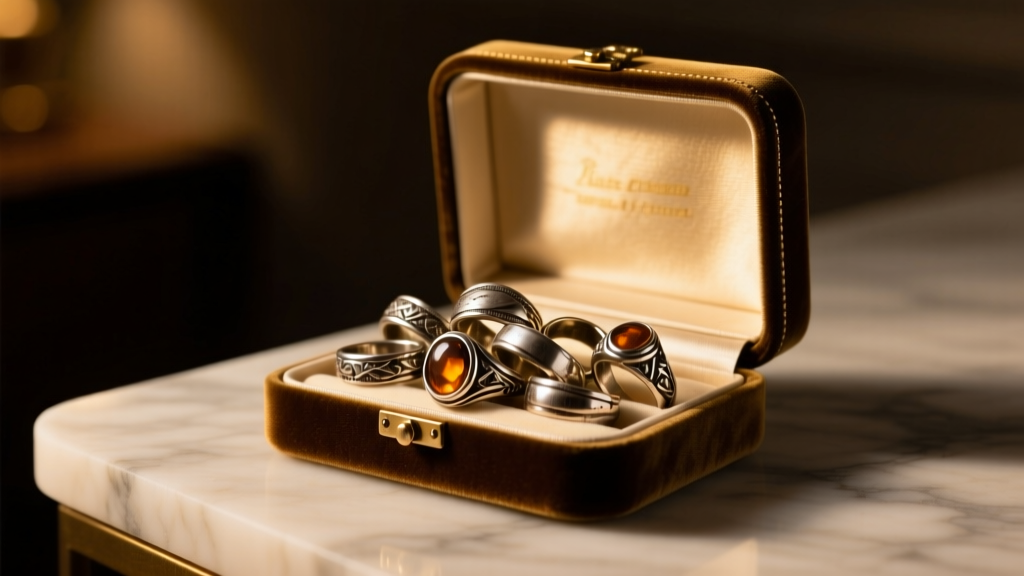
You invested in a premium TR (Tarnish-Resistant) jewelry box specifically to protect your sterling silver, white gold, and copper-alloy pieces from environmental degradation. Yet, upon opening the lid after a few months of storage, you are greeted by the familiar, frustrating sight of yellowing or blackening metal. Why does this happen? The assumption that a 'TR jewelry box' is a permanent, maintenance-free vault is one of the most common misconceptions in jewelry care. In reality, anti-tarnish technology relies on active chemical processes that can be exhausted, overwhelmed, or entirely bypassed by improper environmental controls.
To effectively troubleshoot your storage setup, we must first look at the microscopic battlefield occurring inside your jewelry box. Tarnish is not dirt; it is a chemical reaction. When silver (Ag) is exposed to hydrogen sulfide (H2S) or carbonyl sulfide (OCS) in the ambient air, it forms silver sulfide (Ag2S), which manifests as a dull yellow, brown, or black film. Moisture acts as an electrolyte, accelerating this galvanic reaction. A true TR jewelry box combats this using sacrificial metals or gas-adsorbing barriers, but when these systems fail, your most valuable pieces are left vulnerable.
How TR Technology Actually Works
Before diagnosing the failure, it is critical to understand the specific anti-tarnish mechanism your box employs. According to the Smithsonian Museum Conservation Institute, preventive storage generally relies on one of three technologies:
- Sacrificial Anode Foams: Polyurethane foams embedded with zinc or copper particles. These metals are more reactive than silver, meaning they oxidize and corrode first, 'sacrificing' themselves to neutralize sulfur compounds before they reach your jewelry.
- Intercept Technology: A specialized polyethylene material containing microscopic copper particles that chemically bind with and neutralize corrosive gases in the enclosed micro-climate.
- Pacific Silvercloth: A 100% cotton flannel embedded with thousands of silver and zinc nanoparticles. The embedded silver acts as a massive sacrificial surface area, while the zinc neutralizes the remaining sulfur.
Why Your TR Jewelry Box is Failing: The 4 Culprits
If your silver is still tarnishing inside a sealed, treated environment, one of the following four failure modes is occurring.
1. Exhaustion of the Sacrificial Agent
Anti-tarnish linings are consumable. The zinc or copper particles embedded in the foam or cloth have a finite capacity to absorb sulfur. Once the sacrificial metal has fully oxidized, the TR jewelry box becomes a standard box. You can often spot exhausted foam by looking for a white, chalky powder (zinc oxide) or a green crust (copper carbonate) on the surface of the lining. Pacific Silvercloth, conversely, will turn a dark, permanent brownish-black when its embedded silver particles are fully saturated with silver sulfide.
2. Micro-Climate Humidity Traps
Moisture is the catalyst for tarnish. The Canadian Conservation Institute notes that silver tarnish rates increase exponentially when Relative Humidity (RH) exceeds 65%. If your TR jewelry box is stored in a bathroom, a basement, or near an exterior wall, moisture vapor can permeate the box's exterior. If the interior lacks a desiccant to buffer this humidity, the anti-tarnish lining is forced to work in a highly conductive, moisture-rich environment, exhausting its chemical capacity in weeks rather than years.
3. Off-Gassing from Mixed Materials
Many luxury TR jewelry boxes feature beautiful exteriors made of oak, pine, or MDF (Medium-Density Fiberboard), lined with treated anti-tarnish fabric. The problem? Raw wood emits acetic acid, and MDF off-gasses formaldehyde and sulfur-bearing compounds from its adhesives. If the interior TR lining is not sealed behind an archival barrier film, the box itself is actively generating the corrosive gases that are destroying your jewelry, overwhelming the anti-tarnish agents from the inside out.
4. Human Contaminant Transfer
The most frequent cause of localized, spotty tarnish is the storage of unworn, uncleaned jewelry. Lotions, perfumes, sweat (which contains chlorides and urea), and residues from sulfur-rich foods (like onions and eggs) cling to the microscopic pores of sterling silver. When placed into a TR jewelry box, these localized contaminants create a micro-galvanic cell, causing severe pitting and black tarnish that the ambient anti-tarnish lining cannot neutralize.
Diagnostic Matrix: Identifying Your Tarnish Profile
Use the color and pattern of the tarnish to pinpoint the exact failure in your TR jewelry box setup.
| Tarnish Color / Pattern | Chemical Cause | TR Box Failure Point | Targeted Solution |
|---|---|---|---|
| Uniform Yellow/Gold | Early-stage Silver Sulfide (Ag2S) | Lining saturation; slow gas ingress | Polish with a mild thiourea dip; replace 3M anti-tarnish strips. |
| Spotty Black Pitting | Silver Chloride (AgCl) / Sweat | Human contaminant transfer | Wash silver in mild dish soap and distilled water before storage. |
| Dull Brown Haze | Copper Oxide (from alloy) | High RH (>65%) accelerating oxidation | Add indicating silica gel to the box; move away from exterior walls. |
| White/Green Crust | Zinc/Copper Carbonate | Exhausted sacrificial foam lining | Vacuum the chalky residue; line the box with fresh Pacific Silvercloth. |
How to Retrofit and Recharge Your TR Storage
You do not need to throw away an expensive, structurally sound jewelry box just because its factory-installed TR lining has failed. As a domain expert in archival jewelry storage, I recommend the following retrofitting protocol to restore and even upgrade your box's protective capabilities.
Step 1: Install an Archival Vapor Barrier
If your TR jewelry box has a wooden or MDF frame, you must block the off-gassing. Line the interior compartments with Marvelseal 360, a nylon/aluminum-polyethylene barrier film used by museum conservators. This film is completely impermeable to moisture and corrosive gases. Tape the seams with archival-quality acrylic tape to create a sealed micro-environment.
Step 2: Introduce Active Gas Scavengers
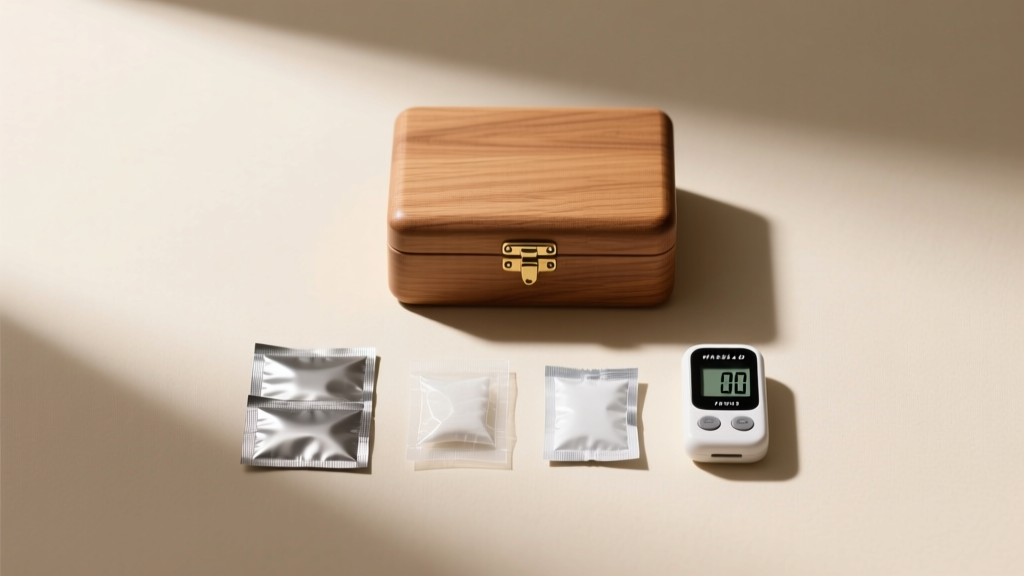
Once the box is sealed, introduce fresh anti-tarnish strips (such as 3M Intercept Technology strips). These strips are highly effective but must be replaced every 6 to 12 months depending on how frequently the box is opened. Write the installation date on the strip with a Sharpie before placing it in the hidden compartment of your TR jewelry box.
Step 3: Buffer the Relative Humidity
Place a small, breathable cotton bag of indicating silica gel (orange to green, avoiding toxic cobalt chloride blue/pink variants) inside the main compartment. The silica gel will maintain the RH between 40% and 50%, the ideal threshold to prevent electrolytic tarnish acceleration without drying out organic gemstones like pearls or opals. Recharge the silica gel by baking it at 250°F (120°C) for two hours whenever the beads turn green.
Advanced Maintenance for High-Value Collections
For heirloom pieces, investment-grade silver, or high-karat gold alloys that are particularly susceptible to environmental damage, the TR jewelry box should be treated as a secondary layer of defense. The primary layer should be individual, zip-sealed polyethylene bags (minimum 4-mil thickness). Polyethylene is naturally inert and does not off-gas sulfur. By placing your jewelry in sealed poly bags with a small square of anti-tarnish paper, and then placing those bags inside your retrofitted TR jewelry box, you create a redundant, museum-grade defense system.
Ultimately, a TR jewelry box is a tool, not a magic shield. By understanding the electrochemistry of tarnish, monitoring your storage environment's humidity, and proactively replacing exhausted sacrificial agents, you can ensure your silver remains as brilliant as the day it was polished.


