Vintage Heart Jewelry Box Buying Guide & Valuation
Discover how to authenticate, evaluate, and price a vintage heart jewelry box. Learn about materials, hinge types, and lining condition in our expert guide.

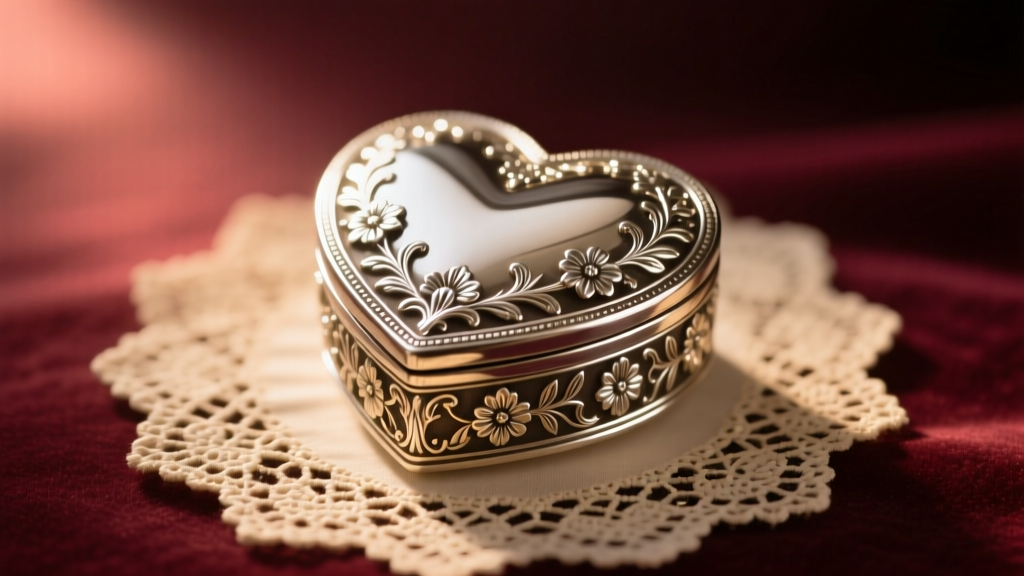
The hunt for the perfect vintage heart jewelry box is a pursuit that blends horological precision with romantic nostalgia. Unlike modern, mass-produced storage solutions, antique and vintage heart-shaped boxes carry the distinct hallmarks of their respective eras—from the heavy, ornate silver overlays of the Victorian period to the vibrant, geometric Bakelite designs of the Mid-Century. However, the secondary market is flooded with contemporary reproductions masquerading as genuine antiques. Whether you are a serious collector or simply seeking a unique, protective home for your heirloom jewelry, understanding the nuances of material authentication, structural integrity, and historical provenance is essential.
This comprehensive buying guide will equip you with the technical knowledge needed to evaluate a vintage heart jewelry box, ensuring your investment is both authentic and structurally sound for decades to come.
Decoding Eras: Victorian, Art Deco, and Mid-Century Designs
The shape of a heart has been a staple in jewelry storage since the 18th century, but the materials and construction methods evolved drastically over time. Identifying the era is the first step in accurate valuation.
Victorian & Edwardian (1850–1910)
During this period, heart boxes were often crafted from heavy porcelain, glass, or carved wood, frequently featuring silver overlay or silver plate. Victorian boxes tend to be heavily ornamented with floral motifs, cherubs, and repoussé detailing. Glass boxes from this era often feature hand-painted enamel accents or cut-crystal bases.
Art Deco & Guilloché (1920s–1930s)
The Art Deco era introduced streamlined, geometric aesthetics. The most highly sought-after vintage heart jewelry boxes from this time feature guilloché enamel—a technique where translucent enamel is fired over an engine-turned metal base, creating a mesmerizing, rippled light effect. These boxes often include intricate brass or sterling silver filigree borders.
Mid-Century Modern (1940s–1960s)
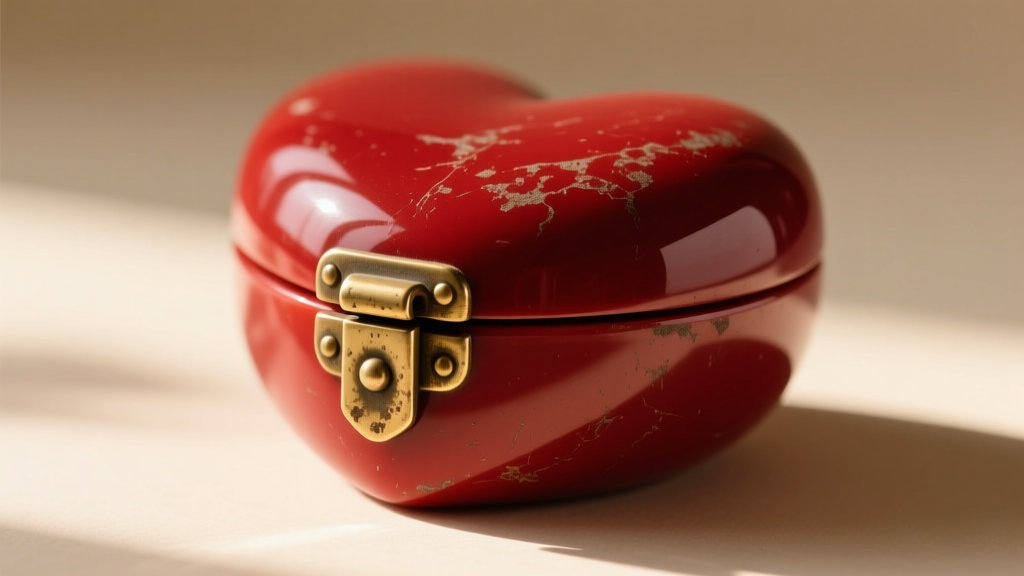
Post-war manufacturing brought synthetic materials to the forefront. Bakelite, Lucite, and Catalin became the materials of choice. Mid-century heart boxes are characterized by bold, saturated colors (cherry red, butterscotch, apple green) and streamlined, sometimes whimsical, hardware. According to antique valuation experts at Kovels, pristine Mid-Century Bakelite pieces have seen a steady 15% increase in collector demand over the last decade due to their rarity and vibrant aesthetics.
Material Authentication & Condition Checklist
Authenticating the material is critical, as modern resins and plastics are frequently distressed to mimic age. Here is how to test the most common vintage materials.
Testing Bakelite and Catalin
If you are examining a Mid-Century plastic heart box, you must verify it is genuine Bakelite or Catalin, not modern ABS plastic. The Simichrome Test is the safest method: apply a small dab of Simichrome metal polish to a cotton swab and rub an inconspicuous area of the box. If the swab turns a distinct yellow or brownish-orange, it is genuine Bakelite. The Hot Water Test involves running hot (not boiling) water over the plastic; genuine vintage phenolic resins will emit a faint, distinct odor reminiscent of formaldehyde or camphor. Never use the 'rub and sniff' friction method, as it can damage the patina.
Evaluating Silver Overlay and Plating
For Victorian and Edwardian boxes, determine whether the metal is solid sterling, silver overlay, or electroplated. Look for hallmarks on the underside or near the clasp. EPNS (Electroplated Nickel Silver) indicates a base metal core. True silver overlay on glass or porcelain will have a thick, almost sculptural quality and should lack the flaking or 'peeling' seen on degraded silver plate. Use a jeweler's loupe to inspect the edges; if you see a brassy or copper undertone bleeding through, the piece is heavily worn plate, which reduces its value by up to 40%.
Comparative Valuation & Material Matrix
Understanding the intersection of era, material, and condition is vital for fair market pricing. The table below outlines current market averages for authentic pieces in good to excellent condition.
| Era / Style | Primary Material | Average Price Range (USD) | Key Value Driver |
|---|---|---|---|
| Victorian | Porcelain w/ Silver Overlay | $150 – $450 | Completeness of silver, maker's mark |
| Art Deco | Guilloché Enamel on Brass | $250 – $800+ | Enamel condition, lack of crazing |
| Mid-Century | Carved Bakelite / Catalin | $120 – $350 | Color rarity (e.g., blue, green), hardware |
| 1970s Revival | Silver-Plated Brass | $30 – $75 | Brand name (e.g., Reed & Barton) |
Evaluating Hinge Integrity and Clasp Mechanisms
The most common point of structural failure in any vintage heart jewelry box is the hinge hardware. Because heart shapes inherently create uneven weight distribution when opened, the stress on the hinge pins is significant.
Inspect the hinge type. Early Victorian boxes typically used extruded brass butt hinges, while Mid-Century pieces often utilized simpler pin hinges. Open the box to a 90-degree angle and gently apply lateral pressure. There should be zero 'wobble' or play in the joint. If the box features a stop hinge (which locks the lid open at a specific angle), ensure the stop arm is not bent or cracked.
Next, examine the clasp mechanism. Many vintage heart boxes utilize a friction catch or a small push-button release. Check for re-soldering by looking for uneven discoloration or flux residue around the clasp base. A replaced or re-soldered clasp indicates past damage and diminishes the collector value. Platforms like Ruby Lane often provide high-resolution macro photography of these hardware elements, which is crucial when evaluating pieces online.
The Importance of Original Interior Linings
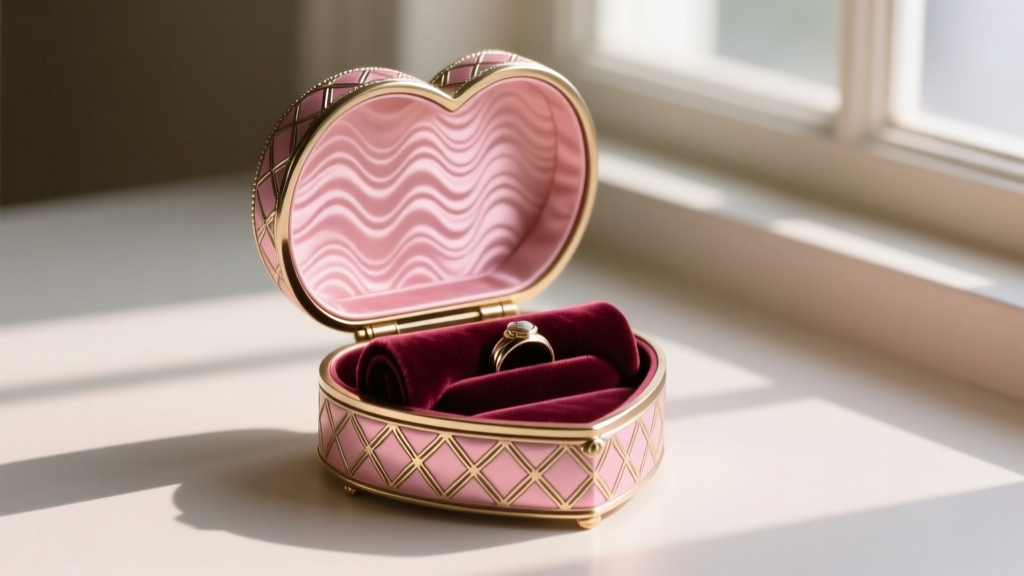
While buyers often focus on the exterior shell, the interior lining is a primary indicator of authenticity and preservation. Vintage boxes were typically lined with moire silk, tufted velvet, or satin.
Beware of silk shatter. In the late 19th and early 20th centuries, silk was often 'weighted' with metallic salts to give it a heavier, more luxurious drape. Over decades, these salts cause the silk to become brittle and disintegrate into a fine powder. If you open a Victorian heart box and find the silk lining in pristine condition, be highly suspicious—it is likely a modern replacement. While a re-lined box is perfectly functional for daily jewelry storage, purist collectors penalize replaced linings, often devaluing the piece by 20% to 30% due to the loss of historical provenance.
Sourcing: Where to Buy and Red Flags to Avoid
Finding a genuine vintage heart jewelry box requires navigating both curated antique markets and unvetted online auctions.
- Specialized Antique Dealers: Sites like Ruby Lane and 1stDibs offer vetted pieces with accurate descriptions, though prices carry a premium.
- Estate Sales: The best environment for finding underpriced, authentic pieces. Always bring a jeweler's loupe and a cotton swab for material testing.
- Online Auctions (eBay/Etsy): High risk, high reward. Avoid listings that use vague terms like 'vintage-style,' 'antique-inspired,' or 'Art Deco reproduction.' Demand photos of the underside, the hinge interior, and any hallmarks.
Expert Tip: If a seller claims a Mid-Century Bakelite heart box is 'mint condition' but the brass hardware shows heavy, dark oxidation, proceed with caution. Genuine Bakelite ages alongside its hardware; a pristine plastic shell with heavily tarnished metal often indicates the plastic was aggressively chemically polished, which strips the original factory finish and ruins the patina.
Care & Preservation for Antique Heart Boxes
Once you have acquired your vintage heart jewelry box, proper preservation is key to maintaining its structural and monetary value.
Humidity Control: Store the box in an environment with 40-50% relative humidity. High humidity will cause silver plate to pit and wood veneers to lift, while excessively dry air will accelerate silk shatter and cause Catalin plastics to craze (develop micro-cracks).
Polishing Protocols: Never use abrasive commercial silver dips on silver-overlay glass or porcelain, as the chemicals can etch the underlying base material. Instead, use a mild, non-abrasive cream like Wenol or a simple paste of baking soda and distilled water, applied with a microfiber cloth. For Bakelite, a light coating of museum-grade microcrystalline wax (such as Renaissance Wax) will protect the surface from UV degradation and fingerprint oils without altering the color.
By understanding the historical context, material science, and structural vulnerabilities of these charming keepsakes, you can confidently navigate the market and secure a vintage heart jewelry box that will safely house your treasures for generations to come.


