Wall Jewelry Storage Troubleshooting: Fix Damage & Tangles
Solve common wall jewelry storage issues. Learn how to prevent drywall damage, stop necklace tangling, and protect metals from open-air tarnish.

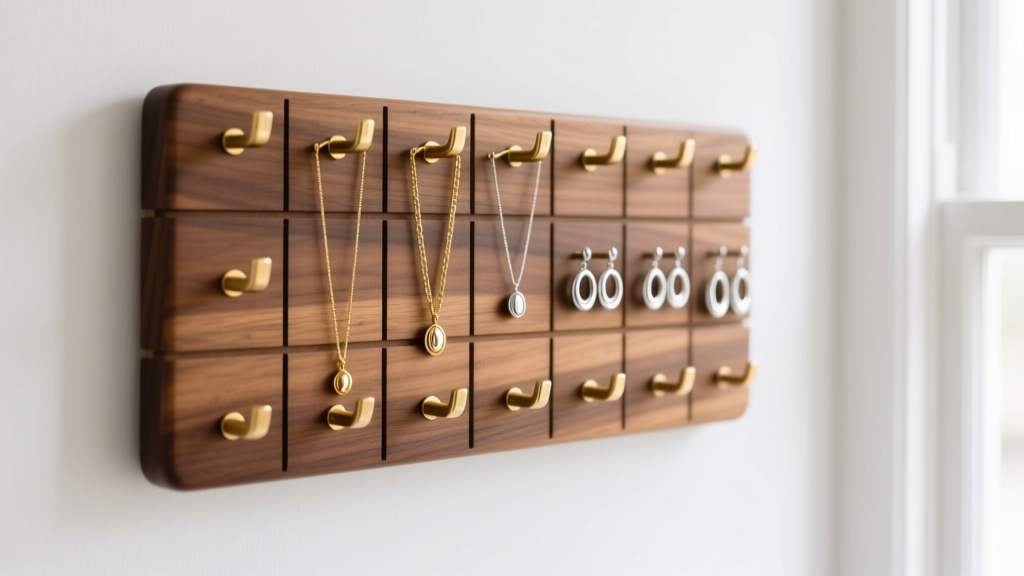
Wall jewelry storage is a favorite among collectors and minimalists alike. It transforms your daily accessories into functional art, freeing up dresser space and keeping pieces visible. However, the reality of open-air, vertical storage often introduces a unique set of structural and environmental failures. From sagging drywall anchors to accelerated tarnishing and hopelessly tangled chains, displaying your collection vertically requires strategic troubleshooting.
In this guide, we will diagnose the most common failure modes associated with wall-mounted jewelry organizers and provide actionable, hardware-specific solutions to protect your investment.
The Hidden Dangers of Open-Air Wall Displays
The most insidious problem with wall jewelry storage is environmental exposure. Unlike enclosed velvet-lined boxes, wall displays subject your metals and gemstones to ambient humidity, airborne sulfur, and fluctuating temperatures.
Sterling silver (an alloy of 92.5% silver and 7.5% copper) is particularly vulnerable. The copper reacts with hydrogen sulfide in the air to form silver sulfide, the black compound we recognize as tarnish. In a typical bedroom with 60% relative humidity, an unprotected silver chain on a wall hook can develop visible tarnish in as little as three weeks.
Troubleshooting Accelerated Tarnish
If your silver and copper-based metals (like rose gold or brass) are darkening rapidly on your wall display, you need to alter the microclimate of the storage zone.
- Integrate Anti-Tarnish Strips: Attach 3M Pacific Silvercloth or specialized activated carbon anti-tarnish strips directly to the backboard of your wall organizer. These strips absorb airborne sulfur compounds and typically remain effective for 6 to 12 months.
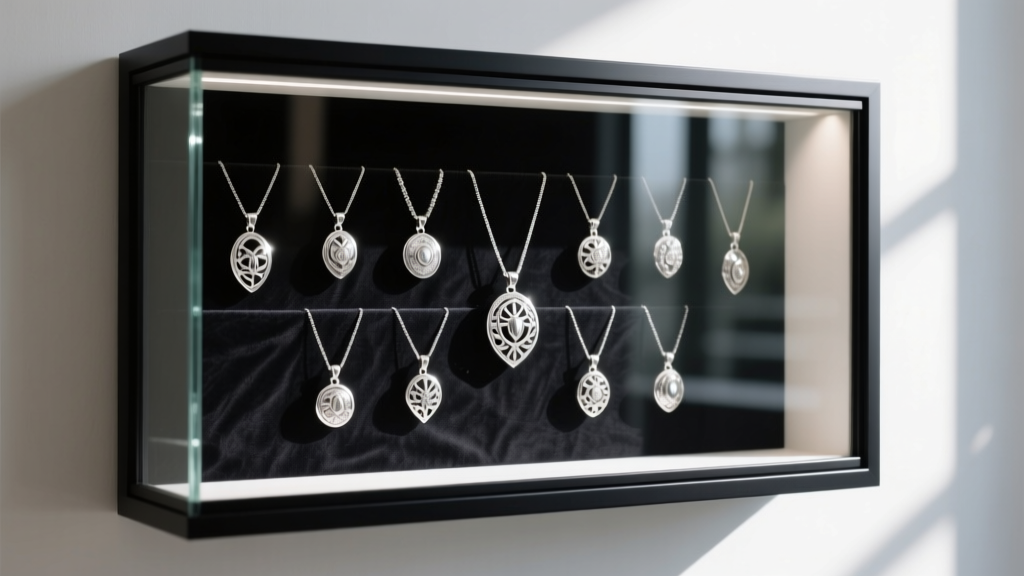
- Upgrade to Enclosed Shadow Boxes: For highly valuable pieces, transition from open hooks to glass-front wall shadow boxes. Ensure the glass is sealed with a silicone gasket to limit air exchange, and line the interior backing with Pacific Silvercloth fabric rather than standard felt, which can trap moisture.
- Control Ambient Humidity: Keep the room's relative humidity below 50%. If you live in a humid climate, run a desiccant dehumidifier in the room where your wall storage is located.
Troubleshooting Drywall Damage and Sagging Anchors
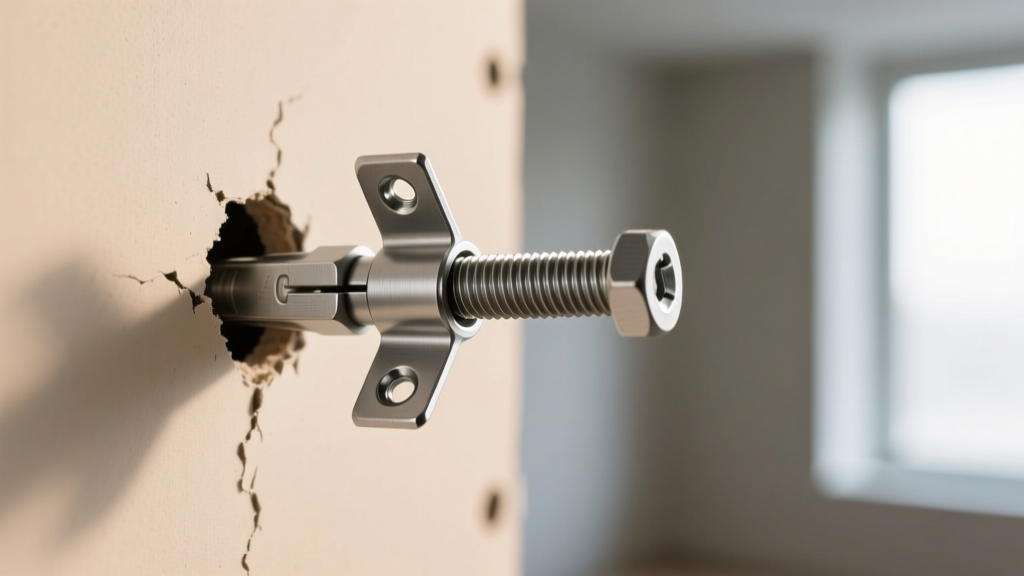
A fully loaded wooden wall jewelry armoire can easily exceed 30 pounds. When you add the dynamic weight of opening doors, pulling drawers, and the cumulative weight of heavy metal jewelry, the stress on your drywall is significant. The most common catastrophic failure in wall jewelry storage is the organizer ripping out of the wall, taking chunks of gypsum with it.
This usually happens because installers rely on the cheap, plastic ribbed expansion anchors included in the manufacturer's packaging. These plastic anchors are generally rated for only 10 to 15 pounds in standard 1/2-inch drywall and are entirely insufficient for heavy, dynamic loads.
The Hardware Upgrade Matrix
To fix a sagging organizer or safely install a new one, you must match the anchor to the load and the wall material. Below is a troubleshooting matrix for securing heavy wall displays.
| Anchor Type | Max Weight (1/2' Drywall) | Best Use Case | Installation Note |
|---|---|---|---|
| Plastic Ribbed Anchor | 10 - 15 lbs | Lightweight acrylic earring boards | Fails under dynamic pulling; avoid for wood cabinets. |
| Threaded Drywall Anchor | 20 - 25 lbs | Small metal wall grids or mesh boards | Screws directly into drywall; good for medium static loads. |
| Toggle Bolt (Wing) | 50 - 75 lbs | Medium wooden jewelry cabinets | Requires a large pilot hole; wings snap off if over-tightened. |
| Snaptoggle (Strap Toggle) | 250+ lbs | Heavy oak/walnut armoires, large mirrors | Industry standard for heavy loads; metal channel will not snap. |
Pro Tip: Always use a stud finder to locate the wooden studs behind your drywall. If you can align at least one side of your heavy jewelry cabinet with a wooden stud and secure it with a 2.5-inch wood screw, the structural integrity increases exponentially. For more on selecting the right hardware, consult this comprehensive wall anchor guide.
Solving the Necklace Tangling Nightmare on Wall Hooks
Nothing defeats the purpose of a wall display faster than a cluster of hopelessly knotted chains. Tangling on wall hooks is not just an annoyance; it is a physics problem dictated by chain link geometry and pendulum motion.
Cable chains (composed of uniform round or oval links) and fine serpentine chains under 1.5mm in width are the most prone to tangling. When hung side-by-side on standard wall hooks spaced only 1 or 2 inches apart, the chains sway when the door closes or the wind blows. The fine links act like microscopic hooks, catching on one another and forming complex slipknots.
Spacing and Angling Solutions
To troubleshoot chronic tangling on your wall display, you must alter the spatial arrangement of your hooks.
- Enforce the 3.5-Inch Rule: Measure the distance between your wall hooks. For fine cable and serpentine chains, you need a minimum lateral spacing of 3.5 inches to prevent the pendants and bottom loops from overlapping during ambient room vibrations.
- Stagger the Drop Lengths: Never hang necklaces of the exact same length next to each other. Alternate between 16-inch chokers, 18-inch princess lengths, and 24-inch opera lengths. This ensures the heavy pendants rest at different vertical planes, making it physically impossible for them to swing into one another.
- Switch to Angled Knobs: Replace standard flush wall hooks with knobs that angle upward at 30 to 45 degrees. This prevents the chains from slipping off and bunching together at the base of the hook.
- Utilize Chain Tensioners: For extremely fine, stubborn chains (like 1mm box chains), use a wall-mounted display that features a top hook and a bottom tensioning peg. Keeping the chain taut eliminates the slack required for knots to form.
Mitigating Dust Accumulation and UV Fading
While tarnish is a chemical reaction, UV fading is a photochemical degradation. If your wall jewelry storage is located on a south or west-facing wall, direct sunlight will relentlessly bombard your collection. According to the Gemological Institute of America (GIA), prolonged exposure to direct sunlight and UV rays can permanently alter the color of several popular gemstones.
Amethyst, kunzite, rose quartz, and topaz are highly susceptible to UV fading. A vibrant purple amethyst pendant left on an open wall hook in direct afternoon sun can fade to a pale, washed-out gray-brown in a matter of months. Furthermore, open wall storage acts as a magnet for household dust, which contains microscopic silica particles that can scratch softer metals and gemstones when wiped away dry.
Protective Display Modifications
- Apply UV-Blocking Window Film: If moving the wall organizer is impossible, apply a clear, ceramic UV-blocking window film to the nearest window. High-quality films reject 99% of UV rays without significantly darkening the room.
- Rotate Light-Sensitive Pieces: Treat your wall display like a museum gallery. Rotate UV-sensitive gemstones out of the direct light path every two weeks, replacing them with diamonds, sapphires, or rubies, which are highly resistant to light damage.
- Implement a Weekly Dusting Protocol: Never wipe dusty jewelry with a dry microfiber cloth, as the silica in the dust will cause micro-scratches on 18k gold and silver. Instead, use a soft, natural-bristle makeup brush to gently sweep dust off the pieces while they are still hanging on the wall, followed by a blast of compressed air to clear the crevices.
Quick Diagnostic Checklist for Your Current Setup
Use this rapid troubleshooting checklist to audit the health and safety of your current wall jewelry storage installation:
- [ ] Anchor Check: Grab the edges of the organizer and gently pull outward. If the drywall cracks, flexes, or the unit shifts more than 1/8th of an inch, immediately upgrade to Snaptoggle anchors or locate a wall stud.
- [ ] Clearance Check: Ensure no necklaces are touching each other laterally. Adjust hook spacing to a minimum of 3.5 inches for fine chains.
- [ ] Light Exposure Check: Observe the wall at 2:00 PM on a sunny day. If direct sunlight hits your gemstones, relocate the unit or apply UV film to the windows.
- [ ] Tarnish Check: Inspect the back of your silver pieces. If black or yellowish film is present, introduce activated carbon anti-tarnish strips to the display area immediately.
Wall jewelry storage should be a blend of aesthetic beauty and functional preservation. By addressing the structural weaknesses of drywall anchors, mitigating the chemical realities of open-air tarnish, and respecting the physical geometry of delicate chains, you can ensure your collection remains safe, pristine, and perfectly displayed for years to come.


