Choosing a Wall Mounted Jewelry Box: Wood vs Metal vs Acrylic
Compare wood, metal, and acrylic for your wall mounted jewelry box. Discover which material prevents tarnish, holds weight, and lasts longest.

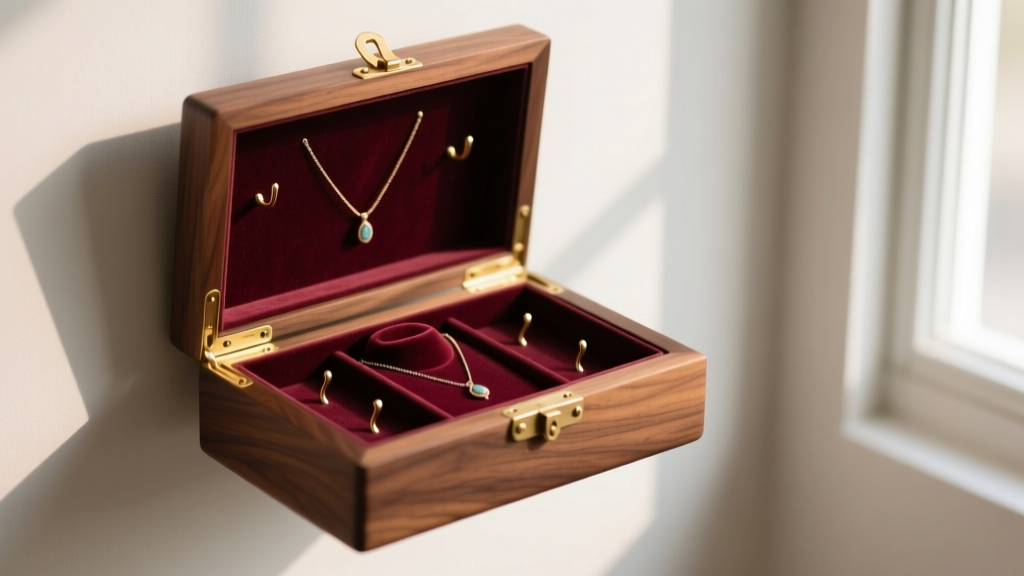
The Material Science of Vertical Jewelry Storage
When optimizing a dressing area or bedroom, a wall mounted jewelry box offers unparalleled space efficiency and architectural appeal. However, the structural integrity, weight distribution, and microclimate of these vertical organizers are entirely dictated by their base materials. In 2026, the market is saturated with options ranging from engineered composites to aerospace-grade aluminum, but not all materials protect fine jewelry equally. Understanding the physical properties, moisture interactions, and load-bearing limits of wood, metal, and acrylic is critical before committing to a permanent wall installation.
The Structural Core: Solid Hardwood vs. MDF vs. Metal
The chassis of your organizer determines its lifespan and its impact on your jewelry. Wood and metal are the most common structural cores, but their manufacturing processes introduce vastly different environmental risks.
Engineered Wood and MDF: The Hidden Moisture Trap
Medium-Density Fiberboard (MDF) is a staple in budget-friendly furniture. While it offers a smooth surface for veneers, MDF is highly susceptible to hygroscopic expansion. If mounted in a room where humidity fluctuates between 40% and 65%—such as a bedroom adjacent to an en-suite bathroom—MDF can absorb ambient moisture, causing the substrate to swell and the veneer to peel. Furthermore, lower-grade MDF utilizes urea-formaldehyde resins. In a sealed, unventilated jewelry cabinet, these off-gassing compounds can create an acidic microclimate that degrades porous gemstones like pearls and opals over time.
Solid Hardwoods: Stability and Moisture Content
Solid woods like kiln-dried walnut, white oak, or maple are vastly superior. According to Wood Magazine, properly kiln-dried hardwoods maintain an equilibrium moisture content (EMC) of 6% to 8%, making them exceptionally stable against warping. A solid wood wall mounted jewelry box naturally buffers minor humidity shifts, protecting sensitive metals and stones. The trade-off is weight; a solid oak cabinet can easily weigh 15 to 20 pounds empty, demanding heavy-duty drywall anchoring.
Metals: Gauge Thickness and Galvanic Corrosion
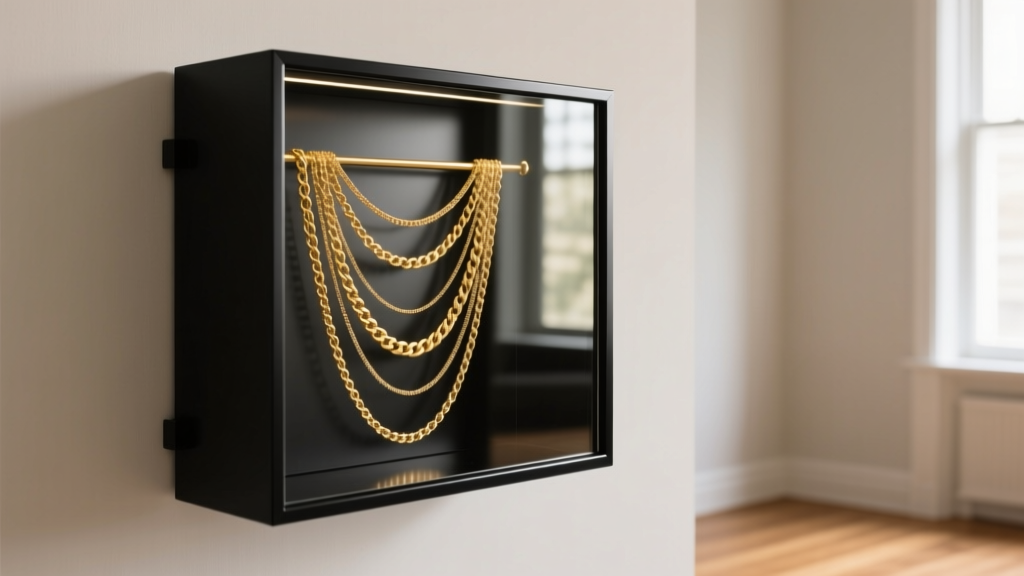
Metal organizers, typically constructed from cold-rolled steel or anodized aluminum, offer a sleek, modern profile. For steel, look for a minimum thickness of 20-gauge (0.0359 inches) to prevent the chassis from bowing under the weight of heavy chain necklaces. Crucially, bare metal must never directly contact jewelry due to the risk of galvanic corrosion and micro-scratching. High-quality metal boxes utilize a powder-coated finish baked at 400°F to create a 2-to-3-mil thick inert barrier. Anodized aluminum is lighter and naturally rust-resistant, making it ideal for minimalist designs, though it dents more easily than steel.
Transparency and UV Resistance: Acrylic vs. Tempered Glass
For collectors who want to view their pieces without opening the cabinet, transparent doors are essential. The choice between acrylic and glass affects both wall safety and UV exposure.
- Cast Acrylic (PMMA): High-quality cast acrylic offers 92% light transmission and is inherently UV stable. It will not yellow when exposed to direct sunlight, making it safe for south-facing walls. It is also shatter-resistant and lightweight.
- Extruded Acrylic: A cheaper alternative that is prone to micro-crazing and yellowing within 2 to 3 years of UV exposure. It also holds static charge, which attracts dust to the interior panels.
- Tempered Glass: While scratch-resistant and optically perfect, tempered glass adds significant sheer weight. A 12x18 inch pane of 4mm tempered glass adds roughly 4.5 pounds to the unit, drastically altering your drywall anchoring requirements.
The Interior Microclimate: Linings and Tarnish Prevention
The exterior material dictates structural strength, but the interior lining dictates chemical preservation. The most common failure mode in jewelry storage is the acceleration of silver sulfide formation (tarnish) due to improper lining materials.
Standard polyester or cotton-blend velvets are highly hygroscopic. They trap ambient moisture against the metal surface of your jewelry, creating the exact damp, oxygen-rich environment required for rapid oxidation.
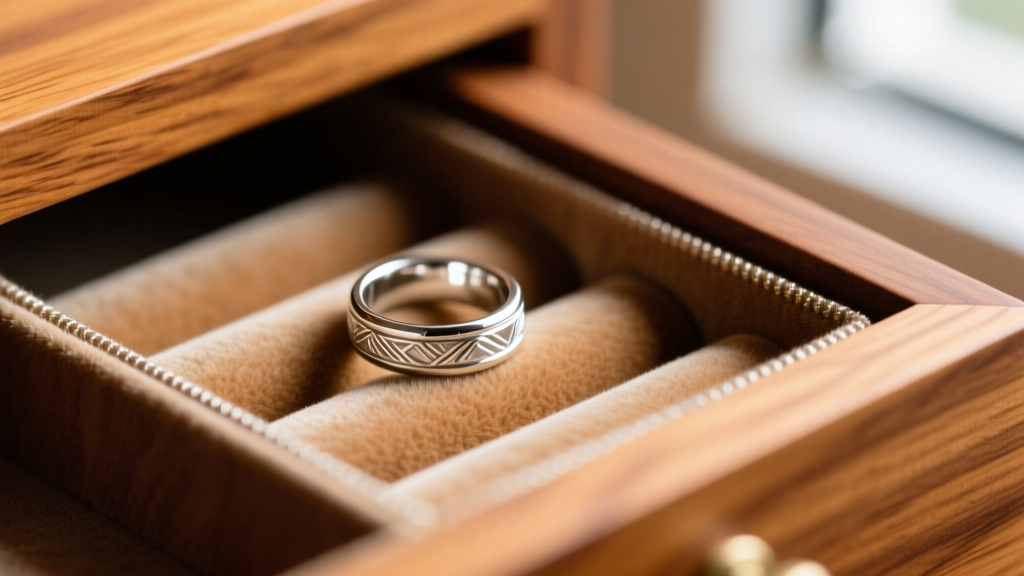
For serious collectors, the interior of a wall mounted jewelry box must be lined with anti-tarnish materials. Pacific Cloth (a treated flannel impregnated with microscopic silver or zinc particles) works via sacrificial oxidation—the cloth tarnishes so your jewelry does not. Alternatively, tarnish-preventive polyethylene films absorb sulfur compounds and hydrogen sulfide from the air. As noted by experts at Jewelers Mutual, controlling the immediate atmospheric environment around silver is far more effective than frequent chemical polishing, which strips microscopic layers of the metal over time.
Weight Capacity and Drywall Anchoring by Material
The physical weight of the empty box, combined with the maximum jewelry load, dictates the hardware required for safe installation. Standard plastic ribbed anchors are insufficient for most loaded jewelry cabinets. Below is a material comparison framework for installation planning.
| Material Profile | Avg Empty Weight | Max Jewelry Load | Required Anchor Type | Tarnish Risk Profile |
|---|---|---|---|---|
| Solid Walnut / Oak | 14 - 18 lbs | 10 - 15 lbs | 1/4' Toggle Bolts | Low (if lined properly) |
| MDF with Veneer | 10 - 14 lbs | 5 - 8 lbs | Strap Toggles | High (off-gassing/moisture) |
| 20-Gauge Steel | 8 - 12 lbs | 15 - 20 lbs | 1/4' Toggle Bolts | Zero (if powder-coated) |
| Anodized Aluminum | 4 - 7 lbs | 8 - 12 lbs | Self-Drilling Metal | Zero |
| Acrylic / Glass Hybrid | 6 - 10 lbs | 5 - 10 lbs | Threaded Drywall | Moderate (static dust) |
When installing heavier solid wood or steel units, always use toggle bolts or strap toggles that distribute the pull-out force across a wider area of the drywall's backside. Relying on screws driven directly into drywall without anchors will inevitably result in catastrophic failure, risking both your wall and your collection.
Final Verdict: Matching Material to Your Collection
There is no single 'best' material; the optimal choice depends entirely on your collection's composition and your room's environment. If you primarily store heavy gold chains, diamonds, and platinum, an anodized aluminum or powder-coated steel chassis provides the necessary load-bearing strength with a modern aesthetic. However, if your collection features porous organics (pearls, coral, amber) and vintage silver, a kiln-dried solid hardwood box lined with Pacific cloth is non-negotiable. It provides a stable, breathable microclimate that engineered woods and cold metals simply cannot replicate. Evaluate your wall space, calculate your total collection weight, and choose the material that safeguards your pieces for decades to come.


