March Birthstone Bloodstone Jewelry: Properties & Settings
Explore the material properties of March birthstone bloodstone jewelry. Compare its durability, ideal settings, and care against aquamarine.

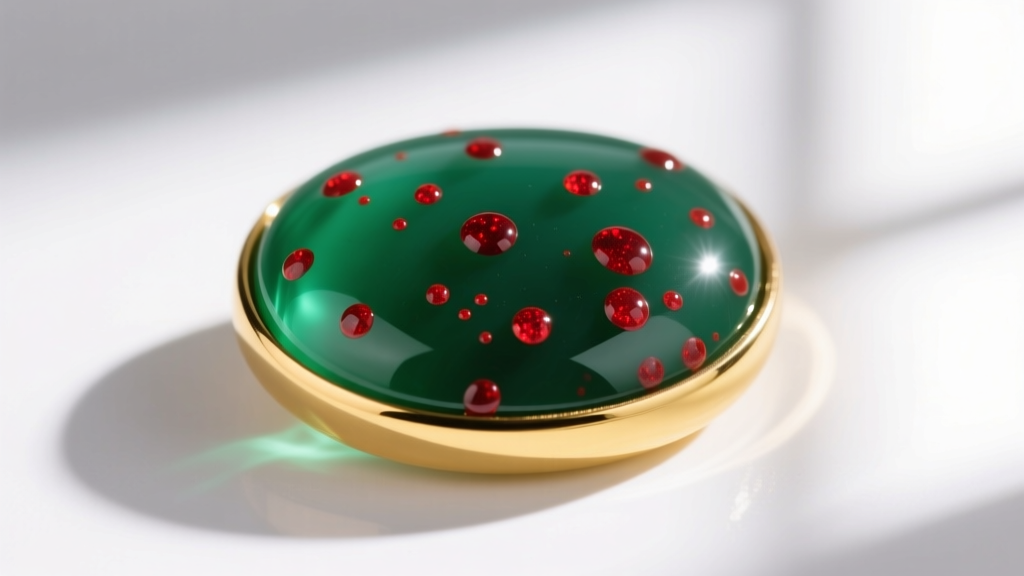
When collectors and gem enthusiasts explore march birthstone bloodstone jewelry, they are often drawn to its rich, opaque green canvas punctuated by striking crimson flecks. While aquamarine typically steals the spotlight as the primary March birthstone, bloodstone (also known as heliotrope) offers a completely different aesthetic and material profile. Understanding the gemological properties of bloodstone is critical for jewelers, lapidaries, and consumers alike. Its unique cryptocrystalline structure dictates everything from how it must be cut and set to how it should be maintained over decades of wear.
The Mineralogy of Bloodstone: Beyond the Red Flecks
Bloodstone is not a standalone mineral; it is a specific variety of chalcedony, which itself is a cryptocrystalline form of quartz (silicon dioxide, SiO2). The term 'cryptocrystalline' means that the quartz crystals are so microscopic that they cannot be distinguished even under a standard light microscope. Instead, they form a dense, interlocking fibrous matrix.
The signature visual properties of bloodstone are entirely driven by its inclusions:
- The Green Matrix: The deep, forest-green body color is caused by inclusions of chlorite, amphibole, or hornblende minerals dispersed throughout the quartz lattice.
- The Red 'Blood' Spots: The vivid red to brownish-red flecks are concentrations of iron oxide, specifically hematite. The most prized specimens feature bright, well-defined red spots against a uniformly dark green background.
According to the Mindat.org mineral database, bloodstone typically exhibits a specific gravity of 2.58 to 2.64 and a refractive index of approximately 1.53 to 1.54. Because it is an aggregate of microcrystals, it does not possess cleavage planes, meaning it will not split cleanly along structural weaknesses like faceted gems do.
Bloodstone vs. Aquamarine: A March Birthstone Showdown
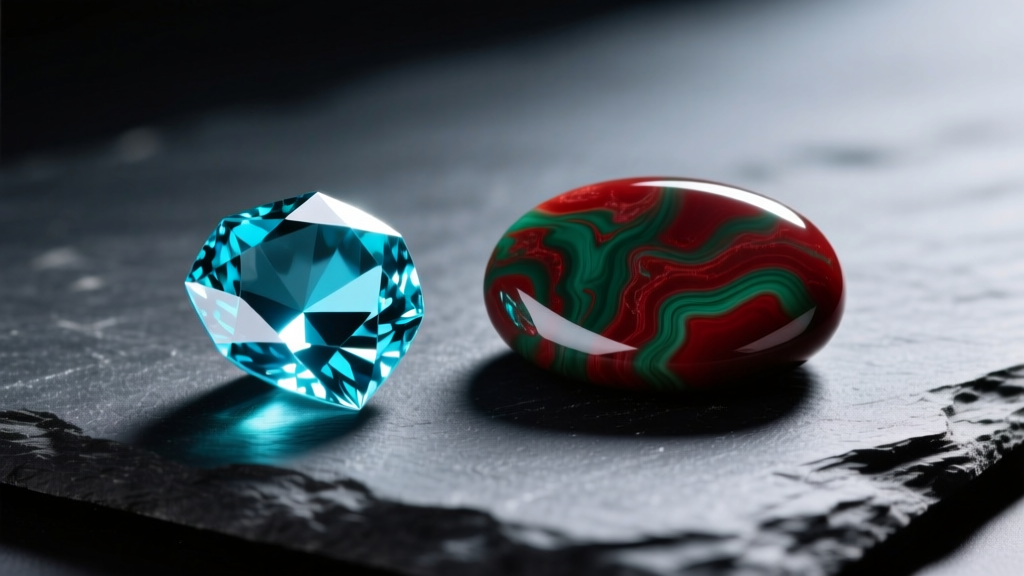
To truly appreciate the material advantages of bloodstone, we must compare it directly to its more famous March counterpart, aquamarine. While aquamarine wins on pure scratch resistance, bloodstone dominates in structural toughness.
| Property | Bloodstone (Chalcedony) | Aquamarine (Beryl) | Green Jasper (Chalcedony) |
|---|---|---|---|
| Mohs Hardness | 6.5 - 7.0 | 7.5 - 8.0 | 6.5 - 7.0 |
| Toughness | Excellent (Highly resistant to chipping) | Good (Prone to chipping on cleavage planes) | Excellent |
| Cleavage | None (Conchoidal fracture) | Poor basal cleavage | None |
| Transparency | Opaque | Transparent to Translucent | Opaque |
| Average Price (Commercial) | $2 - $10 per carat | $100 - $500+ per carat | $1 - $5 per carat |
Why Toughness Matters More Than Hardness in Rings
In gemology, hardness refers to a stone's resistance to scratching, while toughness refers to its resistance to breaking, chipping, or fracturing from impact. Aquamarine ranks higher on the Mohs scale, meaning it resists surface abrasions better. However, beryl (the mineral family of aquamarine) has distinct cleavage planes. A sharp knock against a granite countertop can cause an aquamarine to chip or fracture internally.
Bloodstone, thanks to its tightly interlocking microcrystalline quartz structure, possesses exceptional toughness. It absorbs and disperses kinetic energy far better than single-crystal gems. This makes bloodstone an incredibly resilient choice for everyday rings and bracelets that are subject to accidental impacts.
Lapidary Considerations: Cabochons and Intaglios
Because bloodstone is opaque, traditional faceting is useless; facets rely on light entering and reflecting back through a transparent stone. Instead, lapidaries shape bloodstone into cabochons (smooth, domed, unfaceted stones) or use it for intricate carvings and intaglios.
The uniform density of the chalcedony matrix makes it a dream material for carvers. Historically, bloodstone was heavily utilized for signet rings and seals in ancient Mesopotamia and Rome. The stone is hard enough to hold incredibly fine, razor-sharp details in a carved intaglio, yet tough enough that the delicate carved ridges will not easily snap off during the polishing process. Modern master lapidaries often charge a premium not for the raw bloodstone material, but for the hundreds of hours required to execute a flawless, multi-layered cameo or intaglio.
Optimal Jewelry Settings for Bloodstone
Despite its high toughness, poor setting choices can still compromise a bloodstone piece. When designing or purchasing march birthstone bloodstone jewelry, the setting must protect the stone's girdle (the outer edge).
The Bezel Setting: The Gold Standard
A full or partial bezel setting, where a rim of metal wraps entirely around the circumference of the cabochon, is the absolute best choice for bloodstone. It protects the vulnerable girdle from direct impacts and secures the domed stone firmly in place without putting undue pressure on any single point.
Why Prong Settings Fail
Prong settings are designed for faceted stones to allow maximum light entry. Using prongs on an opaque bloodstone cabochon is both aesthetically clumsy and structurally risky. Prongs leave the edges of the stone exposed to lateral strikes, and the point-pressure of the prong tips can cause localized stress fractures if the jeweler applies too much force during the setting process.
Flush and Gypsy Settings
For men's signet rings, a flush (or gypsy) setting is highly recommended. The stone is set directly into a drilled hole in the metal shank, with the top of the cabochon sitting level with the surrounding metal. This offers maximum protection for the stone's edges and creates a sleek, masculine profile that aligns perfectly with bloodstone's historical use in heraldic and signet jewelry.
Care Protocols: Protecting the Matrix
The Gemological Institute of America (GIA) consistently advises caution when cleaning aggregate quartz stones. While bloodstone is durable, its care routine differs significantly from that of diamonds or sapphires.
Expert Warning: Never place bloodstone jewelry in an ultrasonic cleaner. The high-frequency acoustic cavitation can shake loose the very hematite and chlorite inclusions that give the stone its identity, or cause micro-fractures along the boundaries of the mineral matrix.
The Correct Cleaning Method:
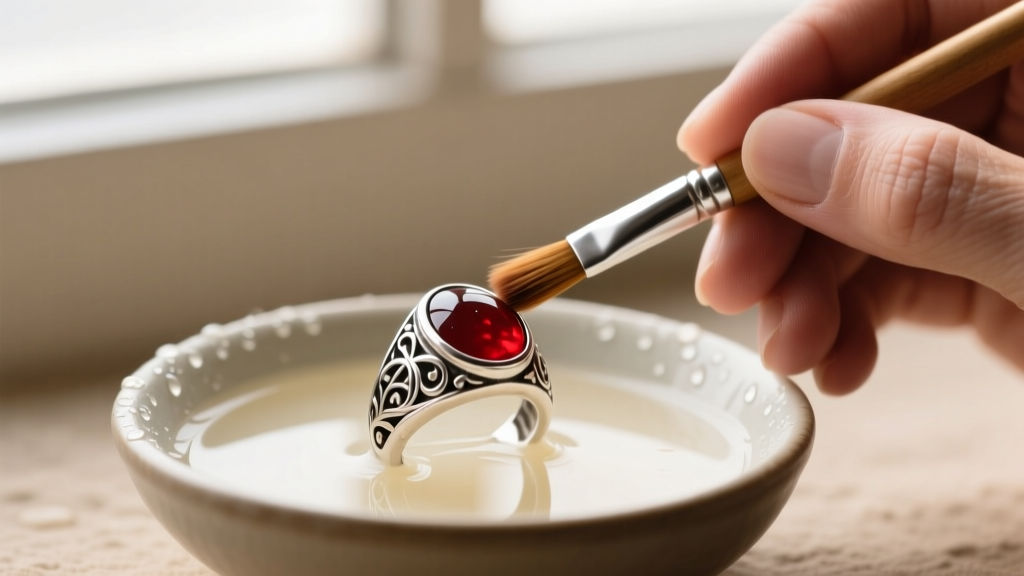
- Mix a few drops of mild, phosphate-free dish soap into a bowl of lukewarm water.
- Soak the jewelry for 5 to 10 minutes to loosen oils and skin cells.
- Gently agitate the water and use a soft-bristled baby toothbrush to clean around the bezel and the back of the setting.
- Rinse thoroughly under lukewarm running water (ensure the drain is plugged!).
- Pat dry with a microfiber cloth. Avoid harsh rubbing, which can leave micro-scratches on the polish over time.
Sourcing and Market Value
The vast majority of the world's commercial bloodstone is mined in India, particularly from the Deccan Traps region, where massive volcanic basalt flows created the perfect hydrothermal conditions for chalcedony formation. Australia, Brazil, and the United States also produce bloodstone, though in smaller commercial quantities.
While standard commercial-grade bloodstone is highly affordable (often under $10 per carat for finished cabochons), 'museum grade' material commands a higher price. Top-tier bloodstone features a deep, almost emerald-like green matrix that is completely free of grey or brown mottling, contrasted by bright, cherry-red hematite spots that are evenly distributed but not so dense as to overwhelm the green. When set in high-karat gold by artisan jewelers, these premium pieces transition from affordable birthstone trinkets to serious collector's items.
Final Verdict: Is Bloodstone Right for Everyday Wear?
If you are seeking a March birthstone that can withstand the rigors of daily wear without the anxiety associated with fragile, included emeralds or cleavage-prone aquamarines, bloodstone is an exceptional choice. Its cryptocrystalline toughness, combined with its rich, opaque beauty and historical gravitas, makes it a highly practical yet deeply meaningful material for heirloom-quality jewelry.


