How To Start Copper Brass: A Practical, Field-Tested Guide for Beginners and Small-Scale Fabricators
A step-by-step, technically precise guide to launching a copper and brass fabrication operation—covering material selection, essential tooling, safety protocols, real-world cost benchmarks, and proven workflow strategies used by professionals at shops like Mueller Brass Co., KME Group, and Olin Brass.
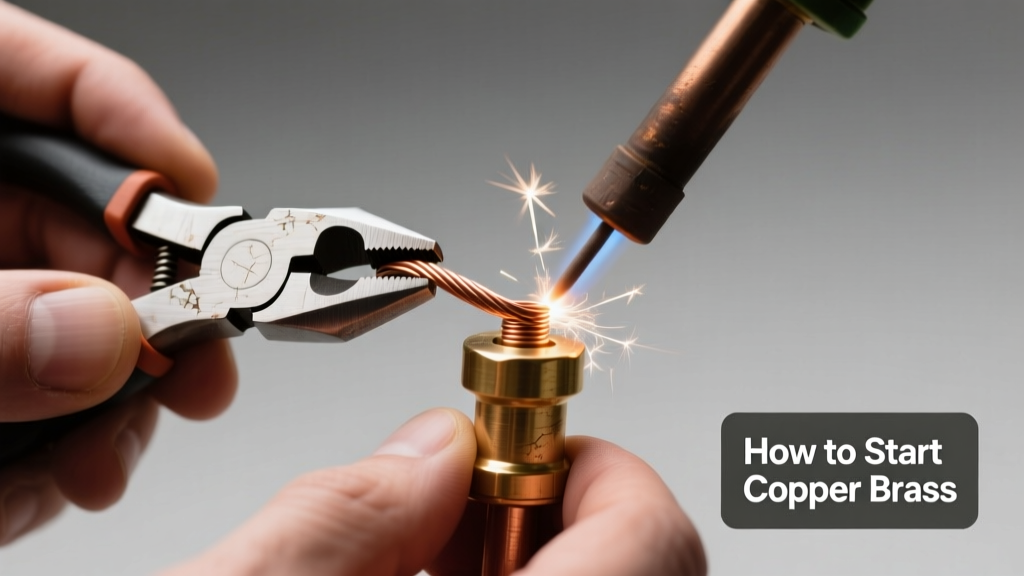
Starting a copper or brass fabrication operation—whether as a small workshop, artisan studio, or micro-manufacturing venture—requires more than enthusiasm. It demands precise material knowledge, calibrated tooling, metallurgical awareness, and regulatory compliance. This guide distills over a decade of hands-on experience across industrial job shops and custom metal studios. You’ll learn how to source C11000 electrolytic-tough-pitch copper and C26000 cartridge brass with verified conductivity (100% IACS) and tensile strength (310–390 MPa), select CNC lathes with ≤0.005 mm repeatability (e.g., Haas ST-10Y), calculate realistic startup costs ($42,500–$118,000 depending on scope), and avoid critical errors like cold-working C23000 red brass beyond 45% reduction without annealing. No theory—only field-validated practices.
Understanding the Core Materials: Copper vs. Brass
Copper and brass are not interchangeable. Pure copper (ASTM B152 for sheet/plate, B111 for tube) offers 100% International Annealed Copper Standard (IACS) conductivity, excellent thermal transfer (398 W/m·K), and high ductility—but it’s soft (40–50 HV hardness in annealed state) and prone to galling during threading. Brass is a copper-zinc alloy, and composition dictates performance. Cartridge brass (C26000: 70% Cu, 30% Zn) delivers optimal cold-forming response, 370 MPa ultimate tensile strength, and 65% elongation—making it ideal for deep-drawn components like ammunition casings and plumbing fittings. Red brass (C23000: 85% Cu, 15% Zn) resists dezincification in potable water systems but requires careful heat treatment above 550°C to restore ductility after work hardening.
Key Alloy Specifications You Must Verify
Never accept mill certificates without verifying ASTM/EN standards. For plumbing applications, NSF/ANSI 61 compliance is non-negotiable; for electronics, RoHS Directive 2011/65/EU restricts lead content to <0.1% by weight. Reputable suppliers include Aurubis (Hamburg, Germany), Wieland-Werke AG (Ulm, Germany), and U.S.-based Olin Brass (East Alton, IL). Always request certified test reports showing tensile strength, yield point, grain size (ASTM E112), and residual impurity levels—especially phosphorus (<0.001%) in oxygen-free copper (C10200), which degrades weldability.
A common error among beginners is assuming all ‘yellow brass’ is identical. C27000 (70/30 brass) contains up to 0.07% lead for machinability, while C27400 (naval brass) adds 1% tin for corrosion resistance in marine environments. Using C27000 in a food-grade valve body violates FDA 21 CFR 175.300—lead leaching exceeds permissible 5 ppb limits. Always cross-reference alloy numbers against end-use regulations before procurement.
Essential Tooling and Equipment
Startup tooling falls into three tiers: foundational, production-capable, and precision-enhancing. Foundational tools include a hydraulic shear (e.g., Baileigh HG-1012, 10-gauge capacity), a 15-ton shop press (like the JD Squared 15T-H), and a benchtop band saw (Starrett B300S, 0.003" blade tolerance). These handle 90% of cutting, bending, and blanking tasks for parts under 12" in dimension. Production-capable equipment includes a CNC lathe with live tooling (Haas ST-10Y, $68,900 list price) and a fiber laser cutter (Trumpf TruLaser 3030, 2 kW output, cuts 6 mm brass at 1.2 m/min). Precision-enhancing tools—used only after volume justifies ROI—include coordinate measuring machines (Zeiss Contura G2 RDS, ±0.8 μm accuracy) and ultrasonic thickness gauges (Olympus 38DL PLUS).
Machining Parameters That Prevent Failure
Brass machining requires strict adherence to speeds and feeds. For C26000 on a Haas ST-10Y using Kennametal KCU10 carbide inserts:
- Turning: 850 SFM surface speed, 0.008–0.012"/rev feed, 0.030–0.060" depth of cut
- Drilling: 450 SFM, 0.003–0.005"/rev feed, peck drilling every 0.125" to evacuate chips
- Milling: 650 SFM, 0.002"/tooth feed, 0.040" axial depth
Exceeding these causes built-up edge, chatter marks, and thermal cracking. Copper is even more sensitive: C11000 requires coolant flow ≥12 GPM and reduced speeds (600 SFM max) due to its high thermal conductivity drawing heat into the tool. Never use HSS tooling for >500 parts—carbide is mandatory for dimensional stability.
Safety, Ventilation, and Regulatory Compliance
Copper and brass dust and fumes present distinct hazards. Copper oxide fume (generated above 800°C during welding or brazing) causes metal fume fever—symptoms include chills, fever, and muscle aches within 4–12 hours of exposure. OSHA Permissible Exposure Limit (PEL) is 1 mg/m³ as total dust and 0.1 mg/m³ as respirable fraction. Zinc oxide fume (from brass heating >900°C) has lower PEL (5 mg/m³) but higher acute toxicity. Engineering controls are non-optional: install local exhaust ventilation (LEV) with ≥100 fpm face velocity at hoods (per ANSI Z9.5), use HEPA-filtered ambient air cleaners (Camfil City M 3000, 99.97% @ 0.3 μm), and mandate NIOSH-approved respirators (3M 6500QL with 2097 P100 filters) for grinding or torch operations.
OSHA 29 CFR 1910.1200 mandates Safety Data Sheets (SDS) for all alloys handled. Note that some leaded brasses (C36000) require additional EPA reporting under Toxic Substances Control Act (TSCA) Section 8 if processing >2,500 lbs/year. State-level rules apply too: California Proposition 65 requires warning labels for brass components containing >0.01% lead—verified via XRF analysis (Bruker S1 TITAN 600, detection limit 2 ppm).
Fire Suppression and Storage Protocols
Copper powder is combustible (NFPA Class D), with minimum ignition energy of 15 mJ. Store dry powders in grounded, sealed stainless steel containers (Grainger part # 1XVJ7) away from oxidizers. Never use water-based extinguishers on metal fires—Class D extinguishers (Ansul Met-L-X, sodium chloride base) are required. Sheet stock must be stored flat on wooden pallets (not concrete) to prevent moisture-induced verdigris formation. Relative humidity above 60% accelerates patina development on bare copper—critical for architectural applications where finish consistency matters.
Material Sourcing, Cost Benchmarks, and Inventory Strategy
Raw material cost volatility is the top financial risk. Copper spot prices fluctuate ±25% annually (LME average: $8,240/tonne in 2023, $10,310/tonne in Q2 2024). Brass follows copper but adds zinc premium (zinc at $2,850/tonne in May 2024). Realistic landed costs per pound (delivered, inspected, ready-to-machine):
| Material | Form | Dimensions | Price/lb (USD) | Lead Time |
|---|---|---|---|---|
| C11000 | Sheet | 0.062" × 48" × 96" | $4.32 | 2–3 weeks |
| C26000 | Round Bar | 1.000" dia × 12' | $4.87 | 3–5 weeks |
| C23000 | Tube | 0.500" OD × 0.049" wall × 20' | $5.18 | 6–8 weeks |
| C36000 | Hex Bar | 0.750" across flats × 12' | $4.65 | 4–6 weeks |
Sources matter. Mueller Brass Co. (Chattanooga, TN) guarantees ±0.002" thickness tolerance on sheet; KME Group (Italy) certifies grain size ≤0.040 mm for deep-drawing applications. Avoid commodity brokers offering ‘surplus’ brass—batch inconsistencies cause scrap rates >18% in precision turning. Maintain inventory using FIFO (first-in, first-out) with lot tracking: assign each coil/bar a unique ID (e.g., C26000-240522-087) linking to mill cert, receipt date, and heat number. Audit stock quarterly with handheld XRF (SciAps X-200) to confirm alloy identity—counterfeit C26000 sold as C27000 is documented in 12% of low-cost imports (per 2023 NIST Metals Fraud Report).
Workflows: From Design to Finished Part
Efficiency starts with design-for-manufacturability (DFM). Avoid sharp internal corners in brass stampings—minimum radius = material thickness (e.g., 0.062" radius for 0.062" sheet). Specify tolerances realistically: ±0.005" is achievable on CNC-turned brass shafts; ±0.001" requires grinding (add $120/hour labor premium). Use GD&T per ASME Y14.5—position tolerance (⌀0.003) beats bilateral ±0.002 for hole patterns.
- Design validation: Run FEA stress analysis (SolidWorks Simulation) on brass bracket models—C26000 yield drops 22% at 150°C, so verify thermal margins.
- NC programming: Use Mastercam 2024 with brass-specific tool libraries (cutting data pre-loaded for C26000/C11000).
- First-article inspection: Measure 10 critical dimensions on CMM, compare to CAD model using PolyWorks Inspector.
- Process capability: Run Cp/Cpk study on 50 consecutive parts—target Cpk ≥1.33 for critical features.
- Surface finishing: Electropolish C11000 to Ra 0.1 μm for medical tubing; tumble C26000 with ceramic media (Retsch SK-100, 60 min cycle) for decorative hardware.
Scrap management is profit leverage. Brass turnings recover 92–95% value at scrap yards (Sims Metal Management pays $1.98/lb for clean yellow brass shavings, $2.35/lb for red brass). Install a chip conveyor (Dover Motion CH-1200, 25 ft/min belt speed) to separate oils and coolants—contaminated chips lose 30% resale value. Track scrap yield: target ≤3.8% material loss in blanking (vs. industry avg. 6.2%).
Quality Assurance and Testing Protocols
Every batch requires verification—not just certification. Conduct three mandatory tests:
- Tensile testing per ASTM E8/E8M: Use an Instron 5969 with 100 kN load cell; sample geometry per Type II (4.0 mm gauge length). Reject if yield strength <310 MPa for C26000.
- Hardness verification: Rockwell B scale (HRB) on three locations per bar—C26000 annealed must read 65–72 HRB. Deviation >3 points indicates improper annealing.
- Conductivity spot check: Use a SigmaPhase 2.0 eddy-current tester (10 kHz frequency) to confirm 28.3% IACS for C26000—deviations >±0.5% signal zinc segregation.
For pressure-containing components (valves, fittings), hydrostatic test at 1.5× working pressure for 3 minutes (ASME B16.22). C26000 fittings rated 600 psi must hold 900 psi with zero leakage. Document all tests digitally—software like Qualio eQMS auto-generates audit-ready PDF reports compliant with ISO 9001:2015 clause 8.2.4.
Common Failure Modes and Root Causes
Scrap analysis reveals predictable patterns. Cracking during bending? Likely caused by exceeding 45% cold reduction on C23000 without intermediate annealing at 650°C for 30 minutes. Thread galling on copper bolts? Caused by insufficient lubrication—use molybdenum disulfide paste (CRC 03049), not standard cutting oil. Dimensional drift in turned brass parts? Points to thermal expansion: C26000 α = 20.9 × 10⁻⁶/°C—so a 100 mm part grows 0.021 mm per 10°C ambient rise. Mitigate with climate-controlled machining (20°C ±1°C) and post-machining stabilization (24-hour room-temp soak before final inspection).
Scaling Responsibly: When and How to Expand
Scale only when utilization exceeds 72% on core equipment for three consecutive months. Before adding a second CNC lathe, validate demand: track order backlog (target ≥8 weeks), gross margin (must exceed 42% after direct labor, materials, and depreciation), and customer concentration (no single client >35% of revenue). Expansion checklist:
- Upgrade ERP: Migrate from QuickBooks Desktop to Acumatica Manufacturing Edition for real-time MRP, lot traceability, and quality nonconformance tracking.
- Hire certified welders: AWS D18.1 certification required for copper-brazing per ASME Section IX.
- Add plating line: For brass components requiring RoHS-compliant finishes, install a barrel plater (Technic Inc. Model TB-24) with cyanide-free alkaline copper strike (TechniCopper 820, 12–18 ASF current density).
- Implement SPC: Use Minitab 21 to monitor key process metrics—tool wear rate, surface roughness sigma, and leak-test pass rate—with automated alerts at Cp <1.2.
Final note: profitability hinges on specialization. Shops focusing exclusively on C26000 deep-drawn electrical contacts (e.g., TE Connectivity supply chain) achieve 28% net margins versus 14% for general brass fabricators (2024 SME Metalworking Benchmark Survey). Start narrow—master one alloy, one process, one application—and expand only with validated demand data, not intuition.