Evaluating Antique Diamond Jewelry: Cut Anatomy & Mount Valuation
Master the technical evaluation of antique diamond jewelry. Learn to identify Old Mine and European cuts, assess mount integrity, and spot modern replicas.

The Evolution of Antique Diamond Cuts
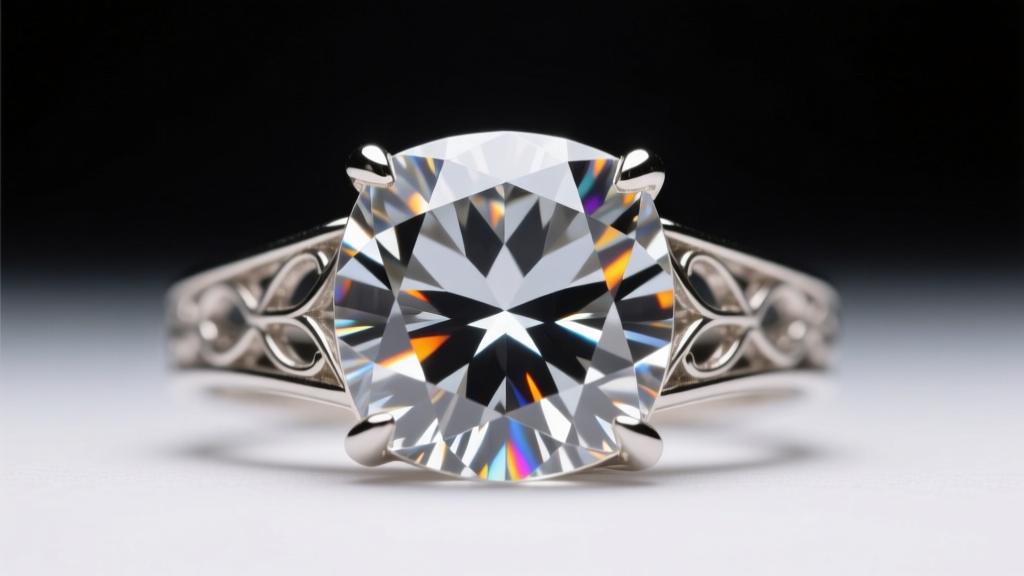
When evaluating antique diamond jewelry, understanding the historical evolution of lapidary techniques is paramount. Unlike modern round brilliants optimized for maximum light return via precise mathematical proportions, antique diamonds were cut by hand to maximize carat weight retention from the rough crystal. This resulted in unique optical signatures that collectors actively seek in 2026. The three primary historical cuts you will encounter are the Old Mine Cut, the Old European Cut, and the Rose Cut.
Old Mine Cut (OMC): The Georgian and Victorian Standard
Predominant from the early 18th century through the late 19th century, the Old Mine Cut is the predecessor to the modern cushion cut. OMCs feature a squarish girdle with softly rounded corners. They possess 58 facets, but their proportions are drastically different from modern stones. Expect a very high crown (often exceeding 15%), a small table (typically 43% to 50%), and a deep pavilion. The most defining characteristic is the large, open culet, which is easily visible to the naked eye through the table facet as a dark or translucent geometric void. Because they were cut by candlelight, OMCs exhibit a chunky, romantic scintillation rather than the crushed-ice brilliance of modern stones.
Old European Cut (OEC): The Edwardian and Art Deco Transition
As diamond cutting technology advanced with the introduction of motorized bruting machines in the late 19th century, the Old European Cut emerged. OECs retain the 58-facet arrangement and high crowns of their OMC predecessors but feature a distinctly round girdle. The table size is slightly larger (43% to 62%), and the culet is smaller, though still typically visible without magnification. According to GIA historical cut research, the OEC represents the direct bridge between antique hand-cutting and the modern Tolkowsky ideal cut, offering a balance of fiery dispersion and emerging brilliance.
Proportion Comparison Matrix
| Cut Style | Girdle Shape | Table % | Crown Angle | Culet Size |
|---|---|---|---|---|
| Old Mine Cut | Squarish / Rounded | 43% - 50% | High (>40°) | Very Large |
| Old European Cut | Round | 43% - 62% | Medium-High | Large |
| Modern Brilliant | Round | 53% - 58% | 34° - 35° | None / Pointed |
Mount Anatomy & Metallurgical Failure Modes
An antique diamond is only as secure as its century-old mounting. Evaluating the structural integrity of the metalwork is a critical, often overlooked aspect of appraising antique diamond jewelry. Metals fatigue, solders degrade, and prongs wear down over decades of daily use.
Shank Thinning and Knife-Edge Degradation
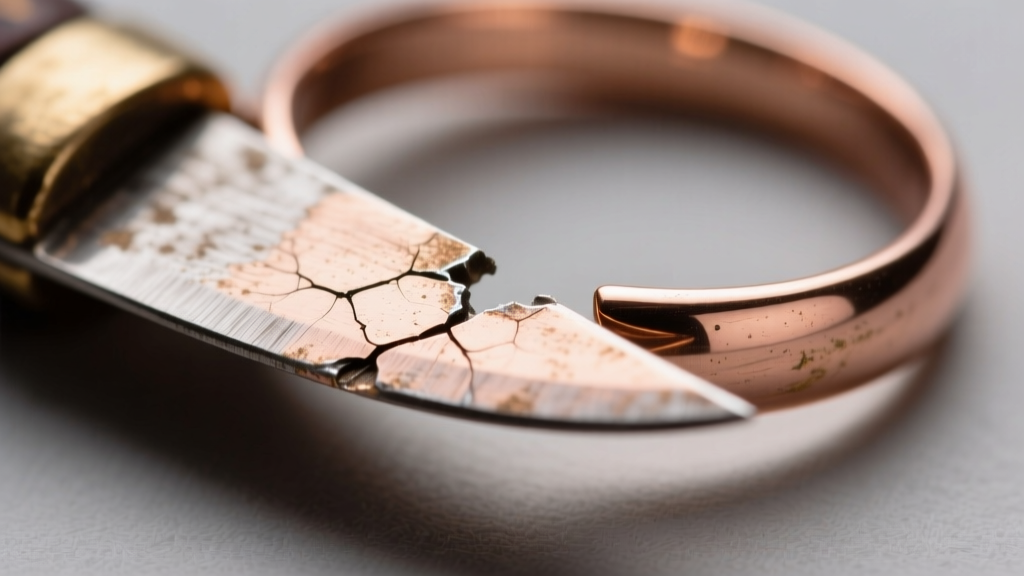
Many late 19th-century rings, particularly Victorian and Edwardian pieces, were crafted with knife-edge shanks to create an illusion of delicacy. While beautiful, a 1.5mm knife-edge shank subjected to 100 years of friction against adjacent rings and daily abrasion can wear down to a dangerous 0.4mm thickness. When inspecting a piece, always check the bottom third of the shank and the areas immediately adjacent to the gallery rail. If the metal feels sharp or shows a concave wear groove, the ring requires immediate shanking or laser welding to prevent catastrophic snapping.
Solder Joint Failures in Multi-Metal Mounts
Art Deco mountings frequently utilized platinum for the gallery and basket, soldered to an 18k or 14k gold shank to reduce costs. The solders used in the 1920s and 1930s often contained lower-melting-point alloys, including lead or high-zinc brass. Over a century, these solder joints can oxidize, become brittle, and develop micro-fractures. A gentle tap test with a resin mallet, or inspection under 10x magnification for dark seam lines, will reveal compromised gallery joints before the basket completely detaches from the shank.
Prong Fatigue: Platinum vs. Gold
Platinum prongs from the Edwardian era are renowned for their durability, but they are susceptible to work-hardening. If a platinum prong has been repeatedly bent back and forth to tighten a stone over the decades, it becomes brittle and can snap cleanly at the bend point. Conversely, 14k and 18k yellow gold prongs do not become brittle; instead, they simply abrade away. When examining gold prongs on antique clusters or halo settings, ensure the metal still covers at least 30% of the diamond's crown facets to prevent the stone from slipping out of the mounting.
Authentication: Spotting Modern Recuts and Synthetics
As the premium for authentic antique diamond jewelry has surged, so has the sophistication of deceptive practices. Collectors must be vigilant against two primary threats: modern recuts disguised as antique, and lab-grown synthetics set into genuine antique mountings.
Identifying Recut Stones
A diamond that has been recut to improve its modern brilliance will lose its historical value premium. To spot a recut OEC or OMC, examine the girdle. Authentic antique diamonds often feature frosted or unpolished girdles with natural, un-faceted skin left over from the cleaving process. A perfectly polished, bruted girdle with laser-inscribed certification numbers is an immediate red flag. Furthermore, use a loupe to inspect the facet junctions; modern recuts will show crisp, machine-perfect symmetry and modern polish lines that contrast sharply with the slightly wavy, hand-polished facets of a true 19th-century stone. Experts at Lang Antiques University emphasize that the presence of modern chevron facets on the pavilion is a definitive indicator of a contemporary recut.
Synthetic Diamonds in Antique Settings
Because CVD and HPHT lab-grown diamonds are relatively inexpensive, fraudulent sellers occasionally set them into genuine, hallmarked 1920s platinum filigree mountings to pass them off as high-value antiques. Visual inspection is insufficient here. You must look for synthetic growth indicators. HPHT diamonds often contain microscopic metallic flux inclusions that are magnetic and opaque, while CVD diamonds may display strain patterns under cross-polarized light that never occur in natural, earth-mined antique rough. Additionally, natural antique diamonds frequently show inert to medium blue UV fluorescence, whereas a strong, chalky blue or entirely anomalous fluorescence pattern warrants immediate gemological lab testing.
Valuation Frameworks for 2026 Collectors
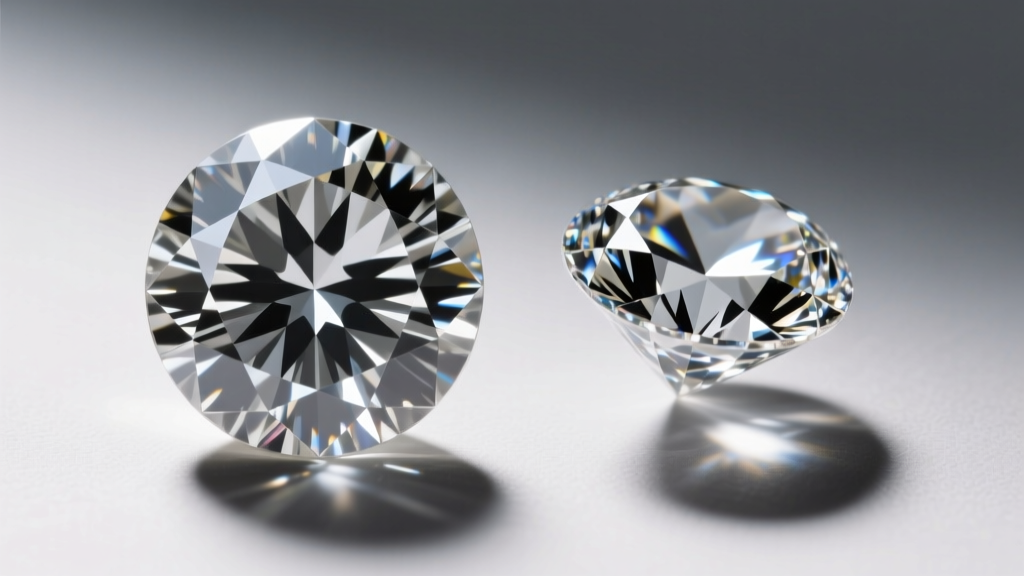
Valuing antique diamond jewelry requires decoupling the stone from the standard Rapaport price list, which is designed exclusively for modern brilliant cuts. In the current market, originality and condition dictate the premium.
- The Originality Premium: An Old European Cut diamond retaining its original frosted girdle, un-repaired original mount, and period-correct hallmarks will command a 20% to 35% premium over a standard round brilliant of the same carat weight, color, and clarity.
- The Recut Penalty: If an OMC has been recut into a modern cushion to improve its light performance, it loses its antique status. The value drops to the baseline modern wholesale price, minus the cost of the lost carat weight.
- Color Tolerance: Antique collectors are highly forgiving of lower color grades. A 2.00-carat OEC in K or L color is highly desirable because the high crown and chunky facets mask body color beautifully, presenting a warm, romantic glow. Therefore, the price penalty for stepping down the color scale is significantly less severe than it is for modern brilliants.
- Mount Condition Multipliers: A pristine, un-altered Art Deco platinum mounting with intact milgrain and no evidence of laser welding or resizing adds substantial historical value. Conversely, a mounting that has been heavily polished, erasing the filigree details and hallmarks, will be valued strictly for its scrap metal weight and the standalone value of the diamond.
Ultimately, mastering the evaluation of antique diamond jewelry requires a dual-lens approach: the gemological rigor to authenticate the stone's historical cut and natural origin, combined with the metallurgical expertise to assess the survival and integrity of its century-old mounting.


