How to Clean Diamond Jewelry at Home: Natural, Lab & Moissanite
Learn how to clean diamond jewelry at home using material science. Compare safe methods for natural, lab-grown, moissanite, and CZ stones.

The Material Science of Diamond Soiling
Before diving into the mechanics of jewelry maintenance, it is crucial to understand why diamonds lose their brilliance so quickly. The carbon lattice of a diamond features strong sp3 hybridized bonds, which create a surface that is highly oleophilic (oil-attracting) and hydrophobic (water-repelling). This means that everyday contact with skin sebum, lotions, and cooking oils causes a microscopic film of grease to adhere stubbornly to the stone's pavilion and table facets. Because water naturally beads up and rolls off a diamond, rinsing your ring under the tap does nothing to remove this oily film.
If you are researching how to clean diamond jewelry at home without damaging the stone or the precious metal setting, you must first identify your specific gem material. As lab-grown diamonds and advanced alternatives like moissanite continue to dominate the 2026 market, treating every clear stone exactly the same is a recipe for long-term damage. While a natural diamond can withstand rigorous cleaning, softer alternatives require a fundamentally different approach to preserve their optical clarity and facet integrity.
How to Clean Diamond Jewelry at Home: The Master Protocol
For natural and lab-grown diamonds set in platinum or gold, the safest and most effective home cleaning method relies on chemical degreasing rather than mechanical abrasion. According to the Gemological Institute of America (GIA), a mild surfactant is all that is required to break the surface tension of oils clinging to the carbon crystal.
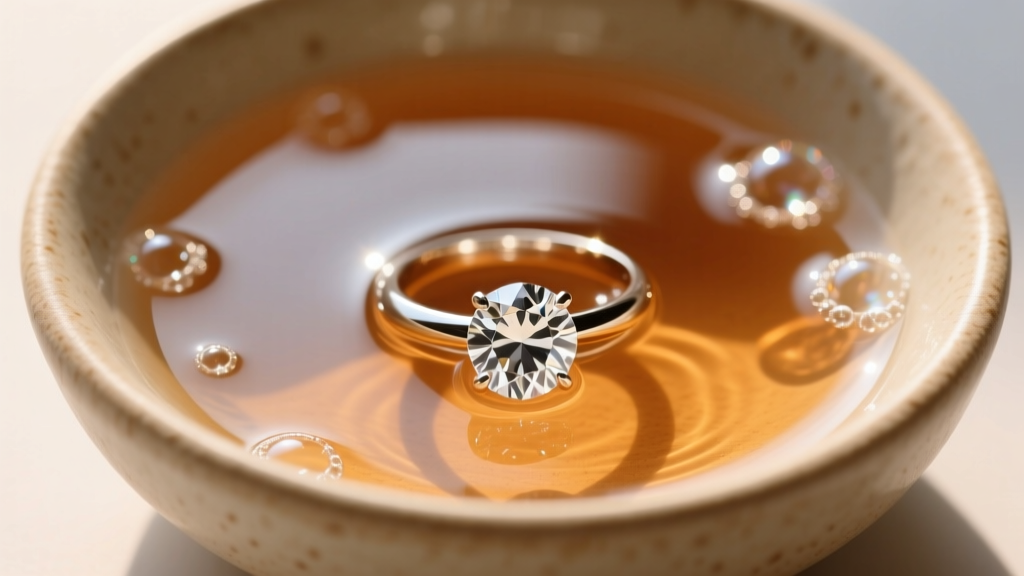
- The Soak: Fill a small ceramic or glass bowl with lukewarm water (never boiling, to avoid thermal shock to certain inclusions). Add 3 to 4 drops of a mild, ammonia-free dish soap. Ammonia can degrade the rhodium plating on white gold settings over time. Let the jewelry soak for 15 to 20 minutes to allow the surfactants to emulsify the oils.
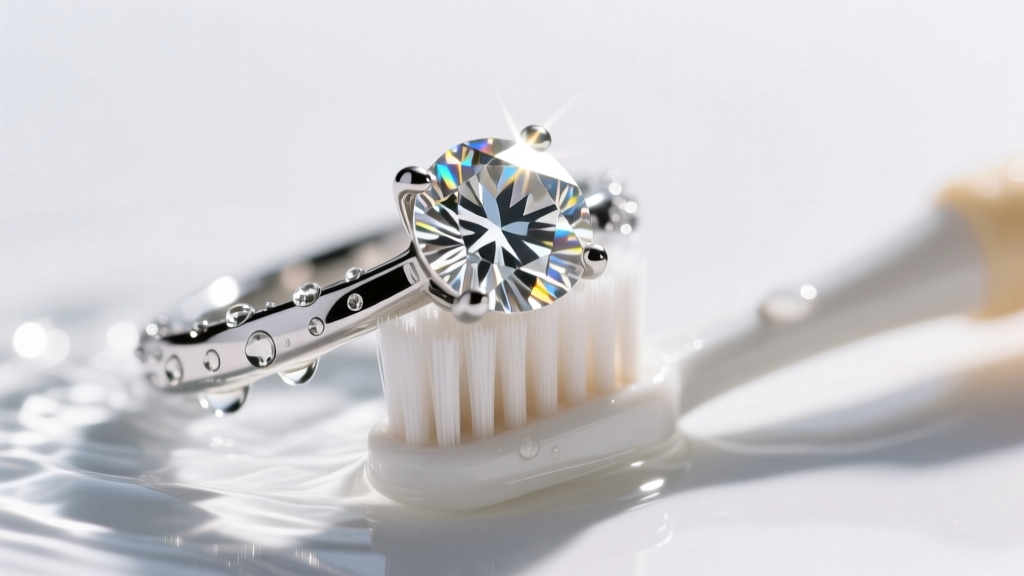
- The Agitation: Using an extra-soft baby toothbrush, gently sweep the bristles across the back of the stone (the pavilion). This is where the majority of oil and dead skin cells accumulate. Do not use a medium or hard-bristled brush; while a diamond cannot be scratched by nylon, the gold or platinum prongs holding it can be worn away over years of aggressive brushing.
- The Rinse: Place the ring in a small mesh strainer and rinse under a gentle stream of lukewarm water. Never rinse directly over an open drain without a stopper in place.
- The Dry: Pat the stone dry with a lint-free microfiber cloth. Avoid paper towels, as the wood pulp fibers can leave microscopic scratches on polished metal surfaces and leave lint trapped in the prong heads.
Material Comparison: Diamonds vs. Alternatives
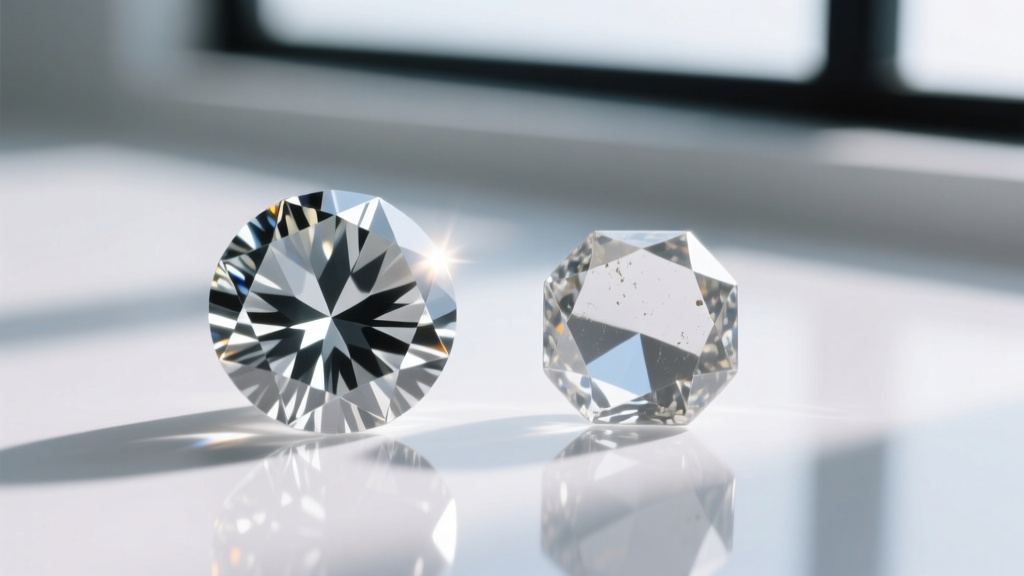
Not all clear gemstones share the extreme durability of a diamond. When evaluating how to maintain your jewelry, you must account for the Mohs hardness scale, chemical resistance, and structural vulnerabilities of diamond alternatives. Below is a material property comparison to guide your cleaning routine.
| Material | Mohs Hardness | Oil Attraction | Ultrasonic Safe? | Primary Cleaning Risk |
|---|---|---|---|---|
| Natural Diamond | 10 | High (Oleophilic) | Yes* | Loosening pave settings |
| Lab-Grown Diamond | 10 | High (Oleophilic) | Yes* | Loosening pave settings |
| Moissanite (SiC) | 9.25 | High (Oleophilic) | Yes | Thermal shock (rare) |
| Cubic Zirconia (ZrO2) | 8.0 - 8.5 | Moderate | No | Micro-abrasions & clouding |
*Note: Ultrasonic cleaners are safe for solid diamonds unless the stone is fracture-filled, clarity-enhanced, or set in a delicate micro-pave setting where high-frequency vibrations can rattle stones loose.
Lab-Grown Diamonds & Moissanite
Lab-grown diamonds possess the exact same physical, chemical, and optical properties as mined diamonds. Therefore, the master degreasing protocol outlined above applies perfectly. Moissanite (silicon carbide) is also highly oleophilic and attracts oil just as aggressively as a diamond. You can safely clean moissanite using the same dish soap and soft brush method. However, moissanite has a slightly different thermal conductivity profile; while it is highly heat resistant, you should avoid moving moissanite jewelry directly from an ultrasonic heater into cold water to prevent rare but possible thermal shock fractures.
Cubic Zirconia and the Abrasion Risk
Cubic Zirconia (CZ) requires a much gentler touch. With a Mohs hardness of 8.0 to 8.5, CZ is significantly softer than diamond and moissanite. Over time, dust and environmental debris (which often contains quartz particles with a hardness of 7) can become trapped under the stone. If you scrub a CZ ring with a stiff brush or use abrasive commercial jewelry dips, you will introduce micro-scratches across the table facet. These scratches scatter light, causing the stone to look permanently cloudy and milky. For CZ, skip the brush entirely; rely solely on a prolonged soak in soapy water and a gentle rinse, followed by drying with a plush microfiber cloth.
Chemical Hazards: Protecting the Metal Setting
When learning how to clean diamond jewelry at home, the focus is often entirely on the gemstone, neglecting the metal alloy that actually secures it. The Federal Trade Commission (FTC) Jewelry Guides and metallurgical experts warn against the use of chlorine-based cleaners (like bleach) or wearing jewelry in chlorinated pools.
Diamonds are impervious to chlorine, but the gold alloys used in 14k and 18k settings are not. Gold is alloyed with copper, silver, and zinc to increase durability. When exposed to chlorine, these alloy metals undergo a chemical reaction that causes stress corrosion cracking. This microscopic degradation occurs at the points of highest mechanical stress—namely, the tips of the prongs holding your diamond. Over time, chlorine exposure will cause prongs to become brittle and snap, resulting in the loss of the center stone. Always remove your jewelry before using household bleach or entering a hot tub.
Drying and Final Polish: Avoiding Micro-Abrasions
The final step in home jewelry maintenance is proper drying and polishing. Air-drying a diamond ring will leave hard water spots (calcium and magnesium deposits) on the facets, which mimic the look of a cloudy, dirty stone. Always use a dedicated, clean microfiber cloth.
For the metal band, you can use a specialized jeweler's polishing cloth infused with mild rouge to restore the luster to scratched gold or platinum. However, never use a polishing cloth on the diamond itself, and avoid using it on matte, brushed, or sandblasted finishes, as the abrasives will polish away the texture and leave a shiny, uneven patch. For intricate pave settings where cloth fibers might snag on tiny prongs, a blast of compressed air (held at least six inches away) is the safest way to dislodge residual moisture from beneath the stones.
When to Seek Professional Maintenance
While home cleaning is excellent for removing daily oils and lotions, it cannot fix structural issues or deep-set grime in porous settings. The International Gemological Institute (IGI) recommends having your fine jewelry professionally inspected every six to twelve months. A jeweler will use steam cleaners (which are safe for solid diamonds but dangerous for emeralds or fracture-filled stones) and inspect the prongs under 10x magnification to ensure the metal has not worn thin. By combining safe, science-backed home cleaning routines with annual professional check-ups, you ensure that your diamond, lab-grown, or moissanite jewelry retains its maximum optical brilliance and structural security for a lifetime.


