How to Clean Simulated Diamond Jewelry Safely at Home
Learn how to clean simulated diamond jewelry safely. Expert tips for moissanite, cubic zirconia, and coated stones to restore brilliance without damage.

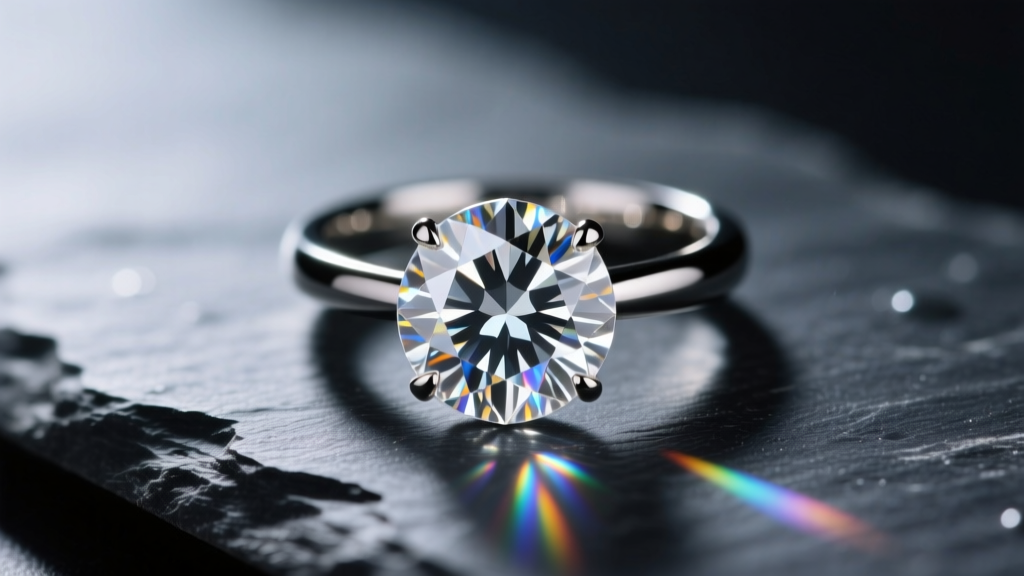
The Science of Simulants: Why One Cleaning Method Doesn't Fit All
When caring for simulated diamond jewelry, the biggest mistake consumers make is treating every stone like a mined diamond. While a natural or lab-grown diamond is a 10 on the Mohs hardness scale and is virtually impervious to household chemicals, diamond simulants possess entirely different physical and chemical properties. Understanding these differences is the key to maintaining optical brilliance and preventing permanent clouding.
Simulants generally fall into three categories: Cubic Zirconia (CZ), Moissanite, and coated simulants (like ASHA or Diamond Nexus). According to the Gemological Institute of America (GIA), moissanite is a 9.25 on the Mohs scale and is highly durable, but it is distinctly oleophilic, meaning it naturally attracts and holds onto grease and oils. Cubic Zirconia, ranking at 8 to 8.5, is slightly porous. This porosity allows it to absorb skin oils, lotions, and hard water minerals, leading to the infamous "milky" or cloudy appearance over time. Coated simulants feature a nanometer-thin Diamond-Like Carbon (DLC) layer over a CZ core, making them highly vulnerable to abrasive cleaning and high-frequency vibrations.
Simulated Diamond Jewelry Care Matrix
Before reaching for a cleaning solution, identify your simulant. Use this matrix to determine which professional and at-home cleaning methods are safe for your specific jewelry.
| Simulant Material | Mohs Hardness | Ultrasonic Safe? | Steam Safe? | Primary Vulnerability |
|---|---|---|---|---|
| Moissanite | 9.25 | Yes | Yes | Grease/Oil buildup (Oleophilic) |
| Cubic Zirconia (Uncoated) | 8.0 - 8.5 | Risky (Fractures) | No (Thermal Shock) | Hard water spots, micro-scratches |
| ASHA / Nexus (Coated CZ) | 8.5 (Surface 10) | No (Strips Coating) | No (Melts Coating) | Chemical stripping, abrasion |
| Crystal / Glass | 5.0 - 6.0 | No | No | Severe scratching, foil backing damage |
Step-by-Step: The Distilled Water & Surfactant Protocol
For 90% of simulated diamond jewelry, the safest and most effective cleaning method relies on a gentle surfactant and distilled water. We specifically mandate distilled water because tap water contains calcium and magnesium ions. When tap water evaporates off a CZ stone, it leaves behind microscopic mineral deposits that refract light poorly, mimicking the look of a cloudy, low-quality stone.
What You Need
- Distilled water (not tap, not filtered)
- pH-neutral liquid dish soap (e.g., original blue Dawn; avoid soaps with added moisturizers or citrus extracts)
- A brand-new, extra-soft baby toothbrush
- A lint-free jeweler's microfiber cloth (never paper towels)
- A glass or ceramic bowl (avoid metal bowls that can cause galvanic reactions with silver settings)
The 5-Minute Cleaning Protocol
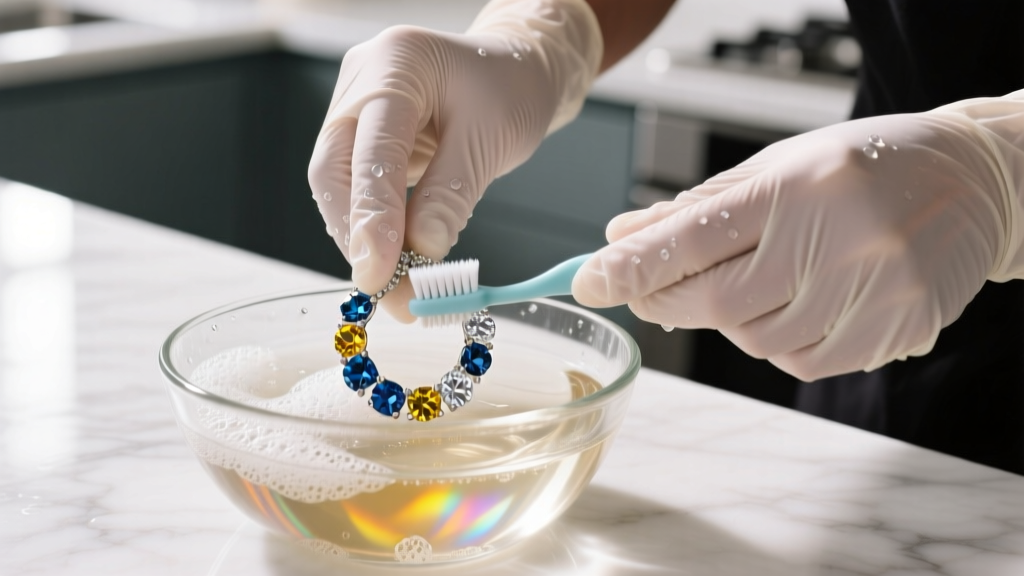
- Prep the Solution: Fill the bowl with warm (not hot) distilled water. Add exactly one drop of dish soap. Swirl gently to create mild suds.
- The Soak: Submerge your simulated diamond jewelry for 3 to 5 minutes. This allows the surfactant to break down the oleophilic grease bonds on moissanite and lift oils from the porous surface of CZ.
- Pavilion Agitation: Remove the piece and use the baby toothbrush to gently scrub the pavilion (the underside of the stone). Dirt and lotion accumulate heavily around the culet and lower girdle facets, blocking light return. Use gentle, circular motions. Do not scrub the crown (top) aggressively, as dust trapped under the bristles can cause micro-scratches on CZ.
- The Rinse: Rinse the jewelry under a slow stream of lukewarm distilled water to wash away the suspended oils.
- Capillary Drying: Pat the metal dry with the microfiber cloth. Use the corner of the cloth to wick moisture out from under the prongs. Air-drying, even with distilled water, can leave minor water tension marks.
The Danger Zone: Ultrasonic and Steam Cleaners
Jewelry stores frequently use ultrasonic and steam cleaners for diamond maintenance. However, applying these methods to simulated diamond jewelry is a leading cause of irreversible damage.
"Ultrasonic cleaners use high-frequency sound waves to create microscopic bubbles in a cleaning solution. When these bubbles collapse against a stone, they generate intense localized pressure. While diamonds can withstand this cavitation, it can easily shatter fracture-filled CZ or strip the delicate DLC coating off treated simulants."
If you own an ASHA or Nexus diamond simulant, the diamond-like coating is only a few nanometers thick. The cavitation from an ultrasonic cleaner will cause this coating to peel or flake, resulting in a patchy, dull stone that cannot be repaired. Similarly, steam cleaners expose stones to rapid thermal shock. Because CZ has a different thermal expansion coefficient than the metal prongs holding it, sudden blasts of 212°F (100°C) steam can cause the stone to crack or the prongs to loosen.
Metal Setting Considerations: Protecting the Foundation
Cleaning the stone is only half the battle; protecting the metal setting is equally critical. Simulated diamonds are most commonly set in 925 Sterling Silver, platinum-plated brass, or 10k/14k gold. Sterling silver is almost always plated with a microscopic layer of rhodium (usually 0.75 to 1.0 microns thick) to give it a bright, white-gold appearance and prevent tarnishing.
Never use bleach, chlorine, or ammonia-based glass cleaners (like Windex) on simulated diamond jewelry. Chlorine reacts violently with the copper alloys in sterling silver and lower-karat gold, causing a phenomenon known as "depletion cracking," where the metal becomes brittle and prongs snap. Ammonia will strip the rhodium plating right off silver, exposing the raw brass or silver underneath, which will rapidly oxidize and turn your skin green. Stick strictly to the mild dish soap protocol outlined above.
Storage and Daily Wear Habits to Prevent Clouding
Preventative care drastically reduces the need for deep cleaning. Simulated diamonds, particularly CZ, are prone to static buildup and micro-scratching.
The "Last On, First Off" Rule
Always put your simulated diamond jewelry on after applying makeup, lotions, perfumes, and hairspray. The aerosolized polymers in hairspray and the heavy emollients in body lotions create a stubborn, waxy film on the pavilion facets that is incredibly difficult to remove with just soap and water. Conversely, take your jewelry off first when you get home, before washing your face or applying night creams.
Compartmentalized Storage
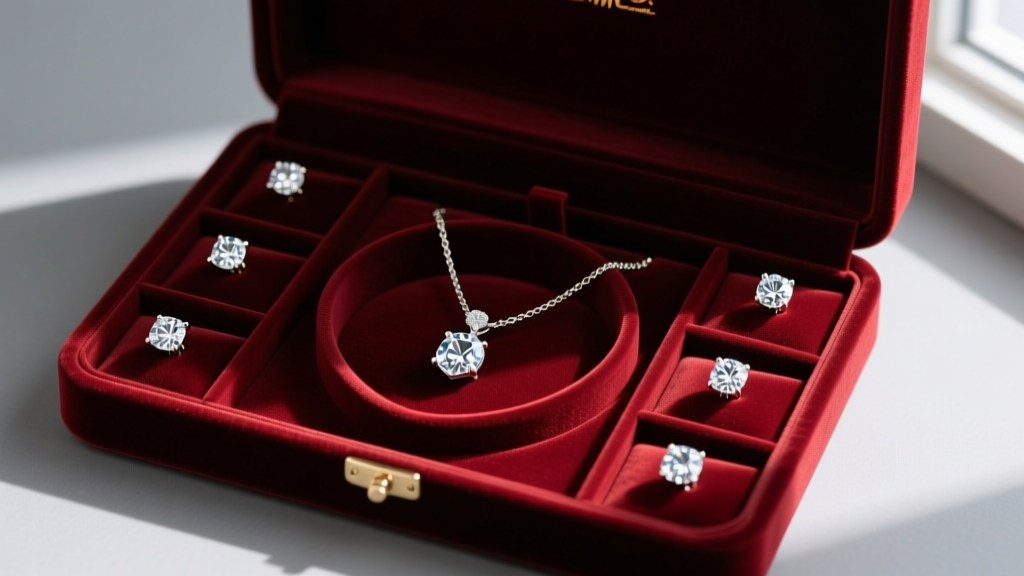
Never toss simulated diamond jewelry into a communal jewelry box. Household dust contains microscopic particles of quartz (Mohs hardness of 7). While quartz won't scratch a diamond, it will scratch Cubic Zirconia (Mohs 8-8.5) over time. When CZ is scratched, those microscopic grooves act as traps for skin oils and dirt, accelerating the cloudy appearance. Store each piece individually in a soft, anti-tarnish flannel pouch or a velvet-lined compartment.
Troubleshooting: Reviving Hopelessly Cloudy CZ
If you have followed the distilled water protocol and your Cubic Zirconia still looks cloudy, milky, or dull, you are likely not dealing with dirt. You are dealing with physical degradation.
Because CZ is softer than a diamond, years of daily wear result in a network of microscopic surface abrasions. These scratches disrupt the stone's ability to refract light, causing it to lose its "fire" and look like cloudy glass. Furthermore, if the stone was exposed to hard water or harsh chemicals, the surface may have suffered permanent chemical etching.
The Solution: You cannot polish a scratched CZ back to life. However, you do not need to throw the ring away. Take the piece to a local bench jeweler and request a "stone swap." A jeweler can easily remove the cloudy CZ and set a brand-new, high-grade (AAAAA quality) CZ into your existing setting. This service typically costs between $20 and $45, depending on the carat size and setting complexity, and will make your simulated diamond jewelry look brand new again. For more information on simulant durability and grading, refer to the GIA's comprehensive guide on Cubic Zirconia.
By understanding the unique gemological properties of your stones and avoiding the harsh chemicals meant for natural diamonds, you can keep your simulated diamond jewelry sparkling brilliantly for years to come.


