Decoding the Most Expensive Diamond Jewelry: A Beginner's Guide
Discover what makes the most expensive diamond jewelry so valuable. A beginner's guide to rare colors, Type IIa purity, and auction records.

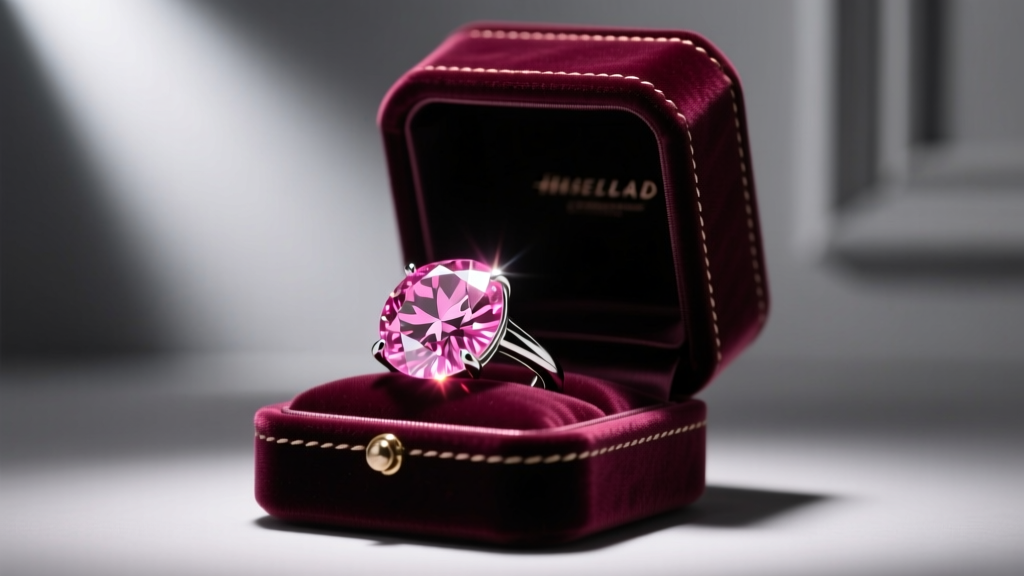
The Allure of the Apex: Understanding High-Stakes Diamonds
When you begin researching fine gems, you will inevitably encounter headlines about the most expensive diamond jewelry ever sold. Pieces like the Pink Star or the Oppenheimer Blue fetch tens of millions of dollars at auction, leaving many beginners wondering what exactly justifies a price tag that rivals the GDP of a small island nation. Is it just marketing, or is there a tangible, scientific rationale behind these astronomical valuations?
The truth is that the upper echelon of the diamond market operates on a completely different set of rules than the commercial engagement ring market. While a standard 1-carat white diamond is evaluated on a relatively forgiving scale of cut, color, clarity, and carat, the most expensive diamond jewelry in the world is priced based on extreme geological rarity, chemical purity, and historical provenance. This beginner-friendly explainer will demystify the anatomy of record-breaking gems, giving you a deeper understanding of gemology and actionable insights you can apply to your own jewelry purchases.
The Science of Scarcity: Type IIa and Fancy Colors
To understand why certain pieces dominate Sotheby's and Christie's auction blocks, you must look beyond the standard 4Cs and dive into diamond crystal chemistry. The vast majority of diamonds (about 98%) are classified as Type Ia, meaning they contain clusters of nitrogen atoms that absorb blue light, giving the stone a slight yellowish or brownish tint.
The Type IIa Phenomenon
The most expensive diamond jewelry featuring white or pink stones almost exclusively utilizes Type IIa diamonds. These gems contain virtually no nitrogen impurities, making them chemically pure and optically transparent. Type IIa diamonds account for less than 2% of all gem-quality diamonds mined globally. When a Type IIa diamond is graded as 'D' (colorless) and 'Flawless' by the GIA, it commands a massive premium because it represents the absolute pinnacle of geological perfection.
The Chemistry of Color
When it comes to colored diamonds, the rules change entirely. The presence of trace elements or structural distortions during the diamond's formation creates 'Fancy' colors. For instance, boron creates blue diamonds, while intense pressure and heat deep within the Earth's mantle cause the crystal lattice to twist, resulting in pink diamonds. The GIA's Fancy Color Grading System evaluates these stones based on hue, tone, and saturation, with 'Fancy Vivid' commanding the highest prices per carat.
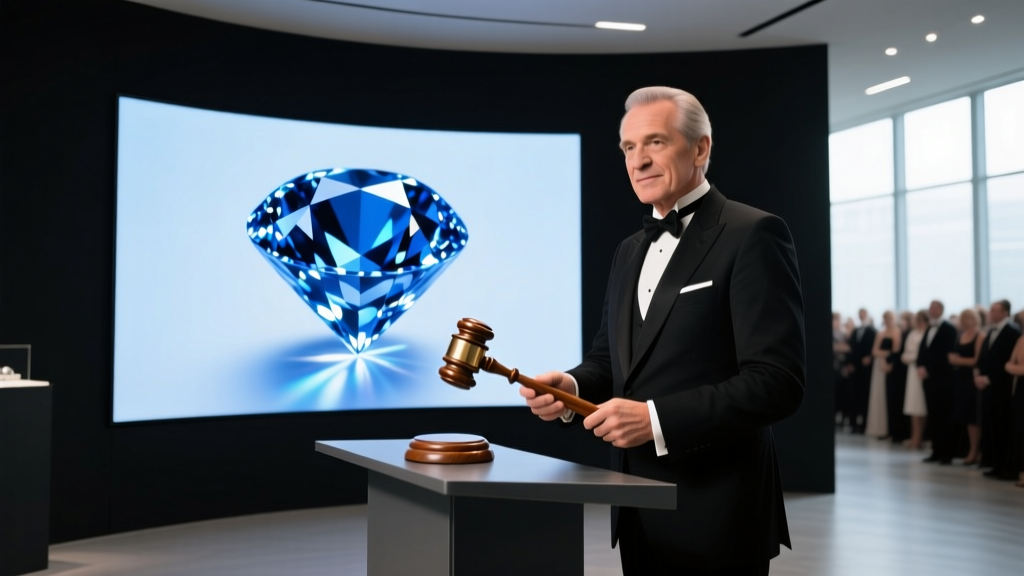
Case Studies: Three of the Most Expensive Diamond Jewelry Pieces
To contextualize these concepts, let us examine three record-breaking sales. These pieces represent the zenith of rarity and market demand.
| Diamond Name | Carat Weight | Color Grade | Hammer Price | Key Value Driver |
|---|---|---|---|---|
| The Pink Star | 59.60 ct | Fancy Vivid Pink | $71.2 Million | Largest internally flawless vivid pink |
| Oppenheimer Blue | 14.62 ct | Fancy Vivid Blue | $57.5 Million | Rarest boron-induced color saturation |
| The Graff Pink | 24.78 ct | Fancy Intense Pink | $46.2 Million | Type IIa purity with historic provenance |
The Pink Star is a masterclass in size combined with saturation. Finding a vivid pink diamond over 5 carats is rare; finding one nearing 60 carats with Internally Flawless clarity is a once-in-a-century geological event. The Oppenheimer Blue, on the other hand, derives its value from the sheer impossibility of its color. Blue diamonds are incredibly difficult to cut because the boron coloration is often unevenly distributed throughout the rough crystal. The cutter must sacrifice significant carat weight to achieve a uniform 'Fancy Vivid' face-up appearance.
Decoding the Auction Ecosystem
Beginners often look at the headline price of the most expensive diamond jewelry and assume that is what the buyer actually paid. In reality, the high-end auction ecosystem involves complex financial instruments that inflate the final number.
- The Buyer's Premium: Auction houses like Christie's and Sotheby's charge a buyer's premium on top of the hammer price. This fee can range from 15% to 25%, meaning a $50 million hammer price might actually cost the buyer over $60 million.
- Third-Party Guarantees: To entice sellers to consign ultra-rare gems, auction houses often secure an 'irrevocable bid' or guarantee from a third-party financier before the auction even begins. This guarantees the seller a minimum price, but it also means the guaranteed bidder gets a cut of the buyer's premium if they are outbid.
- Provenance Premium: If a diamond was previously owned by royalty or a famous historical figure, the 'provenance' can add 20% to 30% to the final valuation, entirely independent of the gem's physical characteristics.
"In the realm of investment-grade diamonds, you are not merely buying a gemstone; you are acquiring a tangible asset with a documented pedigree. The certificate tells you what the stone is, but the provenance tells you where it has been."
— Senior Specialist, International Jewelry Department
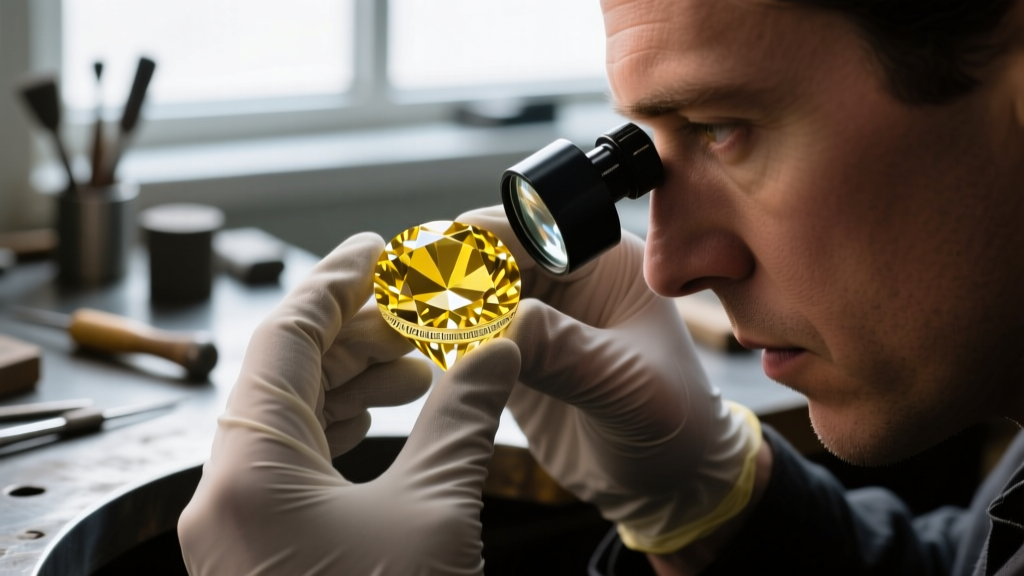
What Beginners Can Learn from Billion-Dollar Gems
You might not be in the market for a $70 million Type IIa pink diamond, but understanding the mechanics of the most expensive diamond jewelry can make you a vastly superior consumer in the commercial market. Here is how to apply high-end gemology to your next purchase:
1. Prioritize Cut Over Color in White Diamonds
While auction houses obsess over 'D' colorless grades, the human eye is far more sensitive to light performance (sparkle) than to subtle color differences. A beautifully cut 'G' or 'H' color diamond will face up brilliantly and cost significantly less per carat than a 'D' color stone with mediocre proportions. Never sacrifice cut quality just to chase a flawless color grade.
2. Understand Fluorescence as a Negotiation Tool
In high-end white diamonds, strong blue fluorescence is often penalized because it can make a stone look milky or oily in daylight. However, in the commercial market (colors I through K), medium to strong blue fluorescence can actually make a slightly yellowish diamond appear whiter to the naked eye. You can often negotiate a 10% to 15% discount on a fluorescent diamond without any negative visual impact.
3. Demand the Right Certification
The most expensive diamond jewelry is universally graded by the Gemological Institute of America (GIA) or, for some antique stones, the AGS. When buying investment-grade or high-value commercial diamonds, never accept a certificate from a lesser-known lab that is notorious for 'grade inflation.' A 'G' color from a lax lab might actually be a 'J' color by GIA standards, meaning you are overpaying for a misidentified stone.
Final Thoughts on Diamond Valuation
The world of the most expensive diamond jewelry is a fascinating intersection of geology, history, and high finance. While the prices may seem unfathomable, they are driven by strict, quantifiable metrics of rarity and chemical purity. By understanding concepts like Type IIa classification, the GIA fancy color scale, and the hidden mechanics of auction premiums, you elevate yourself from a casual shopper to an informed connoisseur. Whether you are spending $5,000 or $500,000, the principles of light performance, accurate grading, and structural integrity remain exactly the same.


