How to Clean and Polish Amber Jewelry: Beginner Guide
Learn how to safely polish amber jewelry at home. Discover expert cleaning methods, oil restoration tricks, and care tips for Polish Baltic amber.

Understanding Amber: Organic Beauty That Requires Special Care
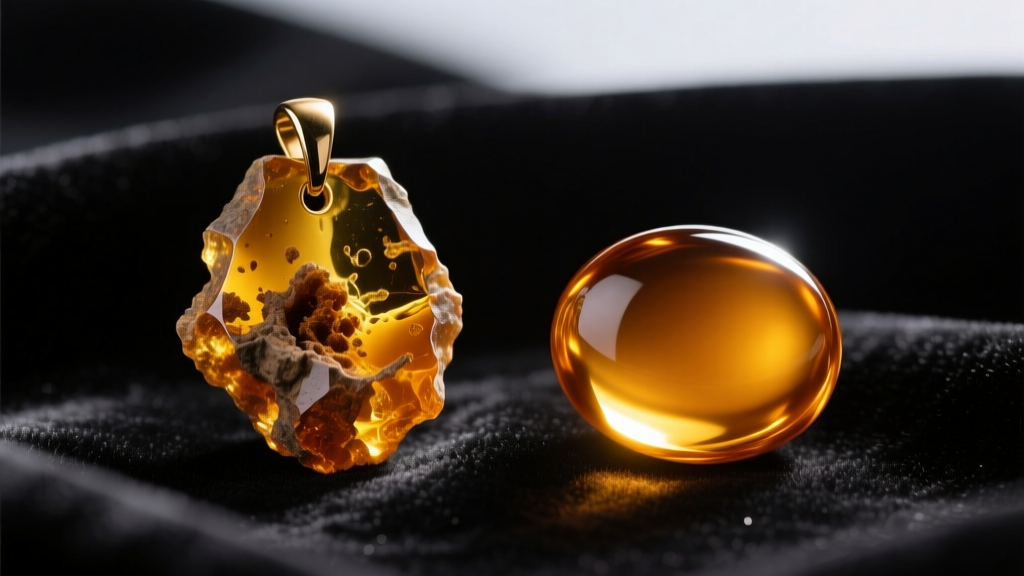
Amber is not a traditional gemstone; it is an organic fossilized tree resin, primarily originating from the ancient Pinus succinifera tree. Because it is organic, amber behaves entirely differently than crystalline minerals like quartz or sapphire. Over time, exposure to oxygen, skin oils, cosmetics, and environmental pollutants can cause your amber jewelry to lose its signature warm glow, becoming cloudy, dull, or heavily scratched.
If you are searching for the best way to clean and polish amber jewelry at home, you must first understand its physical limitations. Amber is incredibly soft and sensitive to both heat and chemicals. Using standard jewelry cleaning methods—like ultrasonic machines or abrasive pastes—will permanently destroy the stone. In this comprehensive beginner's guide, we will walk you through the exact, gemologist-approved steps to safely restore your amber's optical clarity and shine, while also exploring the heritage of authentic Polish Baltic amber.
The Mohs Scale Reality: Why Amber Scratches So Easily
To understand why your amber jewelry loses its polish, you need to look at the Mohs scale of mineral hardness. Amber ranks between 2.0 and 2.5. To put that into perspective, a copper penny has a hardness of about 3.5, meaning even a copper coin can easily scratch amber. Furthermore, everyday household dust contains microscopic particles of quartz (hardness 7). If you wipe a dusty amber pendant with a dry paper towel, those quartz particles will act like sandpaper, leaving a web of micro-scratches that cloud the stone's surface.
| Material | Mohs Hardness | Vulnerability to Scratches |
|---|---|---|
| Amber (Fossilized Resin) | 2.0 - 2.5 | Extremely High (Scratched by a fingernail or copper) |
| Pearl (Organic) | 2.5 - 4.5 | High (Scratched by steel and quartz dust) |
| Opal (Hydrated Silica) | 5.5 - 6.5 | Moderate (Scratched by harder minerals) |
| Quartz / Amethyst | 7.0 | Low (Only scratched by topaz, corundum, diamond) |
| Diamond | 10.0 | None (Hardest natural material) |
Because of this extreme softness, the act of polishing amber is less about aggressive buffing and more about gentle surface restoration and optical filling.
Step-by-Step Guide: How to Safely Polish Amber Jewelry
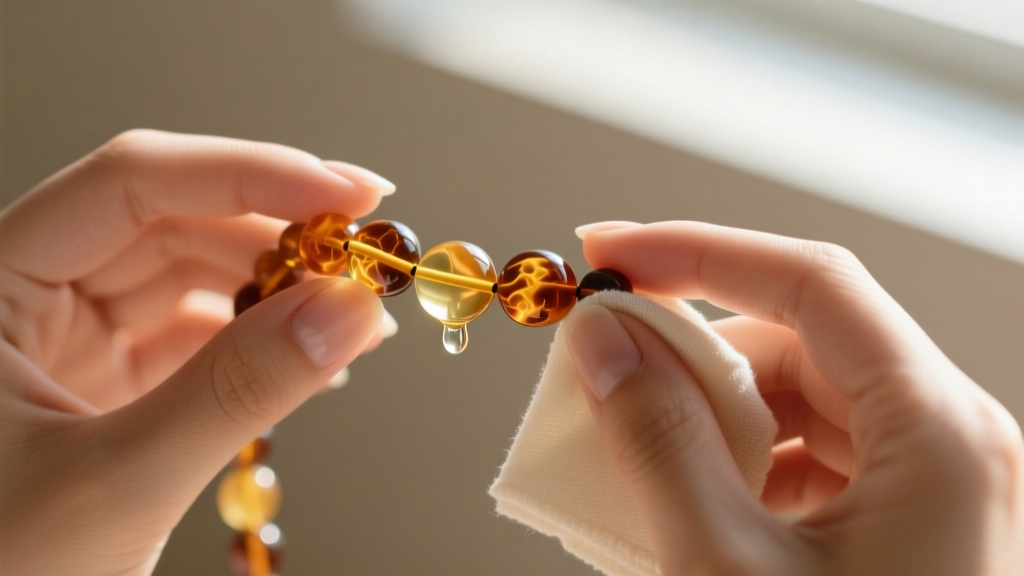
Restoring the shine to your amber requires a gentle, multi-step approach. Never rush this process, and never apply heavy pressure.
Step 1: The Gentle Wash
Before you can polish the surface, you must remove all grit and dust. Fill a small bowl with lukewarm water—never hot, as amber can warp or crack under thermal shock. Add a single drop of pH-neutral, mild dish soap. Submerge your amber jewelry for no more than 2 to 3 minutes. Gently agitate the water with your fingers to loosen skin oils and lotions.
Step 2: The Drying Phase
Remove the jewelry and rinse it briefly under a gentle stream of lukewarm water. Pat it dry with a clean, lint-free microfiber or flannel cloth. Do not rub. Simply press the cloth against the amber to absorb the moisture. Allow it to air dry completely for 15 minutes to ensure no water is trapped in the settings or drill holes.
Step 3: The Oil Polishing Method
This is the secret weapon used by Gemological Institute of America (GIA) professionals to restore amber's luster. Amber has a refractive index (RI) of approximately 1.54. When micro-scratches occur, they scatter light, making the stone look cloudy. By applying a tiny amount of oil, you fill those micro-fissures with a substance that closely matches amber's RI, effectively making the scratches "disappear" and restoring deep optical clarity.
- The Right Oil: Use a drop of pure mineral oil or food-grade olive oil. Mineral oil is preferred because it does not oxidize or turn rancid over time.
- The Application: Place a single drop of oil onto a soft, untreated flannel cloth. Gently buff the amber in slow, circular motions for about 30 seconds per bead or cabochon.
- The Buffing: Use a dry, clean section of the flannel cloth to gently wipe away any excess oil, leaving behind a brilliant, warm shine.
Step 4: What to Absolutely Avoid
When figuring out how to polish amber jewelry, knowing what not to do is just as critical. Never use toothpaste, baking soda, or commercial silver polishes. These contain abrasive silica or harsh chemicals that will permanently frost the surface of the amber. Furthermore, never use ultrasonic jewelry cleaners; the high-frequency vibrations will shatter the fossilized resin from the inside out.
The Heritage of Polish Baltic Amber
When discussing this gemstone, it is impossible to ignore the geographic significance of the term. While "polishing" refers to the maintenance of the stone, "Polish amber" refers to the world's most prized source of this material: the Baltic Sea region, specifically Poland.
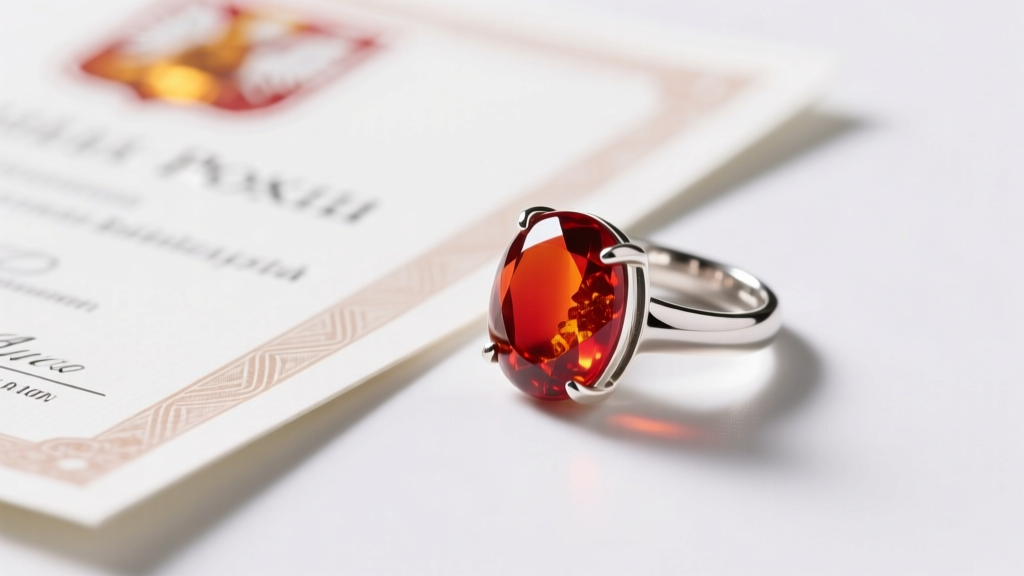
The city of Gdańsk in Poland is widely considered the amber capital of the world. Polish Baltic amber is renowned for its high concentration of succinic acid (up to 8%), which historically earned it the moniker "healing stone" in ancient folk medicine. According to the International Amber Association (IAA), authentic Baltic amber must meet strict classification standards.
IAA Amber Classifications:
Natural: Mechanically treated only (cut, polished). No heat or pressure.
Modified (Heated): Subjected to thermal treatment to enhance color or clarity (e.g., creating "sun spangles").
Reconstructed (Pressed): Made from amber dust and small chips fused together under high heat and pressure. Often used for cheaper bead necklaces.
Bonded: Pieces of natural amber glued together to form a single larger stone.
If you own certified Polish Baltic amber, you are holding a piece of prehistoric history (typically 40 million years old). Because natural, unheated Polish amber is more porous than heavily modified or pressed amber, the oil-polishing method described above is especially effective at maintaining its deep, buttery cognac or cherry-red hues.
Daily Wear and Storage Rules for Amber
Polishing your amber jewelry should only be necessary a few times a year if you follow proper daily wear and storage protocols. Amber melts at roughly 200°C (392°F) and can be damaged by much lower heat sources.
- The "Last On, First Off" Rule: Always put your amber jewelry on after applying perfume, hairspray, lotions, and cosmetics. The alcohol and chemical solvents in these products will eat away at the amber's polish, leaving permanent white, cloudy spots.
- Temperature Control: Never wear amber in a sauna, hot tub, or while sunbathing for extended periods. Prolonged UV exposure and extreme heat will cause the resin to craze (develop a network of fine surface cracks) and darken irreversibly.
- Isolated Storage: Never toss amber into a jewelry box alongside diamonds, sapphires, or even metal chains. The harder gems and metals will scratch the amber. Store each piece individually in a soft flannel pouch or a dedicated, fabric-lined compartment.
Final Thoughts on Amber Maintenance
Learning how to properly care for, clean, and polish amber jewelry is a rewarding process that connects you to the organic nature of the stone. Unlike diamonds that sparkle with cold, hard brilliance, amber offers a warm, tactile, and deeply historical glow. By ditching harsh chemicals, avoiding ultrasonic machines, and embracing the gentle mineral oil buffing technique, you can ensure your Baltic amber pieces remain vibrant, clear, and beautifully polished for generations to come.


