How to Safely Clean and Maintain Abalone Shell Jewelry
Learn how to safely clean, polish, and store abalone shell jewelry to protect its iridescent finish and prevent delamination or chemical damage.

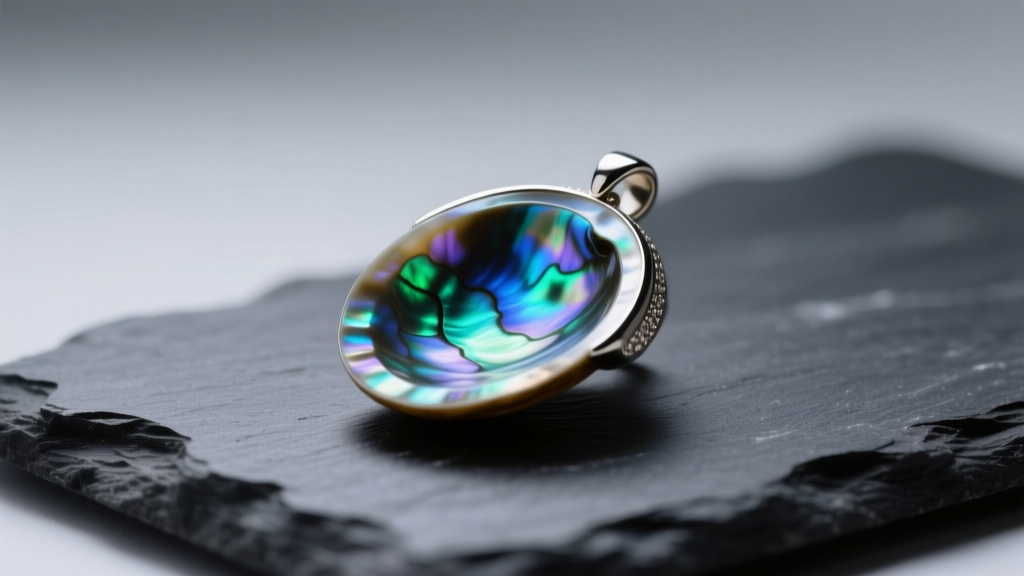
Abalone shell jewelry is celebrated for its mesmerizing play-of-color, featuring sweeping bands of electric blue, vivid green, and pearlescent white. However, the very organic structure that gives abalone its breathtaking iridescence also makes it highly vulnerable to improper care. Unlike crystalline gemstones such as sapphire or quartz, abalone is an organic gem. Standard jewelry cleaning methods—including ultrasonic machines, commercial silver dips, and harsh chemical polishes—can permanently etch, dull, or even dissolve the shell's delicate surface.
In this comprehensive guide, we break down the exact mineralogy of abalone, provide a step-by-step safe cleaning protocol, and explain how to maintain the integrity of both solid shell pieces and complex metal inlays.
The Mineralogy of Abalone: Why It Demands Special Care
To understand how to clean abalone shell jewelry, you must first understand its composition. Abalone nacre (mother-of-pearl) is a composite material consisting of microscopic hexagonal platelets of aragonite (a form of calcium carbonate) layered with an elastic biopolymer called conchiolin. According to mineralogical data from Mindat.org, aragonite has a Mohs hardness of just 3.5 to 4, while the overall composite structure of polished abalone shell typically registers between 2.5 and 3.5 on the Mohs scale.
This low hardness means abalone is easily scratched by dust, quartz, and harder metals. Furthermore, calcium carbonate is highly reactive to acids. Even mildly acidic substances like citrus juice, vinegar, or the natural pH of human sweat can slowly dissolve the aragonite platelets, stripping away the iridescent layers and leaving the shell looking chalky and opaque. The conchiolin protein matrix is also sensitive to extreme heat and dehydration, which can cause the shell to crack or warp over time.
The 4-Step Safe Cleaning Protocol
Because commercial jewelry cleaners are universally too harsh for organic gems, the safest approach relies on gentle, pH-neutral mechanics. The Gemological Institute of America (GIA) recommends similar protocols for pearls and other calcium carbonate-based organics.
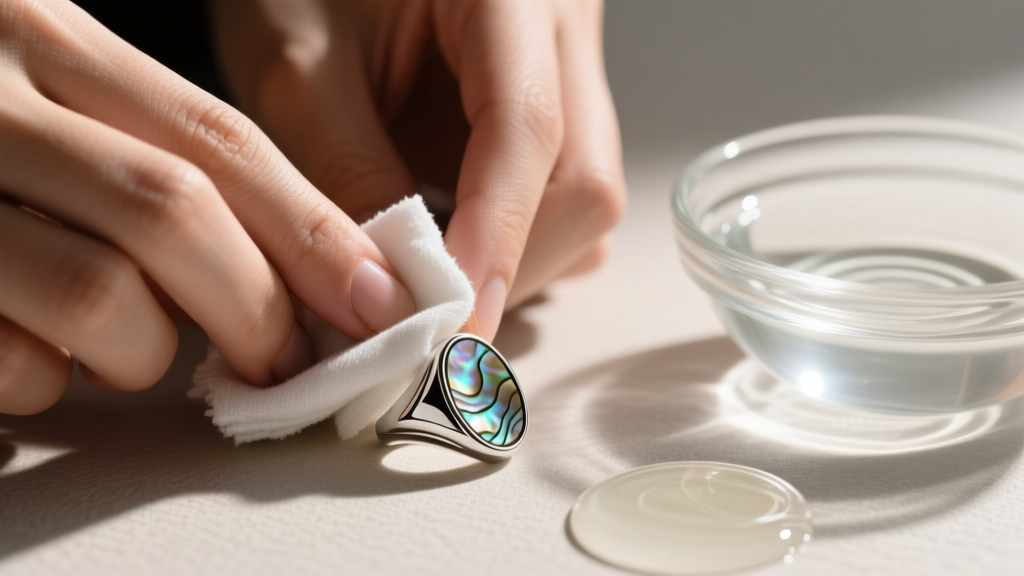
- Prepare a Neutral Solution: Fill a small glass bowl with lukewarm distilled water. Add exactly one drop of pH-neutral liquid soap, such as unscented Castile soap or baby shampoo. Avoid tap water, as the chlorine and dissolved minerals can leave microscopic spots on the nacre.
- The Damp Cloth Method: Never submerge abalone shell jewelry, especially if it features glued inlays or drilled beads, as water can weaken adhesives or trap moisture inside the drill holes. Instead, dip a clean, lint-free microfiber cloth into the solution and wring it out until it is merely damp.
- Gentle Wiping: Wipe the abalone shell gently in a circular motion. Do not apply heavy pressure. If there is stubborn buildup (like lotion or skin oils) in the crevices of a setting, use a soft-bristled baby toothbrush or a cotton swab lightly dampened with the solution to lift the debris.
- Immediate Drying: Use a second, completely dry microfiber cloth to buff the shell dry immediately. Allowing water to air-dry on the surface can result in water spots that dull the optical interference that creates the shell's iridescence.
Chemical Hazards: What Destroys Abalone Nacre
The most common way collectors ruin abalone shell jewelry is by treating it like a traditional crystalline gemstone. Below is a definitive guide to what you must keep away from your pieces.
| Cleaning Agent / Method | Effect on Abalone Shell | Verdict |
|---|---|---|
| Ultrasonic Cleaners | High-frequency vibrations cause micro-fractures in the conchiolin matrix and shatter glued inlays. | NEVER USE |
| Commercial Silver Dip | Contains thiourea and strong acids that will instantly etch and permanently cloud the nacre. | NEVER USE |
| Steam Cleaners | Extreme heat dehydrates the shell, causing warping, cracking, and delamination from metal settings. | NEVER USE |
| Ammonia / Bleach | Breaks down the organic protein bonds, leading to severe structural weakness and color loss. | NEVER USE |
| Mild Soapy Water (Damp Cloth) | Safely lifts oils and debris without compromising the calcium carbonate or protein matrix. | SAFE |
Navigating Metal Settings and Inlay Delamination
Abalone is frequently paired with sterling silver or gold, either as a solid bezel-set cabochon or as intricate channel inlay. This combination creates a unique maintenance challenge: metals tarnish, but the chemicals required to remove tarnish will destroy the abalone.
When your sterling silver setting oxidizes, never use liquid silver dips or abrasive polishing pastes. Instead, use a treated silver polishing cloth (such as a Sunshine cloth). Carefully fold the cloth to a fine point and rub only the metal, ensuring the cloth does not drag across the shell. If you must use a liquid silver polish, apply a tiny amount to a cotton swab, meticulously trace the metal borders, and immediately wipe away any residue that touches the shell with a damp cloth.
For abalone inlay jewelry, be highly vigilant about delamination. Inlays are typically secured using cyanoacrylate or two-part epoxy resins. Exposure to heat, prolonged moisture, or solvents (like acetone or alcohol) will degrade these adhesives. If you notice the shell clicking when tapped, or if you see a visible gap between the metal channel and the shell, stop wearing the piece immediately and take it to a professional jeweler for re-adhesion. Attempting to glue it yourself with household superglue often results in a cloudy, permanent white haze on the nacre.
Proper Storage: Preventing Scratches and Dehydration
Because abalone ranks at a mere 2.5 to 3.5 on the Mohs scale, it is softer than a copper coin. Storing it loosely in a jewelry box alongside diamond, sapphire, or even quartz pieces guarantees a network of fine scratches that will scatter light and diminish the stone's vibrant flash.
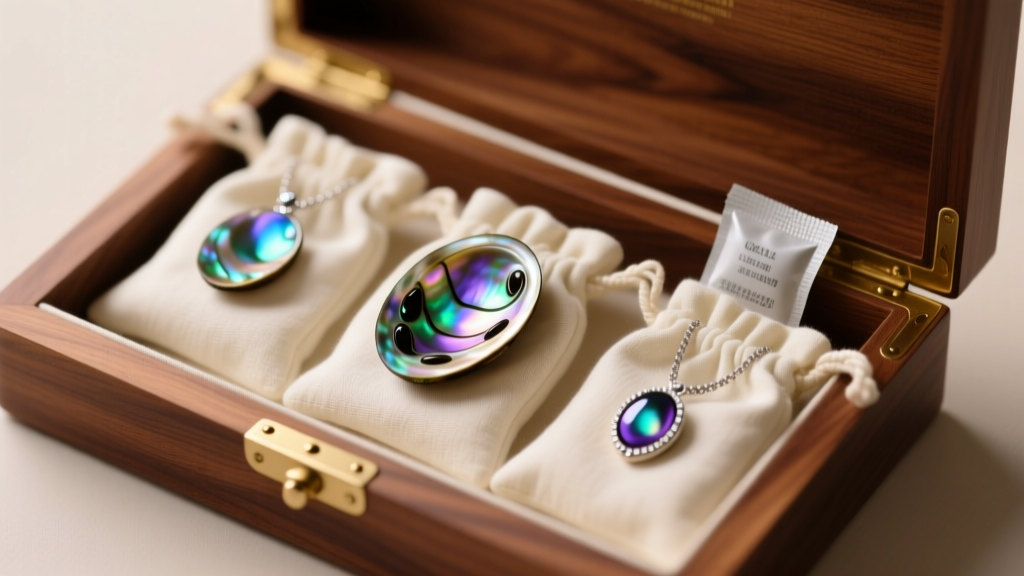
- Isolate Your Pieces: Store every piece of abalone jewelry in its own soft, unbleached cotton or flannel pouch. Avoid plastic ziplock bags, as some plastics emit trace amounts of PVC gases that can react with organic gems over time.
- Control the Climate: Abalone requires a stable environment. Extreme dryness (like the inside of a bank safe deposit box or near a radiator) can cause the conchiolin to dry out and shrink, leading to surface crazing (a network of fine cracks). If you live in an arid climate or use central heating, place a small silica gel packet or a specialized jewelry humidifier in your storage box to maintain a stable ambient humidity of around 40-50%.
- Avoid UV Exposure: While abalone's color is structural rather than chemical, prolonged exposure to direct, intense sunlight can degrade the organic proteins over decades, leading to a yellowish tint. Store your pieces in a closed, dark drawer or box.
Restoring Lost Luster and Treating Minor Scratches
If your abalone shell jewelry has lost its high-gloss finish due to contact with skin acids or minor surface abrasions, you can often restore its luster at home without professional lapidary equipment.
Pro Tip: Never use standard jewelry polishing compounds like rouge or tripoli on abalone. These abrasives are too aggressive and will cut straight through the thin iridescent nacre layers, exposing the dull, chalky calcite underneath.
For minor dullness, apply a single drop of food-grade mineral oil to a soft microfiber cloth and buff the shell gently. The oil temporarily fills in microscopic surface scratches and enhances the optical clarity of the nacre, making the colors pop. Wipe away any excess oil so it doesn't attract dust.
For slightly deeper scratches, a high-quality carnauba-based paste wax (often used for fine wood finishes or antique conservation) can be applied in a thin layer, allowed to haze for five minutes, and then buffed to a brilliant shine with a clean flannel cloth. This provides a protective, sacrificial barrier against skin oils and environmental pollutants while restoring a glass-like finish to the shell. By adhering to these precise, science-backed maintenance protocols, your abalone shell jewelry will retain its oceanic fire and structural integrity for generations.


