The Ultimate Guide to Cleaning Vintage Crystal Jewelry
Learn how to safely clean vintage crystal jewelry, protect fragile foil backings, and restore sparkle to Art Deco and Mid-Century pieces.

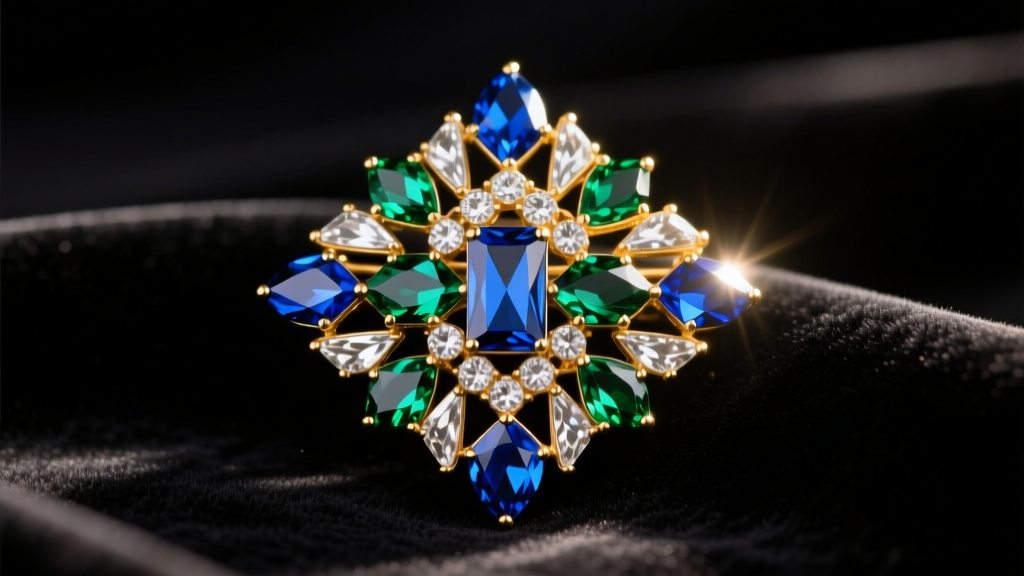
Owning vintage crystal jewelry is akin to curating a wearable museum. Whether you possess a Victorian-era paste necklace, an Art Deco diamond-cut rhinestone brooch, or a Mid-Century Swarovski aurora borealis set, these pieces require a radically different approach to maintenance than modern gemstones. The allure of vintage crystal jewelry lies in its unique light refraction and historical craftsmanship, but the materials used decades or centuries ago are inherently fragile. In this comprehensive 2026 conservation guide, we break down the exact protocols for cleaning, restoring, and preserving your antique treasures without causing irreversible damage.
The Hidden Dangers of Modern Cleaning Methods
The most common mistake collectors make is applying modern jewelry cleaning standards to antique pieces. According to the Victoria and Albert Museum's conservation guidelines, historical jewelry requires specialized environmental and chemical awareness. Modern commercial jewelry dips often contain ammonia or thiourea, which will instantly strip the delicate silver or copper foil backings found on 18th and 19th-century crystals, turning them black or causing them to flake away entirely.
Furthermore, ultrasonic cleaners—which operate at frequencies between 35kHz and 45kHz—are strictly forbidden for vintage crystal jewelry. The high-frequency cavitation bubbles can easily shatter leaded glass, fracture internal stress points in antique paste stones, and shake loose the brittle, oxidized prongs holding the crystals in place.
Identifying Your Vintage Crystal Type
Before you begin any cleaning protocol, you must accurately identify the type of crystal you are handling. The cleaning matrix below outlines the specific vulnerabilities of the three most common vintage crystal categories.
| Crystal Type | Era / Origin | Composition | Water Safety | Primary Vulnerability |
|---|---|---|---|---|
| Lead Crystal / Paste | Georgian / Victorian | High lead-oxide glass (24-33%) | Strictly No | Extremely soft; scratches easily. Foil backings oxidize instantly upon contact with moisture. |
| Rhinestone (Machine Cut) | Art Deco / Retro | Leaded glass with silvered foil back | Strictly No | Moisture causes 'blackening' (silver sulfide) and copper flaking behind the stone. |
| Unfoiled Cut Glass | Mid-Century / 1960s+ | Barium or lead glass, unfoiled | Yes (Briefly) | Chipping at the girdle; glue degradation if stones are set with early epoxies. |
The Dry Cleaning Protocol: The Safest Approach
For 90% of vintage crystal jewelry, particularly any piece suspected of having a foil backing, dry cleaning is the only safe method. This technique removes sebum, cosmetic dust, and environmental grime without risking the structural integrity of the setting.
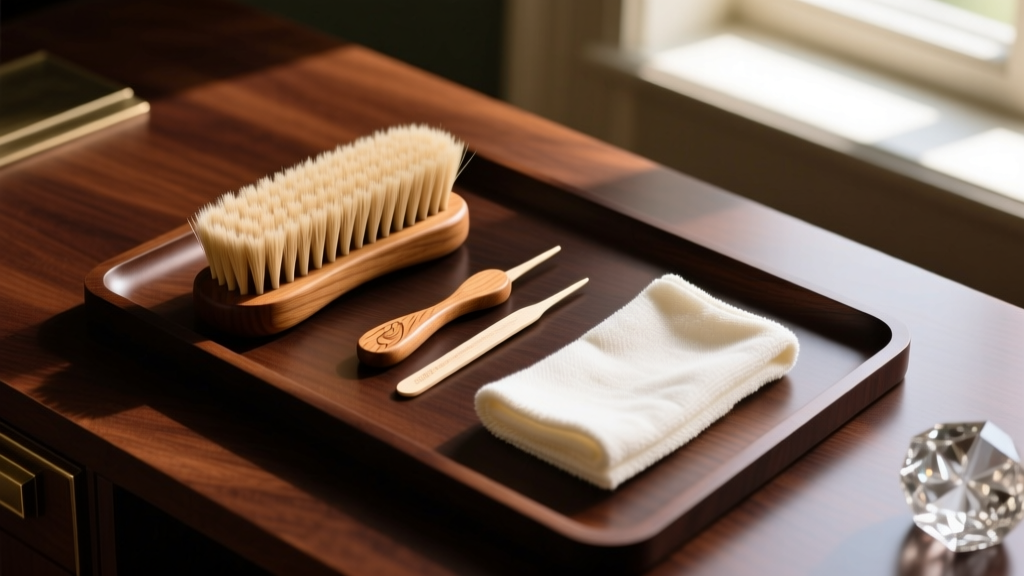
Essential Conservation Tools
- Camel Hair or Sable Makeup Brushes: Avoid stiff nylon toothbrushes. Natural hair brushes are soft enough to dislodge dust without micro-scratching the surface of soft lead paste.
- Wooden Toothpicks or Bamboo Skewers: Metal tools will scratch the silver foil or the soft glass itself. Wood is softer than glass and metal, making it ideal for scraping gunk from crevices.
- Bulb Syringe or Canned Air: Used for blowing loose particulate out of deep pavilion facets.
- Untreated Microfiber Cloths: Ensure the cloth is free of any embedded polishing compounds.
Step-by-Step Dry Technique
Begin by placing the jewelry on a soft, lint-free pad. Use the bulb syringe to blow away loose surface dust. Next, take your camel hair brush and gently sweep the surface of the crystals in a circular motion, paying special attention to the edges where the crystal meets the metal bezel or prongs. For stubborn debris trapped under the girdle of the stone, gently tease it out using the tip of a wooden toothpick. Finally, buff the metalwork (avoiding the stones) with a dry microfiber cloth to restore its luster.
When Wet Cleaning is Unavoidable
Wet cleaning should only ever be attempted on vintage crystal jewelry if you are absolutely certain the stones are unfoiled and securely set. If you are dealing with a Mid-Century unfoiled piece that has accumulated heavy skin oils, a targeted wet clean may be necessary to restore its optical clarity.
According to the Gemological Institute of America (GIA), mild surfactants are preferred over harsh chemical solvents. Mix a single drop of pH-neutral dish soap (like Dawn) into a bowl of distilled water. Never use tap water, as the chlorine and trace minerals can leave permanent water spots or react with base metal alloys. Dip a baby-soft toothbrush into the solution, shake off the excess water so it is only damp, and gently brush the crown of the crystal. Immediately dry the piece using a hair dryer on the cool setting. The forced air pushes moisture out from under the stones, preventing the rust and verdigris that frequently plague vintage settings.
Structural Maintenance: Prongs and Adhesives
Vintage crystal jewelry was often assembled using soft base metals like pot metal, brass, or low-karat gold alloys. Over decades, these metals become brittle. If you notice a loose crystal, do not attempt to squeeze the prongs with standard steel pliers; you will likely snap the prong or crush the glass.
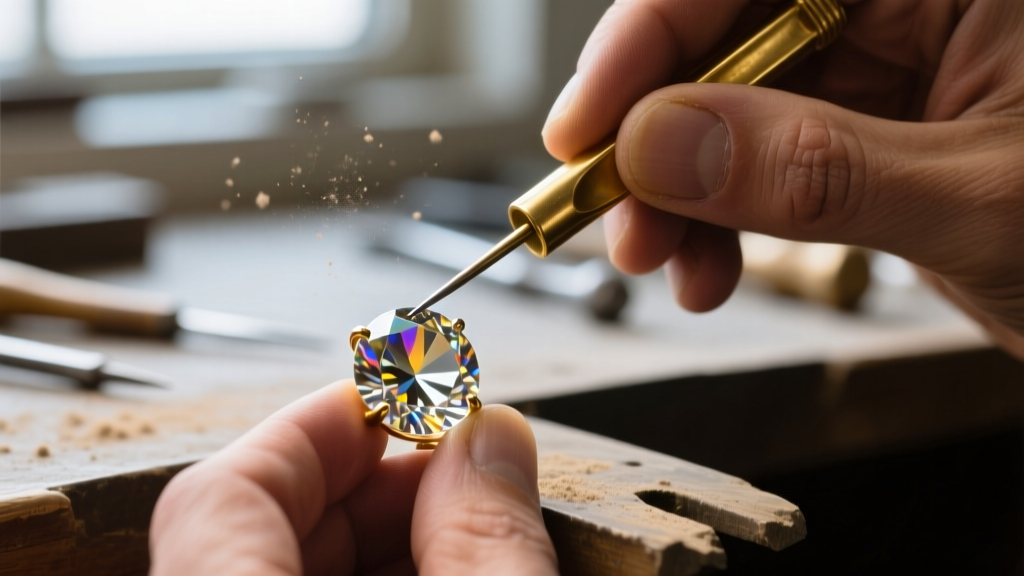
The Adhesive Framework
If a stone has completely detached from its setting, selecting the correct adhesive is a matter of chemistry. Never use cyanoacrylate (Super Glue). As cyanoacrylate cures, it releases vapors that cause 'crazing'—a permanent, frosty white haze that will ruin the optical clarity of the crystal. Furthermore, it dries rigid and brittle, meaning thermal expansion will eventually pop the stone back out.
Instead, professional conservators rely on G-S Hypo Cement. This solvent-based adhesive features a precision needle applicator, dries completely clear, and remains slightly flexible, allowing it to absorb the differing thermal expansion rates of metal and glass. Apply a microscopic bead to the seat of the setting, place the crystal, and allow it to cure for 24 hours in a well-ventilated area.
Archival Storage and Environmental Controls
The long-term preservation of vintage crystal jewelry relies heavily on environmental control. The silver foil backings of Art Deco rhinestones are highly reactive to hydrogen sulfide in the air, which causes rapid tarnishing and blackening.
Conservator's Rule of Thumb: Store vintage crystal jewelry in a climate-controlled environment where the Relative Humidity (RH) is maintained below 45%. High humidity accelerates foil oxidation and promotes the growth of bronze disease on copper-alloy settings.
Wrap each piece individually in acid-free, unbuffered tissue paper to prevent the metal settings from scratching adjacent crystals. Place the wrapped pieces in an airtight polyethylene archival box alongside 3M anti-tarnish strips and silica gel desiccant packets. Replace the desiccant packets every six months to ensure the micro-climate remains sufficiently dry. By adhering to these strict conservation standards, your vintage crystal jewelry will continue to capture and refract light beautifully for generations to come.
For further reading on historical material degradation, consult the American Institute for Conservation (AIC) Wiki, which offers extensive databases on the chemical breakdown of antique jewelry components.


