Expert Guide to Choosing a Crystal Jewelry Box for Storage
Discover expert tips for selecting a crystal jewelry box. Learn about UV protection, humidity control, and Mohs-based compartmentalization.

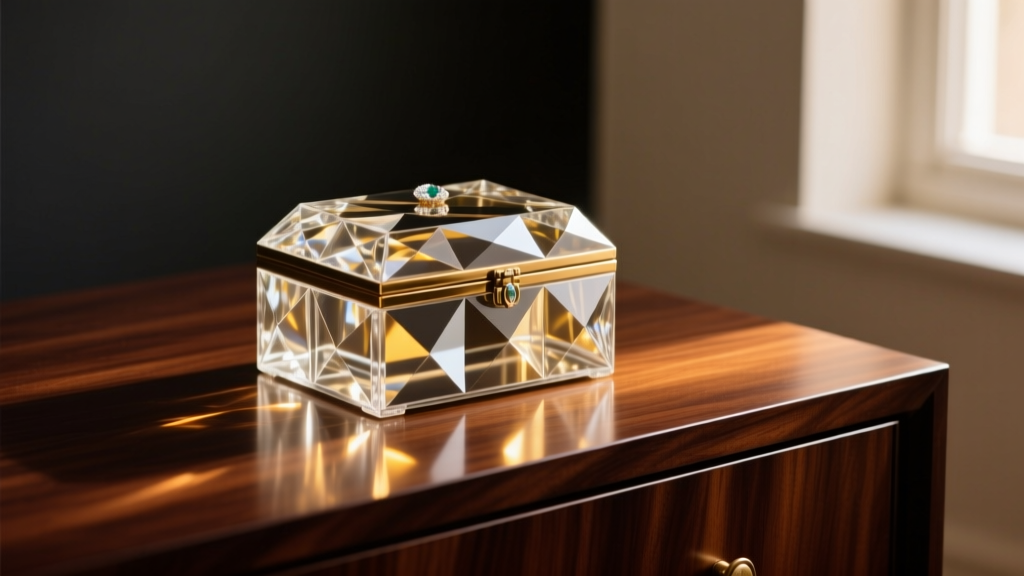
The Hidden Dangers of Improper Gemstone Storage
For serious collectors and everyday wearers alike, the storage environment is just as critical as the gemstone's cut, color, and clarity. While a standard wooden or cardboard jewelry box might suffice for basic fashion accessories, fine gemstones and delicate crystals require a highly controlled microclimate. As preservation standards evolve in 2026, the modern crystal jewelry box has transitioned from a mere decorative display piece to a vital tool for preventing UV degradation, chemical tarnishing, and Mohs-scale scratching.
Many collectors mistakenly believe that any glass-topped box offers adequate protection. However, the material science behind the glass, the chemical composition of the interior linings, and the spatial geometry of the compartments dictate whether your gems will retain their brilliance or suffer irreversible damage over time. According to the Gemological Institute of America (GIA), improper storage is a leading cause of micro-abrasions and environmental degradation in porous and hydrated gemstones.
Material Science: Decoding the 'Crystal' in Your Display Box
Not all transparent boxes are created equal. When shopping for a crystal jewelry box, you will generally encounter three types of transparent materials, each with vastly different optical and protective properties:
- Lead Crystal (Minimum 24% PbO): Prized for its high refractive index (often exceeding 1.65) and brilliant light dispersion. However, lead crystal is relatively soft (Mohs 5-6) and heavy. It blocks some UVB rays but allows significant UVA transmission, which can fade sensitive stones like kunzite or amethyst over prolonged exposure.
- Borosilicate Glass: The gold standard for modern preservation. It is highly durable (Mohs 6.5), resistant to thermal shock, and can be treated with specialized UV-filtering coatings. It lacks the rainbow dispersion of lead crystal but offers superior structural integrity and chemical inertness.
- Soda-Lime Glass: The most common and affordable option. While it provides a physical barrier against dust and impacts, it offers virtually no UV protection and is prone to scratching if stacked or handled roughly.
If your collection includes light-sensitive gems such as amethyst, rose quartz, or fluorite, you must ensure your crystal box features a UV-inhibiting film or is kept in a low-lux environment. Data from Mindat.org confirms that prolonged ultraviolet exposure alters the crystal lattice color centers in many popular gemstones, leading to permanent fading.
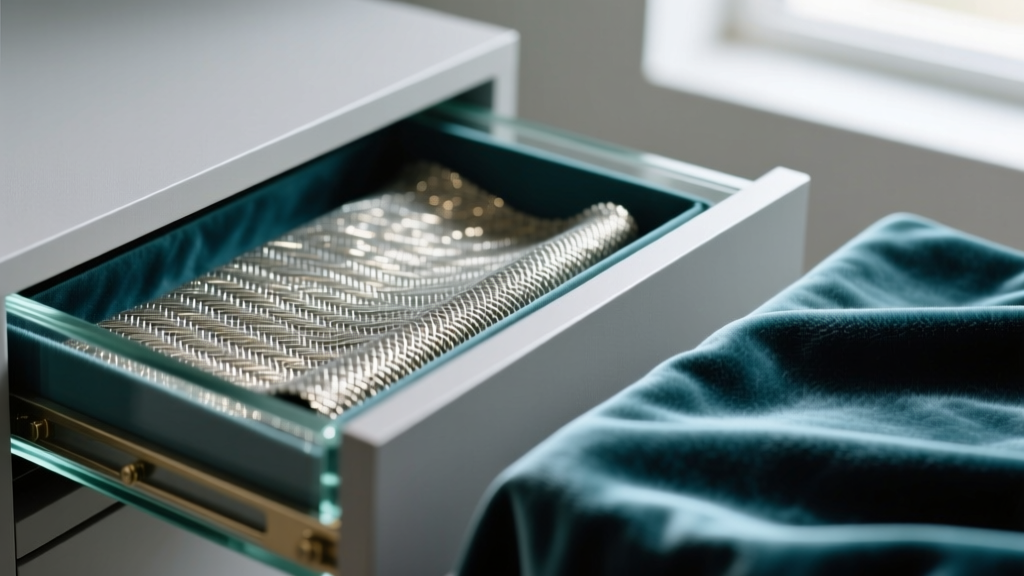
Interior Linings: The Chemistry of Tarnish and Abrasion
The exterior of a crystal jewelry box may be stunning, but the interior lining is where the real preservation work happens. Many mass-produced boxes use polyurethane foams or synthetic velvets that are treated with harsh dyes and chemical binders. Over time, these materials off-gas volatile organic compounds (VOCs) and sulfur-based gases, which react with the silver or copper alloys in your jewelry settings, causing rapid and severe tarnishing.
Lining Material Comparison Chart
| Material Type | Tarnish Resistance | Abrasion Risk | Moisture Wicking | Expert Verdict |
|---|---|---|---|---|
| Polyurethane Foam | Poor (Off-gasses H2S) | Low | Poor | Avoid entirely; causes severe silver sulfide tarnish. |
| Standard Synthetic Velvet | Moderate | Medium | Poor | Acceptable for gold/platinum; risky for silver settings. |
| Acid-Free Flannel | Good | Low | Excellent | Ideal for raw crystals and porous gems like turquoise. |
| Pacific Silvercloth | Exceptional | Very Low | Moderate | The 2026 industry standard; embedded with microscopic silver particles to trap corrosive gases before they reach your jewelry. |
For high-end collections, demand a box lined with untreated, acid-free textiles or specialized anti-tarnish fabrics. The The Silver Institute notes that hydrogen sulfide (H2S) in the ambient air is the primary culprit for silver tarnish, making gas-trapping linings an absolute necessity for open-display crystal boxes.
Compartmentalization Based on the Mohs Hardness Scale
A common and catastrophic mistake is storing mixed gemstones in a single, undivided crystal display tray. The Mohs scale of mineral hardness is not linear; a diamond (10) is exponentially harder than a sapphire (9), which in turn is vastly harder than an opal (5.5-6.5). When jewelry shifts inside a box during movement or cleaning, harder stones will effortlessly micro-scratch and dull the polish of softer stones.
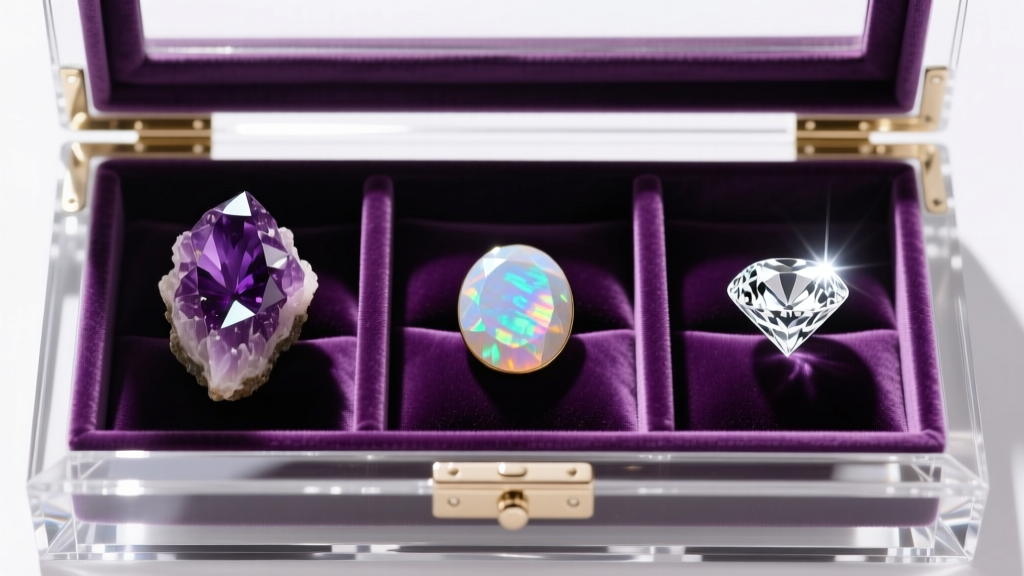
An expertly designed crystal jewelry box will feature deep, individualized slots with rigid dividers. When evaluating a box, look for the following structural features:
- Isolated Diamond Compartments: Diamonds should only ever touch other diamonds or bare metal. They must have dedicated, soft-walled slots to prevent them from acting as abrasive agents against neighboring emeralds (7.5-8) or topaz (8).
- Flat-Lay Zones for Soft Cabochons: Stones like turquoise, malachite, and lapis lazuli (all ranking below 6 on the Mohs scale) require flat, fabric-lined zones where they cannot slide or collide.
- Suspension Hooks for Pearls and Amber: Organic gems like pearls (2.5-4.5) and amber (2-2.5) are incredibly soft and sensitive to pressure. High-end crystal boxes often include suspended hanging bars to keep pearl strands from kinking or crushing against hard surfaces.
Climate Control: Managing Humidity and Thermal Extremes
Glass and crystal enclosures can inadvertently create a greenhouse effect if placed in direct sunlight or near heating vents. This localized thermal spike is devastating to hydrated and included gemstones. Opals, for instance, contain between 3% and 21% water within their silica structure. If the humidity inside a sealed crystal box drops too low, or the temperature spikes, the opal will undergo syneresis—losing its internal moisture and developing a network of fine, irreversible cracks known as 'crazing'.
Similarly, emeralds are almost universally treated with cedar oil or synthetic resins to mask surface-reaching fractures. Excessive heat inside a poorly ventilated glass box can dry out these oils, making the inclusions starkly visible and compromising the stone's structural integrity. To combat this, premium crystal jewelry boxes now incorporate passive climate-buffering zones. These include hidden compartments for silica gel packets (to control upper humidity limits) or specialized humidor-style seals to prevent the ambient air from becoming overly arid.
The 2026 Expert Purchasing Checklist
Before investing in a high-end crystal jewelry box, run it through this rigorous technical checklist to ensure it meets modern preservation standards:
- Verify the Glass Type: Ensure the transparent elements are borosilicate or UV-treated lead crystal, not standard soda-lime glass.
- Inspect the Adhesives: Smell the interior. Any strong chemical odor indicates off-gassing glues and synthetic foams that will tarnish silver and damage porous gems.
- Test the Dividers: The internal dividers should be rigid and deeply padded. Flimsy cardboard inserts wrapped in thin satin will collapse over time, allowing gems to migrate and scratch one another.
- Check the Hinge Hardware: Brass or stainless steel hinges are mandatory. Plated zinc or iron hinges will eventually rust, and the resulting iron oxide dust can permanently stain light-colored gems like moonstone or white jade.
'A true collector does not merely display their gems; they curate their environment. The right crystal jewelry box is an active participant in the longevity of your collection, standing as a barrier against the relentless forces of oxidation, UV radiation, and mechanical abrasion.'
By prioritizing material science and structural geometry over mere aesthetics, you ensure that your gemstone and crystal jewelry remains as flawless in 2050 as the day it was first cut and polished.


