Deep Blue Sapphire Jewelry: 2026 East-West & Tension Setting Trends
Explore 2026 trends in deep blue sapphire jewelry, from east-west architectural settings to tension mounts, complete with gemological pricing data.

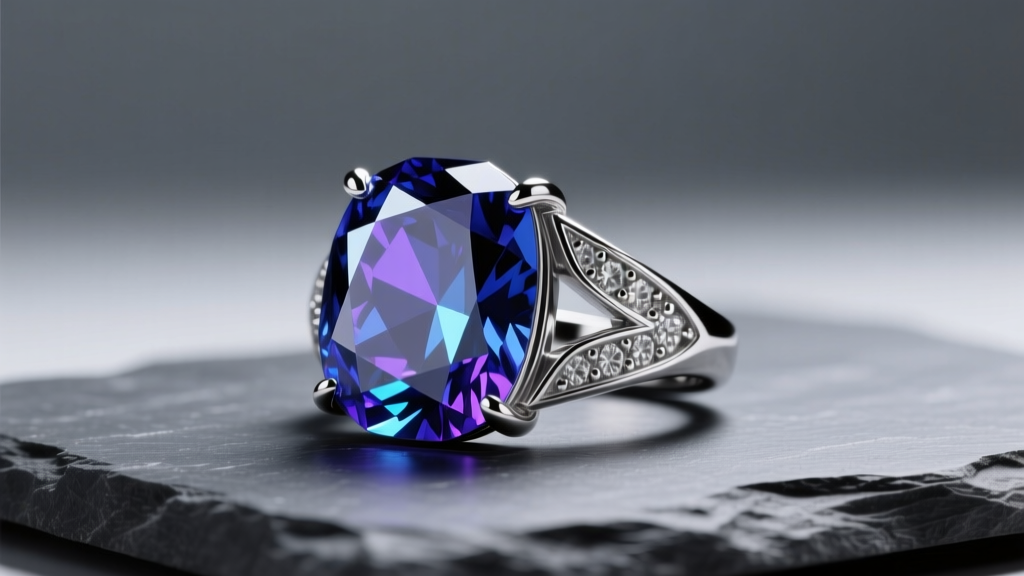
The landscape of fine jewelry is undergoing a seismic shift as we move through 2026. For the past decade, the market was heavily saturated with micro-pavé halos and traditional north-south solitaires. Today, collectors, bespoke designers, and avant-garde jewelers are championing a radically different aesthetic in deep blue sapphire jewelry: architectural minimalism, east-west orientations, and high-tension engineering. This is not merely a fleeting visual trend; it represents a fundamental rethinking of how light interacts with corundum and how precious metals can be manipulated to support stones of extreme hardness.
The 2026 Shift: Moving Beyond the Halo
The ubiquitous halo setting, which dominated the 2010s and early 2020s, is rapidly losing market share among high-end sapphire buyers. Modern collectors are prioritizing negative space and structural metalwork over sheer diamond carat weight. In 2026, the focus is on the sapphire itself, framed by heavy, architectural bezels or striking tension mounts. Jewelers are increasingly utilizing PT950 (95% platinum, 5% ruthenium) to create crisp, knife-edge bezels with microscopic milgrain detailing. This approach highlights the deep, inky saturation of the sapphire without competing with the visual noise of surrounding diamond halos.
East-West Orientations: Maximizing Pleochroism
One of the most significant design evolutions in deep blue sapphire jewelry this year is the widespread adoption of east-west (horizontal) settings, particularly for elongated cushions, ovals, and kite cuts. This design choice is deeply rooted in the gemological properties of corundum. Sapphires are strongly dichroic, meaning they exhibit different colors depending on the angle of light absorption relative to their crystallographic c-axis. When light enters parallel to the c-axis, the stone typically displays a violet-blue hue; perpendicular to the c-axis, it reveals a greenish-blue tone.
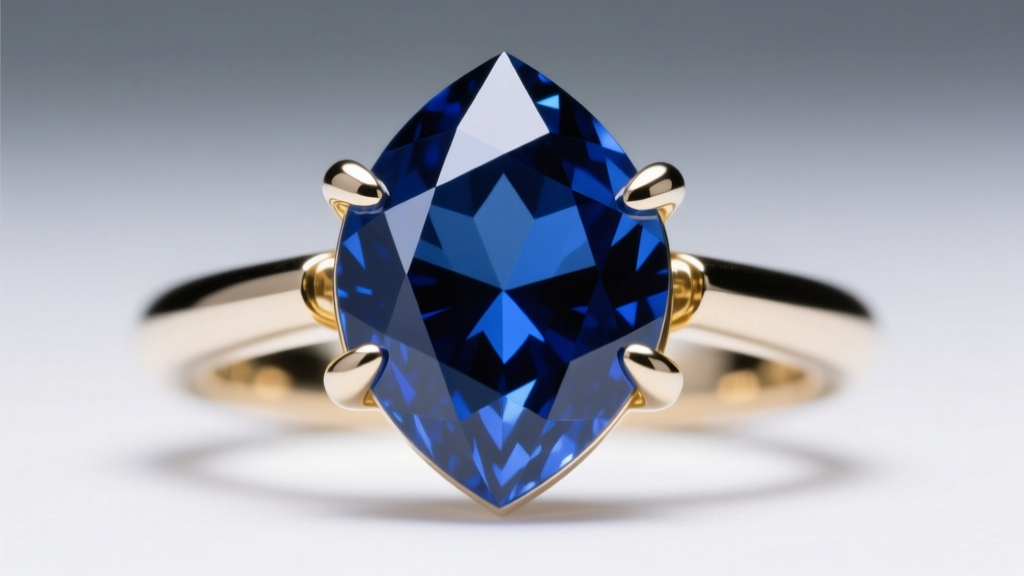
Traditional north-south settings often obscure this optical phenomenon by locking the stone into a single dominant viewing angle. By orienting an elongated stone horizontally across the finger, designers deliberately expose the c-axis to varied lighting environments throughout the day. This creates a dynamic, color-shifting effect on the hand, allowing the sapphire to transition fluidly between deep navy and vibrant violet based on the wearer's movements.
Optimal Cut Ratios for Horizontal Settings
Not every sapphire cut translates well to an east-west orientation. Master cutters are now optimizing rough specifically for horizontal mounting. The most successful ratios for 2026 include:
- Elongated Cushion: A 1.5:1 to 1.7:1 length-to-width ratio provides elegant finger coverage without looking overly stretched.
- Kite Cut: A 1.2:1 ratio offers sharp, geometric lines that pair beautifully with asymmetric prong placements.
- Hexagon: A strict 1:1 ratio provides a modern, architectural footprint that sits perfectly flush in horizontal bezel channels.
Tension & Architectural Settings: Engineering Meets Aesthetics
Tension settings rely entirely on the compressive strength of the metal band and the extreme hardness of the gemstone. At a 9 on the Mohs scale, deep blue sapphire jewelry is one of the only viable candidates for true tension mounting, alongside diamond and moissanite. Softer or more brittle stones, such as emerald (Mohs 7.5-8 with high internal fracturing) or opal (Mohs 5.5-6.5), would instantly shatter under the 12,000 to 50,000 PSI of pressure exerted by a tension band.
'A true tension setting is a feat of metallurgical engineering. We are relying on the tensile memory of platinum to grip a stone with thousands of pounds of force, requiring microscopic precision in the girdle grooves.' — Master Jeweler & CAD Specialist
For 2026 architectural tension rings, the industry standard has shifted away from traditional 18k white gold toward specialized platinum alloys. Platinum's natural density and superior tensile memory ensure that the microscopic grooves—milled exactly 0.15mm deep into the metal to grip the sapphire's girdle—do not warp, relax, or suffer from metal fatigue over decades of daily wear.
Market Data: Pricing Deep Blue Sapphires by Treatment & Cut
Understanding the intersection of cut, treatment, and pricing is critical for buyers navigating the 2026 market. The table below outlines current wholesale-to-retail pricing ranges for 1.50ct to 2.50ct stones.
| Cut / Shape | Treatment Status | 2026 Price Range (Per Carat) | Best Architectural Setting |
|---|---|---|---|
| Elongated Cushion | Unheated (Ceylon) | $4,500 - $8,200 | East-West Bezel with Milgrain |
| Kite / Hexagon | Heated (Standard) | $1,200 - $2,800 | Asymmetric Tension Mount |
| Round Brilliant | Titanium Diffused | $150 - $400 | Avoid (Not Recommended) |
| Emerald Cut | Unheated (Kashmir/Burma) | $12,000 - $25,000+ | Minimalist PT950 Prong |
Sourcing & Authenticity: The Titanium Diffusion Threat
While traditional thermal enhancement (heating) is universally accepted and expected in the sapphire market, 2026 has seen a stealthy rise in titanium lattice diffusion. Unlike beryllium diffusion, which penetrates the entire stone and is typically used for fancy colors like padparadscha or yellow, titanium diffusion is used specifically to deepen the blue color of pale, low-value sapphires. Because titanium atoms are relatively large, they only penetrate the outer 0.1 to 0.5 millimeters of the corundum lattice.
This creates a massive durability and value issue. If a titanium-diffused sapphire is chipped, scratched, or requires repolishing, the deep blue color is literally stripped away, revealing a pale, near-colorless core underneath. Gemologists identify this treatment by immersing the stone in diiodomethane to map color concentration at the facet junctions. To protect your investment, always demand a comprehensive report from a top-tier laboratory like the Gemological Institute of America (GIA) or ensure your jeweler strictly adheres to the enhancement disclosure guidelines established by the American Gem Trade Association (AGTA).
Final Styling Verdict for 2026
The era of hiding a magnificent sapphire behind a wall of micro-pavé diamonds is officially over. The 2026 aesthetic demands that deep blue sapphire jewelry stand on its own structural merit. Whether you opt for the dynamic color-shifting properties of an east-west elongated cushion or the striking, gravity-defying illusion of a platinum tension mount, the key is to prioritize precision cutting, untreated origins, and architectural metalwork. By focusing on these elements, you secure a piece that is not only a triumph of modern jewelry engineering but also a timeless asset in any fine jewelry portfolio.


