Troubleshooting Fairburn Agate Jewelry: Fakes & Fractures
Expert troubleshooting guide for fairburn agate jewelry. Learn to spot dyed fakes, prevent setting fractures, and restore dull cabochon luster.

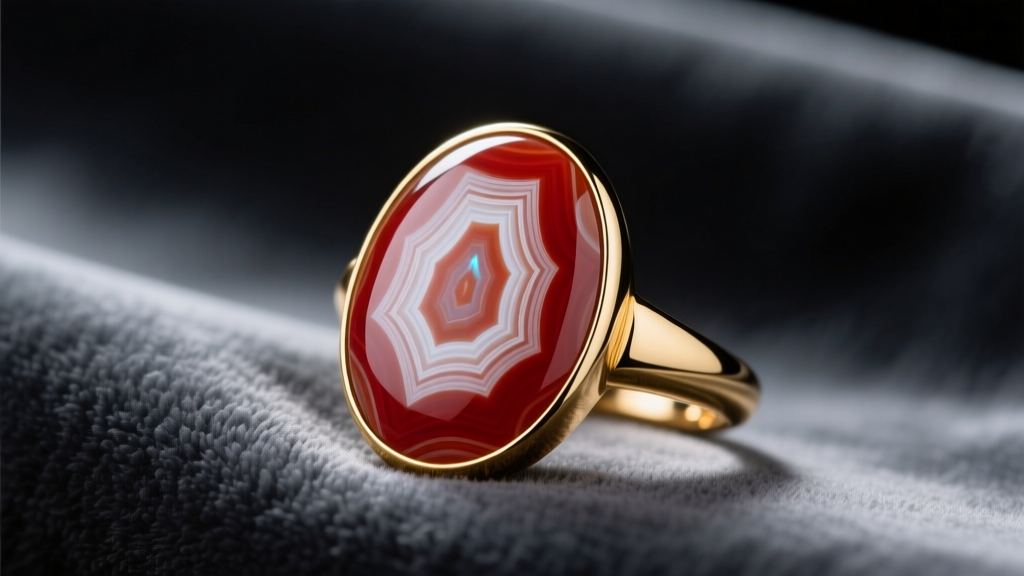
Fairburn agate, the official gemstone of South Dakota, is widely considered one of the most beautiful and valuable agate varieties in the world. Found primarily in the Badlands and the Black Hills region, these stones are celebrated for their incredibly tight, intricate fortification banding and vibrant palette of reds, oranges, yellows, and whites. However, the high market value and rarity of fairburn agate jewelry have created a landscape rife with imitations, while the stone's unique geological formation presents distinct challenges for lapidaries and jewelers.
Whether you are a collector trying to verify a recent purchase, or a jeweler struggling to set a stubborn cabochon without cracking it, troubleshooting Fairburn agate requires specialized gemological and lapidary knowledge. This guide provides actionable, technical frameworks for authenticating, setting, and maintaining Fairburn agate jewelry.
The Authenticity Trap: Spotting Dyed and Synthetic Imitations
Because gem-grade Fairburn agates can command prices upwards of $100 per carat, the market is flooded with treated or dyed substitutes. Unscrupulous sellers frequently pass off dyed Brazilian or Uruguayan agates as genuine Fairburns. To troubleshoot authenticity, you must look beyond basic color and examine the micro-structural banding.
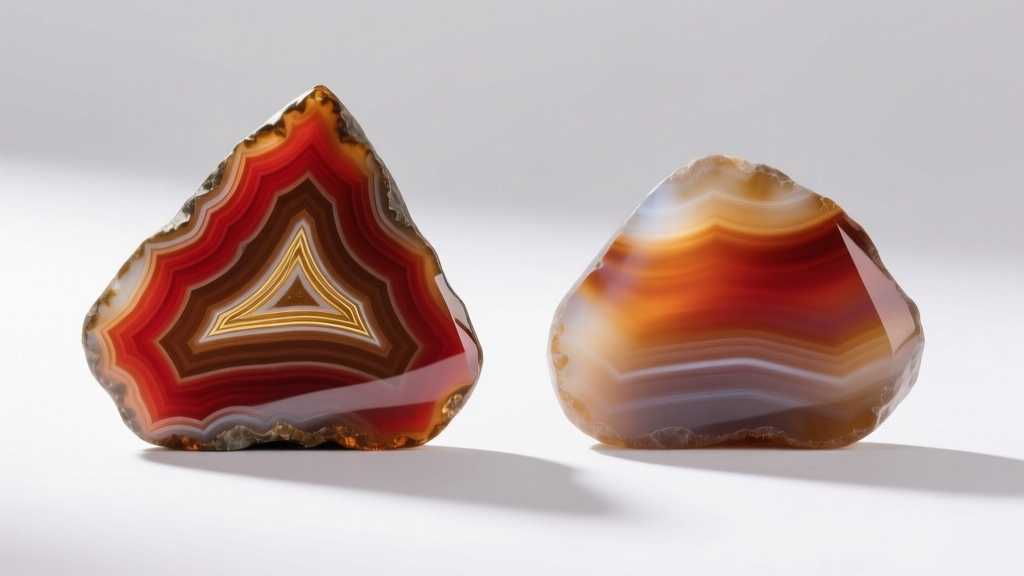
The Fortification and Bleed Test
Genuine Fairburn agates exhibit extreme "fortification" banding—concentric, angular patterns that mimic the walls of a fortress. According to the Gemological Institute of America (GIA), natural agate banding forms through the slow, rhythmic deposition of silica in volcanic cavities. In a true Fairburn, these bands are razor-sharp, often less than 0.5mm thick, with abrupt color transitions. Dyed agates, by contrast, absorb chemical dyes unevenly. Under a 10x triplet loupe, dyed stones will show "bleeding" or blurry edges where the dye has pooled in micro-fractures and porous chalcedony layers.
Acetone and UV Fluorescence Protocols
If visual inspection is inconclusive, employ these non-destructive tests:
- The Acetone Swab: Dampen a cotton swab with pure acetone and rub it firmly against an inconspicuous area of the stone's back or side. If the swab picks up red, orange, or yellow residue, the stone has been surface-dyed.
- UV Fluorescence: Expose the jewelry to long-wave (365nm) ultraviolet light. Natural Fairburn agates are typically inert or show very weak, patchy fluorescence. If the stone glows with a bright, uniform neon green or orange, it has likely been treated with fluorescent dyes or polymer resins.
Fracture Troubleshooting: Why Your Cabochon Cracked During Setting
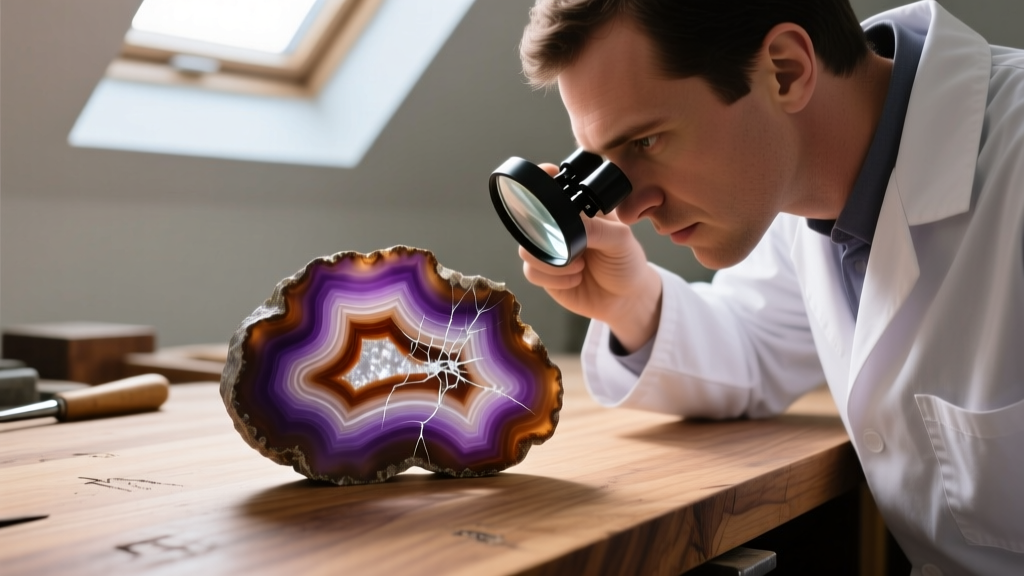
Agate is a cryptocrystalline form of quartz, rating 6.5 to 7 on the Mohs hardness scale. While it is relatively hard, toughness (resistance to breaking) is a different metric. Fairburn agates formed in volatile igneous environments, resulting in immense internal geological stress. This manifests as "crazing"—a network of microscopic internal fractures that are invisible to the naked eye but catastrophic during jewelry fabrication.
Pre-Setting Stabilization Techniques
If you are a jeweler setting a high-value Fairburn cabochon, never assume the stone is structurally sound. Before pushing any bezel wire, inspect the stone under polarized light to reveal internal stress lines. If crazing is detected, you must stabilize the stone.
Apply Opticon F-104, a two-part epoxy resin specifically designed for lapidary stabilization. Place the cabochon in a vacuum chamber to draw the air out of the micro-fractures, then introduce the resin. Once cured, the stone's structural integrity increases dramatically, preventing the propagation of cracks when mechanical pressure is applied during setting.
Bezel Wire Selection and Pushing Strategy
Prong settings are entirely unsuitable for Fairburn agate; the point-load pressure of a prong will almost certainly split a crazed stone. Always use a full bezel. However, using standard half-hard sterling silver bezel wire requires too much force to push over the stone's edge.
Expert Tip: Switch to 28-gauge or 30-gauge dead-soft sterling silver or fine silver bezel wire. Dead-soft wire requires approximately 40% less mechanical force to burnish over the cabochon's edge, drastically reducing the risk of fracturing the agate's girdle.
Polishing and Luster Issues: Restoring a Dull Fairburn Agate
A common complaint among collectors is that older fairburn agate jewelry loses its glass-like luster, developing a dull, waxy appearance or an "orange peel" texture on the surface. This is rarely due to the agate itself wearing down, but rather the result of improper lapidary techniques or chemical degradation of the polish.
Diagnosing the Orange Peel Effect
The orange peel effect occurs when the lapidary artist fails to properly step down through the abrasive grit sequence. Fairburn agates often contain micro-inclusions of varying hardness (such as iron oxide nodules). If a cutter jumps directly from 600-grit to 1200-grit, the softer silica layers wear away faster than the harder inclusions, creating microscopic undulations.
The Fix: To restore the luster, the stone must be removed from its setting and re-polished. The cutter must use a rigid lap (like a Novatech or ceramic lap) rather than a soft rubber pad, ensuring perfectly flat faceting. The final polish must be achieved using Cerium Oxide on a hard felt pad at a low RPM (around 800-1000 RPM) to prevent thermal shock, which can cause the stone to shatter.
The Ultrasonic Cleaner Hazard
Never clean Fairburn agate jewelry in an ultrasonic cleaner. The high-frequency acoustic cavitation creates microscopic shockwaves in the cleaning solution. While this is excellent for removing grime from diamond solitaires, these shockwaves will aggressively exploit the internal crazing of a Fairburn agate, causing the stone to literally vibrate itself apart from the inside out. Always clean Fairburn jewelry with warm water, a mild dish soap, and a soft microfiber cloth.
Fairburn Agate Jewelry Troubleshooting Matrix
Use this quick-reference matrix to diagnose and resolve the most common issues encountered with Fairburn agate pieces.
| Observed Problem | Root Cause Analysis | Actionable Fix / Protocol |
|---|---|---|
| Color rubbing off on skin/clothing | Surface-level chemical dye application on low-grade Brazilian agate. | Discard or return; the stone is a treated imitation, not a genuine Fairburn. |
| Stone fractures during bezel rolling | Internal geological crazing combined with high-yield bezel wire. | Vacuum-stabilize with Opticon F-104; use 28g dead-soft fine silver wire. |
| Dull, waxy, or "orange peel" surface | Improper grit progression during lapidary cutting; thermal burning of polish. | Re-cut on a rigid lap using Cerium Oxide on hard felt at <1000 RPM. |
| Cloudy white haze inside the bands | Water loss or prolonged exposure to harsh chemicals (chlorine, ammonia). | Soak in distilled water for 24 hours; if persistent, the stone is permanently etched. |
| Stone rattles inside the bezel cup | Agate girdle was cut too small or the bezel wire was not fully burnished. | Insert a custom-cut piece of archival-quality polyethylene foam beneath the stone. |
Sourcing and Valuation: Avoiding Overpriced "Scrap" Agates
Troubleshooting fairburn agate jewelry also involves troubleshooting the purchase itself. The secondary market is saturated with "scrap" Fairburns—stones with wide, dull, gray banding that lack the tight, vibrant fortification patterns required for gem-grade status. According to Rock Tumbler's geological guide, true Fairburns must exhibit the distinct, tightly packed concentric bands formed in the specific Oligocene and Miocene epoch volcanic ash beds of the White River Group.
When evaluating a piece of Fairburn agate jewelry, price should correlate directly with the banding density and color saturation. Commercial-grade Fairburns (wide bands, muted colors) typically retail for $5 to $15 per carat. Gem-grade specimens, featuring razor-thin bands of vivid cherry red, mustard yellow, and stark white, easily command $50 to $200+ per carat. If a seller is offering a large, vibrant Fairburn pendant for under $100, apply the authentication protocols outlined above immediately—it is almost certainly a dyed imitation.
By understanding the geological quirks, lapidary requirements, and gemological markers of Fairburn agates, collectors and jewelers can confidently navigate the market, preserve these rare American gemstones, and ensure their jewelry remains structurally and visually flawless for generations.


