Fire Opal Jewelry: Properties, Durability & Gemstone Comparisons
Discover the unique properties of fire opal jewelry. Compare its durability, Mohs hardness, and value against other orange gemstones for daily wear.

The Mineralogy of Fire Opal: What Sets It Apart?
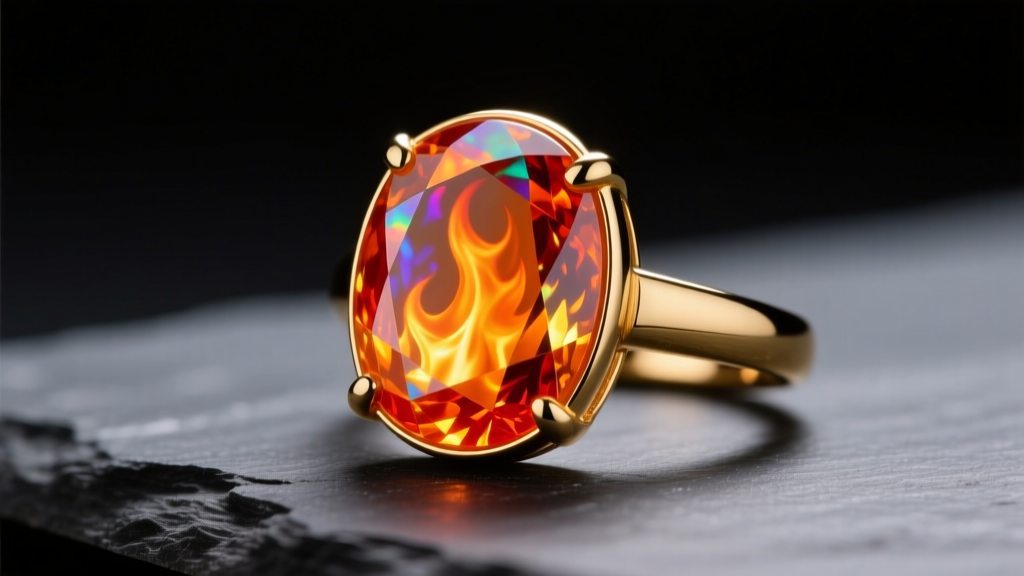
When selecting fire opal jewelry, understanding the stone's unique mineralogical profile is critical for both designers and collectors. Unlike crystalline gemstones, opal is an amorphous form of hydrated silica (SiO2·nH2O). According to the Gemological Institute of America (GIA), fire opal is distinguished by its vivid, warm body color—ranging from translucent yellow to deep, fiery orange-red. Interestingly, the term 'fire opal' refers strictly to the body color, not the 'play-of-color' (iridescence) seen in precious opals. While some Mexican fire opals do exhibit a subtle play-of-color, the majority are classified as 'common' opals that rely entirely on their striking saturation and high transparency for visual impact.
The water content in fire opal typically ranges between 3% and 10%. This structural water is trapped within the silica spheres during formation in volcanic environments. It is this relatively high water content and amorphous structure that dictates the stone's physical limitations, making it significantly more sensitive to environmental stress than crystalline alternatives.
Fire Opal vs. Traditional Opals: A Durability Breakdown
To properly evaluate fire opal jewelry for daily wear, we must first compare it to its more common counterparts: white and black opals. While all opals share the same basic chemical composition, their formation environments and structural stability vary wildly.
| Property | Mexican Fire Opal | Australian White Opal | Australian Black Opal |
|---|---|---|---|
| Mohs Hardness | 5.5 - 6.5 | 5.5 - 6.5 | 5.5 - 6.5 |
| Toughness | Fair to Poor | Fair | Good (due to sandstone matrix) |
| Specific Gravity | 2.10 - 2.20 | 1.98 - 2.20 | 2.10 - 2.20 |
| Cleavage | None | None | None |
| Crazing Risk | Moderate to High | Low | Very Low |
As noted by mineralogical databases like Mindat, the lack of cleavage means opal will not split along defined planes like diamonds or topaz. However, its conchoidal fracture and low toughness mean it chips easily upon impact. Fire opal, in particular, is highly susceptible to 'crazing'—a network of fine surface cracks caused by rapid moisture loss or thermal shock.
Material Showdown: Fire Opal vs. Other Orange Gemstones
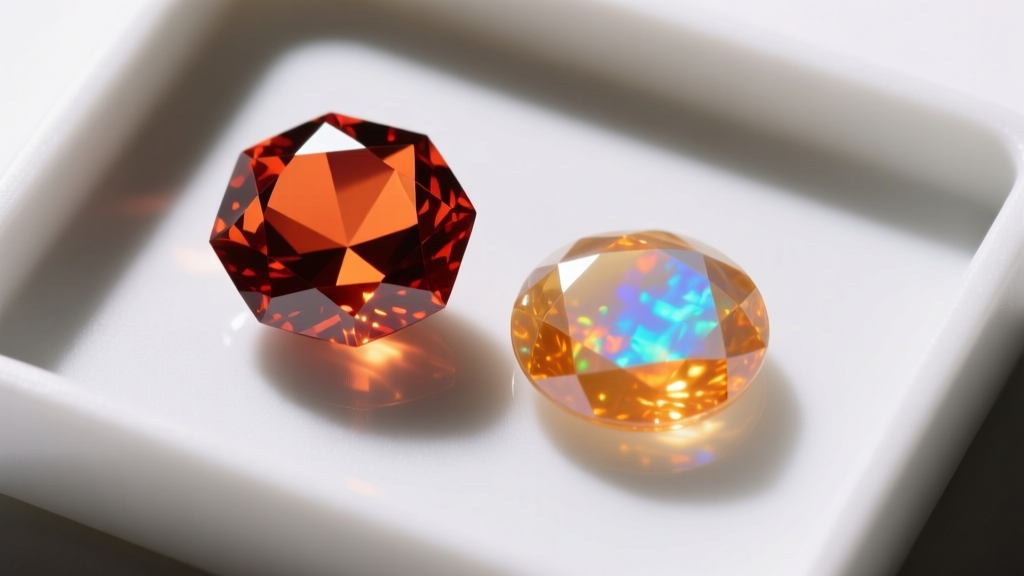
For clients seeking vibrant orange or red gemstones for rings and bracelets, fire opal competes with several highly durable crystalline alternatives. Below is a comparative analysis of how fire opal stacks up against spessartite garnet, citrine, and carnelian in terms of physical properties and market pricing.
1. Spessartite Garnet (Mandarin Garnet)
Spessartite offers a similar fiery orange hue but boasts a Mohs hardness of 7 to 7.5 and excellent toughness. It lacks the water-sensitivity of opal, making it vastly superior for unshielded ring settings. However, high-clarity Mandarin garnets command premium prices, often exceeding $1,500 per carat, whereas commercial-grade fire opals range from $50 to $150 per carat.
2. Citrine
With a Mohs hardness of 7, citrine is highly durable and affordable ($10–$50/ct). However, its color profile leans heavily toward yellow or brownish-orange, lacking the neon, saturated punch of a top-tier Mexican fire opal.
3. Carnelian (Chalcedony)
Carnelian shares the amorphous/cryptocrystalline silica lineage but is far tougher (Mohs 6.5-7) and completely opaque. It is an excellent choice for carved signets or heavy-wear bezels, but it cannot replicate the optical depth and transparency of a faceted or cabbed fire opal.
Designing Fire Opal Jewelry: Settings and Failure Modes
The physical vulnerabilities of fire opal demand highly specific jewelry engineering. If you are designing or purchasing fire opal jewelry, the setting type is the single most critical factor in the stone's longevity.
- Bezel Settings: The gold standard for fire opal. A full bezel protects the girdle and crown edges from lateral impacts, which are the primary cause of conchoidal chipping.
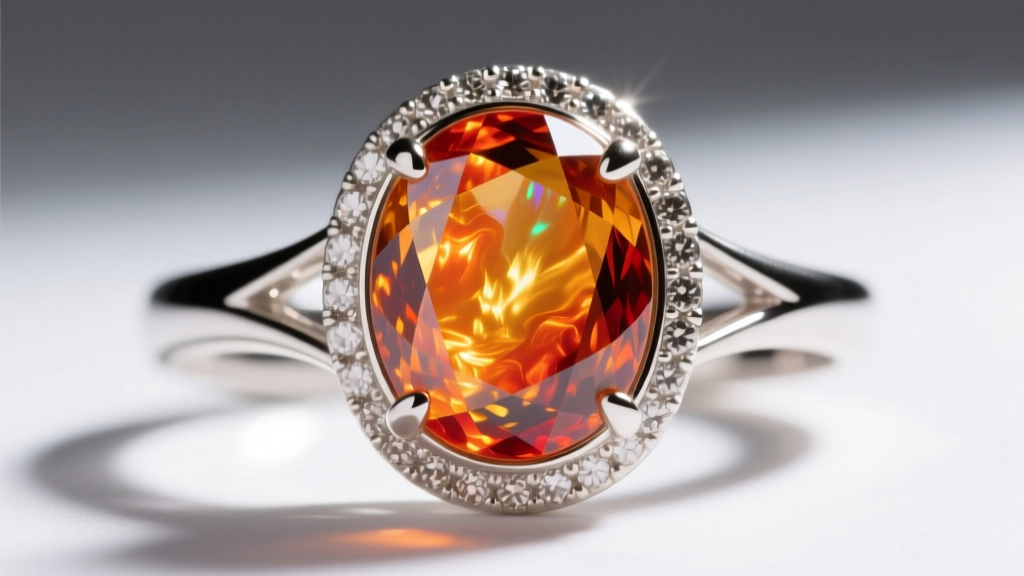
- Halo Settings: Surrounding the center opal with a micro-pavé diamond halo acts as a physical bumper, absorbing shocks before they reach the softer center stone.
- Prong Settings: Highly discouraged for daily-wear rings. If prongs must be used (e.g., in earrings or pendants), opt for V-prongs at the corners of faceted stones to protect fragile points.
Common Failure Modes in Fire Opal
The most frequent catastrophic failure in fire opal jewelry is thermal shock. Jewelers must never use a jeweler's torch to resize a ring containing a fire opal without first removing the stone. The rapid temperature change causes the internal water to expand or vaporize, leading to instantaneous shattering. Additionally, prolonged exposure to dry environments (like safes with desiccants or heated car dashboards) accelerates syneresis, resulting in irreversible crazing.
Care, Cleaning, and Long-Term Maintenance
Maintaining the optical clarity of fire opal requires strict adherence to safe cleaning protocols. The GIA explicitly warns against using ultrasonic or steam cleaners on any opal. The high-frequency vibrations in ultrasonic baths can exacerbate microscopic internal fractures, while the intense heat of steam cleaners can cause rapid dehydration and crazing.
Expert Cleaning Protocol: Use only lukewarm water, a mild phosphate-free dish soap, and an ultra-soft baby toothbrush. Avoid soaking the stone for extended periods, and never use harsh chemical dips or jewelry polishing cloths treated with abrasive compounds, as these can dull the stone's natural polish.
Sourcing and Value Metrics in the 2026 Market
The provenance of fire opal heavily influences its stability and value. In the current market, Mexican fire opal (primarily sourced from Querétaro and Jalisco) remains the benchmark for color saturation and transparency. However, buyers must be aware of the stability differences based on the mining district. Opals mined from rhyolitic volcanic ash tend to be more stable, while those from certain sedimentary layers are prone to rapid crazing once exposed to air.
Brazilian and Ethiopian sources also produce orange opals, but Ethiopian Welo opals are highly porous and hydrophane (they absorb water and change appearance), making them entirely unsuitable for the same jewelry applications as the more stable Mexican varieties. When investing in high-end fire opal jewelry, always request a gemological report verifying the origin and any potential stability treatments, ensuring your vibrant gemstone remains intact for generations.


