Nautilus Shell Jewelry Value Guide: 2026 Pricing & Buyer Tips
Discover the true value of nautilus shell jewelry in 2026. Learn pricing tiers, ethical sourcing rules, and how to assess quality before you buy.

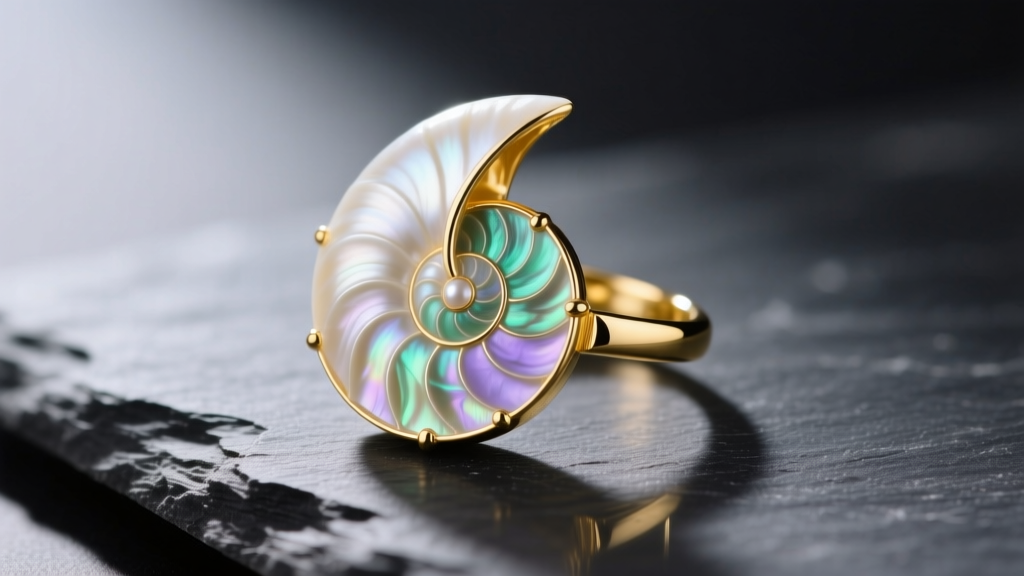
The Allure and Complexity of Nautilus Shell Jewelry
When evaluating organic gemstones, few materials capture the imagination quite like the nautilus. Revered for its perfect Fibonacci spiral and iridescent nacre, nautilus shell jewelry occupies a unique space in the 2026 market. However, assessing its true value requires navigating a complex web of biological classifications, international trade laws, and widespread market mislabeling. Unlike mined crystals such as amethyst or emerald, the nautilus is an organic gem, placing it in the same category as pearls, amber, and coral. This distinction fundamentally alters how we appraise its worth, shifting the focus from carat weight and clarity to nacre quality, structural integrity, and ethical provenance.
For collectors and everyday wearers alike, understanding the financial and ethical dimensions of these pieces is critical. The market is currently saturated with misidentified fossils and uncertified modern shells, making a rigorous value assessment essential before making a purchase. This guide breaks down the exact pricing matrices, material grades, and legal frameworks you need to know to buy nautilus shell jewelry with absolute confidence.
The 2026 Nautilus Shell Jewelry Pricing Matrix
Pricing in the organic gem market is highly stratified. The value of nautilus shell jewelry is dictated by three primary factors: the origin of the shell (modern vs. fossilized), the quality of the nacre or matrix, and the precious metal used in the setting. Below is the current 2026 pricing matrix based on retail market data and auction house valuations.
| Material Classification | Setting / Hardware | 2026 Price Range (USD) | Value Retention |
|---|---|---|---|
| Orthoceras (Mislabeled as Nautilus) | Brass / Base Metal | $15 - $45 | Low (Mass-produced) |
| Modern Nautilus (CITES Certified) | 925 Sterling Silver | $85 - $280 | Moderate |
| Modern Nautilus (High-Grade Nacre) | 14k or 18k Solid Gold | $450 - $1,500 | High |
| True Nautilus Fossil (Rare) | Custom Platinum / Gold | $1,200 - $4,000+ | Very High (Collector) |
As the table illustrates, the jump from sterling silver to solid gold settings exponentially increases the price, but the most significant value driver is the authenticity and rarity of the shell itself. According to the Gemological Institute of America (GIA), organic gems require specialized cutting and polishing techniques to preserve the delicate nacreous layers, which adds to the baseline labor cost of high-quality pieces.
The Great Imposter: Orthoceras vs. True Nautilus
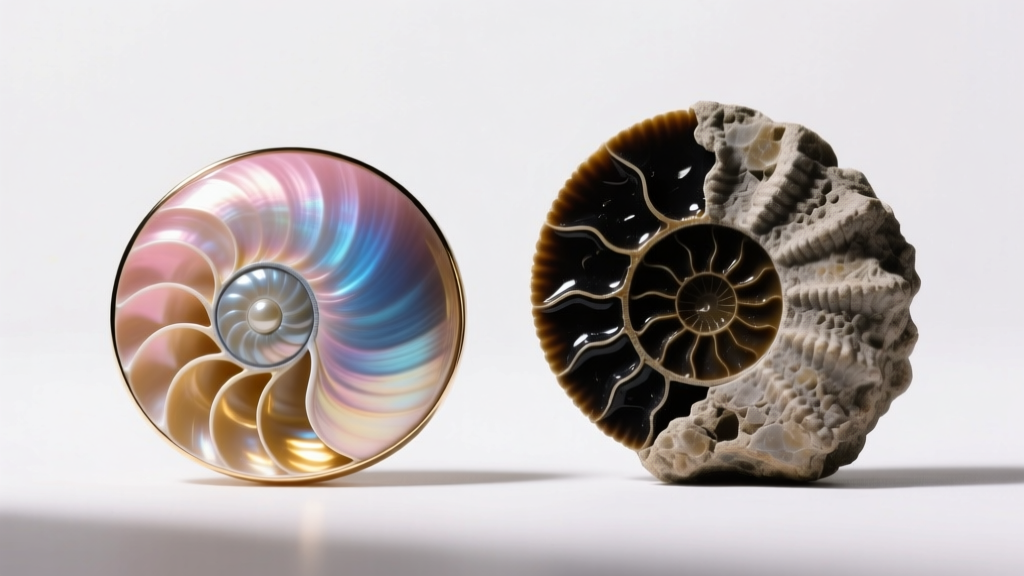
The single biggest threat to your budget when shopping for nautilus shell jewelry is the widespread mislabeling of Orthoceras fossils. Walk into almost any tourist gem shop or browse budget online marketplaces, and you will see dark, polished fossil slices featuring straight or slightly curved chamber lines sold as "nautilus." These are almost exclusively Orthoceras, an extinct cephalopod that lived over 400 million years ago.
How to Tell the Difference
- Chamber Geometry: True nautilus shells feature a tight, coiled spiral with distinct, curved septa (the walls dividing the chambers). Orthoceras features elongated, straight, or conical chambers.
- Color and Matrix: Polished Orthoceras is typically dark brown, black, or grey, embedded in a limestone matrix. Modern nautilus shell is prized for its pearlescent white, cream, and iridescent pink/orange nacre.
- Price Indicator: If a large, dark fossil pendant is priced under $50, it is Orthoceras. True nautilus fossils are exceptionally rare, as the coiled structure usually crushes under geological pressure, making intact, gem-grade fossilized nautilus specimens incredibly valuable.
Metal Settings and Hardware Integrity
Because nautilus shell is relatively soft—ranking between 2.5 and 4.0 on the Mohs hardness scale—the metal setting must provide adequate structural protection. When assessing value, scrutinize the hardware.
Sterling Silver (925)
Sterling silver is the most common and appropriate pairing for modern nautilus shell. The cool tones of silver complement the iridescent pinks and whites of the nacre. When evaluating silver pieces, ensure the bezel is fully enclosed or features a reinforced gallery wire. Prong settings are highly discouraged for nautilus, as the pressure can fracture the shell, and the exposed edges are prone to chipping.
Gold and Vermeil Warnings
High-end nautilus jewelry utilizes 14k or 18k solid gold. However, buyers must be wary of "gold vermeil" or gold-plated brass. The porous nature of some shell matrices can react poorly to the harsh chemicals used in cheap plating processes. Furthermore, if the plating wears off, the underlying base metal can cause skin discoloration and degrade the organic gem. Always demand a hallmark stamp (e.g., 14K, 18K, 750) and a certificate of authenticity for pieces priced above $400.
Ethical Sourcing and CITES Regulations
You cannot accurately assess the value of modern nautilus shell jewelry without understanding international trade law. In 2017, the Nautilus pompilius species was added to Appendix II of the Convention on International Trade in Endangered Species (CITES). This was a landmark decision to protect wild populations from overharvesting for the jewelry and curio trade.
What CITES Means for 2026 Buyers
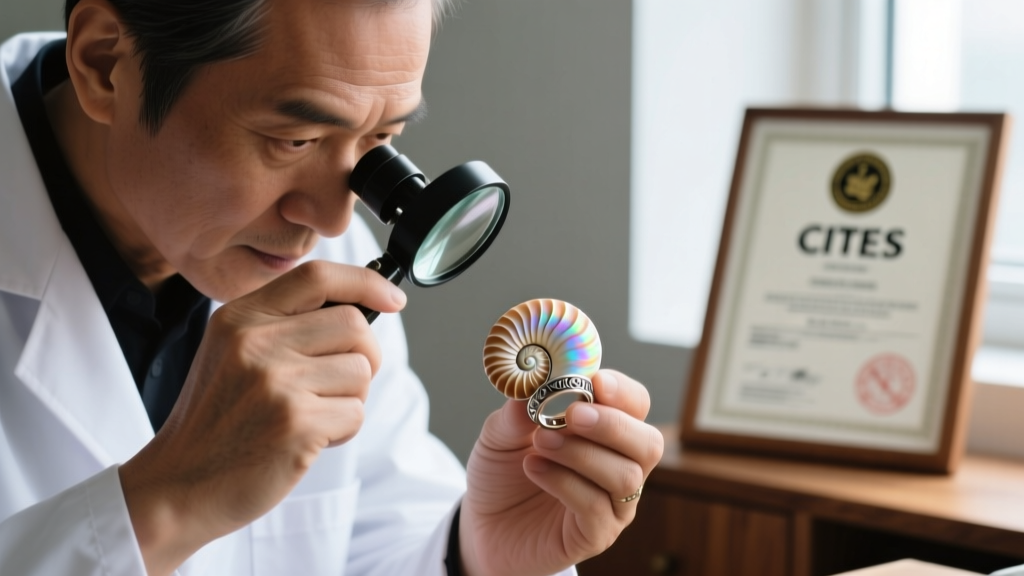
As of 2026, the cross-border commercial trade of modern nautilus shells requires strict CITES export and import permits. This regulatory bottleneck has reduced the global supply of legally harvested shells, subsequently driving up the price of ethically sourced, certified jewelry. When purchasing modern nautilus shell jewelry, especially from international artisans or online marketplaces, you must request CITES documentation.
If a seller cannot provide proof of legal, sustainable harvesting or pre-Convention certification, the piece is not only potentially illegal to import into your country, but its financial value is fundamentally compromised. Reputable jewelers will transparently provide CITES compliance documentation upon request. For a deeper understanding of how these regulations protect marine biodiversity, refer to the official CITES database.
Red Flags: Spotting Overpriced and Treated Pieces
To protect your investment, train your eye to spot artificial treatments and inflated pricing. Because high-quality, unblemished nautilus nacre is rare, some manufacturers resort to enhancements that severely diminish the long-term value of the jewelry.
Dyed and Resin-Filled Shells
Inspect the shell under a 10x jeweler's loupe. If you see dye concentrated in the microscopic cracks or along the chamber seams, the piece has been artificially colored. Similarly, lower-grade shells with crushed chambers are often stabilized with clear epoxy resin. While stabilization prevents further crumbling, it drastically lowers the gemological value. Resin-filled areas will feel slightly warmer to the touch and lack the deep, natural luster of pure nacre.
The "Perfect" Spiral Trap
Nature is rarely flawless. A modern nautilus shell cabochon that exhibits absolute, unbroken symmetry with zero natural inclusions or matrix variations should be viewed with suspicion. While master cutters can isolate pristine sections of the shell, an abundance of "flawless" inventory at a mid-tier price point often indicates the use of synthetic pearl substitutes or heavily bleached and polished low-grade shell fragments. True value lies in the natural, organic character of the gem, complete with its subtle color shifts and natural growth lines.
Final Verdict on Nautilus Shell Value
Nautilus shell jewelry is a profound investment in natural artistry, but it demands an informed buyer. By prioritizing CITES-certified modern shells or accurately identified rare fossils, insisting on protective bezel settings in solid precious metals, and avoiding the Orthoceras imposter trap, you can acquire pieces that are not only visually stunning but structurally and financially sound. In the 2026 market, true value is found at the intersection of ethical provenance, master lapidary work, and uncompromising material authenticity.


