Pink Ruby Jewelry: Properties, Grading, and Sapphire Comparisons
Discover the gemological truth behind pink ruby jewelry. Compare properties, grading thresholds, and pricing against pink sapphires in our expert guide.

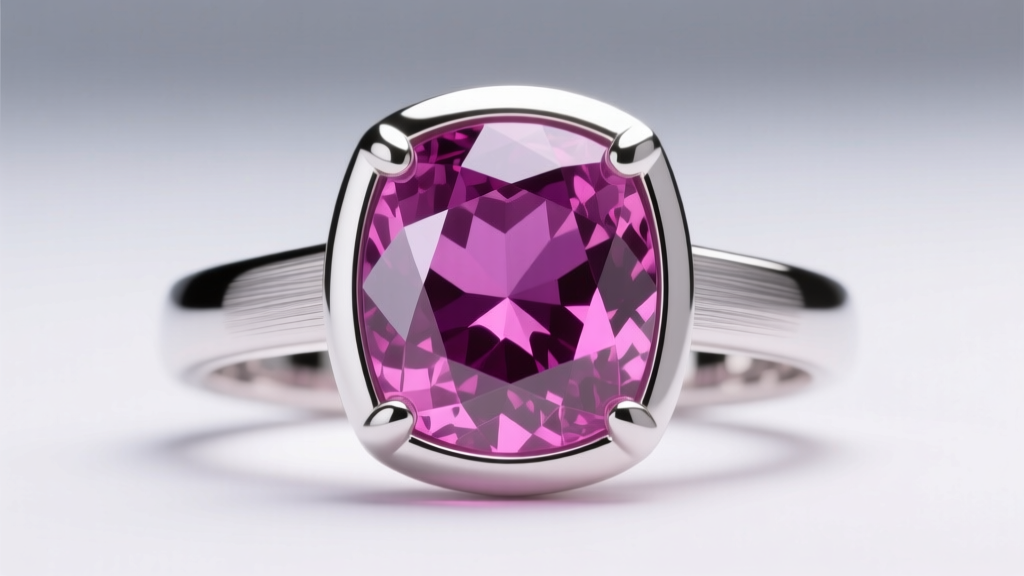
The Corundum Conundrum: Defining the Pink Ruby
In the gemological community, few debates are as fiercely contested as the boundary between a ruby and a pink sapphire. When shopping for pink ruby jewelry, consumers are often unaware that mineralogically, both stones are exactly the same: corundum (aluminum oxide, Al₂O₃). The only difference lies in trace elemental impurities. While iron and titanium create blue sapphires, it is the presence of chromium (Cr³⁺) that paints corundum in shades of red and pink.
Historically, any chromium-bearing corundum was classified as a ruby. However, as the market evolved, gemological institutions had to draw a line to protect consumers from inflated pricing. Today, the Gemological Institute of America (GIA) and the Laboratory Manual Harmonisation Committee (LMHC) utilize strict master stone sets to determine if a stone possesses enough color saturation and tone to be legally and ethically graded as a "ruby." If the pink hue is too light or lacks the requisite chromium saturation, the stone is classified as a pink sapphire, which commands a significantly lower price per carat despite sharing identical physical durability.
Gemological and Physical Properties
Understanding the material science behind your jewelry is critical for both appraisal and long-term wear. Pink rubies share the exact crystallographic profile of their deep red counterparts, making them exceptionally suited for everyday jewelry pieces like engagement rings and eternity bands.
| Property | Specification | Impact on Jewelry Design |
|---|---|---|
| Mineral Class | Corundum (Trigonal Crystal System) | Allows for precise lapidary faceting and high light return. |
| Mohs Hardness | 9.0 | Highly resistant to scratching; second only to diamond. |
| Specific Gravity | 3.99 - 4.01 | Dense material; a 1-carat ruby appears slightly smaller than a 1-carat diamond. |
| Refractive Index | 1.762 - 1.770 | Yields excellent brilliance and internal light reflection. |
| Birefringence | 0.008 | Causes slight doubling of facet edges under high magnification. |
| Pleochroism | Strong (Purplish-Red / Orange-Red) | Cutters must orient the table facet perpendicular to the c-axis to maximize the primary red/pink color. |
Color Grading and the Chromium Threshold
The valuation of pink ruby jewelry hinges almost entirely on color grading, which is broken down into three dimensions: hue, tone, and saturation. The primary hue must be red, with pink acting as a secondary modifier. If the stone exhibits strong purple or orange modifiers, it risks being downgraded to a fancy sapphire.
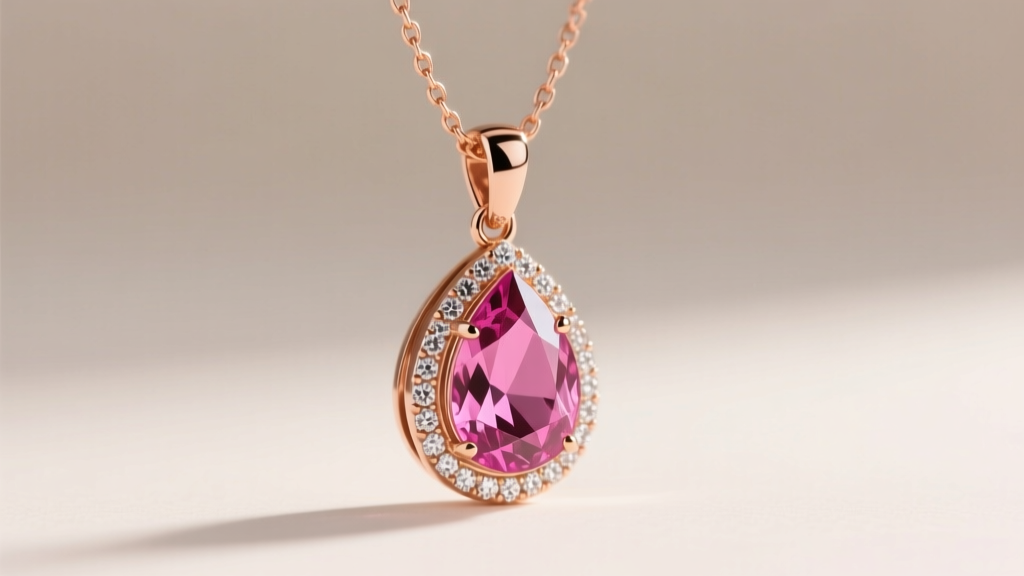
The LMHC Master Stone Standard
To standardize global grading, the LMHC introduced a set of master stones to define the absolute minimum color saturation required for the "ruby" designation. A true pink ruby must possess a medium-light to medium-dark tone. Stones that fall below this threshold, regardless of their chromium content, are graded as pink sapphires. In the 2026 market, top-tier pink rubies exhibit a "vivid" saturation that borders on neon, often described in the trade as pinkish-red rather than pure red, offering a vibrant, youthful alternative to the traditional "pigeon blood" ruby.
Treatments, Origins, and 2026 Market Pricing
The provenance and treatment history of a pink ruby dictate its market value. As of 2026, the market heavily favors unheated stones with verifiable origins, though ethically sourced heated stones remain popular for accessible luxury jewelry.
- Myanmar (Burma): The historical benchmark. Burmese pink rubies possess a natural fluorescence due to high chromium and low iron content, causing them to "glow" in sunlight. Unheated 1-carat stones routinely fetch $15,000 to $30,000+.
- Mozambique: Currently dominating the commercial market. Mozambican stones often have higher iron content, which can slightly dampen fluorescence but yields incredibly clean, large crystals. Heated 1-carat pink rubies from this region typically range from $2,500 to $5,000.
- Madagascar: Known for stones that frequently straddle the ruby/sapphire line. Madagascar yields beautiful pastel-pink rubies that are highly sought after for delicate, feminine jewelry designs, usually priced between $3,000 and $6,000 per carat for unheated specimens.
Disclosure of Enhancements
When evaluating pink ruby jewelry, always demand a report from a tier-one laboratory like the American Gemological Laboratories (AGL) or GIA. Heat treatment is standard and accepted, provided it is disclosed. However, you must strictly avoid lattice diffusion (where beryllium is introduced to artificially redden a pale sapphire) and lead-glass fracture filling. Fracture-filled pink rubies are structurally compromised, worth a fraction of the price, and can be destroyed by a simple lemon juice spill or a jeweler's torch.
Engineering the Perfect Setting for Daily Wear
While corundum ranks a 9 on the Mohs scale, it is not indestructible. Rubies possess a phenomenon known as "parting" along specific crystallographic twinning planes. If struck at the exact right angle, a pink ruby can cleave or chip.
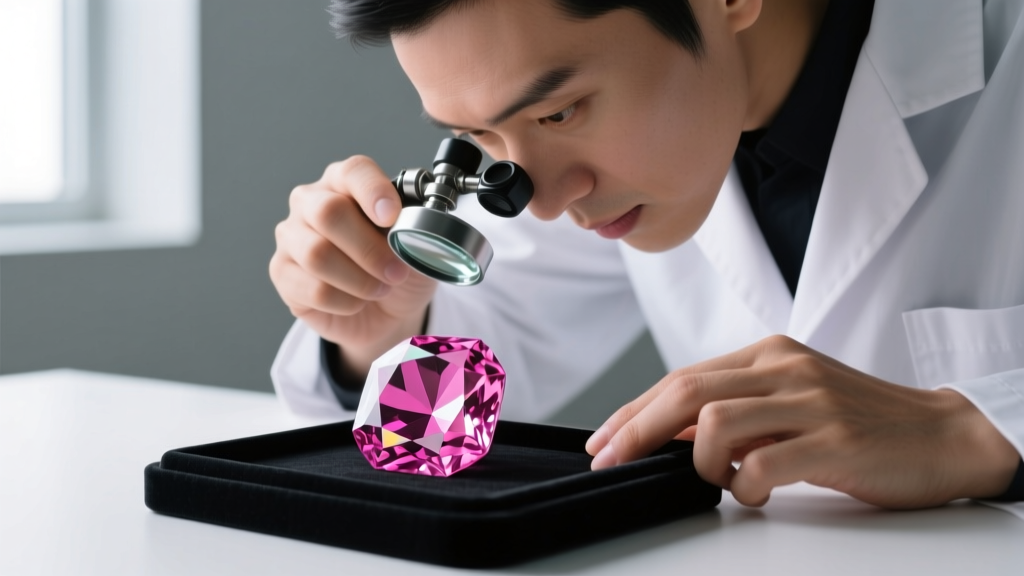
Prong vs. Bezel Configurations
For rings and bracelets—jewelry categories most prone to impact—setting engineering is paramount. If your pink ruby features a sharp geometric cut, such as a pear, marquise, or princess cut, the jeweler must employ V-prongs at the pointed tips to distribute pressure and prevent chipping. For cabochon or oval pink rubies, a full or partial bezel setting in 18k gold or platinum offers superior protection to the girdle, securing the stone against lateral impacts while allowing maximum light entry through the crown.
Professional Care and Maintenance Protocols
Proper maintenance ensures the optical performance of your pink ruby jewelry remains uncompromised over decades of wear. Because of the potential for undisclosed treatments in older or vintage pieces, conservative cleaning methods are always recommended.
Expert Maintenance Rule: Never place pink ruby jewelry in an ultrasonic cleaner unless you have absolute certainty, verified by a modern lab report, that the stone is unheated or traditionally heated without fracture filling. Ultrasonic vibrations can shatter glass-filled stones and loosen secondary inclusions. Instead, use a soft-bristled brush, lukewarm water, and a pH-neutral dish soap, drying with a microfiber cloth to prevent water spots on the facets.
By understanding the intricate material properties, grading thresholds, and setting requirements of pink corundum, you can confidently navigate the market and acquire pink ruby jewelry that is both gemologically significant and structurally enduring.


