How to Match Different Kinds of Gemstone Jewelry to Your Lifestyle
Learn how to choose and style different kinds of gemstone jewelry based on hardness, metal settings, and daily wear requirements.

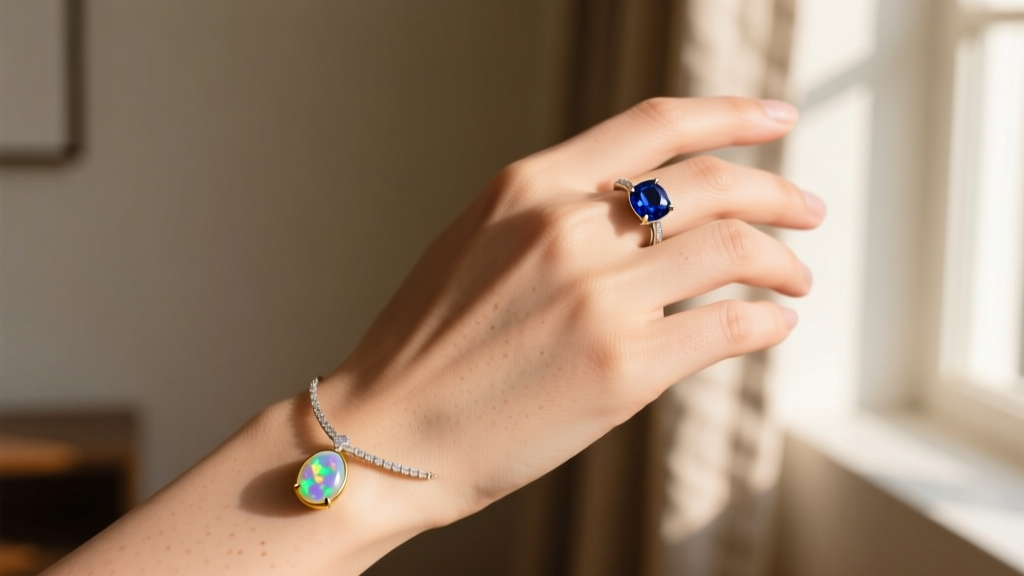
When building a fine jewelry collection, understanding the different kinds of gemstone jewelry is about much more than just aesthetics and color coordination. It requires a strategic approach to mineralogy, metallurgy, and your personal daily habits. A stone that looks breathtaking on a velvet display pad may quickly become a cloudy, chipped disappointment if subjected to the rigors of daily typing, gardening, or gym sessions.
This step-by-step guide will teach you how to evaluate gemstone durability, match them with the correct protective settings, and build a versatile jewelry wardrobe that survives the real world. By the end of this guide, you will know exactly how to select pieces that offer both lifelong beauty and structural integrity.
Step 1: Assess Your Daily Wear and Tear (The Mohs Scale Framework)
The foundational step in choosing the right kinds of gemstone jewelry is understanding the Mohs Hardness Scale. This scale measures a mineral's resistance to scratching, not its toughness (resistance to chipping or breaking). For example, diamonds are a 10 on the Mohs scale, making them virtually scratch-proof, but they possess perfect cleavage planes, meaning a sharp blow can split them.
For everyday rings and bracelets—pieces that endure the most impact—you should strictly limit your choices to gemstones with a Mohs hardness of 8 or higher. For earrings and pendants, which face minimal abrasion, you can safely incorporate softer, more porous stones.
| Gemstone | Mohs Hardness | Toughness | Best Jewelry Application | Recommended Setting |
|---|---|---|---|---|
| Diamond | 10 | Good to Excellent | Everyday Rings, Eternity Bands | Prong, Channel, Bezel |
| Sapphire / Ruby | 9 | Excellent | Everyday Rings, Bracelets | Prong, Bezel, Tension |
| Topaz / Spinel | 8 | Fair to Good | Occasional Rings, Pendants | Bezel, Low-Profile Prong |
| Amethyst / Citrine | 7 | Good | Pendants, Earrings, Cocktail Rings | Bezel, Halo |
| Tanzanite | 6.5 - 7 | Poor | Earrings, Pendants Only | Bezel, V-Prong |
| Opal | 5.5 - 6.5 | Very Poor | Pendants, Occasional Earrings | Bezel, Cabochon |
Step 2: Match Gemstone Cuts to Jewelry Settings
The way a gemstone is cut drastically impacts its structural vulnerability. When evaluating different kinds of gemstone jewelry, you must align the lapidary style with the physical demands of the jewelry type.
Faceted Stones for High-Hardness Gems
Faceting maximizes light return and brilliance, but it introduces sharp corners and edges. If you are selecting a princess-cut or pear-shaped sapphire (Mohs 9), those sharp points are prime targets for chipping if they strike a hard surface. To mitigate this, always insist on V-prongs for pear, marquise, and heart shapes. V-prongs wrap the metal around the vulnerable point, distributing impact force away from the gemstone's cleavage planes.
Cabochon Cuts for Softer and Phenomenal Stones
For softer stones like moonstone, opal, and turquoise, or those displaying optical phenomena like asterism (star sapphires) or chatoyancy (tiger's eye), the cabochon cut is mandatory. A cabochon features a smooth, domed top with no sharp edges. For active lifestyles, look for a low-dome cabochon. High-dome cabochons protrude too far above the setting, making them susceptible to abrasive scratching and blunt-force cracking. Pair these with a full bezel setting, where a continuous rim of metal wraps entirely around the stone's girdle, protecting the edges from lateral impacts.
Step 3: Select the Right Metal Pairing for Longevity
The metal holding your gemstone is just as critical as the stone itself. A common failure mode in gemstone jewelry is prong degradation, where the metal wears thin over years of friction, eventually snapping and dropping the stone.
Platinum vs. Gold Alloys
If you are investing in an everyday sapphire or diamond ring, Platinum (95% pure) is the superior choice. Unlike white gold, which loses microscopic layers of metal (and its rhodium plating) over time, platinum is malleable. When scratched or bent, platinum displaces rather than flakes away. A platinum prong can be easily pushed back into place by a jeweler, whereas a worn white gold prong must be entirely retipped or replaced.
However, for the band itself (the shank), 14k gold is actually harder and more scratch-resistant than 18k gold or platinum due to its higher alloy content (copper, zinc, nickel). If you work with your hands or lift weights, a 14k gold band with a minimum thickness of 1.8mm will resist warping far better than a delicate 1.2mm 18k gold band. Warping is a silent killer of gemstone security; when a ring bends out of its circular shape, it pulls the prongs outward, popping the stone out of its seat.
"Always remove your rings before applying hand lotion, gardening, or using household cleaners. The chemicals can degrade the alloys in lower-karat gold and cloud the pavilion of your gemstone, while physical dirt packs under the girdle, loosening the setting over time." — Gemological Institute of America (GIA)
Step 4: Implement a Gemstone-Specific Care Routine
Different kinds of gemstone jewelry require vastly different maintenance protocols. Using the wrong cleaning method can instantly destroy a valuable piece. Here is a strict troubleshooting framework for gemstone care:
- Ultrasonic Cleaners: Safe ONLY for untreated diamonds, sapphires, and rubies. Never use ultrasonics on emeralds, opals, pearls, tanzanite, or fracture-filled stones. The high-frequency vibrations will shatter included emeralds and strip the cedar oil used to fill their natural fissures.
- Steam Cleaners: Excellent for blasting grease off diamonds, but fatal to temperature-sensitive stones. Sudden thermal shock can cause internal fracturing in garnets, opals, and treated quartz.
- Opal Hydration: Opals contain between 3% and 21% water. If exposed to extreme dry heat (like a sauna or leaving it on a sunny dashboard), they will "craze," developing a network of internal cracks that ruins their play-of-color. Clean them only with a damp, soft cloth.
- Emerald Maintenance: Because nearly all emeralds are clarity-enhanced with oils or resins, they should only be cleaned with warm water, a drop of mild dish soap, and a baby-hair brush. Have them professionally re-oiled by a lapidary every 3 to 5 years to maintain their luster.
Step 5: Build a Versatile Gemstone Capsule Wardrobe
Instead of buying random pieces, approach your collection strategically. A well-curated gemstone capsule wardrobe balances high-durability everyday staples with delicate, high-impact statement pieces. Here is a practical blueprint for building your collection, complete with estimated pricing for quality, ethically sourced materials:
- The Everyday Anchor ($800 - $2,500): A bezel-set blue sapphire or ruby stud pair in 14k solid gold. Bezel settings prevent the prongs from catching on hair or sweaters, and the Mohs 9 hardness ensures they won't scratch when placed in a jewelry box.
- The Statement Pendant ($400 - $1,200): A high-dome cabochon moonstone or black opal set in a sterling silver or 14k gold halo. Pendants keep these softer, moisture-sensitive stones safe from the impacts of hand movements while keeping them close to the skin.
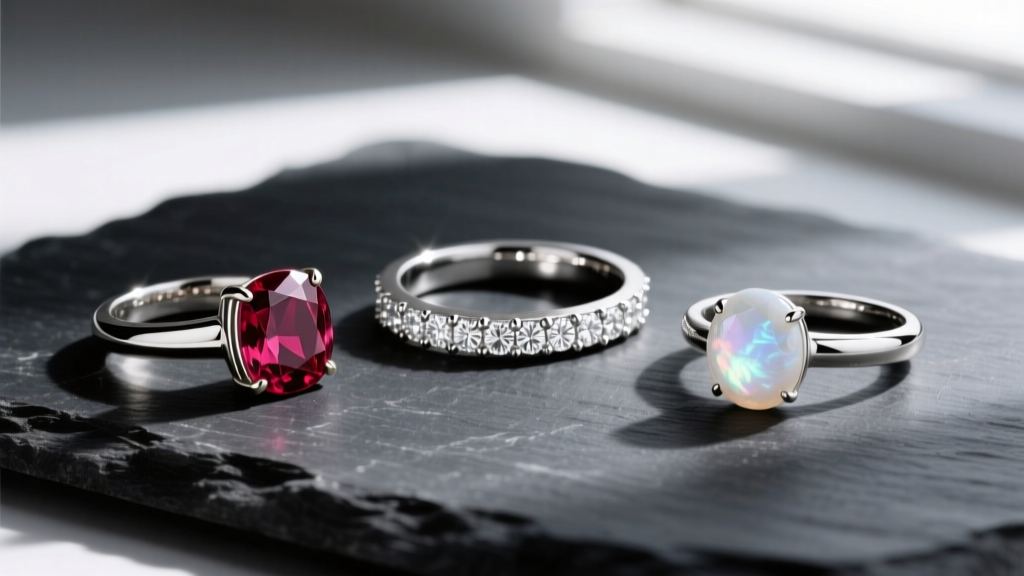
- The Active-Lifestyle Ring ($600 - $1,500): A channel-set diamond or white sapphire band. Channel settings embed the stones completely within the metal track, offering maximum protection for gym-goers or healthcare workers who need a smooth profile that won't tear gloves.
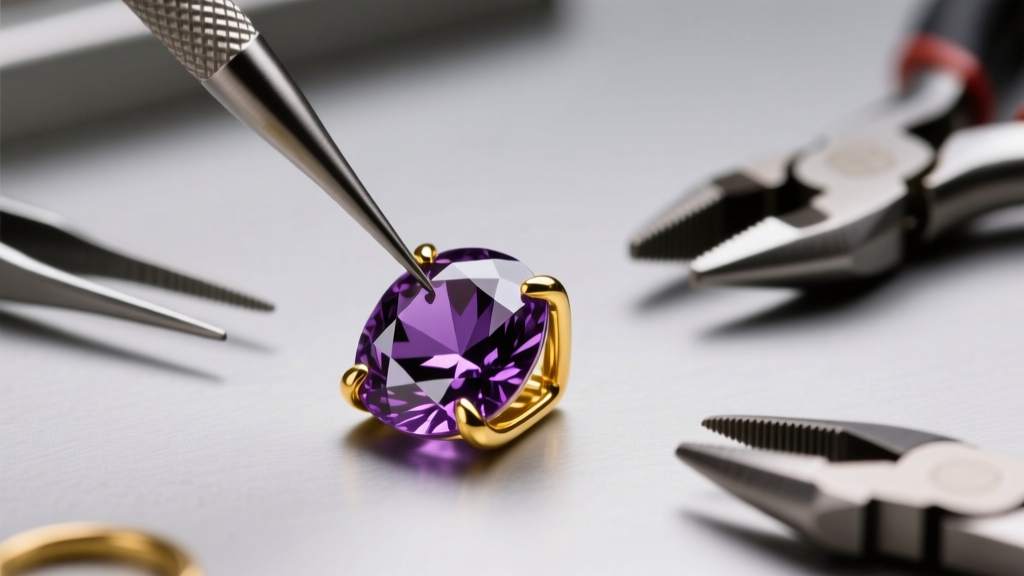
- The Occasion Cocktail Ring ($300 - $900): A large, faceted amethyst or tanzanite in an ornate 18k gold prong setting. These stones offer massive visual impact and vibrant color but are strictly reserved for dinners and events where they won't be subjected to hard impacts.
Conclusion
Selecting the right kinds of gemstone jewelry is an exercise in balancing visual desire with physical reality. By respecting the Mohs scale, choosing protective settings like bezels and V-prongs, matching the metal to your activity level, and adhering to strict, stone-specific cleaning protocols, you ensure your jewelry remains vibrant and secure for generations. Treat your gemstones not just as decorations, but as geological marvels that require intelligent engineering to survive the modern world.


