Shell Jewelry Box Engineering: Protecting Delicate Gemstones
Discover the technical specs of shell jewelry box construction and learn how mother-of-pearl and abalone interiors affect delicate gemstone preservation.

The Material Science of Shell in Jewelry Box Construction
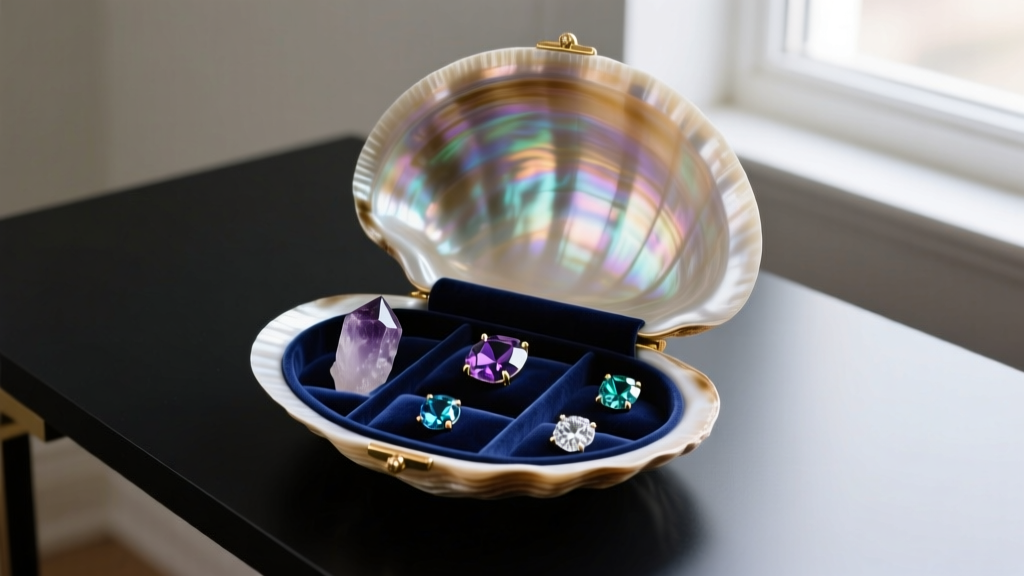
When curating a collection of fine gemstones and delicate crystals, the storage environment is just as critical as the stones themselves. While a beautifully crafted shell jewelry box offers undeniable aesthetic appeal, its organic composition presents unique chemical and physical interactions with your gems. To understand how to properly store sensitive minerals, we must first examine the material science of the shell veneers used in high-end woodworking and jewelry storage.
Shell inlays—primarily sourced from Mother-of-Pearl (MOP), Abalone, and Capiz—are composed of microscopic calcium carbonate (CaCO3) platelets bound together by an organic protein matrix called conchiolin. According to the Mindat Mineral Database, this aragonite/calcite structure gives shell a Mohs hardness ranking between 2.5 and 3.0. While this makes the exterior of a shell jewelry box relatively soft and susceptible to scratching from rogue diamond rings (Mohs 10) or sapphire pendants (Mohs 9), the primary concern for gemstone preservation lies in the box's microclimate and chemical off-gassing.
The Substrate and Adhesive Threat to Porous Stones
The true danger to porous gemstones like turquoise, malachite, or pearls isn't the shell exterior itself, but the substrate and adhesives used in manufacturing. Mass-market shell jewelry boxes often utilize Medium-Density Fiberboard (MDF) cores bonded with urea-formaldehyde resins. Over time, especially in environments with fluctuating humidity, these resins off-gas trace amounts of formaldehyde and acidic vapors.
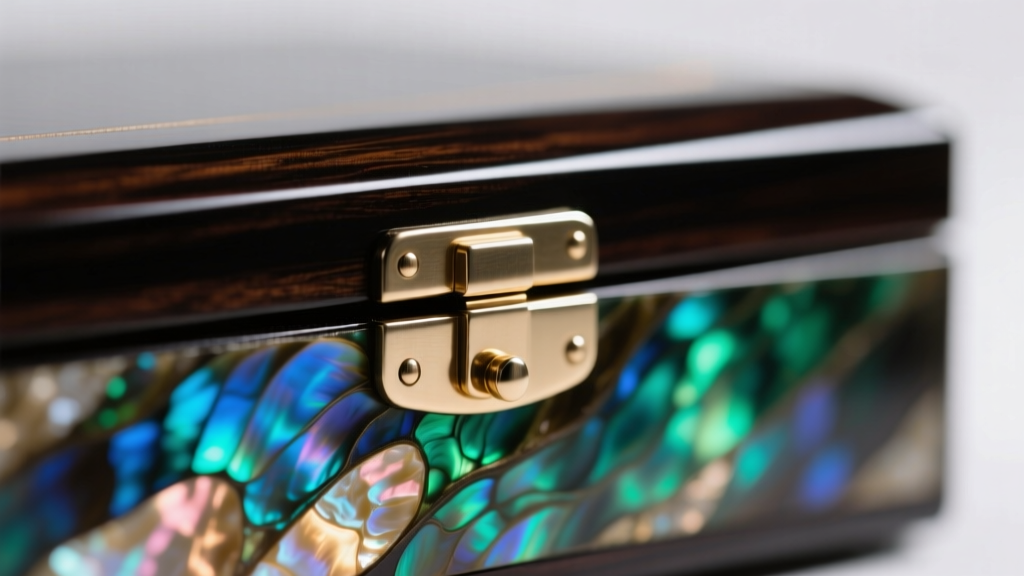
For non-porous stones like faceted quartz or corundum, this off-gassing is negligible. However, for porous and chemically sensitive gems, an acidic microenvironment can cause catastrophic surface degradation. Turquoise, a hydrous phosphate of copper and aluminum, can undergo localized dehydration and color shifting when exposed to volatile organic compounds (VOCs) trapped inside a poorly ventilated shell jewelry box. Expert collectors and lapidaries recommend seeking out boxes where the shell veneer is bonded to a solid poplar, mahogany, or acrylic core using pH-neutral polyvinyl acetate (PVA) or traditional hide glues, completely eliminating the formaldehyde risk.
Gemstone Compatibility Matrix
Not all crystals and gemstones react equally to the enclosed environment of a shell jewelry box. Below is a technical compatibility matrix detailing how specific gemstone categories interact with standard shell-inlaid storage environments.
| Gemstone Category | Examples | Porosity / Mohs | Risk in Standard Shell Box | Recommended Lining |
|---|---|---|---|---|
| Hard & Non-Porous | Diamond, Sapphire, Ruby | Low / 9-10 | Low (Risk of scratching the shell interior) | Individual soft pouches |
| Silicate Crystals | Amethyst, Citrine, Quartz | None / 7 | Very Low | Standard velvet or microfiber |
| Porous & Hydrous | Turquoise, Opal, Lapis Lazuli | High / 5-6 | High (Vulnerable to VOC off-gassing) | Untreated cotton, Pacific Cloth |
| Organic & Soft | Pearl, Coral, Amber | High / 2.5-4 | Extreme (Requires specific humidity) | Anti-tarnish flannel, slight moisture |
The Opal Hydration Dilemma
Opals require a highly specific relative humidity (RH) of 40% to 50% to prevent "crazing"—the formation of microscopic surface cracks caused by moisture loss. A heavily sealed shell jewelry box lined with synthetic materials can trap dry air or, conversely, trap excess ambient moisture that promotes mold on the fabric linings. The GIA Opal Care Guide emphasizes avoiding extreme environmental shifts. If storing precious opals in a shell box, ensure the interior features a breathable natural fiber lining and consider placing a localized, leak-proof silica or humidity-buffering packet in a dedicated compartment.
Interior Engineering: Linings and Microclimates
The interior lining of a shell jewelry box acts as the final barrier between your gemstones and the structural adhesives. High-end manufacturers utilize specific textiles engineered for chemical inertness and tarnish prevention.
- Pacific Cloth (Anti-Tarnish Flannel): Infused with microscopic silver or zinc particles that act as sacrificial anodes, absorbing corrosive gases before they reach silver settings or sensitive copper-bearing stones like malachite.
- Untreated Cotton Sateen: The safest option for highly reactive organic gems (pearls, amber). Unlike synthetic velvets, it does not generate static electricity, which can attract abrasive dust particles to soft crystal surfaces.
- Synthetic Microfiber: While soft, cheap microfiber can generate static charges in low-humidity environments, potentially causing small, lightweight crystal chips (like apatite or fluorite) to leap and collide with one another.
Maintenance and Calibration of Shell Veneers
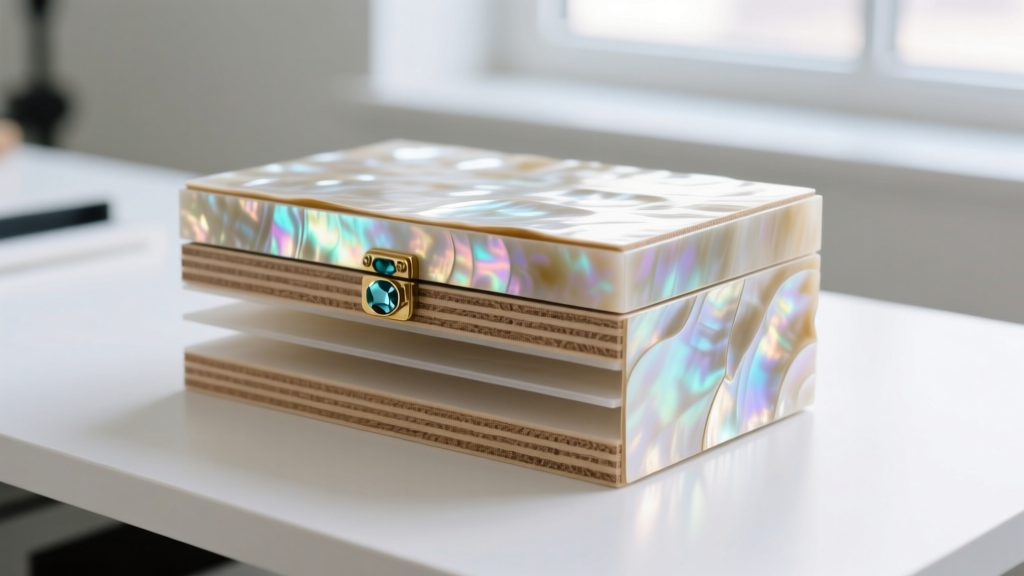
Preserving the structural integrity of the shell jewelry box is equally important for maintaining a safe environment for your gems. The calcium carbonate composition of the shell makes it highly reactive to alkaline and acidic cleaning agents. Never use ammonia-based glass cleaners or ultrasonic jewelry cleaning solutions near the shell exterior, as these will instantly etch the nacreous layers, leaving a dull, chalky residue.
For routine maintenance, use a slightly damp, lint-free microfiber cloth to remove dust. Twice a year, apply a microscopically thin layer of pure carnauba wax to the shell veneer. This not only enhances the iridescent chatoyancy of the abalone or MOP but also creates a vapor barrier that seals the exterior, preventing ambient moisture from penetrating the wood core and triggering adhesive degradation. By understanding the intersection of organic shell materials and mineralogy, collectors can ensure their shell jewelry box serves as a true preservation vault rather than a hidden hazard.
For further reading on protecting porous minerals from environmental degradation, consult the GIA Turquoise Care Guide, which outlines the specific vulnerabilities of hydrous stones to enclosed chemical environments.


