Troubleshooting Dull Peridot Jewelry: Care and Repair Guide
Is your peridot jewelry looking cloudy or scratched? Discover expert troubleshooting tips, safe cleaning methods, and repair solutions to restore its glow.

The Unique Mineralogy and Vulnerabilities of Peridot
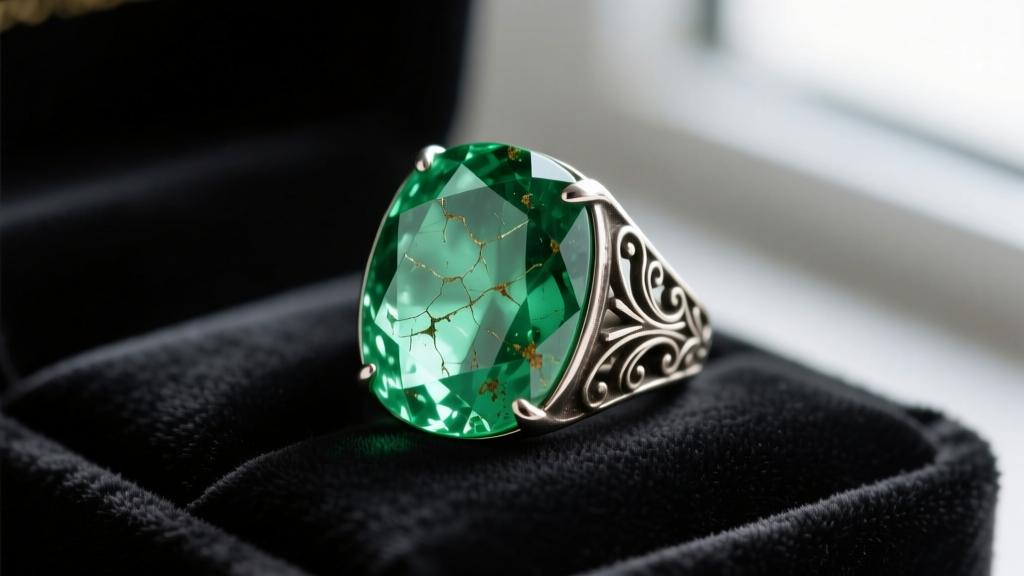
Peridot, the vibrant gem-quality variety of the mineral olivine, is beloved for its signature lime-to-olive green hue. Unlike many other gemstones that derive their color from trace impurities (allochromatic gems), peridot is idiochromatic—its color comes from its essential chemical composition, specifically magnesium iron silicate. While this guarantees a rich, consistent color, the stone's physical properties present unique challenges for long-term wear. With a Mohs hardness rating of 6.5 to 7, peridot jewelry is significantly softer than diamonds, sapphires, and even quartz. This means that everyday environmental dust, which contains microscopic quartz particles, can easily cause surface abrasions over time.
Furthermore, peridot possesses distinct cleavage planes and is highly susceptible to thermal shock. According to the Gemological Institute of America (GIA), peridot frequently contains characteristic disk-like stress fractures known as 'lily pad' inclusions. While these inclusions are a hallmark of natural peridot and help gemologists identify the stone, they also represent structural weak points. When subjected to sudden temperature changes or the high-frequency vibrations of ultrasonic cleaners, these internal stress fractures can rapidly expand, causing the gemstone to shatter from the inside out. Understanding these mineralogical quirks is the first step in troubleshooting and preserving your peridot jewelry.
Diagnosing Common Peridot Jewelry Problems
Problem 1: Cloudiness and Loss of Luster
If your peridot has lost its signature sparkle and appears cloudy or milky, the culprit is rarely internal degradation. In 90% of cases, cloudiness is caused by a microscopic layer of accumulated sebum, lotion, soap scum, and hard water minerals clinging to the pavilion (the bottom facets) of the stone. Because peridot has a relatively high specific gravity (3.34) and a refractive index of 1.65 to 1.69, light return is highly dependent on clean, sharp facet junctions. When grime fills these junctions, light leaks out the bottom rather than reflecting back to the eye, resulting in a dull, lifeless appearance.
Problem 2: Surface Scratches and Abrasions
Because peridot sits right on the borderline of the Mohs scale's scratch threshold (7), it is highly vulnerable to contact with common household surfaces and other jewelry. If you notice a web of fine, white scratches across the table (top facet) of your peridot, the stone has been subjected to friction against materials of equal or greater hardness. This is particularly common in peridot rings worn daily, as the hands frequently encounter countertops, glass, and ceramic mugs. Unlike diamonds, which can withstand immense surface friction, peridot's polish will degrade steadily under these conditions.
Problem 3: Loose Stones in Prong Settings
Peridot is often cut into standard shapes like ovals, cushions, and emerald cuts, and frequently set in four-prong or six-prong mountings. However, the girdle (the outer edge) of a peridot can be quite thin, and the stone's sensitivity to pressure means that overly tight prongs can cause chipping during the initial setting process. If your stone rattles or shifts, it is usually due to prong wear or a prong that was slightly lifted during an impact. Do not attempt to push the prong back down with household pliers, as the localized pressure can easily cleave the stone.
The Danger Zone: Cleaning Methods to Avoid
The most common way owners destroy their peridot jewelry is by using aggressive, generalized jewelry cleaning methods. The American Gem Society explicitly warns against mechanical and chemical cleaning systems for this specific gemstone. Below is a troubleshooting matrix detailing common cleaning methods and their specific risk factors for peridot.
| Cleaning Method | Risk Level | Specific Failure Mode for Peridot |
|---|---|---|
| Ultrasonic Cleaners | Extreme | Cavitation bubbles implode against the stone, exacerbating 'lily pad' inclusions and causing internal shattering. |
| Steam Cleaners | Extreme | Rapid thermal shock causes the stone to split along its natural cleavage planes. |
| Ammonia / Bleach | High | Harsh alkaline chemicals can etch the surface polish, leaving a permanent frosted appearance. |
| Commercial Silver Dips | High | Acidic thiourea compounds used to strip silver tarnish will aggressively eat away at the peridot's surface. |
| Boiling Water | Extreme | Severe thermal shock leading to immediate structural failure and fracturing. |
| Mild Soap & Lukewarm Water | Safe | No chemical or thermal risk; safely lifts oils without damaging the crystal lattice. |
The Master Cleaning Protocol for Peridot
To safely restore the brilliance of cloudy peridot jewelry without risking thermal or chemical damage, follow this exact lapidary-approved protocol. This method relies on gentle chemical breakdown of oils rather than aggressive mechanical force.
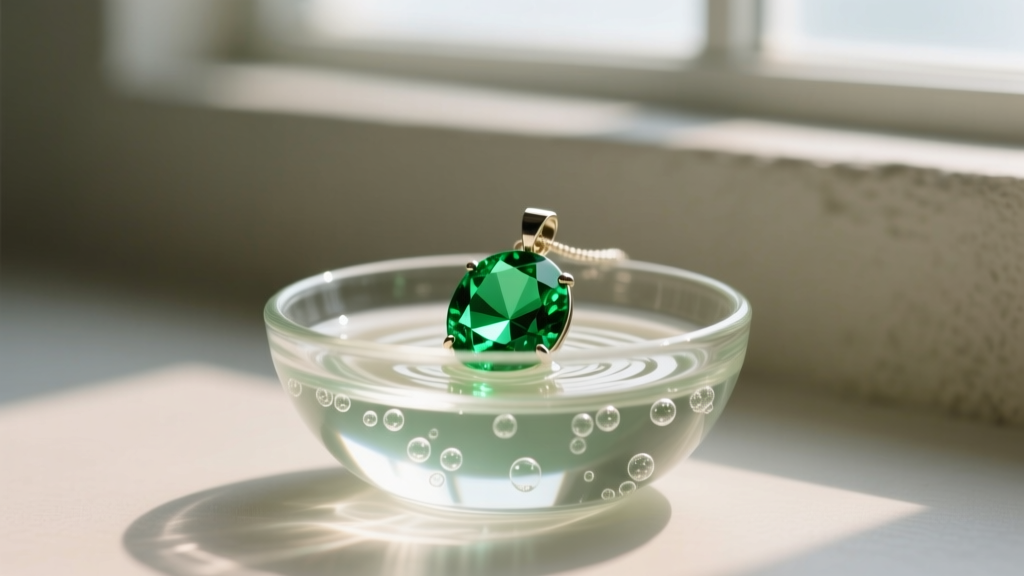
- Prepare the Solution: Fill a small glass bowl with distilled water. Tap water contains dissolved minerals and chlorine that can leave microscopic deposits on the stone. Add three drops of a pH-neutral, unscented dish soap (such as original Dawn). Avoid soaps with added moisturizers or citrus extracts, as the citric acid can mildly etch the stone over repeated uses.
- Soak Briefly: Submerge the peridot jewelry in the solution for exactly 5 to 10 minutes. This is enough time to soften sebum and cosmetic buildup without allowing the water to penetrate any microscopic surface-reaching fractures.
- Agitate Gently: Using a brand-new, ultra-soft baby toothbrush, gently brush the pavilion (back) of the stone. The back of the gem accumulates the most skin oils. Use light, circular motions and avoid pressing hard against the girdle or the prongs.
- Rinse and Dry: Rinse the piece under a gentle stream of lukewarm distilled water. Pat dry with a lint-free microfiber cloth. Do not use paper towels, as the wood pulp fibers can impart micro-scratches on the peridot's polished surface.
When to Seek Professional Lapidary Repair
Home cleaning will only solve issues related to surface grime. If your peridot jewelry suffers from physical damage, professional intervention is mandatory. Here is what you need to know before handing your piece to a jeweler:
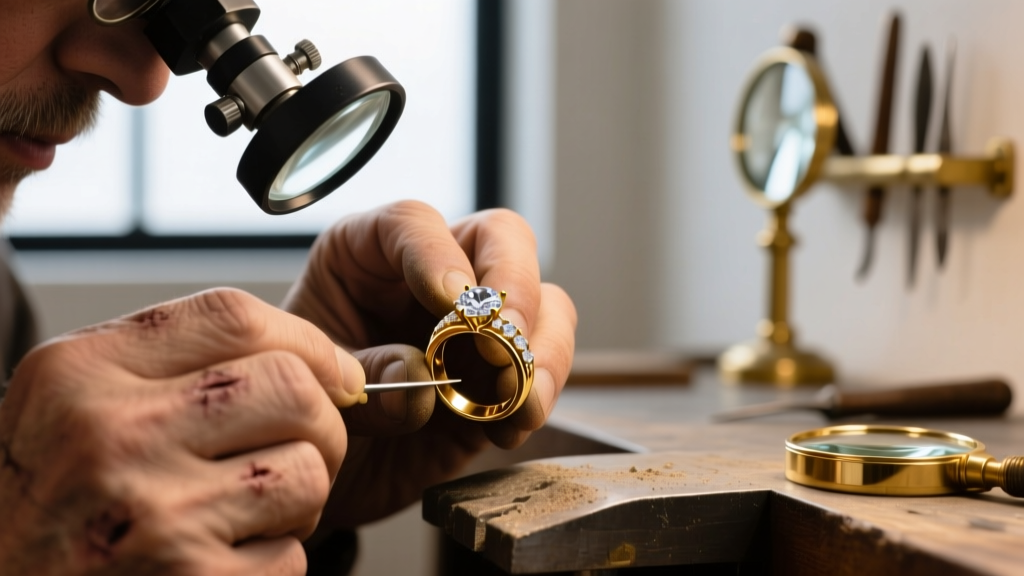
- Re-polishing Scratched Facets: If the table of your peridot is heavily scratched, a lapidary must re-polish it using specific abrasives like cerium oxide or aluminum oxide on a soft lap. Because peridot is highly sensitive to the friction heat generated during polishing, the jeweler must unmount the stone from its metal setting before placing it on a dop stick. Never allow a jeweler to polish a peridot while it is still set in the ring, as the heat transfer can crack the gem.
- Re-tipping Worn Prongs: If a prong is worn down and needs additional metal (re-tipping), the jeweler must use a laser welder rather than a traditional jeweler's torch. A torch applies broad, ambient heat that will easily cause thermal shock to the peridot. A laser welder applies pinpoint heat exclusively to the metal prong, keeping the gemstone safe.
- Upgrading the Setting: If you wear a peridot ring daily and constantly face chipped girdles or loose stones, ask your jeweler to transition the stone into a bezel or halo setting. These settings enclose the vulnerable outer edges of the gem in a protective metal rim, drastically reducing the risk of impact damage.
Preventative Storage and Wear Guidelines
Troubleshooting peridot jewelry is largely about preventing the damage from occurring in the first place. Because of its 6.5 to 7 Mohs hardness, peridot must be stored in complete isolation from harder gemstones. Tossing a peridot ring into a jewelry box alongside diamonds (Mohs 10), sapphires (Mohs 9), or even topaz (Mohs 8) guarantees that the peridot will emerge covered in scratches. Always store peridot pieces in individual soft cloth pouchs or separate, fabric-lined compartments.
Additionally, adopt a 'last on, first off' policy when getting dressed. Peridot should be the last piece of jewelry you put on after applying cosmetics, perfumes, and hairsprays, and the first piece you remove when returning home. Remove your peridot jewelry before engaging in household cleaning, gardening, or gym workouts. The combination of acidic perspiration, physical impact, and exposure to harsh cleaning chemicals creates a perfect storm for degrading the stone's polish and compromising its structural integrity over time. By respecting the unique mineralogical profile of peridot, you can ensure its vibrant green fire remains undimmed for generations.


