Turquoise Cross Jewelry: Stone Grades, Treatments & Metal Pairings
Discover how to evaluate turquoise cross jewelry by comparing stone grades, stabilization treatments, and metal settings for lasting durability.

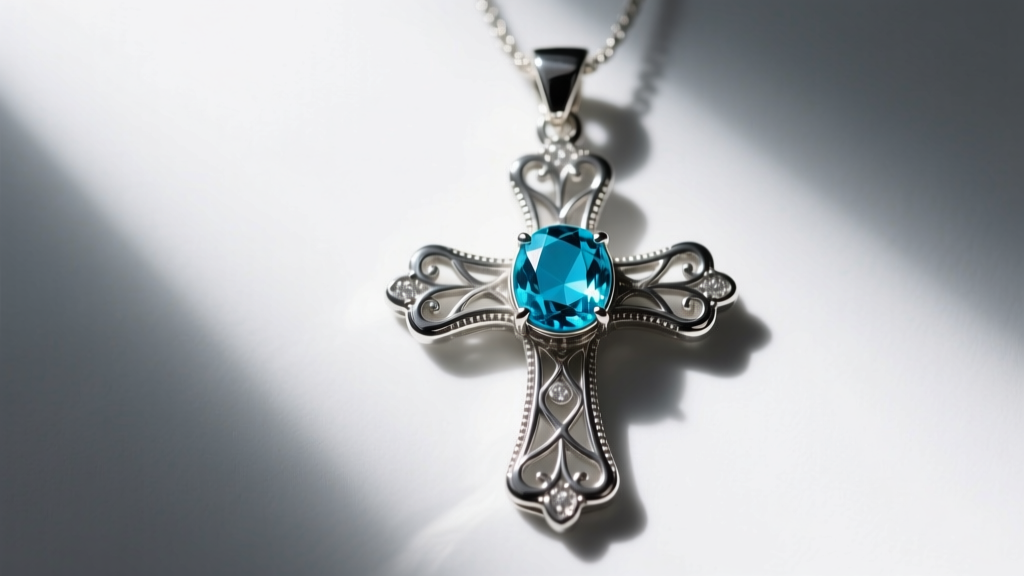
The Anatomy and Lapidary Challenge of Turquoise Crosses
Turquoise cross jewelry represents a unique intersection of spiritual symbolism and Southwestern lapidary art. However, crafting a symmetrical cross from natural turquoise is notoriously difficult. Unlike round or oval cabochons, a cross pendant requires a large, unfractured slab of rough stone to yield the elongated arms and central intersection without hitting internal fissures or chalky inclusions. Because turquoise is a relatively soft, porous hydrous phosphate of copper and aluminum (rating 5 to 6 on the Mohs scale), cutting sharp interior angles for a cross shape introduces significant structural weakness.
High-grade, natural turquoise crosses are exceptionally rare and command premium prices, often ranging from $300 to over $1,200 depending on the mine source and carat weight. To meet market demand while ensuring the structural integrity of the cross shape, the gemstone industry relies on various stabilization techniques. Understanding these material properties is essential for collectors and casual buyers alike to ensure they are paying a fair price for their jewelry.
Natural vs. Stabilized vs. Reconstituted: A Material Breakdown
When shopping for turquoise cross jewelry, the most critical factor influencing both value and longevity is the stone's treatment. According to the Gemological Institute of America (GIA), the vast majority of turquoise mined today requires some form of enhancement to survive the jewelry manufacturing process and daily wear.
| Treatment Type | Process Description | Mohs Hardness | Value & Pricing |
|---|---|---|---|
| Natural (Untreated) | Cut and polished directly from the rough. No resins or waxes added. | 5.0 - 6.0 | Highest. $200 - $1,500+ |
| Stabilized | Impregnated with clear epoxy or acrylic resin under pressure to fill pores. | 6.0 - 7.0 | Standard. $40 - $150 |
| Zachery Treated | Soaked in a non-plastic, potassium-based solution to improve polish and color. | 5.5 - 6.5 | Premium. $100 - $400 |
| Reconstituted | Turquoise dust and chalk mixed with resin and dye, then pressed into blocks. | 3.0 - 4.0 | Lowest. $10 - $30 |
For a cross pendant, stabilized turquoise is often the most practical choice. The epoxy resin binds the microscopic pores of the stone, preventing it from absorbing skin oils, lotions, and perfumes that would otherwise cause a vibrant blue stone to turn a dull, mottled green over time. However, buyers should avoid reconstituted turquoise entirely, as it lacks the continuous crystalline structure of genuine stone and will easily chip at the delicate inner corners of a cross shape.
Decoding the Matrix: Inclusions and Structural Integrity
The "matrix" refers to the host rock or mineral inclusions trapped within the turquoise. In turquoise cross jewelry, the matrix is not just an aesthetic choice; it fundamentally alters the stone's durability.
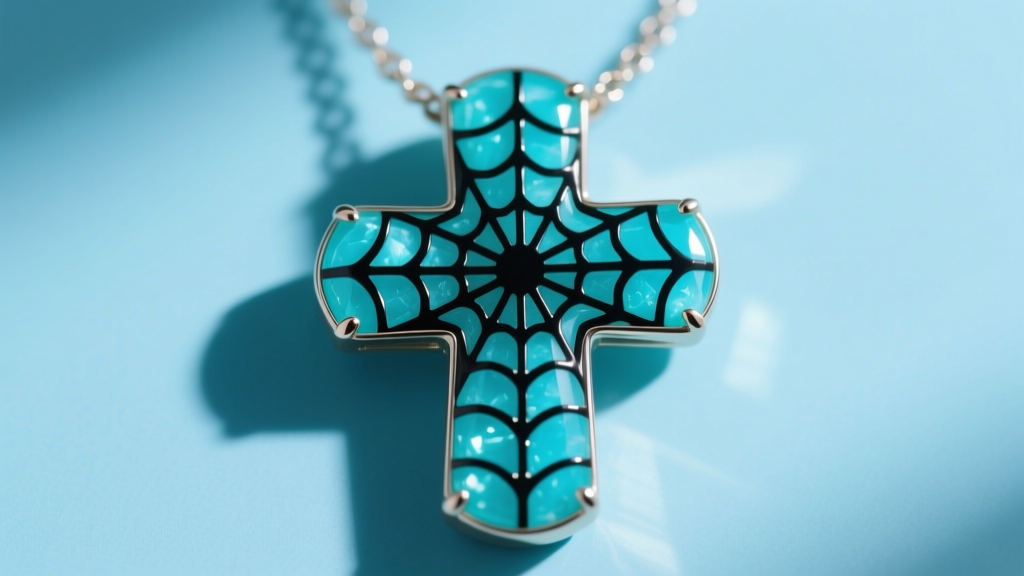
Spiderweb vs. Sandstone Matrix
- Iron Pyrite (Black/Brown Webbing): Often seen in Kingman or Lander Blue turquoise, iron pyrite matrix adds significant structural reinforcement. Iron is harder than turquoise, meaning a cross pendant with a dense spiderweb matrix is highly resistant to chipping at the edges.
- Sandstone or Chalcedony (Brown/Tan): Common in Royston or Boulder turquoise. While beautiful, sandstone inclusions are softer and more porous than the turquoise itself. If the cross is subjected to a hard impact, the stone is likely to fracture exactly along the sandstone matrix line.
- Clear (No Matrix): Sleeping Beauty turquoise is famous for its pure, sky-blue color devoid of matrix. While visually striking and highly prized for symmetrical cross cuts, the lack of harder mineral inclusions means the stone is slightly more prone to edge-chipping if dropped.
Expert Insight: When examining a turquoise cross, look closely at the inner corners where the vertical and horizontal arms meet. If the matrix runs directly through these stress points, the pendant is at a high risk of snapping if caught on clothing.
Metal Settings: Why the Bezel is Mandatory
The metal chosen for turquoise cross jewelry dictates both the aesthetic contrast and the physical protection of the gemstone. Because turquoise is brittle and sensitive to sudden temperature changes, the setting style is just as important as the metal type.
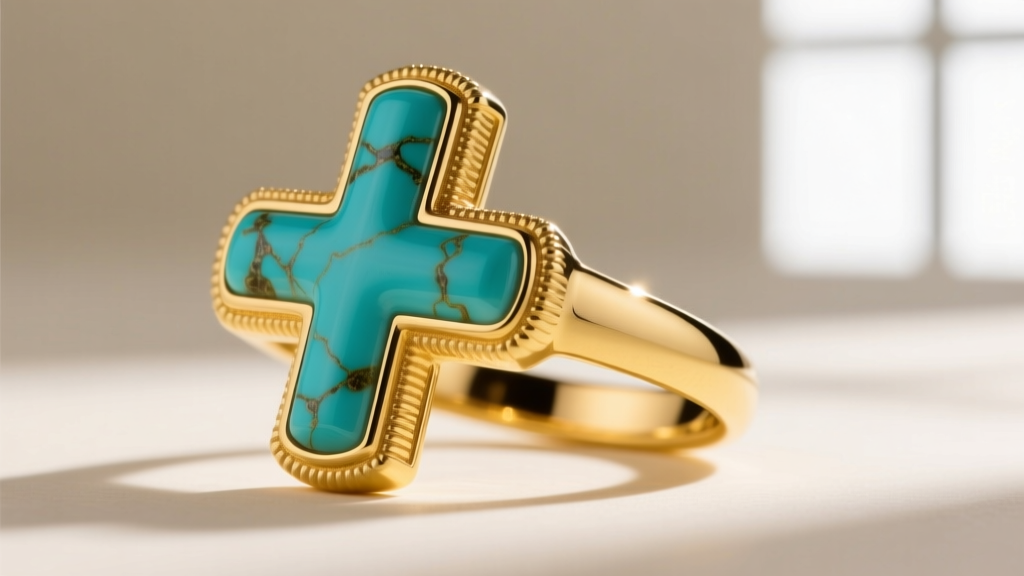
Sterling Silver (925) vs. 14k Gold
Sterling silver is the traditional pairing for turquoise, offering a high-contrast, cool-toned backdrop that makes the blue and green hues pop. However, silver tarnishes due to sulfur exposure, and the liquid silver polishes used to clean it are highly toxic to turquoise. If silver dip seeps into the porous edges of an untreated cross pendant, it will permanently stain the stone black.
Conversely, 14k yellow or rose gold requires no harsh chemical cleaners, making it a safer long-term pairing for natural, untreated turquoise crosses. The warm tones of gold also beautifully complement green-leaning turquoise varieties, like those from the Carico Lake mine.
The Necessity of Bezel Settings
Never purchase a turquoise cross set with prongs. Prong settings leave the fragile edges and corners of the cross exposed to lateral impacts. A proper turquoise cross must feature a full bezel setting—a continuous rim of metal that wraps entirely around the perimeter of the stone. For cross pendants, a slightly raised bezel (where the metal lip sits just a fraction of a millimeter higher than the stone's dome) provides a crucial buffer against scratches and direct impacts when the wearer leans against hard surfaces.
Care, Failure Modes, and Long-Term Maintenance
Turquoise is a hydrous mineral, meaning it contains water within its crystal structure. Exposing turquoise cross jewelry to high heat (such as leaving it on a car dashboard in summer) can cause the water to evaporate, leading to internal cracking and a phenomenon known as "crazing," where a fine network of cracks appears on the surface.
Everyday Failure Modes to Avoid
- Ultrasonic Cleaners: The high-frequency vibrations will shatter the internal structure of the turquoise and strip away any protective wax or resin coatings.
- Cosmetics and Perfumes: Always put your turquoise cross necklace on after applying makeup, hairspray, and perfume. The alcohol and oils in these products will break down the stone's natural polish.
- Chlorine and Salt Water: Swimming pools and hot tubs contain chlorine, which will chemically react with the copper in the turquoise, causing irreversible discoloration and surface pitting.
To clean your turquoise cross jewelry, use only a soft, dry microfiber cloth. If the stone becomes heavily soiled, a barely damp cloth with mild, non-detergent soap can be used, but the stone must be dried immediately. By understanding the material properties, treatments, and structural vulnerabilities of turquoise, you can select a cross pendant that remains vibrant and intact for generations. For further reading on gemstone care and identification, consult the American Gem Society guidelines on porous gemstones.


