Advanced Rose Gold Jewelry Care: Metallurgy, Cleaning, and Patina
Master advanced rose gold jewelry care with our expert metallurgical guide. Learn precise cleaning protocols and karat-specific maintenance.

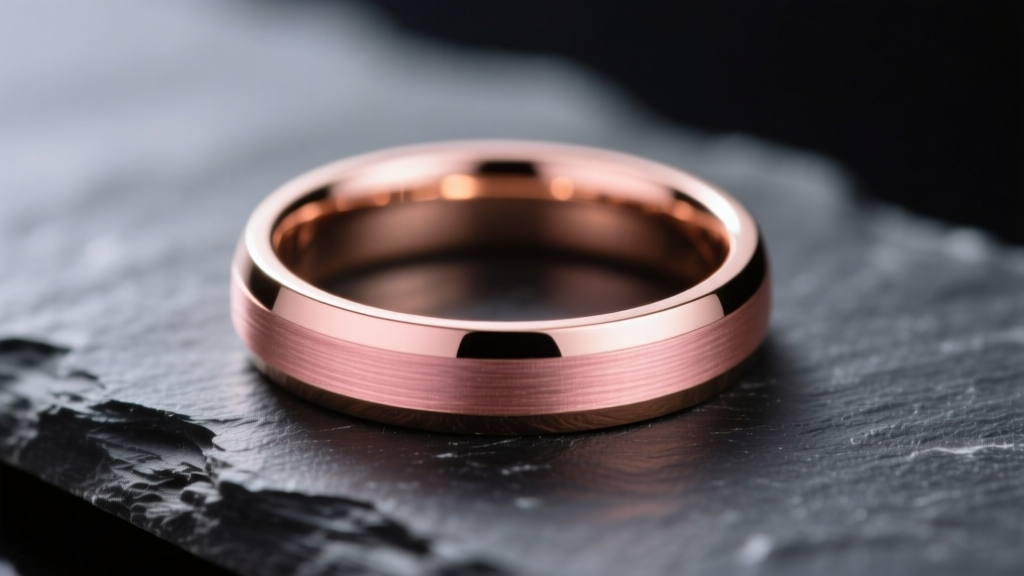
Rose gold has cemented its status as a premier choice for fine jewelry, prized for its warm, romantic hue and vintage appeal. However, beneath its beautiful blush exterior lies a complex metallurgical profile that demands highly specific maintenance. Standard gold cleaning protocols are often insufficient—and sometimes actively harmful—when applied to rose gold. To truly master rose gold jewelry care, one must understand the electrochemical behavior of its copper alloy, the structural vulnerabilities of different karats, and the precise mechanical limits of polishing. This expert guide bypasses generic advice to deliver a technical deep dive into preserving the structural integrity and aesthetic brilliance of your rose gold pieces.
The Metallurgy of Rose Gold: Why Copper Dictates Care
Pure gold (24k) is entirely immune to tarnish and oxidation. However, pure gold is too soft for functional jewelry. To create rose gold, metallurgists alloy pure gold with copper and, in smaller quantities, silver. The copper is the sole element responsible for the signature pinkish-red hue, but it is also the primary vector for degradation. According to the Gemological Institute of America (GIA), the interaction between copper and environmental oxygen leads to the formation of copper oxide, manifesting as a dark patina or tarnish over time.
Unlike the rhodium plating used to mask the yellowish tint of white gold, rose gold relies entirely on its homogeneous alloy mixture for color. This means that surface abrasion does not reveal a different metal underneath, but aggressive chemical cleaning can selectively leach copper from the microscopic surface layer, temporarily altering the jewelry's color profile until it is professionally re-polished.
Karat-Specific Vulnerabilities: 14k vs. 18k
The ratio of gold to copper fundamentally changes how the metal reacts to environmental stressors. Understanding your specific karat weight is the first step in formulating a targeted rose gold jewelry care regimen.
| Property | 14k Rose Gold | 18k Rose Gold |
|---|---|---|
| Gold Content | 58.3% | 75.0% |
| Copper Content (Approx) | 31.0% - 35.0% | 20.0% - 22.5% |
| Silver Content (Approx) | 6.7% - 10.7% | 2.5% - 5.0% |
| Tarnish Susceptibility | High (Rapid oxidation) | Moderate (Slower oxidation) |
| Tensile Strength | Higher (Better for prongs) | Lower (Softer, prone to scratching) |
| Color Depth | Deeper, more pronounced pink/red | Softer, champagne-peach hue |
Because 14k rose gold contains significantly more copper, it is highly susceptible to oxidation when exposed to sulfur-rich environments or high humidity. Conversely, 18k rose gold, while more resistant to tarnish, is physically softer. Its care protocol must prioritize scratch prevention and protection against mechanical abrasion over aggressive chemical de-tarnishing.
Chemical Agents to Avoid: The Copper Threat
The most critical aspect of advanced rose gold jewelry care is knowing which chemicals to strictly avoid. While gold itself is a noble metal and highly unreactive, the copper and silver alloys are not.
The Chlorine and Stress Corrosion Cracking
Chlorine is the ultimate enemy of gold alloys. When 14k or 18k rose gold is exposed to chlorinated water (swimming pools, hot tubs) or harsh household bleach, the chlorine reacts with the copper and silver to form copper chloride and silver chloride. This reaction does not merely tarnish the surface; it penetrates the microscopic grain boundaries of the metal, leading to a catastrophic failure mode known as stress corrosion cracking. This can cause prongs to snap and chain links to become brittle and shatter under minimal tension. Never wear rose gold jewelry in a pool, and never clean it with bleach-based solutions.
Ammonia and Porous Gemstones
While mild ammonia solutions are sometimes used by jewelers to clean diamond-set yellow gold, ammonia can be detrimental to rose gold pieces set with alternative gemstones. Rose gold is frequently paired with morganite, peach sapphires, and opals. Ammonia can degrade the polish of softer stones and strip the natural oils from porous gems like turquoise or pearls, which are increasingly popular in modern rose gold settings.
Professional vs. At-Home Cleaning Protocols
For routine maintenance, the Jewelers of America recommends a gentle, non-chemical approach. However, when dealing with heavy sebum buildup, cosmetic residue, or early-stage copper oxidation, specific protocols must be followed.
The Safe At-Home Emulsion Method
- Solution Preparation: Mix distilled water (tap water contains trace minerals and chlorine) with a few drops of pH-neutral, non-detergent liquid soap. Avoid dish soaps with added degreasers or citrus extracts, as the citric acid can mildly etch the copper alloy over repeated use.
- Thermal Equilibrium: Ensure the water is lukewarm (approx. 30°C). Extreme temperature differentials can cause thermal shock to gemstones, particularly emeralds or opals set in rose gold.
- Mechanical Agitation: Submerge the piece for exactly 3 to 5 minutes. Use a specialized extra-soft baby toothbrush or a dedicated jewelry brush with horsehair bristles to gently agitate the pavilion (underside) of the stones where lotions accumulate.
- Rinsing and Drying: Rinse under a gentle stream of distilled water. Pat dry with a lint-free microfiber cloth. Do not air dry, as water spots will mineralize on the copper-rich surface.
Ultrasonic Cleaning Parameters
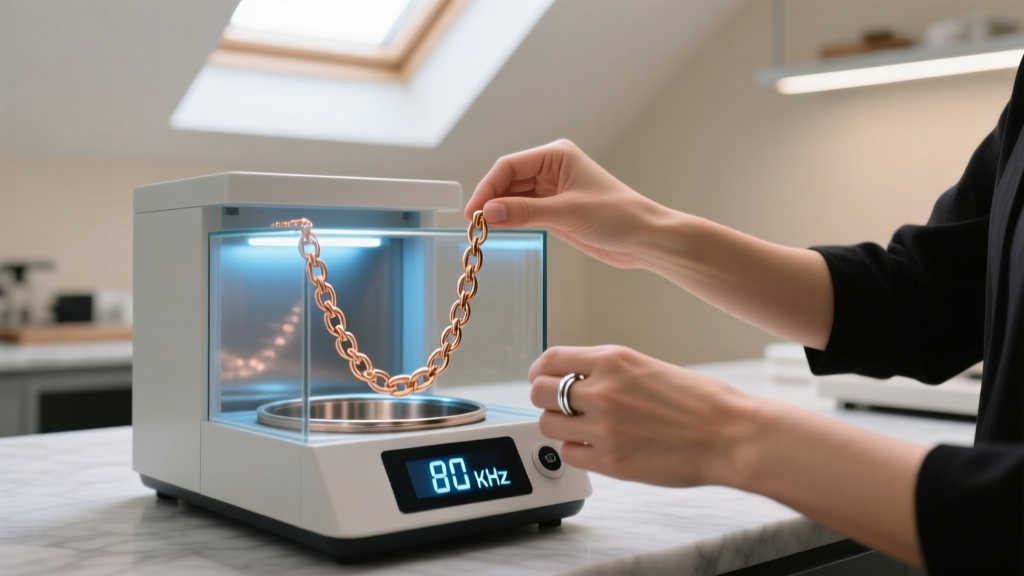
Ultrasonic cleaners use high-frequency sound waves to create cavitation bubbles that implode, blasting dirt from microscopic crevices. While highly effective, they must be calibrated correctly for rose gold.
- Frequency: Use a machine operating at 40 kHz to 45 kHz. Lower frequencies (e.g., 20 kHz) create larger, more violent cavitation bubbles that can pit the softer 18k rose gold surface or loosen delicate pave settings.
- Temperature Limit: Do not exceed 40°C. The combination of ultrasonic vibration and high heat can accelerate copper oxidation and fracture heat-sensitive stones like morganite.
- Solution: Use a specialized, non-ammoniated ultrasonic jewelry concentrate. Never use plain water in an ultrasonic tank, as it lacks the necessary surfactants to suspend the dislodged oils, which can redeposit onto the metal.
Polishing and Patina Management
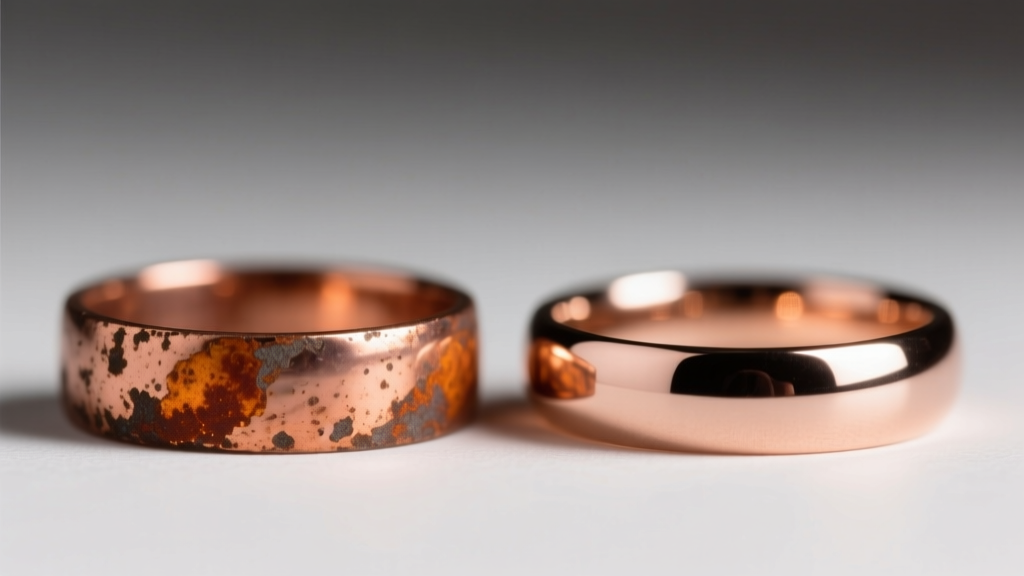
Over time, rose gold will develop a patina—a darkening of the metal caused by copper oxidation and microscopic surface scratches that diffuse light. Some collectors prize this antique look, but if you prefer a high-polish mirror finish, mechanical intervention is required.
Polishing rose gold requires a nuanced understanding of abrasives. Because copper is softer than gold, aggressive polishing compounds can selectively wear away the copper, leaving a temporarily yellowish surface layer. Professional jewelers typically use a two-step process:
Expert Note: Never use commercial silver dip or liquid tarnish removers on rose gold. These products contain thiourea, a chemical that aggressively strips oxidation from silver but will violently react with the copper in rose gold, leaving a permanent, dull, matte-orange stain that can only be removed by physically buffing away a significant layer of the metal.
The Two-Step Jeweler's Polish
- Cutting Phase (Tripoli): A mild abrasive compound (Tripoli) is applied to a muslin buffing wheel to level out microscopic scratches. The jeweler must keep the piece moving to avoid generating localized friction heat, which can warp thin bands or damage gemstone settings.
- Coloring Phase (Rouge): Iron oxide (jeweler's rouge) is applied to a loose flannel wheel. This provides the final high-luster polish without removing significant metal mass. For rose gold, a specific formulation known as 'red rouge' or 'gold rouge' is utilized to ensure the copper alloy is polished evenly alongside the gold, preserving the exact karat color ratio.
Storage and Environmental Control
The final pillar of comprehensive rose gold jewelry care is proper storage. Because copper oxidation is catalyzed by humidity and atmospheric sulfur, storing rose gold in open air or standard cardboard jewelry boxes (which off-gas sulfur compounds from the paper bleaching process) will accelerate tarnishing.
Store each piece individually in anti-tarnish cloth pouches infused with silver and copper tarnish-inhibiting chemicals (such as 3M Anti-Tarnish strips). Keep the storage environment climate-controlled, ideally below 50% relative humidity, and utilize silica gel desiccant packets in the storage drawer to absorb ambient moisture. By respecting the unique metallurgical properties of the copper-gold alloy, you can ensure your rose gold jewelry retains its structural integrity and breathtaking blush color for generations.


