Art Gold Jewelry Trends 2026: Sculptural & Wearable Masterpieces
Explore 2026 art gold jewelry trends, focusing on sculptural techniques, 18k and 22k alloys, and how to appraise avant-garde wearable masterpieces.

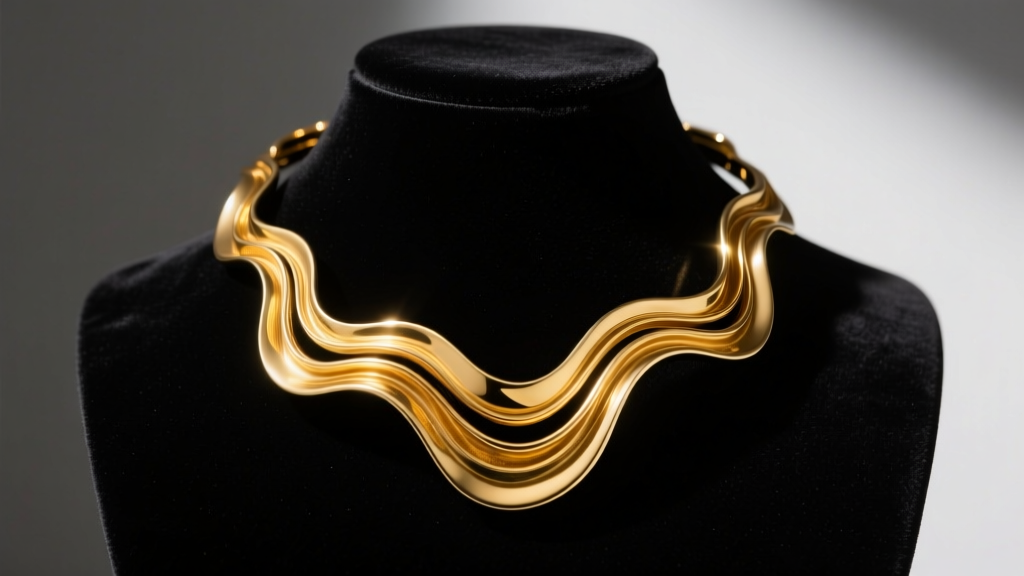
The intersection of fine art and precious metallurgy has never been more dynamic than it is today. As we analyze the luxury market in 2026, art gold jewelry has emerged as a dominant force among serious collectors and avant-garde fashion enthusiasts. Unlike commercial fine jewelry, which often prioritizes symmetrical gemstone settings and mass-producible CAD/CAM designs, art gold jewelry treats the metal itself as the primary canvas. These are wearable sculptures, characterized by aggressive textures, asymmetrical silhouettes, and a profound emphasis on the artisan's hand.
The Evolution of Wearable Gold Sculptures
Historically, the studio jewelry movement of the mid-20th century laid the groundwork for treating gold as an expressive medium rather than merely a store of wealth. Today, contemporary studio jewelers are pushing these boundaries further. The 2026 market reflects a distinct pivot away from the ultra-polished, minimalist gold hoops and chains that saturated the 2010s. Collectors are now seeking pieces with visceral, tactile surfaces—gold that looks melted, hammered, woven, or organically grown. This shift is driven by a desire for uniqueness; in an era of AI-generated designs and rapid prototyping, the unmistakable imperfections of hand-fabricated art gold offer undeniable authenticity.
Defining Techniques in Avant-Garde Goldsmithing
Creating art gold jewelry requires mastery over ancient and complex metallurgical techniques. The value of these pieces lies in the hundreds of bench hours required to manipulate the metal. Key techniques defining the current landscape include:
- Reticulation: A process where the surface of the gold is repeatedly heated and quenched to deplete the copper and silver at the surface, leaving a fine layer of pure gold. When heated again, this pure layer melts and ripples into dramatic, topographic textures while the underlying alloy remains solid.
- Granulation: The meticulous fusing of microscopic gold spheres to a base sheet without the use of solder. This requires precise control of heat and a copper-based colloidal flux, a technique dating back to the Etruscans but reimagined in modern brutalist forms.
- Chasing and Repoussé: Hammering the gold from both the front and back to create high-relief, three-dimensional sculptural elements, often used in large-scale art gold cuffs and collar necklaces.
- Mokume-Gane: Fusing multiple layers of different gold alloys (such as 18k yellow, 18k rose, and palladium white gold) and carving into the billet to reveal organic, wood-grain-like patterns.
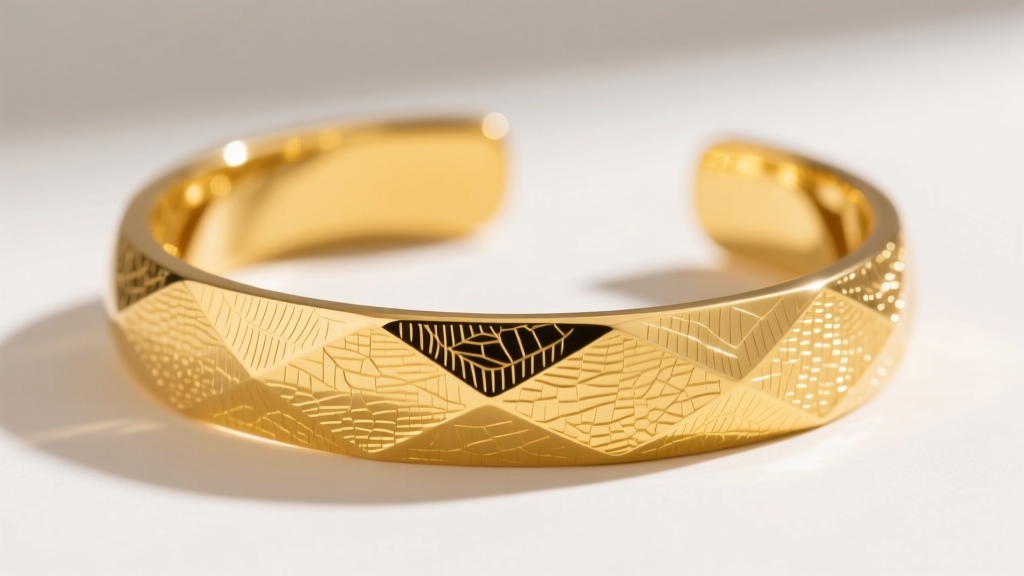
2026 Market Data: Commercial vs. Art Gold
Understanding the valuation of art gold jewelry requires abandoning the traditional 'melt value plus markup' paradigm. The pricing structure is fundamentally aligned with the fine art market, where provenance, conceptual depth, and labor dictate the premium. Below is a comparative analysis of the current market landscape.
| Metric | Commercial Fine Jewelry | Studio Art Gold Jewelry |
|---|---|---|
| Primary Valuation Driver | Material weight & gemstone carat | Labor hours, technique & artist provenance |
| Average Production Time | 2 - 8 hours (often outsourced) | 40 - 200+ hours (bench-made) |
| Typical Alloy Preference | 14k or 18k (for durability) | 18k, 22k, or 24k (for color & malleability) |
| Price Range (Necklace) | $1,500 - $8,000 | $6,500 - $45,000+ |
| Resale Market Behavior | Depreciates near melt value | Appreciates based on artist secondary market |
Material Science: Why Karat Purity Dictates Form
In the realm of art gold jewelry, the choice of karat is not merely a question of budget; it is a structural and aesthetic decision that dictates what forms the metal can take. According to the Gemological Institute of America (GIA), the alloying metals mixed with pure gold drastically alter its working properties.
The Dominance of 22k and High-Karat Alloys
For highly sculptural pieces that rely on chasing, repoussé, or deep folding, studio jewelers heavily favor 22k gold (91.6% pure). The high pure-gold content gives the metal a buttery, almost tactile softness that allows for extreme deformation without work-hardening and cracking. The rich, deep yellow-orange hue of 22k gold also provides a visual weight that 14k or 18k simply cannot replicate. However, because 22k is too soft for structural components like clasps, prongs, or high-tension hinges, artists will often engineer hybrid pieces, utilizing 18k gold (75% pure) for the 'skeleton' and 22k or 24k for the 'skin' or sculptural focal points.
'True art gold jewelry does not hide the nature of the metal; it celebrates its density, its color, and its response to fire and force. The alloy is the artist's paint.' — Contemporary Studio Jewelry Manifesto, Society of North American Goldsmiths (SNAG).
Authentication and Appraising Studio Gold Art
As the secondary market for wearable art expands, authenticating and appraising these pieces requires specialized knowledge. A standard jewelry appraiser may undervalue a piece if they only look at the gold weight. Here is the framework for properly evaluating art gold jewelry:
- Locate the Maker's Mark and Assay: Genuine studio pieces are almost always signed with a registered maker's mark and a karat stamp (e.g., '750' for 18k or '916' for 22k). In art jewelry, the maker's mark is the primary driver of secondary market value.
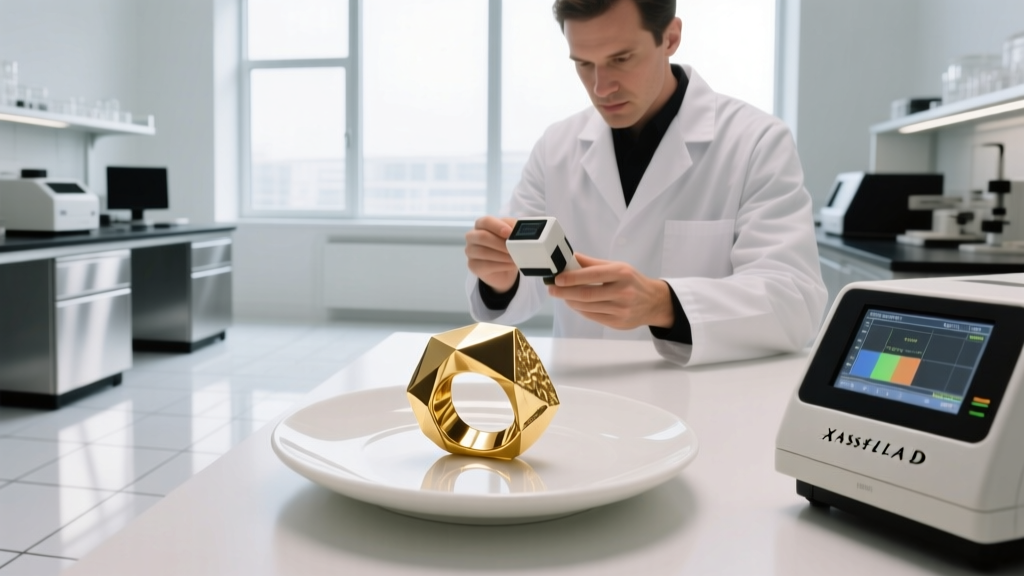
- Non-Destructive XRF Testing: Because art gold often features complex textures, porous reticulation, or mixed-metal inlays, traditional acid testing is destructive and inappropriate. Appraisers must use X-Ray Fluorescence (XRF) spectrometry to verify the exact elemental breakdown of the alloy without damaging the patina.
- Evaluate the 'Hand' of the Piece: Look for evidence of hand-fabrication. Slight asymmetries, tool marks left intentionally in the design, and complex solder joins that are invisible to the naked eye indicate high-level bench mastery.
- Request Provenance Documentation: High-end art gold pieces should be accompanied by a certificate of authenticity from the artist or gallery, detailing the techniques used, the exact alloy composition, and the year of fabrication.
Care and Maintenance for Textured Gold Masterpieces
Caring for art gold jewelry is vastly different from maintaining polished commercial pieces. The very textures that make these pieces valuable are also their greatest vulnerability when it comes to maintenance.
Avoid Ultrasonic Cleaners: The high-frequency vibrations of an ultrasonic cleaner can easily dislodge delicate granulation or fracture work-hardened edges on a reticulated cuff. Furthermore, ultrasonics can trap moisture deep within porous, textured surfaces, leading to long-term degradation of any non-gold elements or patinas the artist may have applied.
Gentle Surfactant Cleansing: To clean deep textures, use a solution of warm distilled water and a few drops of pH-neutral dish soap. Utilize an ultra-soft, natural-bristle brush (such as a baby toothbrush or a specialized makeup brush) to gently agitate the dirt from the crevices. Rinse with distilled water to prevent hard water spotting, and dry immediately with compressed air or a microfiber cloth, avoiding snagging on rough granulation.
Storage Protocols: Never store art gold pieces in communal jewelry boxes. The high karat used in sculptural elements is highly susceptible to scratching and denting. Each piece must be stored individually in a soft, lint-free flannel pouch or a custom-fabricated archival box to prevent the heavy gold elements from crushing one another.
Building a Curated Art Gold Collection
Entering the art gold jewelry market in 2026 requires a shift in mindset from 'shopping' to 'collecting.' The most astute collectors are currently focusing on emerging artists who have recently transitioned from academic programs to independent studio practices, as well as established masters whose work bridges the gap between European goldsmithing traditions and contemporary brutalist aesthetics. By prioritizing technique, karat purity, and structural innovation over sheer weight, collectors can acquire wearable masterpieces that hold profound cultural and artistic value for generations.


