How to Buy, Authenticate, and Style Gold Egyptian Jewelry
Learn how to authenticate, style, and care for gold Egyptian jewelry. Discover karat differences, hallmark guides, and modern styling tips.

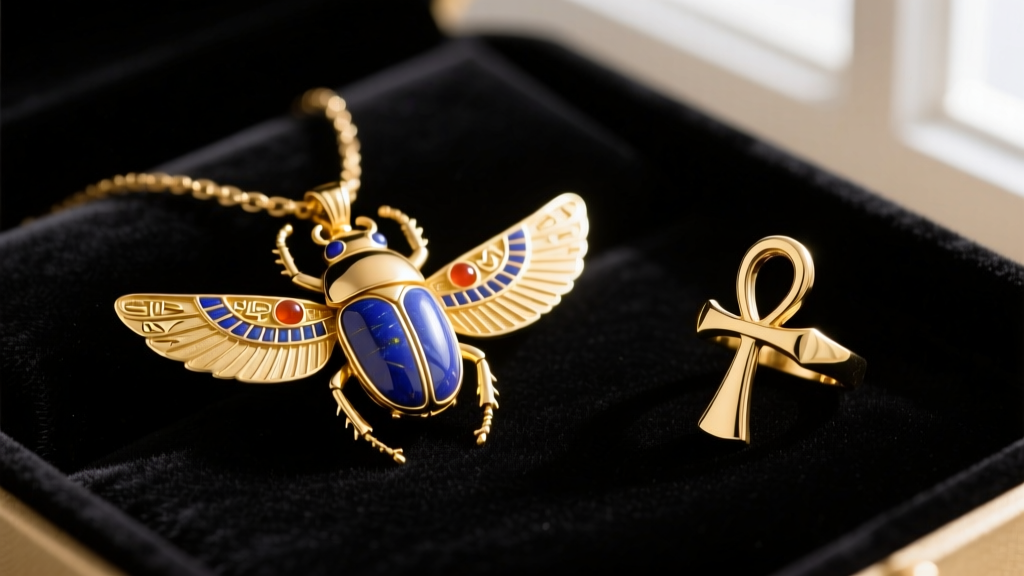
The Enduring Allure of Gold Egyptian Jewelry
Gold Egyptian jewelry represents one of the most historically rich and symbolically profound traditions in the world. From the bustling souks of Khan el-Khalili in Cairo to high-end modern boutiques, pieces featuring the Ankh, Scarab, and Eye of Horus remain highly sought after. However, the market is saturated with everything from genuine 21-karat vintage artifacts to mass-produced, gold-plated replicas. Whether you are an avid collector or looking for a meaningful statement piece, understanding the metallurgy, hallmarks, and cultural context of these items is crucial. This comprehensive guide will walk you through the exact steps to authenticate, style, and preserve your gold Egyptian jewelry.
Understanding Karats: The 21k and 18k Standard
Unlike the United States, where 14k gold is the standard for fine jewelry, traditional Egyptian and Middle Eastern gold markets heavily favor higher purities. According to the Gemological Institute of America (GIA), gold purity drastically affects both the color and the durability of the piece. When shopping for authentic gold Egyptian jewelry, you will primarily encounter two karats:
| Karat | Purity Stamp | Gold Content | Characteristics in Egyptian Jewelry |
|---|---|---|---|
| 24k | 999 | 99.9% | Too soft for intricate motifs; rarely used outside of bullion or simple bands. |
| 21k | 875 | 87.5% | The traditional souk standard. Features a rich, buttery yellow hue. Softer, making it ideal for detailed hand-engraved filigree but prone to scratching. |
| 18k | 750 | 75.0% | The modern and export standard. Offers a slightly paler yellow but provides excellent durability for rings and bracelets that endure daily impact. |
| 14k | 585 | 58.5% | Almost never found in authentic, domestically produced Egyptian jewelry; usually indicates a Western replica or tourist-market imitation. |
If a piece claiming to be vintage Egyptian gold is stamped 14k or lacks a purity mark entirely, approach with extreme caution. High-karat gold possesses a distinct, warm luster that lower-karat alloys simply cannot replicate.
Step-by-Step Guide to Authenticating Gold Egyptian Pieces
Authenticating gold Egyptian jewelry requires a multi-sensory approach, combining visual inspection with metallurgical testing. Follow these steps to verify your piece:
Step 1: Locate and Decode the Hallmark
Egyptian gold is strictly regulated by the Ministry of Supply and Internal Trade. Authentic pieces will bear an official assay mark. Look closely at the clasp, the inside of the ring band, or the back of a pendant using a 10x jeweler's loupe.
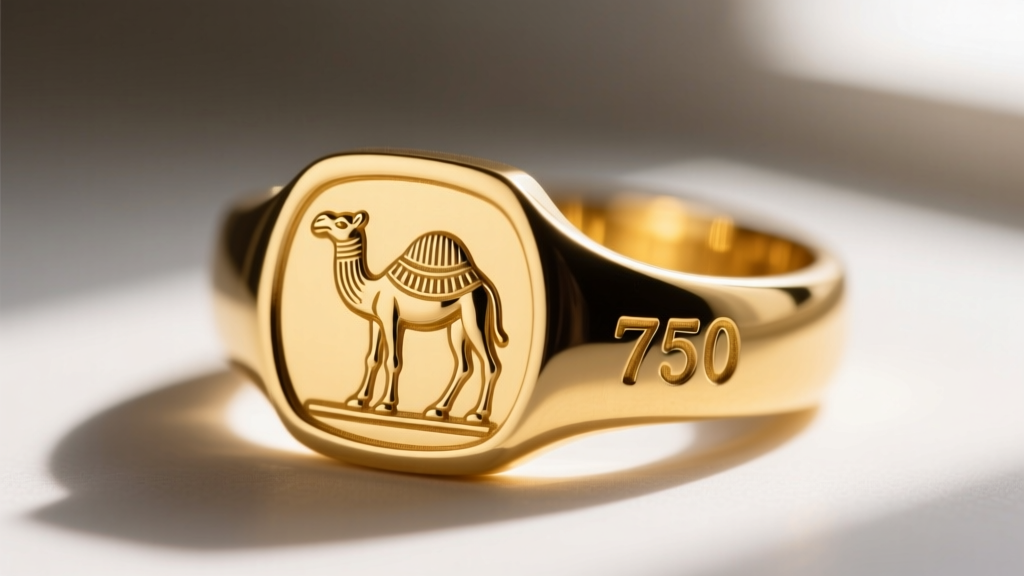
- The Camel Mark: The most common modern hallmark for 18k and 21k gold in Egypt.
- The Lotus Flower: Often found on older, vintage, or antique pieces.
- Numeric Stamps: You should see '750' for 18k or '875' for 21k adjacent to the pictorial hallmark.
Step 2: Inspect the Gemstone Inlays
Traditional Egyptian jewelry frequently incorporates Lapis Lazuli, Turquoise, and Carnelian. Fakes often use dyed howlite, resin, or glass. Genuine Lapis Lazuli will feature tiny, metallic flecks of pyrite (fool's gold) and will feel cool to the touch. If the 'lapis' is perfectly uniform in color with no matrix or pyrite, it is likely synthetic or dyed.
Step 3: Assess the Craftsmanship and Mold Lines
Authentic vintage pieces from Cairo's goldsmiths often feature hand-cut filigree and granulation. Run your finger over the edges. If you feel a distinct, raised seam line running along the side of a hollow bangle or pendant, the piece was likely cast in a mold in a mass-production facility, rather than handcrafted by a traditional artisan.
Step 4: The Specific Gravity or Acid Test
Because 21k gold is highly valuable, it is a frequent target for counterfeiting (such as gold-plated tungsten). A professional jeweler can perform an XRF (X-ray Fluorescence) scan or a careful nitric acid test on an inconspicuous area to verify the 87.5% gold content without damaging the intricate exterior.
Decoding Classic Motifs: What Are You Wearing?
To truly appreciate gold Egyptian jewelry, one must understand the iconography. The British Museum's Egyptian archives highlight how these symbols were not merely decorative, but served as powerful amulets.
"In ancient Egypt, jewelry was deeply intertwined with religion and magic. The materials and the shapes both possessed protective qualities, serving the wearer in life and the afterlife."
- The Scarab (Khepri): Representing the rising sun, rebirth, and transformation. Often carved from lapis or turquoise and set in gold bezels.
- The Ankh: The key of life, symbolizing eternal life and the union of masculine and feminine energies.
- The Wedjat (Eye of Horus): A powerful protective amulet warding off evil and promoting healing.
- The Tyet (Isis Knot): Symbolizing the goddess Isis, often associated with protection and the afterlife.
How to Style Gold Egyptian Jewelry for Modern Wear
The challenge with heavily themed jewelry is avoiding a 'costume' aesthetic. The key to styling gold Egyptian jewelry in 2026 is juxtaposition—pairing ancient, ornate motifs with sleek, modern silhouettes.
The Rule of the Statement Piece
Egyptian gold is inherently bold. If you are wearing a heavy, 21k gold scarab cuff bracelet or a wide collar necklace, let it be the focal point. Pair it with a crisp, white linen button-down shirt, tailored wide-leg trousers, and minimalist leather loafers. The clean lines of modern tailoring allow the intricate filigree and rich yellow gold to pop without overwhelming the eye.
Layering with Mixed Textures
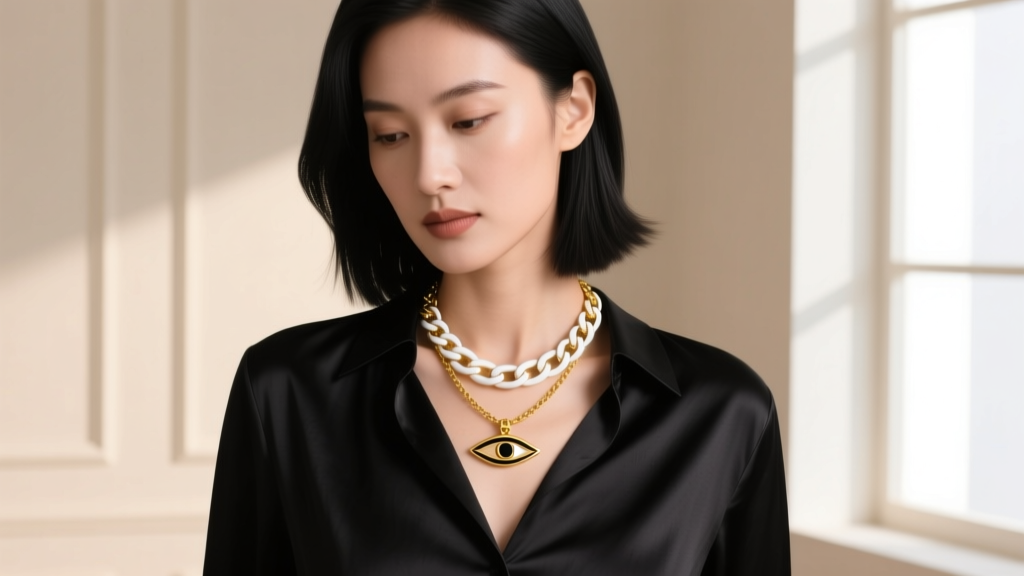
For a more contemporary, everyday look, mix your Egyptian pendants with modern chains. Thread an 18k gold Ankh pendant onto a sleek, geometric white gold or platinum box chain. The contrast between the ancient, organic shape of the Ankh and the sharp, industrial links of a modern chain creates a visually striking, fashion-forward aesthetic.
Stacking Rings with Intention
When stacking Egyptian rings, vary the widths. Pair a wide, domed lapis lazuli scarab ring on your index finger with a thin, hammered gold band on your middle finger. Avoid wearing highly detailed Egyptian rings on adjacent fingers, as the visual clutter will diminish the impact of the individual motifs.
Caring for High-Karat Gold and Soft Gemstones
Maintaining gold Egyptian jewelry requires specific protocols, especially when dealing with 21k gold and porous gemstones.
- Avoid Ultrasonic Cleaners: Never put Egyptian jewelry featuring turquoise, lapis lazuli, or carnelian into an ultrasonic cleaner. The high-frequency vibrations and heat can easily shatter these relatively soft stones (Mohs hardness 5-6) or strip the dyes from stabilized turquoise.
- Gentle Hand Washing: Mix a few drops of mild, phosphate-free dish soap in lukewarm water. Use a baby toothbrush with extra-soft bristles to gently dislodge dirt from the filigree and under the gemstone bezels.
- Polishing 21k Gold: Because 21k gold is soft, it will accumulate micro-scratches over time, developing a beautiful, soft patina. If you prefer a high shine, use a non-abrasive, treated jewelry polishing cloth. Never use liquid silver dips or harsh chemical polishes, as they can strip the alloyed metals (like copper and silver) that give the gold its structural integrity.
- Storage: Store high-karat pieces individually in soft flannel pouches. 21k and 24k gold can easily be scratched by harder gemstones like diamonds or sapphires if tossed together in a communal jewelry box.
Final Thoughts on Collecting
Investing in gold Egyptian jewelry is an investment in wearable history. By prioritizing authentic hallmarks, understanding the unique properties of 18k and 21k gold, and styling your pieces with modern intentionality, you can build a collection that honors ancient craftsmanship while remaining fiercely relevant in contemporary fashion.


