Aztec Gold Custom Jewelry: A Beginner’s Guide to Mexica Designs
Discover how to commission aztec gold custom jewelry. Learn about Mexica motifs, 18k vs 22k gold alloys, lost-wax casting, and pricing.

What Defines Authentic Aztec Gold Custom Jewelry?
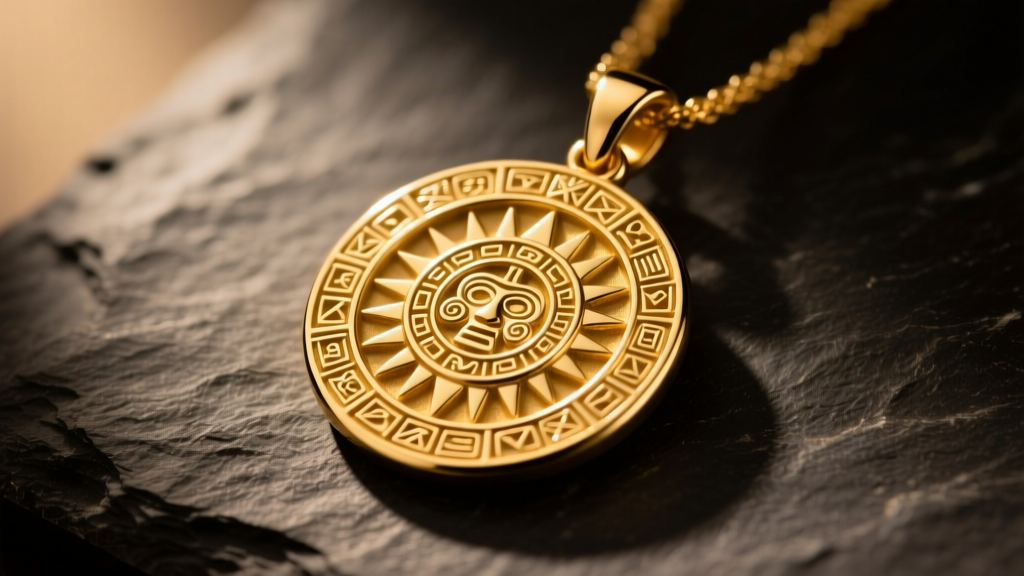
When collectors, historians, and jewelry enthusiasts search for aztec gold custom jewelry, they are typically looking for bespoke pieces that honor the rich metallurgical and artistic heritage of the Mexica people. Unlike mass-produced tourist souvenirs, authentic custom pieces are deeply rooted in pre-Columbian iconography, utilizing specific high-relief carving techniques, symbolic geometry, and rich, warm gold alloys that mimic historical Mesoamerican artifacts.
The Aztecs (Mexica) were master metalworkers who primarily worked with gold, silver, and copper. While much of their original work was melted down during the Spanish conquest, the surviving codices and archaeological findings reveal a profound understanding of alloy manipulation and the cire perdue (lost-wax) casting method. Today, commissioning a custom piece in this style means collaborating with a jeweler who understands both the cultural weight of the symbols and the specific metallurgical requirements to achieve that distinct, antique "Aztec" aesthetic.
The Metallurgy: Choosing the Right Karat for Mesoamerican Designs
To achieve the deep, saturated yellow hue characteristic of historical Aztec goldwork, modern jewelers must carefully select the gold alloy. Pure 24k gold is too soft for intricate, high-relief custom jewelry that will be worn daily. Instead, jewelers manipulate the copper and silver ratios in 18k and 22k gold to create a warm, reddish-yellow tone that closely resembles the historical tumbaga (a gold-copper alloy) prized in Mesoamerica.
According to the Gemological Institute of America (GIA), the addition of copper not only increases durability but also shifts the color spectrum toward a warmer, more antique finish. Below is a breakdown of how different karats perform in custom Aztec-style jewelry:
| Karat | Gold Purity | Color Profile | Durability | Best Application |
|---|---|---|---|---|
| 14k Yellow | 58.3% | Pale yellow, modern look | High | Everyday rings, heavy bracelets |
| 18k Yellow | 75.0% | Rich, warm yellow (Ideal) | Medium-High | Pendants, signet rings, detailed cuffs |
| 22k Yellow | 91.6% | Deep, saturated orange-yellow | Low | Ceremonial pendants, display pieces |
For most custom commissions, 18k yellow gold with a slightly higher copper-to-silver ratio is the industry standard. It provides the necessary structural integrity for deep undercuts in the carving while delivering the historical color accuracy required for authentic Mexica motifs.
The Lost-Wax Casting Process: How Your Custom Piece is Born
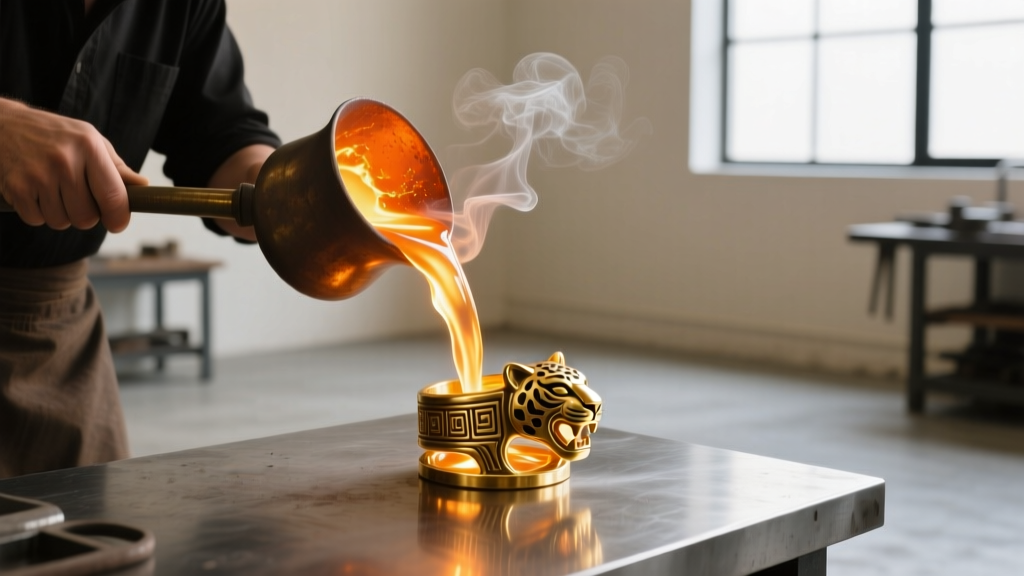
It is a beautiful historical parallel that the primary method used to create modern aztec gold custom jewelry is the exact same technique invented and perfected by ancient Mesoamerican artisans: lost-wax casting. This method allows for the organic, fluid lines and intricate, layered geometry found in Aztec art, which cannot be achieved through modern machine stamping or simple fabrication.
Step-by-Step: From Wax to Gold
- Master Carving: The jeweler hand-carves the design from a block of jeweler’s wax. For Aztec designs, this requires deep undercutting to create the dramatic shadows and high-relief textures typical of the Sun Stone or jaguar motifs.
- Spruing and Investing: Wax channels (sprues) are attached to allow molten gold to flow and gases to escape. The wax model is placed in a flask and filled with investment plaster.
- Burnout: The flask is heated in a kiln to approximately 1,350°F (732°C). The wax melts and vaporizes, leaving a perfect negative cavity.
- Casting and Shrinkage: Molten 18k gold is forced into the cavity via centrifugal or vacuum casting. The jeweler must account for a precise shrinkage rate of roughly 1.25% to ensure the final piece matches the intended dimensions.
"Hand-carving the wax master is non-negotiable for true Aztec-style jewelry. CAD (Computer-Aided Design) often results in lines that are too sharp and uniform. The Mexica aesthetic requires organic, slightly asymmetrical tool marks that only a human hand can impart." — Master Bench Jeweler
Iconography Guide: Selecting Meaningful Aztec Symbols
Commissioning a custom piece requires a respectful and accurate understanding of Mexica iconography. Aztec symbols are not merely decorative; they are deeply tied to cosmology, agriculture, and the calendar system. When working with your jeweler, consider these historically significant motifs:
- Ollin (Movement/The Fifth Sun): Represented by a four-lobed symbol, Ollin signifies the current era of the Aztec cosmos and the concept of dynamic movement. It is an excellent choice for a central pendant or a signet ring face.
- Xolotl (The Dog God): Associated with lightning, sunset, and guiding souls through the underworld (Mictlan). A Xolotl motif, often depicted with skeletal features or dog-like attributes, makes for a striking, edgy piece of custom goldwork.
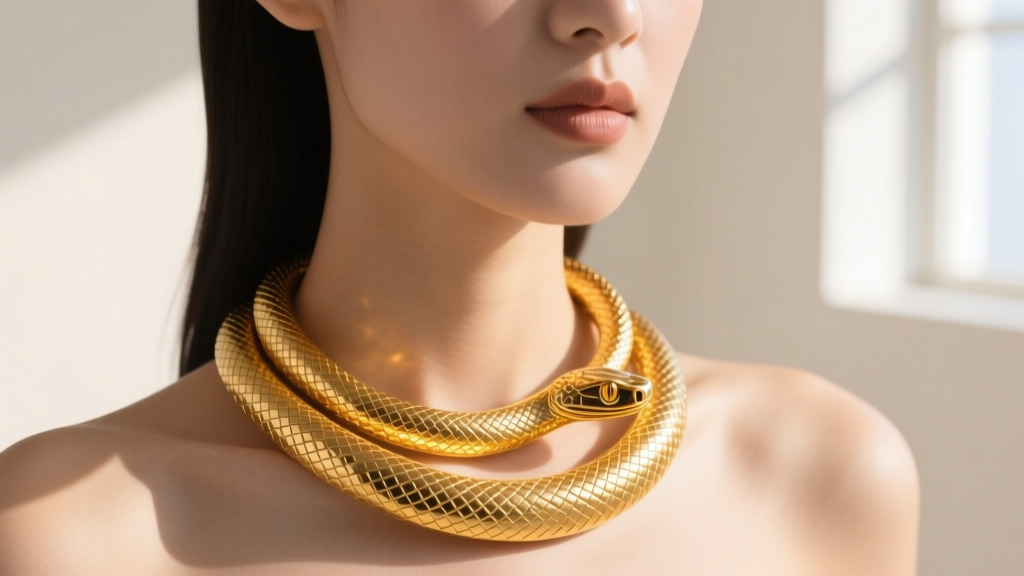
- Quetzalcoatl (The Feathered Serpent): While heavily pan-Mesoamerican, the Mexica depicted the Feathered Serpent with intricate scale and feather textures. This requires a highly skilled caster to maintain the definition of the overlapping scales in solid gold.
- Ehecatl (Wind God Mask): Characterized by a protruding, beak-like mouth mask. This shape translates beautifully into three-dimensional gold pendants and allows for dramatic, sweeping curves.
Commissioning Your Piece: Pricing, Timelines, and Finding a Jeweler
Entering the world of bespoke jewelry can be intimidating, especially when dealing with niche historical styles. The cost of aztec gold custom jewelry is driven by three main factors: design complexity, gold weight, and the finishing technique. Because these pieces rely on high-relief carving, they are inherently heavier and more labor-intensive than minimalist modern jewelry.
Realistic Pricing Tiers (2026 Estimates)
Based on current precious metal markets and bespoke labor rates, here is what you can expect to pay for a custom 18k yellow gold piece:
- Entry-Level (5g - 10g): $800 – $1,500. Typically a small, single-sided motif like an Ollin symbol or a simple eagle head, cast in 14k or 18k gold with minimal hand-finishing.
- Mid-Tier Pendants (15g - 25g): $2,200 – $4,500. This is the sweet spot for custom work. It covers a substantial, double-sided pendant (such as a detailed Coatlicue or Jaguar face) with hand-carved wax, deep oxidation, and meticulous polishing of the high points.
- Statement Cuffs & Heavy Rings (40g+): $6,000 – $12,000+. Large structural pieces that require internal armatures, complex multi-part casting, and extensive hand-texturing (such as hammering and stippling) to mimic ancient artifacts.
When vetting a jeweler, ask to see their portfolio of repoussé or high-relief cast work. If their portfolio consists entirely of flat, polished, diamond-set engagement rings, they likely lack the specific texturing skills required for authentic Mesoamerican goldwork.
Care and Patina: Maintaining the Antique Finish
The visual impact of Aztec-style gold jewelry relies heavily on contrast. Jewelers achieve this by applying a chemical patina (often liver of sulfur) to oxidize the recessed areas of the carving, turning them dark brown or black, while polishing the raised surfaces to a high shine. This mimics the look of an artifact that has aged over centuries.
To maintain this finish, you must alter your standard jewelry care routine. Never use ultrasonic cleaners or harsh chemical dips on patinated custom gold. The high-frequency vibrations and acidic solutions will strip the oxidation from the deep crevices, leaving the piece looking flat, overly shiny, and distinctly modern. Instead, clean your jewelry using a few drops of mild dish soap, lukewarm water, and a soft baby toothbrush. Gently brush the surface to remove skin oils and lotions, being careful not to scrub aggressively into the darkened recesses. Dry thoroughly with a microfiber cloth. With proper care, the rich, historical contrast of your custom Aztec gold piece will endure for generations.


