Is Premium Jewelry Cleaning Solution for Gold Worth the Cost?
Discover if premium jewelry cleaning solution for gold is worth the cost. We compare commercial vs DIY methods to protect your investment.

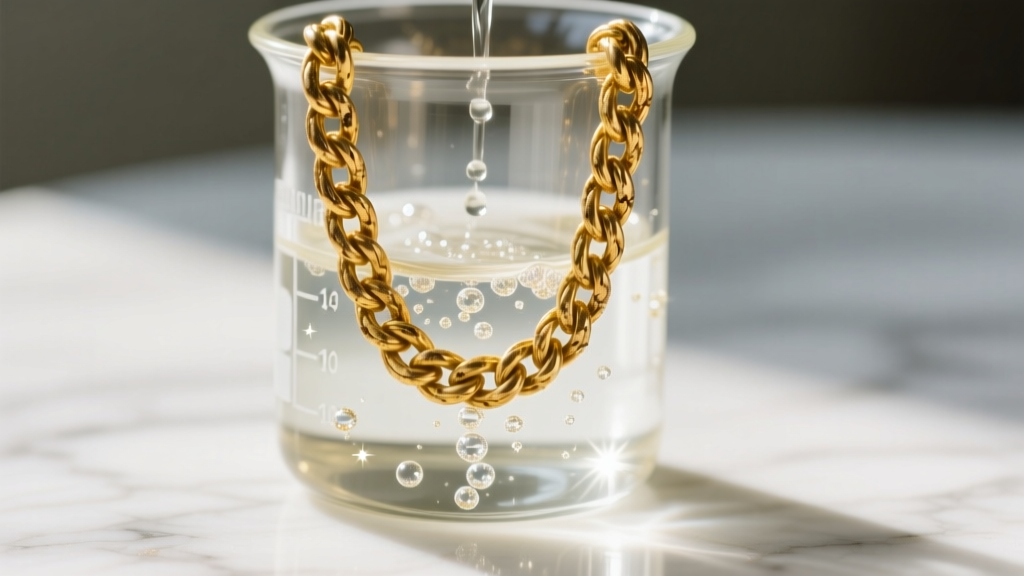
The True Cost of Maintaining Your Gold Jewelry
When evaluating the long-term value of your gold jewelry collection, maintenance costs are frequently overlooked. Pure gold (24k) is virtually indestructible and does not tarnish. However, the gold alloys used in everyday jewelry—such as 10k, 14k, and 18k—contain metals like copper, silver, and zinc. These alloy metals react with environmental sulfur, chlorine, and human sebum, leading to dullness and oxidation. The central question for budget-conscious collectors is whether investing in a specialized commercial jewelry cleaning solution for gold yields a better return on investment than DIY alternatives, or if premium products are merely a markup on basic chemistry.
From a value assessment perspective, the goal of cleaning is twofold: restore optical brilliance by removing light-blocking oils, and prevent long-term metallurgical degradation. Using the wrong chemical agents can lead to catastrophic failure modes, such as stress corrosion cracking in lower-karat gold or the premature stripping of rhodium plating on white gold. This guide breaks down the actual cost-per-use, chemical efficacy, and hidden risks of gold cleaning solutions to help you allocate your jewelry care budget effectively.
Commercial vs. DIY: A Cost-Per-Ounce Breakdown
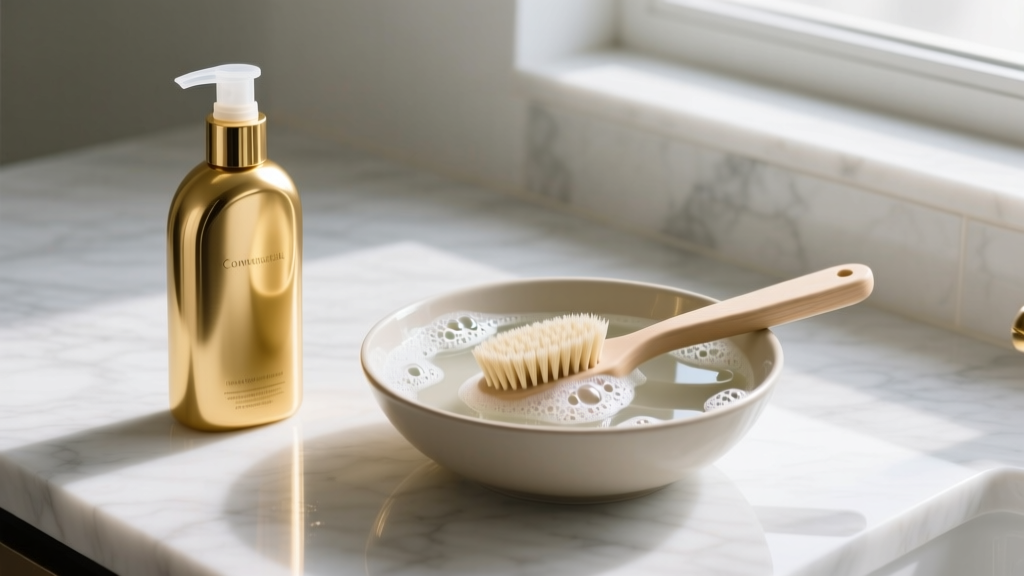
The market for commercial gold cleaners is dominated by a few heritage brands that promise professional-grade results at home. But when we break down the cost per fluid ounce and compare it to the efficacy of the active ingredients, the value proposition shifts dramatically. Most commercial liquid solutions rely on a mild ammonia base combined with non-ionic surfactants (detergents) to lift oils.
| Cleaning Method | Average Retail Cost | Cost Per Use (approx.) | Active Ingredients | Best For |
|---|---|---|---|---|
| Connoisseurs Gold Cleaner | $9.00 / 8 oz | $0.15 | Ammonia, Surfactants | 14k/18k Yellow Gold |
| Hagerty Jewel Clean | $11.50 / 6 oz | $0.25 | Ammonia, Isopropanol | Heavy Sebum Buildup |
| Blitz Gold Shine | $13.00 / 8 oz | $0.22 | Mild Detergents | Gold with Soft Gemstones |
| DIY Dawn & Warm Water | $4.00 / 18 oz | $0.02 | Anionic Surfactants | All Karats, Routine Care |
| Ultrasonic Cleaner (Capital) | $45.00 upfront | $0.01 (amortized) | Water + Cavitation | Diamond & Solid Gold |
As the data illustrates, the financial premium for a branded jewelry cleaning solution for gold is roughly 1,000% higher per use than a high-quality dish soap like Dawn. According to the Gemological Institute of America (GIA), warm water mixed with a few drops of mild, phosphate-free dish soap is the safest and most universally recommended method for routine gold maintenance. The commercial solutions offer convenience—primarily through the inclusion of a built-in strainer basket and a branded brush—but the chemical advantage over a DIY surfactant mix is negligible for standard soil.
How Karat Purity Dictates Your Cleaning Budget
Your cleaning budget and methodology must scale inversely with your gold's karat purity. The structural integrity of the alloy determines its vulnerability to chemical cleaning agents.
10k and 14k Gold: The Durability Advantage
10k gold contains only 41.7% pure gold, while 14k contains 58.3%. The high volume of copper, nickel, and zinc makes these alloys highly durable but prone to surface oxidation (tarnish). Commercial ammonia-based cleaners are highly effective here, as the ammonia safely dissolves copper oxides without harming the gold matrix. The budget value of a commercial cleaner is highest for 14k gold that has been exposed to sulfur-heavy environments (like hot springs or heavy pollution).
18k and 24k Gold: The Softness Liability
18k gold (75% pure) and 24k gold (99.9% pure) are significantly softer. The primary risk here is not chemical degradation, but mechanical micro-scratching. Many budget-conscious consumers attempt to use abrasive DIY pastes (like baking soda and water) to polish high-karat gold. This is a critical error. Baking soda has a Mohs hardness of roughly 2.5 to 3, while pure 24k gold sits at 2.5. Using abrasive pastes will literally strip away microscopic layers of your gold, reducing the physical weight and intrinsic melt value of your piece over time. For high-karat gold, invest in a non-abrasive, surfactant-only commercial solution or stick strictly to liquid soap soaks.
Hidden Costs: When Cheap Solutions Damage Your Gold
When assessing the budget of jewelry care, you must factor in the potential cost of ruin. The most devastating and common failure mode in gold jewelry maintenance is exposure to chlorine. Many consumers mistakenly use household bleach or generic surface cleaners to sanitize their jewelry. Chlorine reacts violently with the copper and silver alloys in 10k and 14k gold, causing a phenomenon known as stress corrosion cracking. This chemical attack targets the microscopic solder points of chains and ring prongs, causing them to snap under minimal tension. Replacing a snapped 14k gold chain or re-tipping diamond prongs can cost anywhere from $75 to $250, entirely wiping out any perceived savings from using cheap household chemicals.
The White Gold Rhodium Replating Factor
White gold is an alloy of yellow gold and white metals (like palladium or nickel), but it requires a flash-plating of rhodium to achieve its bright, mirror-like finish. Rhodium is a platinum-group metal that is highly resistant to tarnish but vulnerable to harsh chemicals. Frequent use of highly concentrated, unbuffered ammonia solutions—often found in cheap, off-brand glass cleaners used as DIY jewelry soaks—will accelerate the degradation of the rhodium layer. Once the rhodium wears thin, the underlying yellowish-white alloy shows through. Professional rhodium replating costs between $60 and $120 per ring. Therefore, using a pH-balanced, specialized jewelry cleaning solution for white gold, or a gentle DIY soap soak, is a mandatory investment to delay that $100 replating expense.
The Verdict: Where to Spend and Where to Save
To maximize the value retention of your gold jewelry while minimizing annual maintenance costs, adopt the following tiered budget framework:
- Save on Routine Liquid Soaks: Skip the $15 commercial bottles for your weekly or monthly cleans. A $4 bottle of phosphate-free Dawn dish soap diluted in warm water, combined with a $3 extra-soft baby toothbrush, provides 95% of the cleaning power at a fraction of the cost. The Jewelers of America officially endorses this mild soap method as the gold standard for at-home care.
- Spend on Proper Drying Tools: Where DIYers fail is in the drying process. Wiping gold with paper towels introduces microscopic wood fibers that cause micro-scratches. Allocate $10 to $15 for a pack of optical-grade microfiber cloths. This single purchase protects the polish of your gold for years.
- Spend on Professional Ultrasonic for Heavy Soil: If you own intricate gold pieces with diamond accents (never use ultrasonics for emeralds, opals, or pearls), the $45 capital expenditure on a basic consumer ultrasonic cleaner pays for itself after 10 uses compared to professional jeweler cleaning fees. Use only distilled water and a drop of mild dish soap in the tank.
- Avoid 'Miracle' Polishing Cloths for High-Karat: Chemically treated polishing cloths contain mild abrasives and rouge. While excellent for removing tarnish from sterling silver, they will strip the high-polish finish off 18k and 24k gold, leaving a satin, brushed appearance that requires professional machine polishing to fix.
"The most expensive jewelry cleaning solution is the one that forces you to visit a bench jeweler for prong re-tipping or chain soldering. Stick to mild surfactants, avoid chlorine entirely, and let the gold's natural luster do the work."
Ultimately, a premium jewelry cleaning solution for gold is a luxury of convenience, not a necessity of chemistry. By understanding the metallurgical realities of your specific gold karats and avoiding catastrophic chemical exposures, you can maintain a pristine collection on a highly disciplined budget.


