Comparing the Best Types of Gold for Jewelry: Karats, Alloys & Wear
Compare the top types of gold for jewelry, from 10k to 24k karats and solid to vermeil. Discover alloy properties, durability, and best use cases.

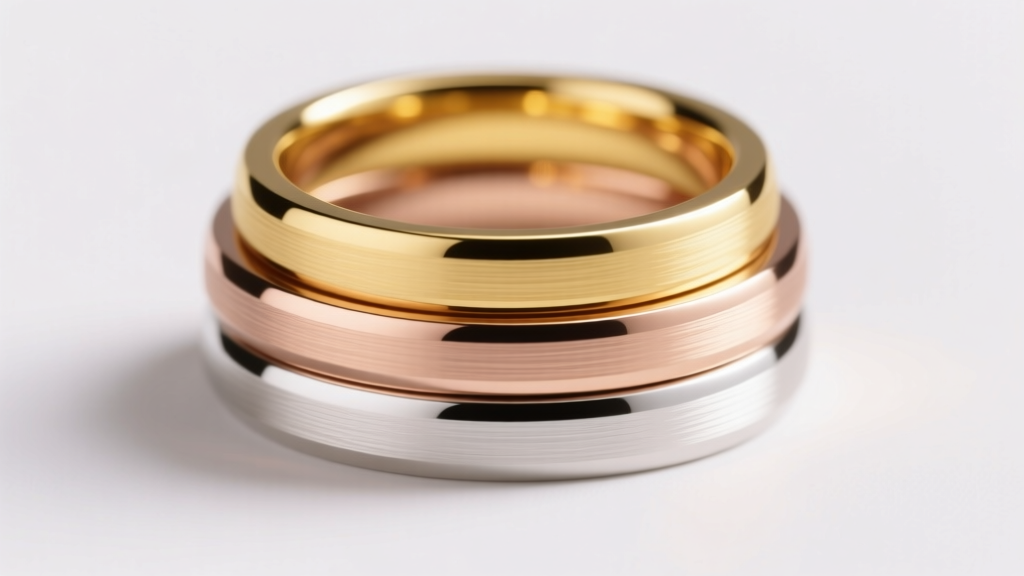
The Metallurgy of Gold: Why Pure Gold Fails in Jewelry
When evaluating the various types of gold for jewelry, it is crucial to understand that pure gold (24k) is fundamentally unsuited for daily wear. In its purest form, gold is a dense, malleable transition metal with a Vickers Hardness (HV) of just 25 to 30. To put this in perspective, pure gold is roughly the same hardness as a human fingernail. A 24k gold ring will deform under the pressure of a firm handshake, and prongs holding gemstones will bend, leading to catastrophic stone loss.
To transform gold into a viable jewelry material, metallurgists introduce alloy metals. These alloys alter the crystalline lattice structure of the gold, increasing its tensile strength, hardness, and resistance to abrasion. The specific combination of these alloying metals not only dictates the durability of the final piece but also determines its color and hypoallergenic properties.
The Alloy Matrix: Copper, Silver, and Zinc
The three most common alloying metals used in gold jewelry are copper, silver, and zinc. Copper is the primary hardening agent and is responsible for warm, reddish hues. Silver adds structural integrity while introducing cooler, greenish undertones. Zinc acts as a deoxidizer during the casting process and helps bleach the alloy to create whiter tones. The precise ratio of these metals is what separates a brittle, porous casting from a durable, lustrous piece of fine jewelry.
Decoding Karats: A Technical Breakdown of Gold Purity
The karat (k) system measures the proportion of pure gold in an alloy out of 24 parts. While higher karats command a premium due to their intrinsic melt value, they are not always the superior choice for functional jewelry. Below is a technical comparison of the most common karats used in modern jewelry manufacturing.
| Karat | Gold % | Alloy % | Vickers Hardness (HV) | Best Use Case |
|---|---|---|---|---|
| 24k | 99.9% | 0.1% | 25 - 30 | Investment bullion, ceremonial pieces |
| 22k | 91.6% | 8.4% | 40 - 50 | Low-impact earrings, cultural jewelry |
| 18k | 75.0% | 25.0% | 120 - 135 | Engagement rings, luxury daily wear |
| 14k | 58.3% | 41.7% | 140 - 160 | Everyday rings, active lifestyle jewelry |
| 10k | 41.7% | 58.3% | 160 - 180 | Class rings, high-impact budget pieces |
According to the Gemological Institute of America (GIA), 18k gold offers the ideal compromise between purity, color saturation, and durability for fine jewelry. However, for heavy-impact items like bracelets or men's wedding bands, 14k gold's higher alloy content provides superior scratch resistance.
Solid, Filled, Plated, and Vermeil: Structural Integrity Compared
Beyond karat purity, the structural composition of the jewelry piece heavily influences its lifespan and value. Understanding the difference between solid gold and gold alternatives is vital for making informed purchasing decisions.
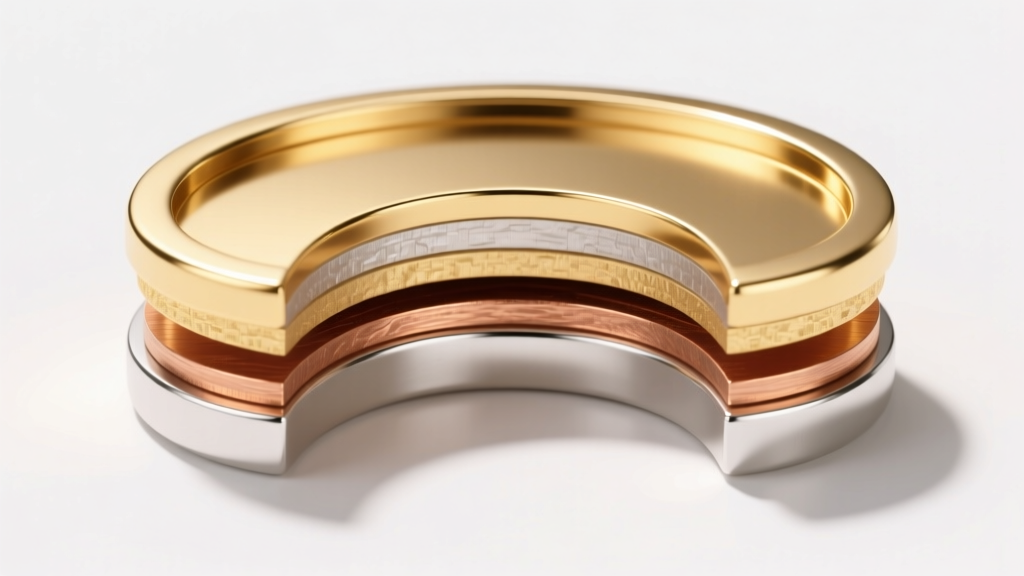
Wear Testing and Failure Modes
Solid Gold: Homogeneous throughout. If scratched, the underlying metal is identical to the surface. It can be polished indefinitely without losing its gold content.
Gold-Filled: Created by mechanically bonding a thick layer of solid gold (usually 12k or 14k) to a brass core using heat and pressure. By law, the gold layer must constitute at least 1/20th (5%) of the total weight. Gold-filled items can last decades but will eventually wear through at high-friction points like ring shanks.
Gold Vermeil: The Federal Trade Commission (FTC) strictly regulates vermeil. It must feature a sterling silver base coated with a minimum of 2.5 microns of 10k (or higher) gold. Vermeil is superior to standard plating but will require re-dipping every 1 to 3 years with daily wear.
Gold-Plated (Flash Plated): A microscopic layer of gold (often less than 0.5 microns) electroplated onto a base metal like brass or copper. This type fails rapidly, often tarnishing or rubbing off within months of daily wear due to galvanic corrosion and friction.
Color Alloys: The Science Behind Yellow, White, and Rose Gold
The color of gold jewelry is not a surface treatment; it is a fundamental property of the alloy mixture. Master jewelers manipulate the alloy matrix to achieve specific hues.
- Yellow Gold: The classic alloy typically consists of pure gold mixed with equal parts silver and copper. An 18k yellow gold recipe might be 75% Au, 12.5% Cu, and 12.5% Ag. The silver tempers the redness of the copper, maintaining a warm, buttery yellow tone.
- Rose Gold: Achieved by drastically increasing the copper content while reducing or eliminating silver. A standard 18k rose gold alloy contains 75% Au, 22.25% Cu, and just 2.75% Ag. The high copper content makes rose gold slightly more durable than yellow gold but can cause skin discoloration for those with copper sensitivities.
- White Gold: Pure gold is alloyed with white metals like palladium, nickel, or manganese. Nickel white gold is harder and cheaper but is a known contact allergen. Palladium white gold is hypoallergenic and possesses a naturally whiter hue, though it is more expensive and has a lower melting point, making it trickier to cast.
'White gold is naturally a warm, grayish-yellow. The brilliant, mirror-like finish consumers associate with white gold is actually a surface plating of rhodium, a platinum-group metal. As this plating wears away from friction, the underlying yellowish alloy is revealed, requiring periodic re-plating by a jeweler.' — World Gold Council Metallurgy Guidelines
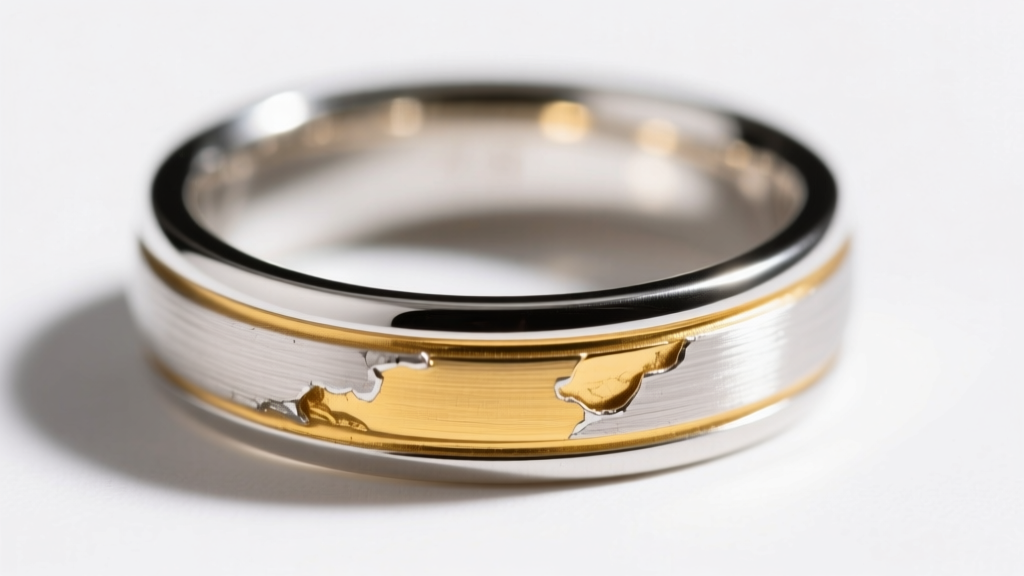
Decision Framework: Matching Gold Type to Jewelry Function
Selecting the right type of gold requires matching the material's physical properties to the mechanical stress the jewelry will endure. Use this framework to guide your material selection:
High-Impact Zones (Rings and Bracelets)
These pieces are subjected to constant friction, impacts, and exposure to chemicals. 14k solid gold is the optimal choice here due to its high Vickers hardness. If budget allows for a premium feel, 18k solid gold is acceptable, but avoid 22k or 24k, as the prongs will bend and the shanks will warp. Never use gold-plated or vermeil for daily-wear rings; the friction will strip the plating within weeks.
Low-Impact Zones (Earrings and Pendants)
Because earrings and necklaces experience minimal structural stress, you can prioritize purity and color saturation over extreme hardness. 18k or 22k solid gold is excellent for these applications. For budget-conscious buyers, gold vermeil is a highly viable option for earrings, as the lack of friction ensures the 2.5-micron gold layer will remain intact for years.
Body Jewelry and Piercings
For fresh or healing piercings, the alloy composition is critical. Avoid any gold containing nickel or copper, as these can cause severe allergic reactions and impede healing. The Association of Professional Piercers recommends 14k or 18k solid, nickel-free, palladium-alloyed white gold or high-quality yellow gold. Gold-plated body jewelry should never be used in unhealed piercings due to the risk of the base metal leaching into the wound.
Conclusion
Understanding the metallurgical realities behind the different types of gold for jewelry empowers you to make purchases that align with your lifestyle and budget. By looking beyond the karat stamp and evaluating the structural integrity, alloy composition, and intended wear environment, you can curate a collection that remains beautiful, durable, and structurally sound for generations.


