Aztec Gold Jewelry: Metallurgy, Tumbaga & Authenticity Guide
Explore the technical metallurgy of Aztec gold jewelry. Learn about tumbaga alloys, depletion gilding, and how to authenticate pre-Columbian artifacts.

The Metallurgical Reality: Tumbaga vs. Pure Gold
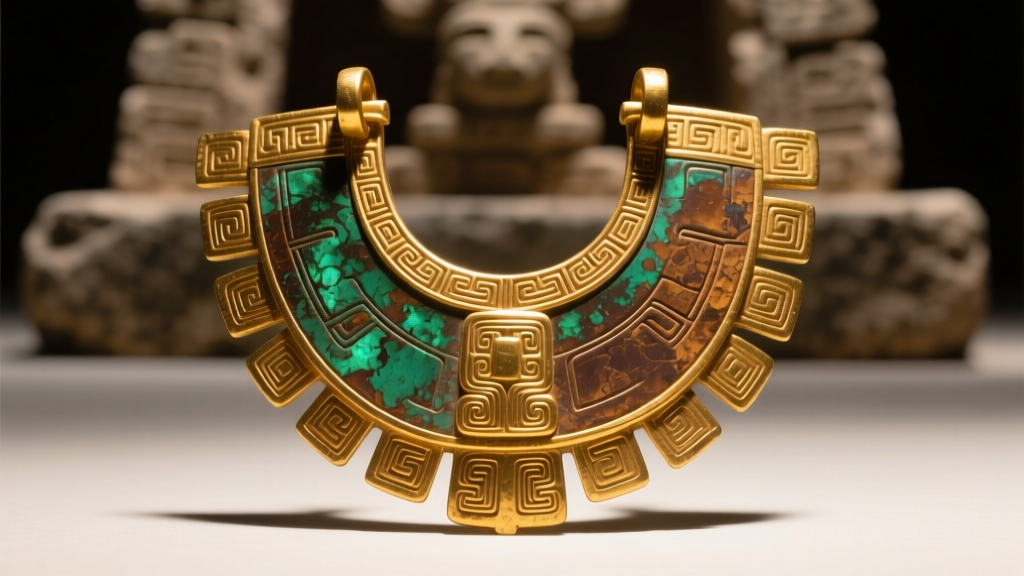
When collectors and historians discuss Aztec gold jewelry, there is a pervasive misconception that pre-Columbian Mesoamerican artisans worked exclusively with high-karat, pure gold. In reality, the vast majority of surviving Aztec and Mixtec gold artifacts are composed of tumbaga, a sophisticated gold-copper alloy. Understanding the metallurgical composition of these pieces is the first critical step in authentication, appraisal, and historical appreciation.
Pure gold (24k) is too malleable for the intricate structural demands of Mesoamerican jewelry, such as the delicate wirework and filigree seen in Mixtec-Aztec pectorals. By alloying gold with copper, indigenous metallurgists lowered the melting point of the metal (often to around 900°C, compared to 1064°C for pure gold) while significantly increasing its tensile strength and hardness. This allowed for the creation of complex, durable items like the famous Yanhuitlan shield and various zoomorphic bells.
Typical Tumbaga Alloy Composition
Based on X-ray fluorescence (XRF) studies of museum-grade artifacts, the elemental breakdown of Aztec tumbaga varies wildly depending on the region and the specific artisan. However, it generally falls within the following ranges:
| Element | Percentage Range | Metallurgical Purpose |
|---|---|---|
| Gold (Au) | 5% – 45% | Corrosion resistance, color, prestige value |
| Copper (Cu) | 50% – 90% | Hardness, structural integrity, lowers melting point |
| Silver (Ag) | 1% – 5% | Trace impurity or intentional alloy for color shifting |
According to research published by Encyclopedia Britannica, some tumbaga artifacts contain as little as 3% gold by volume, yet appear entirely golden to the naked eye. This brings us to the most remarkable chemical process utilized by Aztec goldsmiths.
Depletion Gilding: The Ancient Surface Enrichment Technique
If an Aztec gold pendant is made of 90% copper, why does it not look like a tarnished bronze coin? The answer lies in depletion gilding, a surface enrichment technique that chemically strips copper from the outermost layers of the alloy, leaving behind a porous, nearly pure gold surface.
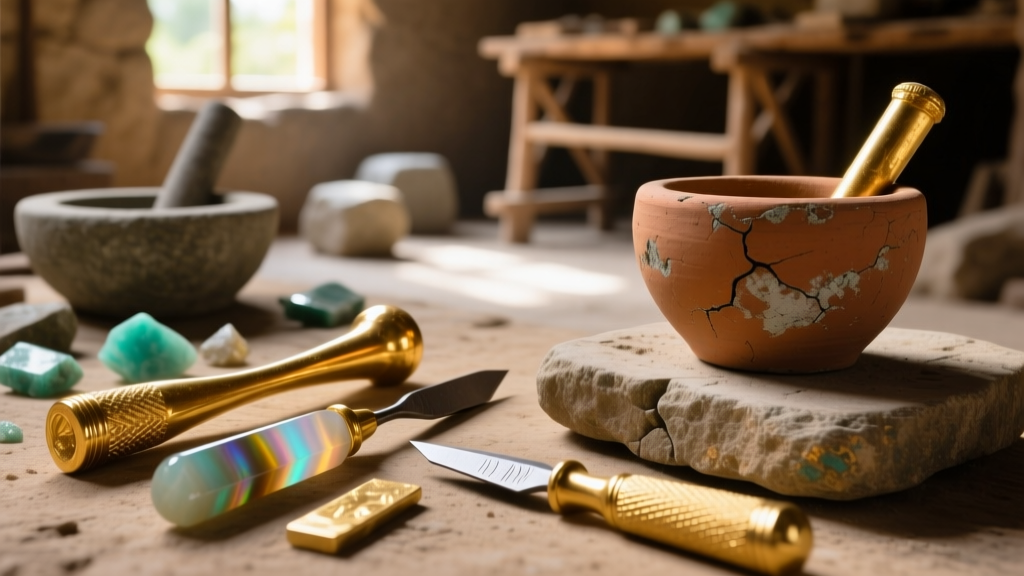
The Aztec goldsmiths, known as teocuitlatl workers, documented in Bernardino de Sahagún’s Florentine Codex, utilized naturally occurring acidic compounds to achieve this. The process typically followed these steps:
- Acid Application: The cast or hammered tumbaga piece was submerged in or painted with a heated solution of oxalic acid (derived from native Oxalis wood sorrel plants) or alum.
- Copper Dissolution: The acid selectively reacted with the copper at the surface, converting it into copper salts which were then washed away.
- Repetition: This process was repeated multiple times, driving the depletion zone deeper into the metal.
- Burnishing: Finally, the artisan used smooth, polished agate or bone tools to burnish the porous, spongy gold surface. This collapsed the microscopic voids left by the dissolved copper, creating a solid, highly reflective 22k to 24k gold exterior.
This technique means that surface-level testing (like standard acid scratch tests) will yield a false positive for high-karat gold, completely missing the copper-rich core beneath.
Manufacturing Techniques: Lost-Wax Casting & Hammering
The structural complexity of authentic Aztec gold jewelry is a testament to their mastery of the cire perdue (lost-wax) casting method. Artisans would carve a precise model out of a mixture of beeswax and copal resin. This model was then encased in a refractory clay mold. When heated in a kiln, the wax melted and drained away, leaving a negative cavity.
Molten tumbaga was poured into the cavity using clay crucibles and blowpipes to maintain the necessary temperature. Once cooled, the clay mold was broken away (meaning every lost-wax cast piece is technically unique). For items requiring extreme thinness, such as the gold leaf appliqués found in the Templo Mayor offerings, artisans relied on exhaustive hammering over stone anvils, utilizing the natural ductility of the gold-copper alloy.
Authenticating Aztec Gold Jewelry: Modern Forensic Methods
Because of the deceptive nature of depletion gilding, traditional jewelry appraisal methods fail when evaluating pre-Columbian artifacts. Modern authentication requires non-destructive forensic analysis.
1. X-Ray Fluorescence (XRF) Spectrometry
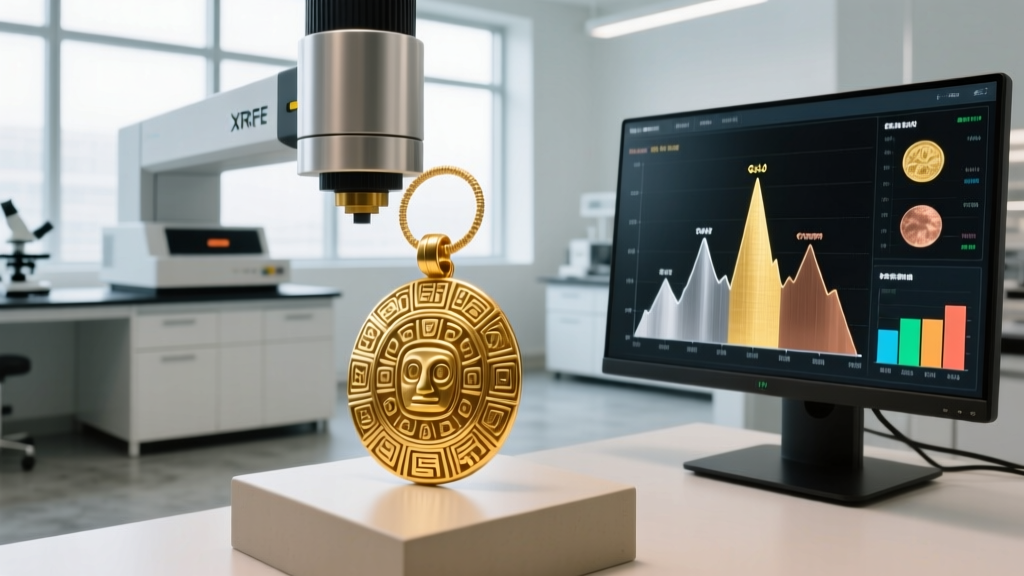
XRF is the gold standard for analyzing Aztec gold jewelry. By bombarding the piece with X-rays, the machine measures the fluorescent X-rays emitted by the atoms, providing an exact elemental breakdown. However, because XRF only penetrates a few microns into the surface, conservators must sometimes take a microscopic cross-section or use a higher-energy beam to read the copper-rich core beneath the depletion-gilded surface.
2. The Specific Gravity Trap
Hydrostatic weighing (specific gravity testing) is highly unreliable for tumbaga that has undergone depletion gilding. The porous nature of the unburnished subsurface layers can trap microscopic air bubbles when submerged in water, artificially lowering the calculated density and leading appraisers to incorrectly assume the piece is a modern, lower-density forgery.
3. Thermoluminescence (TL) Testing
For hollow-cast tumbaga bells or figures, traces of the original clay core often remain trapped inside the metal. Extracting a microscopic sample of this core and subjecting it to TL testing can determine the last time the clay was heated, effectively dating the casting process to the pre-Columbian era.
Common Forgeries and the "Tourist Trade" Trap
The market is flooded with 20th-century reproductions, particularly from the Taxco region of Mexico and various mid-century tourist hubs. These forgeries are often cast from silicone molds taken directly off authentic museum pieces. While they capture the exact visual geometry of Aztec motifs (like the serpent-headed Xiuhcoatl or the wind god Ehecatl), their metallurgy betrays them.
Modern forgers rarely possess the patience or chemical knowledge to perform multi-stage depletion gilding. Instead, they cast the pieces in standard brass or modern 10k/14k gold alloys and apply a superficial electroplated gold wash. Under 40x magnification, a genuine depletion-gilded surface shows a distinct, interlocking crystalline structure, whereas a modern electroplated forgery will show uniform, featureless grain or microscopic flaking at the edges.
Legal and Ethical Considerations for Collectors
Acquiring genuine Aztec gold jewelry is not merely a matter of metallurgical verification; it is heavily bound by international law. Pre-Columbian artifacts are considered the inalienable cultural patrimony of the nations in which they were found.
Under the 1970 UNESCO Convention, the illicit import, export, or transfer of ownership of cultural property is strictly prohibited. In Mexico, the National Institute of Anthropology and History (INAH) maintains absolute jurisdiction over all archaeological artifacts.
Any genuine Aztec gold piece offered for sale must come with exhaustive, verifiable provenance predating the 1970 UNESCO agreement. Without documented export permits and a continuous chain of custody from recognized mid-20th-century collections, a piece is legally presumed to be either a modern forgery or illicitly looted. Responsible collectors and institutions must demand this paperwork before commissioning XRF or metallurgical testing, ensuring that the pursuit of historical gold does not fund modern archaeological destruction.
Conclusion
Aztec gold jewelry represents a pinnacle of ancient chemical engineering. The deliberate manipulation of tumbaga alloys and the mastery of depletion gilding prove that Mesoamerican metallurgists were not merely working with gold; they were actively transforming base metals into functional, spiritual masterpieces. For the modern collector, appraiser, or historian, looking past the golden surface to understand the copper core is the only way to truly appreciate and authenticate these remarkable artifacts.


